Al Jazeera: The 2004 Afghan constitution invests the president with more powers than former Afghan kings had before the republican period. Among them is the power to appoint all government officials, political and professional, from the cabinet to the district levels. At the same time the office of the president, at least in practice, tends to be filled only with ethnic Pashtuns. That is why candidates view the presidency as “the prize” to be won at any cost. Click here to read more (external link).
Former U.S. Ambassador Khalilzad Supports Tough Line On Pakistan
RFE/RL’s Radio Free Afghanistan
January 4, 2018
Zalmay Khalilzad, the former U.S. ambassador to Afghanistan and the United Nations, expressed support for President Donald Trump’s tough line against Islamabad and said the administration is likely studying various methods to put pressure on Pakistan for what he called its lack of cooperation in the fight against terrorism.
“I consider Trump’s action positive and I support it,” he told RFE/RL in an interview conducted on January 4, referring to the president’s Twitter comment on New Year’s Day accusing Pakistan of “lies and deceit” and of providing a safe haven for terrorists operating in Afghanistan.
Islamabad rejected the accusations, saying it “cannot be held responsible for the collective failure in Afghanistan.”
Khalilzad said, however, that “the conclusion that has been reached in the United States is that Pakistan does not cooperate.”
“The United States has arrived at what the Afghans have been saying for a long time — which is that Pakistan’s policy toward Afghanistan, terrorism, and the fight against terrorism is not genuine.”
The comments come as the White House has called on Pakistan to do more to fight terrorism and says it will announce “specific actions” to pressure Islamabad, possibly as soon as January 4.
Cutting Off Assistance?
The actions were not identified, but a senior administration official on January 3 said the moves would likely include a cutoff of “security assistance” to Pakistan, although it remains unclear how much or what type of assistance would be cut or for how long.
“A step that is being debated in the United States is how to pressure Pakistan’s military,” Khalilzad said in the interview.
He suggested that members of the Pakistan military and ISI intelligence service who “are directly involved in the war and work against Afghanistan” could be put on a blacklist to bar them and their families from travel to the United States and to have their assets under U.S. control frozen.
He also said the United States could potentially downgrade Pakistan’s status as a non-NATO ally, or even cut off all military assistance to Islamabad.
It could also stop providing funds that it currently gives Pakistan in return for allowing the transportation of goods through its territory to U.S. troops and personnel in Afghanistan.
Khalilzad said debate is also under way to consider potential financial pressure that could be exerted on Pakistan from international organizations, such as the World Bank and the International Monetary Fund (IMF), and by “U.S. allies such as Saudi Arabia and those in Europe and Asia.”
The Afghan-born Khalilzad served as the U.S. ambassador to the United Nations under presidents George W. Bush and Barack Obama from 2007 to 2009. He was ambassador to Afghanistan from 2003 to 2005 and to Iraq from 2005 to 2007.
Copyright (c) 2018. RFE/RL, Inc. Reprinted with the permission of Radio Free Europe/Radio Liberty, 1201 Connecticut Ave NW, Ste 400, Washington DC 20036.
Related
Report: 21 Journalists Killed in Afghanistan in 2017
Hasib Danish Alikozai
VOA News
January 3, 2018
WASHINGTON — Last year was the deadliest since 2016 for journalists in Afghanistan, with 21 reporters being killed in the line of duty, a new report, released by Nai, a nongovernmental organization advocating for open media in Afghanistan, claims.
Abdul Mujib Khelwatgar, the chief executive officer of Nai told reporters last week that his organization had registered 141 cases of violence against reporters across Afghanistan.
“Based on our new report, the Afghan government and those working in the government are responsible for 62 cases of violence against reporters, terror groups are responsible for 42 cases of violence, illegal armed groups are responsible for 26 case,” Khelwatgar said.
“Eleven cases involve violence by media sector employers,” Khelwatgar added.
In 2017, 23 reporters were wounded and 21 others physically assaulted in Afghanistan, Khelwatgar added.
Afghan judiciary criticized
Khelwatgar stressed that the Afghan government is not responsible for any of the killings.
“Taliban, ISIS and, in a few cases, unknown people are responsible for the killing of the media staff and journalists. The government of Afghanistan is not behind any of these killings,” Khelwatgar told VOA, using an acronym for the militant group Islamic State.
But he did criticize the country’s judiciary for only pursuing and investigating 43 cases of violence against reporters.
Journalists have increasingly come under attack by terror groups in Afghanistan in recent years.
On Dec. 28, a suicide attack on a compound housing the Afghan Voice news agency and Tebyan cultural center, killed at least 40 people and wounded dozens more. Several among those wounded were reporters.
The Islamic State terror group claimed responsibility for the attack.
In early November, gunmen disguised as Afghan national police attacked the headquarters of the privately owned Shamshad TV in the capital, Kabul, killing one staff member and injuring several others.
Islamic State claimed responsibility for that attack as well.
Following the attack, the United Nations Assistance Mission in Afghanistan said in a tweet that journalists are civilians who should not be targeted.
In May, IS fighters targeted the Afghan state television building in Nangarhar’s provincial capital, Jalalabad, killing six people.
Also that month, two media workers, including a driver for the British Broadcasting Corporation (BBC), were killed in the truck bomb attack on the German Embassy in Kabul. The offices of 1TV, another privately owned Afghan TV station, were also damaged.
IS also claimed responsibility for that attack.
2016 a deadly year
Before Nai’s recent report, the organization said 2016 was the deadliest year for reporters in Afghanistan since 2001.
“Prior to [2017], 2016 was the deadliest year for media staff and journalists … in which 14 media staff were killed,” Khelwatgar said.
In January 2016, Taliban claimed responsibility for a suicide attack on a mini bus, carrying reporters working for Tolo television, the country’s most-watched television channel. Seven journalists were killed in that attack.
Following that attack, the insurgent group warned media organization in a statement to avoid promoting “obscenity,” “irreligiousness,” “foreign culture” and “nudity.”
Afghanistan remains one of the world’s most dangerous countries for journalists and media workers.
Afghanistan ranks 120th out of 180 countries on the Reporters Without Borders (RSF) Press Freedom Index.
“By sowing terror, the Taliban and Islamic State have created information ‘black holes’ in many regions since 2015,” RSF said on its website about the media environment in Afghanistan. “Afghanistan struggles to protect its journalists in this increasingly violent civil war.”
In addition to terror groups, government officials and Afghan security forces have also been accused of violence against journalists in the country.
“… Many governors and local officials are unable to accept the principle of media independence, and the police and military are implicated in several cases of violence against journalists,” RSF said.
Determination
Despite the security risks and danger, Afghan journalists seem determined to continue their work.
That determination was in full display in November when injured Parwaiz Safi, a journalist for Shamshad TV, in a sign of resilience appeared live on TV with news to his audience hours after the IS attack. His bandaged hands could be seen during the live broadcast.
The media sector in Afghanistan grew substantially following the fall of the Taliban. About three dozen TV stations reportedly operate in the country, and there are about 170 FM radio stations as well as hundreds of print media outlets.
The Afghan government has been citing the growth in the media sector as one of its achievements and vows that it will protect the media, but industry advocates are concerned that the government might be in the process of losing its grip on that achievement if it does not take the necessary steps to protect reporters from violence.
Khalid Mafton from Washington and Abdul Hai Warshan from Kabul contributed to this report.
Pakistan Extends Afghan Refugees’ Stay for a Month
Ayaz Gul
VOA News
January 3, 2018
ISLAMABAD, PAKISTAN — Pakistan has extended for one month the stay of about 1.4 million Afghan refugees who lost their legal residency status on Dec. 31, 2017.
Under a trilateral agreement with Afghanistan and the U.N. High Commissioner for Refugees (UNHCR), the host government was considering a proposed one-year extension in the validity of the Proof of Registration (PoR) cards for the refugees.
Prime Minister Shahid Khaqan Abbasi on Wednesday chaired a meeting in Islamabad of the federal Cabinet, which debated the proposal.
“After detailed discussion, the [federal] Cabinet agreed to grant only 30 days’ extension for PoR and also decided that the issue of early repatriation of Afghan refugees shall be raised with UNHCR and with the international community,” said a statement issued after the meeting.
The Cabinet emphasized that Pakistan’s economy has long carried the burden of hosting Afghan refugees and under the current circumstances cannot sustain it further.
Pakistan hosts about 2.7 million registered and undocumented Afghan refugees who have fled decades of conflict in Afghanistan.
Pakistani authorities lately have alleged that militants conducting terrorist attacks on both sides of the border are using refugee localities as hideouts. Islamabad has also pressed the U.S.-led Western partners of the Afghan government to arrange for an early repatriation of the refugees.
Analysts speculated Wednesday’s move might have stemmed from Islamabad’s diplomatic tensions with Washington, fueled by a New Year’s Day tweet from U.S. President Donald Trump.
Trump tweeted that Pakistan has received more than $33 billion in U.S. aid in the last 15 years but continues to harbor terrorists fighting American forces in Afghanistan.
Islamabad denied the charges and called them an attempt to scapegoat it for what it called the “failure” of the U.S. military mission in Afghanistan.
Rashid Khan world’s 2nd highest wicket taker in ODIs in 2017
1TV: Afghanistan’s legspinner Rashid has finished 2017 as the second highest wicket taker of the year in the 50-over format. The young player has claimed 43 wickets in 16 matches he played during the years. Click here to read more (external link).
Noor Orders Arrest Of Newly-Appointed Balkh Governor
Tolo News: Atta Mohammad Noor, the ousted governor of Balkh, has ordered the removal of Engineer Mohammad Dawood, the newly-appointed governor of Balkh by President Ashraf Ghani. A letter obtained by TOLOnews shows that the order has been issued based on complaints by residents of Zaare district in Balkh. The residents claimed that Engineer Dawood had been involved in the murder of their family members some years ago. Click here to read more (external link).
Related
Why the Taliban Isn’t Winning in Afghanistan
Foreign Affairs: Although the Taliban has demonstrated a surprising ability to survive and conduct high-profile attacks in cities like Kabul, it is weaker today than most recognize. It is hamstrung by an ideology that is too extreme for most Afghans, a leadership structure that is too closely linked to the Pashtun ethnic group, an over-reliance on brutal tactics that have killed tens of thousands of innocent Afghan civilians and alienated many more, a widespread involvement in corruption, and a dependence on unpopular foreign allies such as Pakistan. Click here to read more (external link).
Afghanistan’s First All-Female TV Network Presses Society’s Buttons
Atlantic Council: Afghanistan’s first female-oriented, female-run station, Zan TV, started operations in May of 2017. It is the brainchild of media entrepreneur Hamid Samar, who provides 100 percent private funding. All reporters, anchors, and, most importantly, news content decision makers, are women. Click here to read more (external link).
Pakistan’s opposition leader denounces Trump as ‘ignorant’
Press TV / January 3, 2018
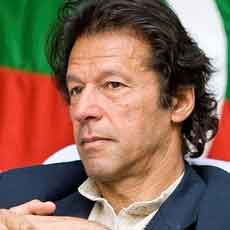
Pakistan’s opposition leader Imran Khan has denounced Donald Trump as “ignorant and ungrateful” after the US president accused Islamabad of harboring terrorists.
Khan, who has ambitions to become Pakistan’s next prime minister, said in a Twitter post on Wednesday that the Trump administration was making Pakistan a scapegoat to cover Washington’s failure in neighboring Afghanistan.
“Pakistan has now suffered the ultimate insult (by) being made the scapegoat for US failures in Afghanistan,” Khan said.
Trump said in his first tweet of 2018 that Washington had “foolishly given Pakistan more than $33 billion in aid over the last 15 years.”
“They give safe haven to the terrorists we hunt in Afghanistan, with little help. No more!” wrote the US president on Monday.
Washington has long accused Islamabad of allowing the Haqqani network, which is an affiliate of the Taliban militant group, to operate relatively freely in Pakistan’s porous border regions to carry out operations in Afghanistan.
Khan, however, mocked the Trump administration by challenging the American president to explain how “a couple of thousand or so (Taliban-allied) Haqqanis allegedly in Pakistan are supposed to be the cause of why the most well-equipped military force in history … cannot succeed” in Afghanistan.
Pakistan’s famous cricket star-turned-opposition leader, Khan also criticized Islamabad’s participation in the so-called war on terror led by Washington.
“The lesson to be learned by us is never to be used by others for short term paltry financial benefits ever again,” Khan said.
On Wednesday, former Pakistani Prime Minister Nawaz Sharif also said his country should end its dependence on aid from the US.
Sharif called Trump’s tweet “non-serious” and “regrettable” and said the heads of state should keep international norms and diplomatic rules of engagement in mind when addressing other states.
At a top security meeting on Tuesday, Pakistan’s civilian and military leadership angrily dismissed the threats by Trump to cut off aid as “completely incomprehensible.” The “recent statements… by the American leadership were completely incomprehensible as they contradicted facts manifestly,” read a statement issued by the prime minister’s office after a meeting of the National Security Council. Trump’s comments “struck with great insensitivity” and “negated the decades of sacrifices made by the Pakistani nation.”
The US president’s latest tweet comes following an increasingly tense back-and-forth between Washington and Islamabad. Relations between the two sides have taken a nosedive under the Trump administration. Washington has confirmed it will withhold $255 million in US military aid to Pakistan this year.
On Tuesday, the White House press secretary, Sarah Huckabee Sanders, told reporters to expect more details on specific actions against Pakistan over the next day or two.
Successive US governments have criticized Pakistan for links with the Taliban and for harboring slain al-Qaeda leader Osama bin Laden.
US commander urges Afghan army to press Taliban during winter
Press TV
January 2, 2018
A top US commander has called for a more aggressive approach in the Afghan army against a normally quieter Taliban during the winter season, saying more American “trainers” would be deployed to the front lines to escalate the offensive.
General Joseph Votel of the US Central Command, who leads forces in the Middle East, said Tuesday that preparations for a full battle against the Taliban in the spring season should begin sooner in the Afghan army.
“… we’ll look for a major effort to gain the initiative very quickly as we enter into the fighting season,” said Votel, adding that Afghan forces must “keep the pressure on all the time and work to gain the upper hand as quickly as we can, so that as we get into this next fighting season we can build on the initiative.”
The general said new deployments of American trainers would help with the operation. That carries greater risks for American service members, but Votel said US commanders will make sure US forces have adequate protection.
Under President Donald Trump, Washington has been desperate to prevent a deterioration of security in Afghanistan, some 17 years after the US led an invasion of the country. More US troops are being deployed in areas where the Taliban have gained grounds over the past years. Fears over security have also exacerbated as the Daesh Takfiri terrorist group, which is on its last legs in Iraq and Syria, has carved out its own rule in some Afghan territories.
Votel expressed hope that the Afghan army could reach a better level of preparedness for the next spring fight as a result of Washington’s training and funding.
“By the time they get to the next fight, they will be able to really present a significant offensive capability,” said the US commander, adding that the Afghan army must prepare for greater fighting once the weather improves.
Reports suggest Trump has effectively doubled the number of US troops in Afghanistan to 16,000 and there are plans for the deployment of a special training unit early this year. That, however, has hardly prevented the advance of the Taliban as the group now controls almost half of the country.
Related