
logo

Daily Updated Afghan News Service

  • Home
  • About
  • Opinion
  • Links to More News
  • Good Afghan News
  • Poll Results
  • Learn about Islam
  • Learn Dari (Afghan Persian/Farsi)

Recent Posts

  • The toxic aftermath of decades of war in Afghanistan November 17, 2026
  • Taliban Force Two Shia Clerics To Abandon Mourning Ceremonies In Exchange For Release November 17, 2026
  • Taliban Leader Offers Government Posts To Opponents For First Time November 17, 2026
  • Tolo News in Dari – November 17, 2026 November 17, 2026
  • Ariana Airlines to launch direct flights between Mazar-e-Sharif and Jeddah November 17, 2026
  • Nearly 2 Million People in Afghanistan Living With Diabetes, 71% Unaware November 17, 2026
  • Zimbabwe beat Afghanistan by 57 runs in second Test November 17, 2026
  • Australia’s transparency watchdog orders new search for Afghanistan killing documents November 17, 2026
  • ICC Must Reconsider Closure Of Afghanistan War Crimes Case, Say Afghan Rights Groups November 16, 2026
  • Tolo News in Dari – November 16, 2026 November 16, 2026

Categories

  • Afghan Children
  • Afghan Sports News
  • Afghan Women
  • Afghanistan Freedom Front
  • Afghanistan United Front
  • Al-Qaeda
  • Anti-Government Militants
  • Anti-Taliban Resistance
  • AOP Reports
  • Arab-Afghan Relations
  • Art and Culture
  • Australia-Afghanistan Relations
  • Book Review
  • Britain-Afghanistan Relations
  • Canada-Afghanistan Relations
  • Censorship
  • Central Asia
  • China-Afghanistan Relations
  • Civilian Injuries and Deaths
  • Corruption
  • Crime and Punishment
  • Drone warfare
  • Drugs
  • Economic News
  • Education
  • Elections News
  • Entertainment News
  • Environmental News
  • Ethnic Issues
  • EU-Afghanistan Relations
  • Everyday Life
  • France-Afghanistan Relations
  • Germany-Afghanistan Relations
  • Haqqani Network
  • Health News
  • Heroism
  • History
  • Human Rights
  • India-Afghanistan Relations
  • Interviews
  • Iran-Afghanistan Relations
  • ISIS/DAESH
  • Islamophobia News
  • Japan-Afghanistan Relations
  • Landmines
  • Media
  • Misc.
  • Muslims and Islam
  • NATO-Afghanistan
  • News in Dari (Persian/Farsi)
  • NRF – National Resistance Front
  • Opinion/Editorial
  • Other News
  • Pakistan-Afghanistan Relations
  • Peace Talks
  • Photos
  • Political News
  • Reconstruction and Development
  • Refugees and Migrants
  • Russia-Afghanistan Relations
  • Science and Technology
  • Security
  • Society
  • Tajikistan-Afghanistan Relations
  • Taliban
  • Traffic accidents
  • Travel
  • Turkey-Afghanistan Relations
  • UN-Afghanistan Relations
  • Uncategorized
  • US-Afghanistan Relations
  • Uzbekistan-Afghanistan Relations

Archives

Dari/Pashto Services

  • Bakhtar News Agency
  • BBC Pashto
  • BBC Persian
  • DW Dari
  • DW Pashto
  • VOA Dari
  • VOA Pashto

International Criminal Court judges consider Afghanistan war crimes inquiry

2nd February, 2018 · admin · 1 Comment
Dostum

Dostum

BBC News: Judges at the International Criminal Court (ICC) are deciding whether to authorise an official war crimes inquiry into events in Afghanistan. They are due to begin examining written submissions from victims in Afghanistan about whom and what any potential investigation should focus on. The BBC has learnt that one of the most high-ranking officials to be named in the submissions to the court is Gen Abdul Rashid Dostum. Click here to read more (external link).

Posted in Human Rights, Political News | Tags: Dostum, War Crime |

Former top US diplomat: Trump is right on Afghanistan, wrong on Pakistan

2nd February, 2018 · admin · 2 Comments

Source: France24

Posted in Pakistan-Afghanistan Relations, Security, Taliban, US-Afghanistan Relations |

Ghani Says Afghan Taliban Headquartered in Pakistan

2nd February, 2018 · admin
Ghani

Ghani

Ayaz Gul
VOA News
February 2, 2018

ISLAMABAD — Afghan President Ashraf Ghani alleged Friday Taliban insurgents fighting the government in Kabul are using Pakistan as a headquarters and demanded the neighboring country take immediate action against them.

The charges underscore intensifying bilateral tensions in the wake of recent deadly attacks in the Afghan capital that killed nearly 140 people, including four Americans.

In a nationally televised speech, Ghani claimed eleven suspects arrested in connection with the violence have revealed the identities of the perpetrators and their locations.

“The list of these individuals and their networks has been shared with Pakistan,” Ghani said, adding the government demands Islamabad immediately take “clear and specific actions” and not give “mere commitments.”

On Wednesday, the interior minister and the spy chief of Afghanistan made a surprise visit to Pakistan where they shared the list in a meeting with top civilian, intelligence and military officials.

“Pakistan is the headquarters of the Taliban. The time has come for them now to take action [against the insurgents],” asserted the Afghan leader.

Denials

At a news conference in Islamabad Friday that coincided with Ghani’s speech, foreign ministry spokesman Mohammad Faisal rejected allegations the Taliban and their allies, the Haqqani network, have bases in Pakistan and called on the Afghan government to focus on security lapses that led to recent bombings in Afghanistan.

“We reject any allegations of support to the Haqqani network or the Taliban and of allowing them to use our soil. Pakistan has been taking actions against all terrorist groups in its territory,” he said.

Faisal reiterated Pakistan’s resolve against terrorism. He said that Afghans have shared “some information” with the Pakistani government about recent attacks in Kabul and relevant authorities will look into it before Kabul is given a formal response.

“All international reports, including those from the United States, have indicate that vast swaths of territory in Afghanistan is being used be a number of terrorist groups like Daesh,” Faisal noted, using an alternate acronym for Islamic State.

The Pakistani spokesman was referring to latest U.S. military assessments the Taliban-led militants control or contest 44 percent Afghan territory.

“Blaming Pakistan for security lapses inside Afghanistan is unfair, especially when such large spaces and support to these elements is available within the country,” he added.

Pakistani leaders maintain that around three million Afghan refugees in the country, half of them undocumented, serve as hideouts for insurgents and have consistently called for repatriation of the displaced families for addressing the security challenge.

From bad to worse

The counter allegations have deteriorated an already strained and mistrust-marred relationship between Kabul and Islamabad.

Ghani’s hard-hitting speech Friday came as a high-level Pakistani delegation comprising senior civilian and security officials, is set to travel to Afghanistan on Saturday to discuss mutual security, economic and trade cooperation.

The United States is also pressuring Pakistan to do away with alleged militant sanctuaries on its side of the border. But at a Thursday Pentagon press briefing, Joint Staff Director Marine Corps Lt. Gen. Kenneth McKenzie dismissed suggestion U.S. military intends to undertake operations inside Pakistan.

“Through a variety of measures we look to getting Pakistan cooperation and assistance as we pursue operations in Afghanistan. But no, we are not planning to conduct military operations inside Pakistan,” said McKenzie.

Islamabad has warned against any unilateral U.S. military action, saying it would be determinate to bilateral cooperation against regional terrorism.

A string of attacks rocked Kabul last month, beginning with a Taliban raid on the city’s heavily guarded Intercontinental Hotel on January 20, killing 22 people. Four Americans were also among the dead.

Last Saturday, an insurgent suicide bomber detonated an ambulance packed with explosives near a highly-secured government building in Kabul, killing 105 people and wounding nearly 250 others.

On Sunday, Islamic State suicide bombers assaulted an Afghan military academy in the capital, killing 11 soldiers and wounding 16 others. Afghan authorities instantly blamed Pakistan for being behind the attacks.

Islamabad swiftly denied the accusations and condemned what it called dastardly terrorist attacks in the Afghan capital.

Posted in Haqqani Network, Pakistan-Afghanistan Relations, Security, Taliban | Tags: Ashraf Ghani |

New Life For Afghan Boy Who Supported Nine People

2nd February, 2018 · admin


Millions of people saw our report on a 13-year-old Afghan boy supporting a family of nine, and many decided to help. Now he goes to school and has a normal childhood. (RFE/RL’s Afghan Service)

Posted in Afghan Children, Education, Everyday Life |

U.S. General Sees Afghan Troop Gains In Fight Against Taliban

2nd February, 2018 · admin · 1 Comment

afghan_securityRadio Free Europe/Radio Liberty
February 2, 2018

A top U.S. commander says he has seen improvement in Afghan forces’ capabilities in the fight against Taliban extremists in Helmand Province since the American military returned to the troubled region nine months ago.

But Marine Brigadier General Roger Turner told a Pentagon news briefing on February 1 that Taliban fighters still control about half of the province, and the U.S.-backed Afghan troops remain in a tough fight throughout the country’s southern region.

Turner returned to the United States about 10 days ago after completing his stint atop the nine-month rotating leadership command for the coalition’s Task Force Southwest.

Brigadier General Benjamin Watson has replaced Turner as commander of the task force, which will soon have bolstered numbers as U.S. military builds up its force under a directive from President Donald Trump.

U.S. and NATO forces formally concluded their combat mission at the end of 2014, shifting to a training role.

After the pullback, Taliban fighters seized a sizable amount of territory, especially in Helmand, with local officials estimating that the extremists controlled some 85 percent of the poppy-growing province early last year.

In response, U.S. officials announced that 300 Marines would be deploying to help train and advise security forces in Helmand — the first Marine deployment to the province since the end of active combat operations.

In the first few months after their April 2017 arrival, Turner told the news briefing, the U.S. Marines were able to assist local Afghan National Defense Security Forces (ANDSF) to retake some Taliban-held districts and improve security in others and help reduce the ANDSF casualty rate by 40 percent, bolstering their confidence in the process.

Turner added that roads around key cities have become safer and a civilian airport reopened in the provincial capital of Lashkar Gah, leading to a greater sense of security for residents.

During the briefing, Turner cited gains made in the administrative center of Nawa as an example of success in the Task Force South region.

Afghans forces — including the National Army’s 215th Corps — successfully took back Nawa after a bloody eight-week battle.

“We knew that the Taliban didn’t really have good control of Nawa, because the population there really kind of rejects their presence,” he said.

“So we knew that, and our partners knew that…they seized the Nawa district in July,” Turner said. “It was the first time they took back terrain in a Taliban stronghold.”

He cited the emergence of a generation of younger commanders who have trained and fought with coalition forces for improved efficiency of Afghan units.

Turner added that while the Marines have performed in combat roles in Helmand, his forces generally remain in the background while Afghan troops conduct the brunt of the fighting.

“I’m not going to expose our forces to risk if I don’t need to,” he said.

Turner said his successor will have even more forces to work with during his nine-month term, with an additional 100 troops to join the task force, allowing it to focus on advise-and-assist missions with local forces.

The U.S. military has also sent a squadron of A-10 Thunderbolt aircraft to the fight around Helmand Province, providing more close-air support and to target the Taliban drug trade.

Trump in August unveiled his new strategy for the South Asia region, under which Washington has deployed 3,000 more troops to Afghanistan to train, advise, and assist local security forces,

The comments on battlefield gains come at the same time that the Taliban and other extremists have stepped up their campaigns of violence.

In recent weeks, Kabul has been hit by several deadly assaults, including a massive suicide car bombing in a crowded central area on January 27 that killed more than 100 people and was claimed by the Taliban.

With reporting by AP, Stars & Stripes, and Military.com

Copyright (c) 2018. RFE/RL, Inc. Reprinted with the permission of Radio Free Europe/Radio Liberty, 1201 Connecticut Ave NW, Ste 400, Washington DC 20036.

More Security News

  • Pakistan Expresses Concern After White House Comment on Safe Havens
  • Taliban, IS Fighting Causes Families to Flee in Northern Afghanistan
  • Official: US Drone Kills 26 Taliban in Eastern Afghanistan
Posted in Civilian Injuries and Deaths, Drone warfare, ISIS/DAESH, Security, Taliban, US-Afghanistan Relations | Tags: Helmand, Taliban vs. ISIS |

Taliban Attacks in Kabul Hurt Local Economy

2nd February, 2018 · admin


VOA News / February 1, 2018: The recent Taliban attacks in Afghanistan’s capital not only took dozens of lives, they also hurt the local economy. Afghanistan’s Chamber of Commerce and Industries says Kabul’s business community suffered more than $10 million U-S dollars in losses from the violence and chaos.

Related

  • Kam Air Still Struggling After Kabul Hotel Carnage
  • Kabul Bombing Losses And Saffron Harvest Discussed
Posted in Economic News, Security, Taliban | Tags: Kam Air, Kam Airlines |

Child Soldiers Say Under IS, It Was Normal to Kill Someone

1st February, 2018 · admin · 5 Comments

Ayesha Tanzeem
VOA News
February 1, 2018

ISLAMABAD, PAKISTAN — Recruited as a child soldier into Islamic State’s branch in Afghanistan and Pakistan, Lal Mohammed accompanied his elder teenage brother, Bakht e Ali and their father, Taweez Khan into the training and indoctrination for a promised life of religious glory. They lived for almost two years as members of the Wilayet e Khorasan, or Islamic State Khorasan Province, in Eastern Afghanistan.

“I was nine years old when I was with them. Now I am 12. They used to show us videos on how to fight and carry out suicide bombings,” Mohammad said.

His older brother was around 16 when he joined the militant group.

Islamic State, known regionally as ISKP, emerged in the region in early 2015. Most originally belonged to the Pakistani Taliban, which had been displaced from their stronghold in Pakistan’s tribal areas by a military operation.

Across the border in Afghanistan, 15 years of war had left vast swathes of territory without government. The age-old Pashtun tradition of welcoming guests helped them find shelter in the homes of local Shinwari tribesmen, who had been refugees during the Soviet invasion of Afghanistan in the 1980s and were eager to return the favor.

Eastern Afghanistan, particularly Nangarhar province, became an IS stronghold.

Later, many of those who provided shelter had to flee with their families, often leaving their belongings behind.

“When Daesh (ISKP) came to our area, most people already sympathized with them,” Ali said. “Our tribal elders and religious clerics started backing them. Daesh commanders started sitting with us in our homes. They would show us videos of the infidels oppressing Muslims.”

The militants told the locals their police and army were puppets of infidels and they needed to rise up in jihad, a holy war. Some of the locals, like Khan and his sons, joined their ranks.

Life with ISKP

Life with ISKP for the boys was regimented. They woke up before dawn to offer morning prayers, followed by religious lessons focused on jihad, then daily chores, and finally weapons training.

Ali recalled around 100 to 150 kids who lived and trained with them, including some who were under 10 years old, like his brother, Mohammad.

“I saw it with my own eyes. They used to tell these young kids that if they carried out suicide bombings, all their troubles would be over and they would go straight to paradise. They were so good at indoctrination that any child who listened to them for a month would not listen to anyone else.”

All the children’s needs, clothing, weapons, food, were taken care of. Khan, their father, received a salary from ISKP.

The two brothers remember their training to be very disciplined. The ultimate goal was to make them suicide bombers.

One day, they took the younger brother on a mission. “Daesh fighters told me we were going to be in a firefight, and that they would stay behind and open fire from the check post. I should go forward and explode my suicide vest,” Mohammad said.

ISKP lost that fight and had to retreat. He came back alive.

The militants focused on molding young minds by showing videos and playing militant music to increase the boys’ sense of affiliation with IS. The brothers said the idea of being part of something bigger than themselves, a battle between good and evil, felt good.

‘We wanted to slaughter someone’

Militants punished anyone who did not follow their fundamentalist brand of sharia. “We’ve seen torture. We’ve seen it happening to our own friends or relatives,” Ali recalled.

He also recalled how normal it was to kill someone.

“We saw a lot of people get slaughtered. We also wanted to slaughter someone because we were told that this would bring us holy rewards from God. People who disagreed with Daesh were slaughtered.”

Khan said, “Sometimes they would tie people’s hands and feet, and then slaughter them. Sometimes they would hang a man from a tree and just leave him there to die. Sometimes they would just beat someone up with batons ’til he died,” he said.

Escaping from the militants

Not everyone was happy with the militants, but if someone tried to escape, ISKP militants usually went after them to punish or kill them.

Despite that danger, and the promises of heaven and glorious rewards from God, the father and sons said the atrocities became too much for them to handle.

Khan described a growing sense of alienation from the group, which he started seeing as foreigners oppressing his countrymen.

“These men from TTP (Pakistani Taliban) started working here as IS. They started taking land and trees from the locals as spoils of war,” he said. “They used to kidnap Afghanis to get ransom,” he added.

Eventually, Khan decided to take his sons, and some other men under his command, and escape to a government controlled area. They surrendered to local police. He now works with the police.

“Even now, if IS finds out we are here, they will find us and kill us,” Ali said.

Meanwhile, they have no idea of the fate of dozens of other child soldiers who were living with ISKP.

According to a Human Rights Watch report, the Taliban have also trained and deployed scores of children for military operations and used them to plant homemade bombs.

The United Nations has documented the use of child soldiers by Afghan police.

In December last year, the Afghan government signed an initiative called the Child Protection Policy, with the aim of protecting children in conflict zones, including barring its security forces from using children in armed conflict.

But for children like Ali and Mohammad, there is no effective program to de-radicalize and re-integrate them into society. Now, Bakht e Ali works as a security guard, while Lal Mohammad stays at home and has not joined school again.

Posted in Afghan Children, Human Rights, ISIS/DAESH |

Protest Held In Kabul Amid Tense Afghan-Pakistani Ties

1st February, 2018 · admin

afg_and_pak

Radio Free Europe/Radio Liberty
February 1, 2018

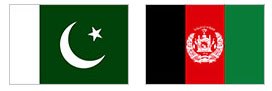
Dozens of angry protesters have gathered outside the Pakistani Embassy in Kabul, chanting slogans such as “Death to Pakistan” and burning flags of the country.

The demonstration on February 1 came as senior Afghan officials returned from a visit to Islamabad, where they had pressed Pakistani authorities to act against militants based in the country.

The delegation included Afghan intelligence chief Masoom Stanekzai and Interior Minister Wais Barmak, who told a news conference in Kabul that Afghanistan laid out evidence that militants who carried out recent deadly attacks in Afghanistan were trained in Pakistan.

“We provided Pakistan with documents about Taliban operating centers inside Pakistan and we expect Pakistan to act against them,” said Barmak.

In a statement, Pakistan’s Embassy in Kabul said the information provided was being “examined for its authenticity.”

Meanwhile, Pakistani Foreign Minister Khawaja Muhammad Asif visited the Afghan Embassy in Islamabad and said that the two neighboring states “can successfully fight the war against terror through mutual trust,” Pakistan’s government said on Twitter.

The Afghan capital in recent weeks has been hit by several deadly assaults, including a massive suicide car bombing on January 27 that killed more than 100 people and was claimed by the Taliban.

Afghan officials said the attack was carried out by the extremist Haqqani network, which is based in Pakistan and allied with the Taliban.

Afghanistan, along with the United States, has long said the Haqqani network has found safe haven in Pakistan.

Islamabad denies harboring militant groups that carry out attacks in Afghanistan.

Tense relations between Kabul and Islamabad have prompted concern that Pakistan might push back the more than 2 million Afghans who are currently living in the country.

Pakistan’s government extended the stay of Afghan refugees in the country for 60 days late on January 31 as an earlier deadline expired.

A delegation led by Foreign Secretary Tehmina Janjua is to visit Afghanistan on February 3 to hold “constructive and meaningful discussions” with Afghan officials on “all issues including counterterrorism, peace and reconciliation, and repatriation of refugees,” according to Pakistan’s Embassy in Kabul.

With reporting by Reuters, AP, and dpa

Copyright (c) 2018. RFE/RL, Inc. Reprinted with the permission of Radio Free Europe/Radio Liberty, 1201 Connecticut Ave NW, Ste 400, Washington DC 20036.

Related

  • Protestors Ask Govt to Sever Ties With Pakistan
  • MoI, NDS Claim Attacks Clearly Originated In Pakistan
  • Pakistan Embassy disputes Afghan officials statement following Islamabad visit
Posted in Haqqani Network, Pakistan-Afghanistan Relations, Security, Taliban | Tags: Masoom Stanikzai, NDS, Protest |

Sayyad Elected As New IEC Chief

31st January, 2018 · admin

iec-logo

Tolo News:  The seven members of the Independent Election Commission voted on Wednesday to elect their new leaders.
Gulajan Abdulbadi Sayyad has been elected as the head of the Independent Election Commission (IEC). Click here to read more (external link).
Posted in Elections News | Tags: Gula Jan Abdul Badi Sayyad |

Taliban openly active in 70% of Afghan territory: Study

31st January, 2018 · admin
Taliban militants (file photo)

Taliban militants (file photo)

Press TV
January 31, 2018

A new study finds that the Taliban militants are openly active in 70 percent of Afghanistan’s soil, fully controlling four percent of the country and having presence in another 66 percent.

The study released by the BBC on Tuesday shows that the Taliban forces are in full control of 14 Afghan districts (four percent of Afghanistan) and are openly active in 263 (66 percent) others.

The BBC conducted the research in 399 districts across Afghanistan between August 23 and 21 November, using a network of its reporters who spoke to over 1,200 individual local forces across the country.

The research shows that nearly 15 million people – half the population – are living in areas affected by the Taliban presence.

The results are significantly higher than the most recent assessment of 407 districts by the NATO-led coalition, which said on Tuesday that the militant group contested or controlled 44 percent of Afghan districts as of October 2017.

The BBC study said that the Afghan government controlled 122 districts, or about 30 percent of the country, but noted that even those areas are not safe from Taliban attacks.

An Afghan government spokesman has downplayed the BBC findings.

The Pentagon did not directly comment on the BBC study, but pointed to the latest figures by NATO, which shows that nearly 56 percent of Afghanistan’s territory was under Afghan government control or influence.

The BBC study also said Daesh Takfiri terrorists are also active in 30 Afghan districts in the east and the north, but they are not in control of any specific area.

The study was released amid a sharp spike in terror attacks by both and Daesh against Afghan civilians and security forces.

Even the Afghan capital is not safe Daesh and Taliban militancy.

Last week, Kabul witnessed a large Taliban bombing, which hit near foreign diplomatic missions and government buildings and left over 100 people dead.

Many parts of the country remain plagued by militancy despite the presence of thousands of foreign troops.

The United States — under Republican George W. Bush’s presidency — and its allies invaded Afghanistan on October 7, 2001 as part of Washington’s so-called war on terror.

The offensive removed the Taliban from power, but insecurity continues to rise across the Asian country.

Afghanistan ‘obvious choice for Daesh’

In a TV debate on Press TV on Tuesday, Michael Lane, member of the American Institute for Foreign Policy, warned that Daesh militants are likely to use the security void in Afghanistan and intensify their presence in the country after they were defeated in Iraq and Syria.

“Afghanistan is an obvious choice for the defeated ISIS (Daesh) in the theaters of Syria and Iraq. They have really no place else to go. Right now Afghanistan provides something of a safe sanctuary for them,” he said.

“The government of Afghanistan is really only the government of Kabul, it does not really control the whole country,” he added.

Pointing to possible collaboration between the Taliban and Daesh militants in Afghanistan, he noted, “They (The Taliban) are not necessarily perfect allies with ISIS, but there is certainly room inside the outlined areas of Afghanistan for more than one terrorist group to operate and I think the ISIS fighters look at it as sort of a safe haven.”

On Monday, Daesh gunmen launched a pre-dawn attack on an army outpost guarding a military academy in Kabul, killing at least 11 Afghan soldiers and wounding another 16.

Daesh has claimed responsibility for a number of similar attacks in Afghanistan over the past two years.

Posted in ISIS/DAESH, Security, Taliban |
Previous Posts
Next Posts

Subscribe to the Afghanistan Online YouTube Channel

---

---

---

Get Yours!

Peace be with you

Afghan Dresses

© Afghan Online Press
  • About
  • Links To More News
  • Opinion
  • Poll