1TV: Rashid Khan claimed five wickets as he helped Afghanistan beat Zimbabwe by six wickets in the third One-Day International in Sharjah on Tuesday and lead the five-match series 2-1. Their next game will be on Friday. Click here to read more (external link).
Kabul in secret talks with Taliban: Report
Press TV
February 13, 2018
Afghan officials are conducting talks with the Taliban militant group following a recent wave of deadly bombings and terror attacks by the outfit that have left almost 200 people killed, a report says.
“Afghanistan’s intelligence Chief Masoom Stanikzai and its National Security Chief Mohammed Hanif Atmar continue to each talk separately to the Taliban,” the Associated Press reported Tuesday citing individuals “familiar with the backdoor negotiations.”
According to the report, the secret talks with the terrorist group reflect a desire in Kabul to end the Taliban militancy, which has lingered on 17 years after a United States-led military invasion of the country toppled a Taliban regime.
The unidentified sources further said that the problem was that neither one of the top Afghan security officials in contact with the Taliban “is talking to the other or to the High Peace Council,” which was established by Kabul to discuss peace with the Taliban.
Disagreements within the Afghan government have also reportedly expanded, even as Taliban militants continue to gain more territory across Afghanistan — and despite the recent deployment of thousands of more US troops to the country — while exploiting increasingly ruthless tactics.
The AP report said Hakim Mujahid, a member of the High Peace Council, had confirmed that Stanikzai still maintained regular contacts with the Taliban’s point man for negotiations, Mullah Abbas Stanikzai. The two are not related.
Meanwhile, representatives from dozens of countries are due to meet in the Afghan capital later this month for a second time to discuss the so-called Kabul process aimed at forging a path to peace. The first round was held in June.
Still, the latest spate of violence has limited options for Afghan President Ashraf Ghani, who is also fending off a mini-revolt within his own government, feuding with the vice president as well as a powerful northern governor.
US President Donald Trump has recently ordered intensified bombardment against Taliban positions. Some say that is likely to elicit further violence from the Taliban.
Taliban’s former number two, Aga Jan Motasim, who still regards the terrorist group’s leader Mullah Habaitullah Akhunzada as a friend, has said he wants to be a bridge between the government and the Taliban.
He reportedly spends his time between Kabul — where he talks to the government — and in Turkey, from where he can contact his former Taliban colleagues.
Increasingly, the Taliban have gained control of territory inside Afghanistan. Washington says more than half of Afghanistan is either under direct Taliban control or under their influence. Other estimates put the figure as high as 70 percent.
The Special Inspector General for Afghan Reconstruction (SIGAR) said in a report late last year that $72 billion of the $120 billion spent in Afghanistan since the US-led war began had gone to the country’s security.
“Clearly, the time is ripe to ask why an undertaking begun in 2002 and costing $70 billion has — so far r— not yielded bigger dividends,” the report said.
Related
Kabul Hosts Regional Military Chiefs
RFE/RL’s Radio Free Afghanistan
February 13, 2018
The Afghan capital is hosting the regional military chiefs for a conference to discuss cooperation in the fight against terrorism.
Afghan Defense Ministry spokesman Daulat Waziri told RFE/RL that the chiefs of army staff of about 11-12 countries were attending the meeting, which he said was called by the U.S. Central Command (CENTCOM).
Those attending were said to include CENTCOM chief General Joseph Votel, General John Nicholson, commander of U.S. forces in Afghanistan, and Pakistan’s chief of army staff, General Qamar Javed Bajwa.
Pakistan has been under increasing pressure from both Afghan and U.S. officials to take action against militants operating in the country. Islamabad denies harboring militant groups that carry out attacks in Afghanistan.
“I believe that at last Pakistan will bow to international pressure and will join the fight against terrorism,” Waziri said.
Meanwhile in Brussels, the U.S. ambassador to NATO called on Pakistan to “work with the United States, with NATO to stop the treacherous activities of the Taliban.”
“Pakistan has a chance to be a major force for good if they will,” Kay Bailey Hutchison told journalists ahead of the NATO defense ministers meeting on February 14-15.
“The next step for them is to work with us, to come together to see how can get the Taliban to lay down their terrorist activities and become a part of a unified Afghanistan that would be a strong neighbor of Pakistan,” Hutchison added.
The Western-backed government in Kabul has been struggling to fend off the Taliban and other militant groups since the withdrawal of most NATO troops in 2014.
Talks at the Kabul conference were also expected to touch upon narcotics trade in the region.
Afghanistan is the world’s top producer of the poppy from which opium and heroin are produced.
In a report released in November, the Afghan Ministry of Counternarcotics and the UN Office on Drugs and Crime said opium production in the country increased by 87 percent to a “record level” of 9,000 tons last year, compared with 2016 levels.
With reporting by AP, Pajhwok, and Khaama Press
Copyright (c) 2018. RFE/RL, Inc. Reprinted with the permission of Radio Free Europe/Radio Liberty, 1201 Connecticut Ave NW, Ste 400, Washington DC 20036.
Related
Pakistani Taliban Confirms American Drone Killed Deputy Chief
Ayaz Gul
VOA News
February 12, 2018
ISLAMABAD — The outlawed Pakistani Taliban confirmed Monday its deputy chief was among several militants killed in a recent U.S. drone strike near Pakistan’s volatile border with Afghanistan.
In announcing the death of Khan Said Sajna, the spokesman for the so-called Tehrik-e-Taliban Pakistan, TTP, said the pre-dawn drone attack occurred on February 8 in the Gorwek area of North Waziristan.
While American officials rarely comment on Pakistan-specific anti-terrorism drone operations, tribal sources and local intelligence officials at the time had confirmed Sajna and his fighters were returning home from the adjacent Afghan province of Khost when missiles fired from an unmanned aircraft hit their vehicle.
The slain commander was believed to be sheltering in Khost and had ties to the Haqqani network accused of staging high-profile terrorist attacks against local and U.S.-led forces in Afghanistan. His elimination, analysts say, is a major blow to the TPP.
Sajna was wanted by Washington for his role in terrorist attacks against U.S. citizens. Pakistani authorities also wanted him for planning major terrorist attacks in the country and orchestrating a 2012 jailbreak in the northwestern town of Bannu that freed around 400 inmates, including high-profile militants.
Sajna was also heading the Mehsud branch of the Pakistani Taliban. Mufti Wali Noor has now been appointed as his successor, said Monday’s TTP announcement.
The militant group has taken responsibility for numerous suicide bombings and other terrorist acts over the past decade in which tens of thousands of Pakistanis, including security forces, have lost their lives.
North Waziristan and other federally administered tribal areas around it have long hosted militant bases blamed for attacks on both sides of the porous border between Pakistan and Afghanistan.
However, Pakistani military officials say major ground and air offensives launched in 2014 have mostly cleared the tribal belt and construction of a robust fence on the Pakistani side of the frontier is currently under way to deter illegal cross border movements.
Islamabad maintains TTP leaders and militants who escaped the army offensive have taken shelter in volatile Afghan border areas and plot terrorist attacks against Pakistan from there.
Both the countries routinely accuse each other of supporting militant attacks against their respective soils, fueling tension.
Other Security News
Spend Afghan war money at home: Paul to Trump
Press TV
Feburary 12, 2018
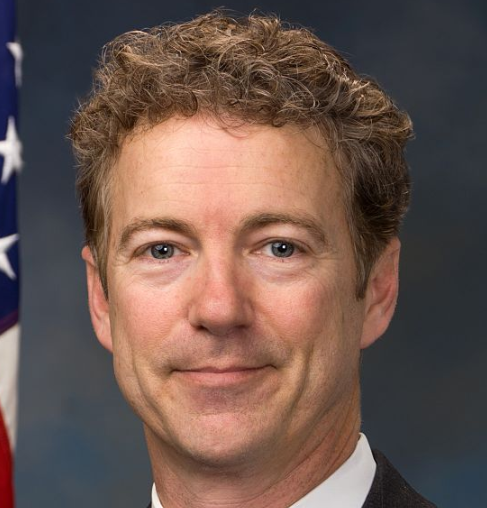
US Republican Senator Rand Paul has called on President Donald Trump to scrap his plans for extending years-long American military presence in Afghanistan and spend the Afghan War funding at home instead.
“I think the Afghan war is long past its mission,” Paul told CBS on Sunday, referring to the 2001 invasion and the following occupation of Afghanistan by American forces.
“I think now it’s a nation building exercise. We’re spending 50 billion dollars a year. And if the president really is serious about infrastructure, a lot of that money could be spent at home,” he argued.
The Kentucky senator, who bowed out of the 2016 Republican presidential primary after failing to compete with Trump, said the US had no business rebuilding the war-ravaged country or build bridges and buildings in Pakistan.
On August 21, Trump announced that he would increase US troops in the country, prolonging a 17-year war which he had once described as a “complete waste.”
Since Trump took office, the number of troops has nearly doubled in Afghanistan – from 8,500 in early 2017 to 14,000 today.
US officials have estimated that the military presence in the war-torn country will cost taxpayers more than $45 billion this year.
Paul said Trump was one of “the least interventionist” US presidents but he was surrounded with people who kept telling him there was a military solution to the Afghanistan debacle.
“The generals who surrounded him with don’t want to admit that there isn’t a military solution. And so the war goes on and on and on,” Paul argued. “And really I think after 15 years and a trillion dollars that the Afghan it’s time for them to take over their country.”
The second longest war in the US history, which has killed over 2,000 American soldiers and injured 20,000 more, has cost the US economy more than $714 billion dollars, according to the Pentagon’s Special Inspector General for Afghanistan Reconstruction (SIGAR) July report.
Paul said in his interview that American voters wanted Congress to have a say in governments’ plans for invading other countries.
“We’re actively in war in about seven countries and yet the Congress hasn’t voted on declaring or authorizing the use of military force in over 15 years now,” he said.
Related
Afghan mining revenue increases in 2017
KABUL, Feb. 11 (Xinhua) — The Afghanistan Ministry of Mines and Petroleum has reported increase in its annual revenue, saying its revenue from 271 million afghani (some 3.9 million U.S. dollars) in 2016 jumped to 7 billion afghani (some 102.2 million U.S. dollars) in 2017, said a statement of the ministry released here on Sunday.
Acting Mines and Petroleum Minister Nargis Nehan has said that the ministry had collected its revenues from contracts with companies, enterprises and exploitation of small natural reservoirs.
“Revenues collected from enterprises in 2017 was over 4.5 billion afghani, from big contracts over 2.2 billion afghani and from small mines extractions 461 afghani,” the statement quoted the acting minister as saying.
Taliban key commander among 8 killed in Afghan northern Takhar province
TALUQAN, Afghanistan, Feb. 11 (Xinhua) — A Taliban key commander Mir Wali is among eight militants who were killed in Darqad district of Afghan northern Takhar province on Sunday, as cleanup operation continues in the restive district, police spokesman in the province, Abdul Khalil Asir said.
“The security forces in crackdown against Taliban rebels attacked several villages including Basir Khil, the stronghold of Taliban in Darqad district, and killed eight insurgents including Taliban notorious commander Mir Wali and his lieutenant Qari Sefat on Sunday morning,” Asir told Xinhua.
More than a dozen militants sustained injuries in the ongoing operations which started on Thursday, the official said.
Mir Wali had served as a military commander of the Taliban group in the northern Takhar province and his physical elimination could serve as a major blow to the insurgent group, the official said.
Taliban militants are yet to make comment.
Other Security News
First Yoga Center Opens In Balkh
1TV: The first ever yoga center opened in northern Balkh province on Sunday with the support of Balkh Physical Education Department in cooperation with the Indian consulate. One aspiring student, Sayed Sultan, said yoga strengthens muscles and also promotes good mental health and that is why he has chosen to take part. Click here to read more (external link).
Zimbabwe beat Afghanistan to level ODI series 1-1
1TV: Zimbabwe defeated Afghanistan by 154 runs in their second One-Day International in Sharjah on Sunday to level the five-match series 1-1. Click here to read more (external link).
No Progress Reported in Pakistan-Afghanistan Talks
Ayaz Gul
VOA News
February 10, 2018
ISLAMABAD — Afghanistan’s two-day dialogue with neighboring Pakistan ended Saturday without progress on issues dividing the two countries and fueling bilateral tensions, officials said.
Islamabad hosted the meeting of what is named the Afghanistan-Pakistan Action Plan for Peace and Solidarity, or APAPPS. The inaugural round of the Pakistan-initiated dialogue was held in Kabul on February 3.
Pakistani Foreign Ministry spokesman Mohammad Faisal said the two sides held “good” discussions with “some agreements” but said “further work [was] required”. He did not elaborate.
He said Pakistani Foreign Secretary Tehmina Janjua and Afghan Deputy Foreign Minister Hekmat Khalil Karzai led their respective delegations comprising senior civilian and military officials.
However, an Afghan Foreign Ministry statement issued in Kabul after Saturday’s talks categorically said the discussions made no headway on matters related to deteriorating security in Afghanistan.
“While some progress was made on the mechanism of cooperation, no progress was achieved on specific, results-oriented, time-bound measures in the APAPPS, particularly in the areas of counter terrorism, reduction of violence, peace and reconciliation to meet the priorities of Afghanistan,” according to the statement.
The Afghan government alleges the Taliban use sanctuaries on Pakistani soil to plot insurgent attacks and claimed last month’s bloody attacks in Kabul were planned in the neighboring country. Afghan officials also shared what they called “evidence” with Islamabad and demanded swift action against the perpetrators.
Pakistan denied any links to the spate of attacks in the Afghan capital and maintains no Taliban sanctuaries are present on its side of the border. Islamabad has also offered to conduct joint investigations into the recent violence.
For its part, Islamabad also alleges militants conducting terrorist attacks in Pakistan use sanctuaries on Afghan soil for plotting the violence. The allegations and counter allegations have plunged bilateral relations to new lows in recent years.
Saturday’s talks also covered subjects such as repatriation of around three million Afghan refugees from Pakistan and joint economic development.
Pakistani officials insist the prolonged presence of the refugee community coupled with “inadequate” border security on the Afghan side hamper Islamabad’s counterterrorism efforts.
The United States has also increased pressure on Pakistan to take action against alleged militant sanctuaries, including those of the Haqqani terrorist network. Islamabad asserts the country is being scapegoated for U.S. “failures” to secure Afghanistan.