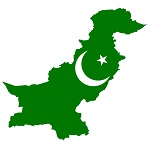
FPRI: While utilizing Chabahar does fuse common regional and economic interests by allowing an alternate trade route into Afghanistan—and thereby reducing Afghanistan’s dependence on Pakistani ports—relying too heavily on Chabahar raises serious security and economic concerns in Kabul because using Chabahar is bound to further fray Afghanistan’s already tenuous relationship with Pakistan. Click here to read more (external link).

Afghanistan to face Cambodia in football tomorrow Tuesday
1TV: Afghanistan national football team will face Cambodia in Tajikistan capital city Dushanbe on Tuesday. It will be their sixth and final match in the third round of qualifier for 2019 AFC Asian Cup. Click here to read more (external link).
Afghan Air Force to receive 4 Black Hawks with strike capability in 2019
Khaama Press: The helicopters will be divided between the Afghan Air Force and the Special Mission Wing, which supports Commando ground operations. The first batch of the Black Hawk helicopters pilots will be mission-ready in May as they are currently being trained during follow-on Mission Qualification Training. Click here to read more (external link).
Pakistan Currency Depreciation Discussed

Tolo News: Afghanistan Central Bank (ACB) said Sunday that due to economic and financial problems in Pakistan, the International Monetary Fund (IMF) has announced that Pakistani Rupees will lose value against the USD. Click here to read more (external link).
Related
Pakistan says China Standing With it, US ‘Constantly Receding’
Ayaz Gul
VOA News
March 26, 2018
ISLAMABAD — A top Pakistani government official argues that the crisis in relations with the United States stems from Washington’s focus on military partnership rather than engaging Pakistan as a democracy and addressing mutual concerns.
In an exclusive interview, Defense Minister Khurram Dastgir tells VOA, that as a consequence, Islamabad’s ties, have massively deepened with traditional ally China, and intense re-engagements are also bringing Pakistan closer to Russia.
Pakistan, a major recipient of military assistance as a non-NATO U.S. ally in the now 17-year-old war in Afghanistan, has been repeatedly criticized for its alleged support for the Taliban and Haqqani networks carrying out attacks on international and Afghan forces.
Iin January, U.S. President Donald Trump suspended military assistance to Islamabad on the grounds that the U.S. had received “nothing but lies and deceit” in return. That withering attack has plunged a traditionally rollercoaster bilateral relationship to historic lows.
“We are still very serious in maintaining our engagement with the United States…Unfortunately, the Trump administration has chosen to focus on the transactional part of the relationship,” Dastgir said while referring to U.S. military assistance for counterterrorism operations.
A renewed diplomatic reengagement with Pakistan has been underway since Trump suspended the aid but it has yet to produce desired results on the ground in terms of eliminating sanctuaries inside Pakistan, say U.S. officials.
Dastgir says despite U.S. adverse actions, Pakistan has not “impeded or blocked” its ground and airlines of communications being used for ferrying vital supplies to international troops in Afghanistan. But he asked whether a productive partnership with the U.S. is still possible under the circumstances.
“You can’t have a country whom you would accuse of being deceitful and simultaneously being a major non-NATO ally. So, the contradictions in 2018 have become too large,” noted the Pakistani minister.
Dastgir rejected allegations as “illogical” that Pakistan harbors “safe havens” and cited the U.S. military’s latest assessments that the Taliban controls or contests a large chunk of the Afghan territory.
“[Nearly] half of the country is a safe haven but your [U.S.] focus is on remnants in Pakistan…When you don’t control 45% of Afghanistan and don’t know what is going on there, who is there, who is moving in and out of that safe haven, but you keep blaming us,” he lamented.
Pakistan maintains that years of counterterrorism operations have cleared its land of all terrorist groups and in the process the country suffered more than the U.S., with tens of thousands of casualties caused by retaliatory militant bombings.
Moreover, officials insist persistent security concerns scared away much-needed foreign investment for overcoming a crippling energy crisis in Pakistan and inflicted billions of dollars in economic losses.
“That was the time when Pakistan’s democracy needed consolidation and it was at that time that the U.S. chose to begin pulling away,” Dastgir said of the year 2013 when his Pakistan Muslim League party won the elections and took power.
The quantum of U.S. military and economic aid had become “insignificant” by the time 2018 rolled around, he said, and explained why China has since increased its influence in Pakistan.
“China acted first and Pakistan needed support very seriously and grievously. Now that we have it five years later, we have nearly resolved the energy crisis, we have nearly resolved the terrorism crisis. So, now that people of Pakistan and the government of Pakistan, which represents the people, look back, we see China as standing with us and the U.S. is constantly receding.”
Beijing has invested billions of dollars in the last three years under a massive cooperation deal with Islamabad, known as China-Pakistan Economic Cooperation, or CPEC. China is building infrastructure projects and power plants under CPEC.
The unprecedented Chinese investment will have added 12,000 additional megawatts of electricity in the national grid by June this year, effectively overcoming the country’s once crippling energy crisis.
Minister Dastgir called for the U.S. to revisit its Pakistan approach for a stable and productive partnership.
“The U.S. has not made, in our view, a serious effort to engage Pakistan as a democracy, and a democracy which has an elected government,” he insisted.
It is widely perceived that the powerful Pakistan military directly influences the foreign policy decision making process when it comes to dealing with the U.S., Afghanistan and archival India.
“Yes, the [Pakistan] military has its own influence and its own operations. But if this relationship is to become long lasting, if this relationship has to have firm basis it has now to become no longer a military-to-military relationship, which it currently is. It has to become a relationship between two democracies. That is the way forward,” asserted the Pakistani defense minister.
Taliban Attack Disrupts Power Supply to Kabul, Several Afghan Provinces
Ayaz Gul
VOA News
March 26, 2018
ISLAMABAD — The Taliban has destroyed a major electricity tower in northern Afghanistan, disrupting imported power supply to five provinces, including Kabul.
The pre-dawn insurgent subversive action occurred in the province of Baghlan, plunging a vast area into darkness, including much of the Afghan capital.
Residents, businesses and offices in Kabul, a city of nearly five million people, faced frequent power cuts Monday and used private generators to run essential operations.
Provincial governor, Abdul Hai Naimati, told VOA a team of technicians was at the site and repair work was underway.
Afghanistan imports about 300 megawatts of electricity for these provinces from neighboring Central Asian states of Tajikistan and Uzbekistan.
Officials at state-run De Afghanistan Breshna Shirkat electricity providing authority told VOA the Taliban attack disrupted supply to Kabul, Parwan, Maidan Wardak, Ghazni and Ningarhar provinces.
The Taliban had warned last week it would cut the electricity transmission if power supply to insurgent-controlled areas in Baghlan was not restored.
The insurgents had destroyed a major tower in Baghlan’s Dand-i-Shahabuddin district in about two years ago, cutting power supply to Kabul and other areas for nearly six weeks.
The Taliban currently controls or contests nearly 45 percent of the Afghan territory, according to latest U.S. military assessments.
Monday’s insurgent activity occurred as delegations from regional and countries around the world gathered in the Uzbek capital, Tashkent, for a conference on peace building efforts in Afghanistan.
Afghan President Ashraf Ghani will address the meeting his country is co-hosting with Uzbekistan.
The Taliban has ignored Ghani’s unconditional offer of peace talks he announced last month at the Kabul Process international meeting.
Turkey to open new consulate in Afghanistan: Afghan Foreign Ministry
Hurriyet: Turkey has decided to increase its diplomatic presence in Afghanistan and will soon open a new consulate in the country, state-run Anadolu Agency reported on March 25, citing the Afghan Foreign Ministry. In a statement, the ministry said Ambassador Oğuzhan Ertuğrul called upon the Afghan Foreign Minister Salahuddin Rabbani, during which both sides discussed ways and means to bolster bilateral ties. Ertuğrul said Turkey would soon establish a consulate in the country’s third-biggest city bordering Iran, according to the statement. Click here to read more (external link).
Pakistan’s Pashtuns Find New ‘Frontier Gandhi’
Radio Free Europe/Radio Liberty
March 25, 2018
Daud Khattak
Frud Bezha
A veterinary student from Pakistan’s militancy-hit tribal areas, Manzoor Pashteen did not appear to be destined for the national stage.
But the 26-year-old has become a rising celebrity as the leader of a new protest movement advocating for the rights of Pakistan’s Pashtun minority.
Pashteen’s rise has seen him compared by his followers to the “Frontier Gandhi,” the moniker given to Abdul Ghaffar Khan, better known as Bacha Khan, who led a nonviolence campaign for greater rights for his fellow Pashtuns in the British Raj in the early 20th century.
Speaking to RFE/RL’s Radio Mashaal in a Skype interview, Pashteen echoed Bacha Khan’s message.
“We believe in nonviolence,” Pashteen said. “We are not using aggressive language and have no intention of resorting to violence.”
“Now it is up to the government whether they let us use our right to peaceful protest or use violent means against us,” added Pashteen, who hails from South Waziristan, part of the Pashtun-dominated Federally Administered Tribal Areas (FATA) straddling the border with Afghanistan. “The choice is the government’s.”
The impoverished, long-neglected, and largely lawless tribal areas became a frontline in the battle against extremist groups after the U.S.-led invasion of Afghanistan in 2001 when Al-Qaeda took refuge in the region. The area has been the scene of Pakistani army operations, U.S. drone attacks, and militant attacks that have uprooted millions of people and left thousands dead.
Pashtuns make up the majority of recruits and members of Pakistani-based militant groups such as the Afghan Taliban, the Haqqani network, and the Pakistani Taliban. The former extremist outfits have carried out deadly attacks against Afghan and international forces in neighboring Afghanistan, while the latter has carried out sectarian attacks against religious minorities and waged an insurgency against Pakistani government troops.
Civilians in Pashtun-dominated areas of Pakistan have borne the brunt of the violence and protesters have alleged extrajudicial killings, forced disappearances, racial profiling, and harassment by law enforcement. They have demanded the lifting of curfews and other coercive measures, and the clearing of mines planted by the army in FATA.
Pashteen’s Pashtun Protection Movement made national headlines when he led thousands of people from the tribal areas and northwest Pakistan to the capital, Islamabad, in February. The rally, ignited by the killing of a young Pashtun shopkeeper in an allegedly staged gunbattle with police in the port city of Karachi, stirred up long-held grievances among Pashtuns.
Since then, rallies have been held across the tribal areas, in Khyber Pakhtunkhwa Province, and neighboring Balochistan Province, attracting tens of thousands of people.
Pakistan has an estimated 40 million Pashtuns who form roughly 20 percent of the country’s 200 million population. Pashtuns are concentrated in an arc along Pakistan’s western border with Afghanistan in FATA and the provinces of Khyber Pakhtunkhwa and Balochistan.
“The government is not serious at all,” says Pashteen. “We informed the authorities that some people in the army and [intelligence] agencies are terrorizing our people. Instead of initiating action against those elements, the government and agencies filed police cases against us.”
‘Spontaneous Movement’
Pashteen’s personal experiences fueled his activism. He was arrested one year ago after staging a protest against the planting of mines in FATA. Around two years ago, he established the Waziristan Protection Movement with 25 other young activists to fight for the rights of his community. The name was changed to Pashtun Protection Movement this year.
Afrasiab Khattak, a former senator and analyst, says Pashteen’s efforts have spurred a “spontaneous movement that has overtaken political parties.”
“Traditional tribal structures have broken down by violence imposed on the area,” says Khattak. “A number of local leaders have been killed and others are displaced. Young activists like Manzoor Pashteen are filling this vacuum.”
But Pashteen’s critics suggest there are ulterior motives behind the movement.
“Pashtuns constitute the second-largest group in federal government ministries and the armed forces,” says Imtiaz Gul, who heads the Islamabad-based Center for Research and Security Studies. “So, I don’t understand what rights he is talking about.”
“Of course the Pashtuns of FATA need to be treated as equal citizens and must be mainstreamed, but to project this demand as a Pashtun rights movement is unfair and appears politically motivated,” adds Gul.
Pakistani security analyst Ayesha Siddiqa says Pashteen’s movement is a genuine and organic effort to draw the attention of the Pakistani state toward the plight of people in the tribal areas.
“It’s not about all Pashtuns but those from the tribal areas that got the rough end of the stick for the last 30 years that are genuinely hurt,” she says. “In other parts of the country, their projection as terrorists or violent is totally uncalled for and unfair. However, this does not mean that Pashtuns that are in positions of authority are targeted.”
‘Magic’ With The People
Pashteen appears unfazed by his detractors, and is planning rallies in the northwestern city of Peshawar and another sit-in in Islamabad.
“We have given the courage to the people to speak out about what they see and feel,” he says. “They were scared and unable to speak. We have given them a voice and they have stood with us.”
Mujahid Wazir is among the young Pashtuns who have joined the cause. A 30-year-old living in the city of Lahore, his family lives in a camp for internally displaced people outside of South Waziristan.
“We are fed up with military checkpoints and curfews,” he says by telephone from Lahore. “I have been racially profiled under the pretext of security.”
“Whenever there is a blast or attack, we are profiled,” he adds. “We have to go to the police station.”
Allah Noor is another Pashtun who is part of the movement.
“As we raised our voices, every tribesman who has suffered has come out to protest,” he says from the northwestern city of Peshawar. “Before this movement started, there was widespread fear of speaking out.”
Many Pashtuns allege they have been the targets of the Pakistani Army and intelligence services, which have an oversized role in the South Asian country. Pashtuns in FATA live under colonial-era laws that punish an entire tribe for the crime of an individual, jail residents for up to three years without cause, and forcibly relocate people and have their property searched and seized.
Pashteen is mobbed by supporters during rallies. Many embrace him and his younger fans emulate his attire — shalwar kameez with a colorful scarf and red-and-black hat.
He says his ability to unite tens of thousands of people is not due to his charisma.
“The magic is in the cause and the people who have stood with me,” he says.
Copyright (c) 2018. RFE/RL, Inc. Reprinted with the permission of Radio Free Europe/Radio Liberty, 1201 Connecticut Ave NW, Ste 400, Washington DC 20036.
Related
14 percent decline in level of water in Afghanistan’s five water zones: minister
1TV: The level of surface of water has declined by 14 percent in five water zones of Afghanistan, the country’s minister of energy and water said Sunday. President’s senior adviser Hamid Helmandi recommended building small dams in different parts of the counter to tackle the problem. Most of Afghanistan’s water flows out to its neighbours. Click here to read more (external link).
Related
Senior U.S. Diplomat Due In Uzbekistan For Talks, Afghan Conference
Radio Free Europe/Radio Liberty
March 25, 2018
A senior U.S. diplomat is due to arrive in Uzbekistan on March 25 for a three-day visit for talks with Uzbek leaders and to attend an international peace conference on Afghanistan.
Undersecretary of State for Political Affairs Thomas Shannon will attend the Tashkent conference on Afghanistan on March 26 and is also scheduled to meet with Uzbek President Shavkat Mirziyoev and Minister of Foreign Affairs Abdulaziz Kamilov during his trip.
The Tashkent conference is set to start on March 26, although the foreign ministers from the five Central Asian nations are expected to meet with Afghan officials on March 25.
The conference comes on the heels of the so-called Kabul Process event held in the Afghan capital on February 28 in which Afghan President Ashraf Ghani proposed peace talks with the Taliban without preconditions.
Representatives from more than 20 countries are expected to convene in Uzbekistan, including from the United States, the European Union, Pakistan, Iran, China, and Russia.
The State Department said in a March 22 statement that the Tashkent conference “will build on progress made at the February 28 Kabul Process Conference in a continued demonstration of international support for a peaceful political settlement in Afghanistan.”
The State Department has said Shannon will discuss with Uzbek leaders “the progress made under President Mirziyoev’s reform agenda, reaffirm support for Uzbekistan’s initiative and valuable contributions to leadership in the region, and underscore the United States’ commitment to stability in Uzbekistan and throughout the region,” the State Department said.
Mirziyoev has taken steps to improve Uzbekistan’s ties with its neighbors since he became president after authoritarian President Islam Karimov’s death was announced in September 2016.
During Karimov’s 27-year rule in Central Asia’s most-populous nation, its relations with Kazakhstan, Kyrgyzstan, Tajikistan, and Turkmenistan were strained by disputes over transit routes, border security, water resources, and other issues.
Copyright (c) 2018. RFE/RL, Inc. Reprinted with the permission of Radio Free Europe/Radio Liberty, 1201 Connecticut Ave NW, Ste 400, Washington DC 20036.
Related