
Al Jazeera / April 7, 2018: Beekeeping is being used as a way of helping Afghanistan’s economy and to counter the opium trade. But it also gives women the chance to earn money, in a country where many rarely work outside their homes. And one female student is now running her own successful honey business. Al Jazeera’s Rob Matheson reports.
Grass-Roots Peace Movement Spreads Across Afghanistan
VOA News
April 7, 2018
The grass-roots call for peace by some residents that began as a sit-in in Afghanistan’s restive Helmand province is gathering momentum and spreading to other provinces of the country.
A car bomb explosion March 23 in the nation’s southern region, near a packed sports stadium in the provincial capital of Lashkargah, killed at least 14 people and wounded dozens more.
The attack occurred while a wrestling match was underway. The Taliban did not officially claim responsibility, but Afghan officials assigned blame to the insurgent group, saying it typically denies responsibility for attacks that kill large number of civilians.
Initially, it was viewed as just another routine terror assault that killed civilians, and it would have remained so had it not been for the residents of Helmand province, who decided they had to act.
A group of young local men began a sit-in at the capital of the province and demanded an end to violence. Later, women joined the sit-in and urged the warring sides to end the vicious cycle of violence that has been tearing through the nation.
“Stop making us widows and making us cry over the death of our children,” a woman said at the rally in Helmand last month.
Hunger strike
The initial anti-war sit-in turned into a hunger strike after the Taliban rejected the protesters’ pleas for peace and instead warned them not to go near Taliban territory. The insurgent group instead instructed locals to conduct their protest at a nearby Afghan and NATO military base.
The strike continued for three days before religious clerics intervened and encouraged protesters to eat.
“Religious clerics considered the hunger strike to be against Islam, and they asked us to end it, promising they would go to the Taliban and discuss our demands with them,” Bacha Khan, a protester in Helmand, told VOA.
The hunger strike did end. The sit-in, however, continues, gaining momentum and rapidly expanding to other provinces.
Iqbal Khyber, an activist from Helmand and a key member of the sit-in, told VOA demands for peace would not end.
“Our sit-in will continue until we see at least two days of cease-fire between warring sides. Our long march began in Kandahar province [in southern Afghanistan] today [April 5]. We will put up the peace sit-in tents in every corner of the country,” Khyber told VOA.
“Preparations for putting peace sit-in tents in Kabul, Zabul, Paktia, Khost, Bamyan, Balkh, Kunduz, Badakhshan and Farah are already underway. We will not stop until our demand for peace is met,” he added.
Growing demonstrations
Demonstrations have begun in western Herat and central Bamyan provinces, where dozens of protesters got together and expressed their solidarity with the Helmand peace sit-in.
“The call for peace is the voice of all Afghans and it cannot be attributed to a specific tribe, group or party,” Faqir Ahmad, a protester at a Herat peace sit-in tent, told VOA.
At a gathering in central Bamyan province, activists announced their backing of the Helmand sit-in.
“Today we pronounce our support for the peace and advocacy movement of our brothers in Helmand,” Ismail Zaki, a civil society activist in Bamyan, told VOA.
Government reaction
While at an international conference in Kabul in late February, Afghan President Ashraf Ghani offered unconditional peace talks with the Afghan Taliban. He advocated for the peace movement across the country.
“I welcome the campaign in Helmand and other provinces where women, elders and youth have gathered to seek peace and raise their voices against war and violence. And I hope this peaceful national movement will be strengthened and supported by the people in large numbers,” Ghani said in a Dari tweet on Wednesday.
The Taliban have yet to officially respond to the Afghan government’s offer of unconditional peace talks.
The Afghan High Peace Council (HPC), a government body tasked with talking to the insurgents, also praised the initiative of Helmand residents.
“I call on Tahrek-e-Taliban, the commanders of the Taliban, the people who are living in Taliban-controlled areas, let’s end the war and embrace peace,” Karim Khalili, chairman of the HPC, told a gathering on Wednesday in southern Kandahar province.
Taliban’s stance
While the Taliban initially rejected the local plea for peace, the insurgent group has since softened its stance.
A Taliban official requesting anonymity told VOA that his group is looking forward to meeting and talking with the protesters.
“It is a totally new subject for us. We are studying it and we will meet with these people and listen to their demands and will try to find out why they are making such demands from the Taliban alone,” the insurgent official told VOA.
That meeting apparently happened. According to the organizers of the sit-in, local Taliban groups in Helmand have supported their call for peace.
“Local Taliban delegations visited us, extended their support and expressed their frustration of war,” Khyber, a sit-in organizer, told VOA.
This story was written by Mohammad Habibzada and Hasib Danish Alikozai. VOA’s Azizullah Popal in Kandahar, Zafar Bamyani in Bamyan and Ayaz Gul in Islamabad contributed to this report.
Balkh Gets Its First Female District Chairperson

Friba Ahmadi
Tolo News: For the first time a woman has been appointed as chairperson of a district in Mazar-e-Sharif in Balkh province. Friba Ahmadi, was appointed chairwoman of the 5th district of Mazar and took up the reins this week. The 36-year-old university graduate said she is confident of her abilities and addressing people’s problems will be a priority for her. Ahmadi graduated from the college of literature at Balkh University. Click here to read more (external link).
Schools To Reopen In Afghan District After Deal Reached With Taliban
 Radio Free Europe/Radio Liberty
April 7, 2018
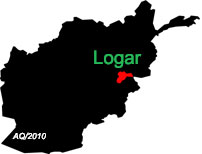
Dozens of public schools that were shut down by the Taliban in an area under its control south of Kabul are set to reopen after a deal was reached with the militant group, an Afghan official says.
Salim Saleh, a spokesman for the provincial governor of Logar, said that classes “are expected to resume in the afternoon on April 7 or April 8” in at least 30 schools in the province’s Charkh district after a week-long interruption.
The Taliban closed the schools on March 31 after several militants and one of their commanders were killed in a night raid by government forces.
Afghan media earlier reported that Mualvi Mohammad, a Taliban commander, was killed in the Afghan army operation in the area late on March 30.
Saleh told RFE/RL on April 7 that the deal to reopen the school was reached after negotiations between the Taliban and tribal elders in the area.
The official had previously said that authorities were in contact with influential tribal elders and religious scholars in Charkh in an attempt to secure the schools’ reopening.
Saleh said the Taliban’s move left some 12,000 students out of school in Charkh, which is about 60 kilometers south of the Afghan capital.
With reporting by tolonews.com and pajwok.com
Copyright (c) 2018. RFE/RL, Inc. Reprinted with the permission of Radio Free Europe/Radio Liberty, 1201 Connecticut Ave NW, Ste 400, Washington DC 20036.
Afghan forces kill senior Daesh commander in drone attack in Jawzjan
 Press TV
April 7, 2018
Afghan forces have killed a top commander of the Daesh Takfiri terrorist group in Afghanistan’s northern province of Jawzjan a year after he defected from the Taliban terror outfit and set up a new Daesh foothold in the crisis-hit country, security officials say.
Afghanistan’s Tolo News channel, citing Mohammad Hanif Rezaee, a spokesman for Shaheen 209 Military Corps in Balkh province, reported on Saturday that Qari Hikmatullah, along with his bodyguard, was mortally wounded in an Afghan air forces drone strike in Moghol village of the Darzaab district on Thursday afternoon.
Rezaee also confirmed that Daesh appointed Hikmatullah’s successor, identified as Mawlavi Habib Ur Rahman, to further unleash terror in the north of the country.
US-led forces invaded Afghanistan and toppled a ruling Taliban regime some 17 years ago. That ongoing war has failed to bring stability to the country despite the presence of thousands of foreign forces. A recent survey found that the militants were active in two-thirds of the country and were fully controlling four percent of it.
The Takfiri group, taking advantage of the resulting chaos, first appeared in the war-torn country some three years ago. As well as its main stronghold in the eastern province of Nangarhar, on the border with Pakistan, Daesh militants have been active in northern Afghanistan, maintaining a reign of terror and destruction in the country.
As Daesh has completely lost all of its urban strongholds in Iraq and Syria during the past year, it has stepped up its terror attacks in war-ravaged Afghanistan despite the presence of thousands of foreign troops there.
Last month, Daesh claimed responsibility for bomb attacks near Shia Hazara mosques in Herat and Kabul that killed dozens of people. The Hazara community, the poorest of the country’s ethnic groups, accounts for about 22 percent of Afghanistan’s population.
In January, Leader of the Islamic Revolution Ayatollah Seyyed Ali Khamenei expressed regret over the deaths of Afghan civilians in Daesh terror attacks, saying the United States had been relocating the terror group from the Middle East to the South Asian country to rationalize its military presence in the region.
By transferring the Daesh terror group from Iraq and Syria to Afghanistan, the US seeks “to justify the continuation of its presence in the region and to create security for the Zionist regime,” Ayatollah Khamenei said.
Other Security News
Pakistani PM Says His Afghan Visit Narrowed Mutual Trust Gap

Ayaz Gul
VOA News
April 7, 2018
ISLAMABAD — Pakistan’s prime minister, Shahid Khaqan Abbasi, has said his official meetings with leaders in Afghanistan in the past week have helped narrow a mutual “trust deficit” and the visit will prove to be a “milestone” in promoting regional peace.
Abbasi undertook a day-long visit to Kabul on Friday where his high-level delegation held extensive talks with President Ashraf Ghani and other senior leaders of his government.
The “mutual trust gap can be bridged through sustained meetings and in our meetings yesterday (Friday), we have been able to narrow the trust deficit to a large extent,” Abbasi told reporters Saturday.
“We now have to practically prove that we are sincere to the people and to the peace and prosperity of this region,” he added.
The Pakistani prime minister said in his “frank and open” discussions with Afghan leaders, both sides have agreed to jointly work toward ending the war in Afghanistan through peace talks rather than focusing on military means.
Abbasi also emphasized the solution to the war in Afghanistan lies in an intra-Afghan dialogue and “we all should help them” in bringing peace to their country.
“We are hopeful that this visit, God willing, will prove to be a milestone in Pakistan-Afghanistan relations and in promoting regional peace.”
After Friday’s high-level talks in Kabul, both countries jointly urged the Taliban to respond positively to President Ghani’s recent offer of unconditional peace talks without further delay.
Ghani’s initiative has received widespread domestic and international backing, but the Taliban has avoided commenting on the offer.
Afghan and U.S. officials have long alleged Taliban leaders are sheltering in Pakistan and covertly receive support from the country’s security institutions, charges Islamabad rejects as baseless.
There was also no immediate Taliban reaction available to Friday’s joint call for the rebels to join the Afghan peace process.
Pakistani and Afghan officials said the meetings between Abbasi and Ghani were held in “a very cordial and friendly atmosphere.”
Both leaders “agreed on achieving the common aim of regional security through connectivity” — meaning road, rail, trade and transit links, as well as importing natural gas and power to Pakistan through Afghanistan from resource-rich Central Asian states.
Prime Minister Abbasi extended an invitation to President Ghani to visit Pakistan “at his earliest convenience.”
Officials said that progress on the construction of a multi-billion-dollar pipeline to transport natural gas from Turkmenistan to Pakistan and India through Afghanistan, known as TAPI, also was reviewed.
The two countries have also agreed to further an Islamabad-proposed plan for a comprehensive bilateral dialogue, known as the Afghanistan-Pakistan Action Plan for Peace and Solidarity or APAPPS, for strengthening security, economic, political and counterterrorism cooperation.
Rail and road connectivity projects to boost trade and transit activities between and through the two countries also came under discussion. The Afghan side raised the issue of alleged cross-border violations by Pakistani forces and urged Prime Minister Abbasi to use official channels if his country has concerns with regard to militant activity originating from the Afghan side.
The two nations also agreed to form a joint commission to prepare a timetable and mechanism for the dignified repatriation of nearly 3 million Afghan refugees from Pakistan.
This story was written by VOA’s Ayaz Gul in Islamabad.
Related
Tolo News in Dari April 7, 2018
Experts Warn: India-Pakistan Proxy War Detrimental to Afghan Peace

Pakistan, Afghanistan and India
VOA News
April 6, 2018
WASHINGTON — As Pakistan, Afghanistan and U.S. officials meet to discuss peace efforts, regional experts are cautioning such a plan would remain elusive until Pakistan and India agree to ease their proxy war that continues to play out in neighboring Afghanistan.
Pakistan Prime Minister Shahid Khaqan Abbasi traveled to Kabul on Friday at the invitation of Afghan President Ashraf Ghani to discuss mutual measures against terrorist attacks.
Ahead of the meeting, Alice Wells, U.S. principal deputy assistant secretary of state for South and Central Asia, was in Islamabad to discuss strained bilateral relations, as well as efforts for peace and stability in Afghanistan and the region.
Long-standing animosity
Analysts, however, are skeptical whether the fresh diplomatic push by the United States will be sufficient to realign the security calculus in South Asia, given the long-standing animosity between Pakistan and India.
“There are two security dilemmas in the region and unfortunately they intersect in Afghanistan today,” Ashley Tellis, senior fellow at Carnegie Endowment for International Peace, said.
“One is the dilemma between Pakistan and Afghanistan that is independent of India. And of course there is a second security dilemma, which is between India and Pakistan and the struggle for influence outside in the broader region,” Tellis said. “And Afghanistan has become the arena where that struggle for influence is being manifested most clearly.”
Journalist and author Steve Coll, whose latest book Directorate S: The CIA and America’s Secret Wars in Afghanistan and Pakistan, offers a detailed behind-the-scene look at the protracted Afghan conflict claims. He claims there have been proxy war developments between India and Pakistan in recent years.
“Both sides are trying to use the same proxy violence strategies against one another,” Coll claimed. “It only reinforces the belief among Pakistani high command they need purchase on their border region as a kind of forward defense against what they perceive to be long-term Indian intentions.”
Coll said he believes Pakistan is willing to accept a certain amount of instability and violence in Afghanistan if they think doing so would prevent it from consolidating as India’s ally.
Hostage to a covert war
Moeed Yusuf, associate vice president of the Asia Center at the U.S. Institute of Peace in Washington, said Afghanistan has become hostage to covert war games between New Delhi and Islamabad.
Yusuf said an understanding needs to be struck between the two South Asian archrivals to roll back the proxy violence in Afghanistan to help stabilize the war-torn country.
“If they can’t agree on working together, then one country can invest in one area and the other work on another. But at least the animosity between the two should not play out in Afghanistan,” Yusuf said.
Carnegie Endowment’s Tellis said, “Pakistan would have to change its strategy considerably. That is, if it continues to treat Afghanistan essentially as a battleground for harming India, then it puts itself in opposition to both the government of Afghanistan and the government of India.”
Given this strategy, experts agree the U.S. will have to isolate efforts to stabilize Afghan for a durable peace plan. They were divided, however, on Washington’s direction, given the strategy for Pakistan and Afghanistan announced by U.S. President Donald Trump last August.
“Even if recognition is there, I don’t see the appetite in Washington to do something about it,” Yusuf, of the U.S. Institute of Peace, said. “So if the United States is suffering because of this issue, then the U.S. has to take initiative to at least mediate between the two countries to the extent of Afghanistan rather than getting embroiled in bigger issues like Kashmir.”
Tellis, however, argued the opposite point of view, saying the general view in Washington’s policy circles is that the India-Pakistan issue is very difficult to solve. “It will certainly not be solved anytime soon. And therefore we cannot make Afghanistan hostage to India-Pakistan rivalry.”
This story was written by Aman Azhar.
Related
Press TV: Pakistan, Afghanistan tensions rise over air strikes
Hats Proliferate as Symbol of Pashtun Protest Movement
VOA News
April 6, 2018
An Afghanistan-made hat known as a “Mazari hat” has been in high demand in markets across Afghanistan and parts of Pakistan since Manzoor Pashteen, the leader of a Pashtun movement, started wearing it at public rallies and protests.
The red and black Mazari hat is a traditional garment worn mostly in northern Afghanistan’s Balkh province. Recently, it has become popular as a symbol of peaceful protest and has earned the nickname “Pashteen hat.”
Yama, a hat seller in Kabul, who like many Afghans goes by one name, told VOA that demand for the hat has soared in recent months.
“It used to be called Mazari hat. Now it is called the Pashteen hat. In the past, the hat came in one design. Now there are several designs that customers could choose from,” Yama said. “People have started to like the hat and they buy it in great numbers as well.”
Pashteen, whose movement espouses the human rights of Pakistan’s ethnic Pashtun community, recently explained how he came to begin wearing the hat.
“Our people are poor. A young man who was a cleaner in the village one day took his hat off and told me that he could not afford a nice hat. I told him, ‘Give it to me, I will give you mine,’ ” Pashteen said at a public gathering in Pakistan. “The hat may not have monetary value, but its moral value is priceless.”
Pashtun grievances
Pashtuns, who are the largest ethnic group in Afghanistan but a minority in Pakistan, have felt neglected and targeted in Pakistan for some time. That long-simmering anger boiled over in January with the death at police hands in Karachi of Naqeebullah Mehsud, a 27-year-old shopkeeper-turned-model.
Police said at the time that Mehsud had been killed in a shootout with members of the Pakistani Taliban, but an internal inquiry cast doubt on that claim, saying Mehsud had no evident link to any militant group. The killing sparked days of protests and a weekslong march in Pashtun-dominated northwestern Pakistan. It also prompted the establishment of Pashteen’s group, known as the Pashtun Tahafuz Movement, or Pashtun Protection Movement.
In a recent Facebook video, Pashteen reiterated his movement’s demands and urged an end to atrocities against ethnic Pashtuns.
“There is war in our homeland which must stop. You [military] have carried out military operations. We have never opposed them. If you want to carry out operations against the Taliban, do them by all means, but we are against extrajudicial killings, disappearances and persecution of people under the pretext of the war against the Taliban,” Pashteen said.
The protest movement has also won support from Malala Yousafzai, the young woman who was awarded the Nobel Peace Prize after being shot in the head for advocating girls’ education in Pakistan.
Government’s stance
Pakistan’s government claims Pashteen’s movement has been influenced by outsiders, particularly by the government of Afghanistan — a charge rejected by Afghan officials.
Major-General Asif Ghafoor, director-general of Inter-Services Public Relations (DGISPR), told reporters in Pakistan recently that the government has accepted the movement’s legitimate demands.
“You have seen that it [the movement] found new angles. The movement began to get the most support from Afghanistan. Different voices started to flow in. I personally met Manzoor Pashteen. He is a wonderful young boy. He came here and then met with the prime minister as well,” Ghafoor told reporters.
“Whatever genuine demands he had have been met,” Ghafoor added.
Pashteen denies that any outsiders are involved in the movement.
“They say we are NDS [Afghan intelligence agency] and RAW [Indian intelligence agency] agents. I tell them prove it,” Pashteen said in a live video Wednesday on Facebook. “We do not demand one thousand evidences. Just one is sufficient.”
Pashteen has increasingly relied on social media to get his message across to followers and supporters, complaining that local Pakistani media have not covered the activities of his movement.
“Pashtun Long March story has reached New York Times, but Pakistani media is still shying away from it. I wonder why,” Asim Yousafzai, a D.C.-based author, wrote on his Twitter feed.
“If an animal falls into a gutter, media would be all over the news. Our march continued peacefully for weeks and the local media did not cover us,” Pashteen said in February. “We gathered in Islamabad against this very discrimination that’s present in the system against us.”
This story was written by VOA’s Hasib Danish Alikozai . Rahim Gul Sarwan contributed to this report from Kabul and VOA’s Deewa Service.