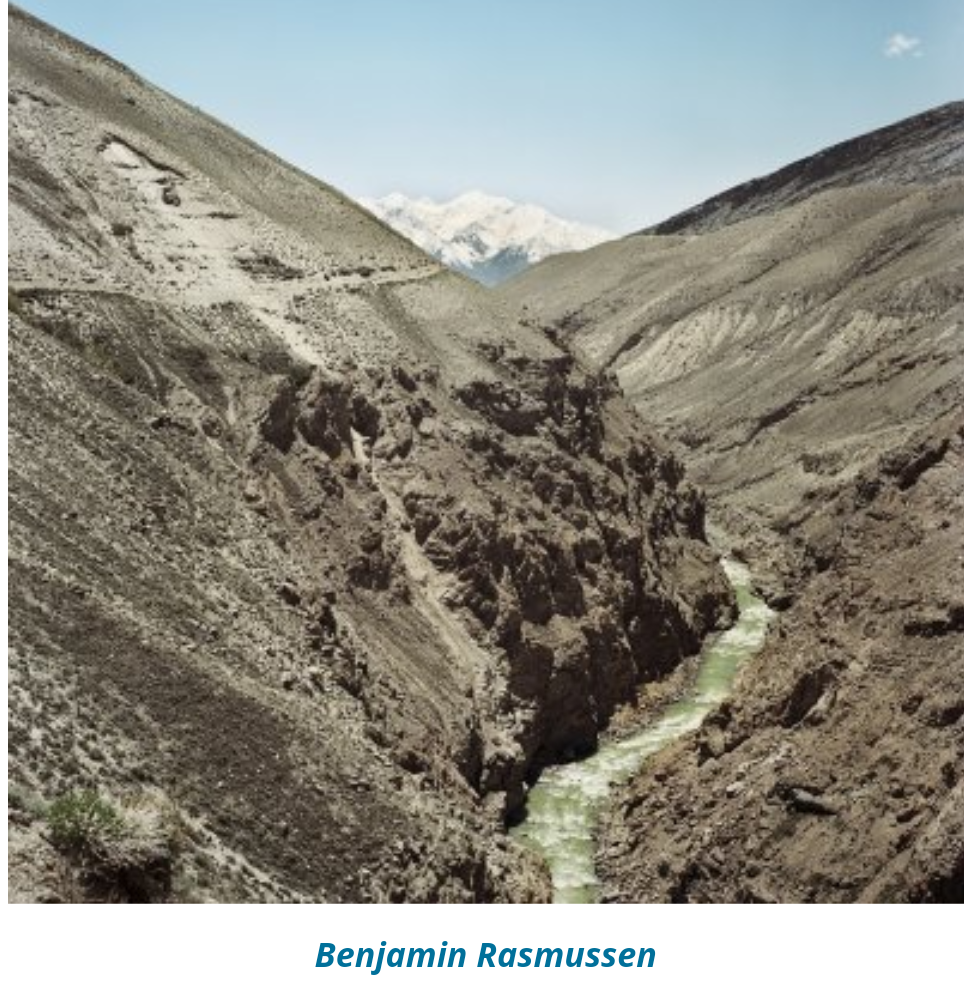
Business Insider (AU): The Wakhan Corridor is notoriously hard to reach. To get there, you have to drive, ride on donkeys, and hike the 250-mile journey from Kabul or fly into Tajikistan and cross the border from the North. Both ways are difficult, but travelling by land requires going through Taliban-held lands. Click here for more (external link).
Video: Women Drivers in Mazar i sharif
Tolo News in Dari – April 15, 2018
Clashes Erupt Between Afghan and Pakistani Border Forces
Ayaz Gul
VOA News
April 15, 2018
ISLAMABAD — Pakistan says cross-border fire from Afghanistan Sunday killed two Pakistani paramilitary soldiers and wounded five others.
A military spokesman said its personnel were conducting routine “surveillance” in the remote Kurram region “to plug gaps and make necessary preparations to start fencing” the border when they came under attack from the other side.
Army spokesman Major-General Asif Ghafoor said an “engagement” between military officials of the two countries “is underway to defuse [the] situation.”
Pakistani troops, he added, are “exercising maximum restraint” to avoid any Afghan civilian casualties on the other side of the border.
Earlier, a regional Afghan police chief told VOA the clashes broke out along the Zazi Maidan border district in southeastern province of Khost adjacent to Kurram.
General Abdul Hanan Zadran claimed two Pakistani border forces were killed and several others were wounded. He confirmed one Afghan civilian fatality on his side but local media reported the death of at least two Afghan border forces while several others were wounded.
Pakistani army spokesman Ghafoor told VOA it was not clear whether Afghan military or border police forces initiated the cross-border fire “because there is no Afghan border post in the near vicinity.”
Pakistan and Afghanistan share a nearly 2,600-kilometer largely porous border. The Pakistani military has recently started constructing a robust fence on the border in its bid to prevent illegal crossings in either direction.
Afghan authorities oppose Pakistani plans of fencing the frontier because Kabul disputes the former British era demarcation.
The Afghan government earlier this month accused Pakistan of conducting airstrikes and firing hundreds of shells in their eastern border province of Kunar, charges Islamabad rejected.
Pakistani officials maintain that fugitive militants hiding in “ungoverned” Afghan border areas plot terrorist attacks against the country and military forces are conducting operations inside their own territory to deter such attacks.
Islamabad maintains fencing of the border will help address mutual concerns of illegal terrorist infiltration.
Afghanistan has long accused Pakistan of sheltering and helping Taliban insurgents, charges Pakistani officials deny.
Related
20 killed in separate gunfights in Afghanistan

Taliban militants (file photo)
KABUL, April 15 (Xinhua) — At least 20 people have been killed in two separate gunfights in Afghanistan, authorities said on Sunday.
Early Sunday morning, seven Taliban and two gunmen were killed after Taliban clashed with an armed group in Chishti Sharif district of western Herat province, local Ariana News TV reported.
Among the killed was Nasrullah Badghisi, a Taliban divisional commander, according to the report, which said the fighting erupted following a dispute between the rival groups over expanding territory in parts of the remote district.
In eastern Ghazni province, four policemen and seven Taliban insurgents were killed after Taliban attacked security checkpoints in Jaghato district Saturday night, Harif Noori, a provincial government spokesman, told Xinhua.
Five policemen and five militants were also wounded in the exchange of fire, he said.
Fighting has escalated in Afghanistan as spring and summer, known as fighting season, is drawing near in the mountainous country.
Other Security News
Fighting in Afghanistan’s North Disrupts Kabul’s Power Supply
Ayaz Gul
VOA News
April 14, 2018
ISLAMABAD — Fresh fighting in northern Afghanistan has disrupted the electric supply to Kabul and several provinces for the second time in less than three weeks.
The hostilities come as the country’s Independent Election Commission (IEC) on Saturday launched a long-delayed voters’ registration process for parliamentary and district council elections scheduled for October 20.
A provincial police spokesman told VOA that a team of technicians from the state-owned electricity department has arrived in the Baghlan province to assess the damage and carry out the repair work, but heavy fighting prevented them from reaching the site in Dushi district.
Officials said the overnight destruction of the electricity tower plunged a vast area into darkness, including much of the Afghan capital, a city of more than 5 million people.Residents and businesses in Kabul said Saturday they were relying on private generators to run critical operations.
Transmission lines passing through Baghlan are used to import about 300 megawatts of electricity from neighboring Central Asian states of Tajikistan and Uzbekistan.
The Taliban controls or contests several districts in the Afghan province and routinely launches attacks on security forces in government-controlled areas.
Last month, insurgents also had blown up a major electricity tower in the Kelagai area of Baghlan, cutting the power supply to Kabul and many Afghan provinces for several days.
The Taliban had justified their action at the time, saying the government was blocking supply of electricity to insurgent-controlled areas.
Separately, officials confirmed Saturday that an overnight Taliban attack in the western city of Farah killed at least seven Afghan soldiers and wounded several others.
Afghan President Ashraf Ghani on Saturday repeated his offer of peace talks for the Taliban and invited them to register as a political group to join the parliamentary elections for seeking resolution of their disagreements.
Ghani spoke shortly after launching the voters’ registration process at the presidential place in Kabul. The two-months long exercise will enable the country to create for the first time in its history formal voters’ lists — a move likely to address allegations of fraud and rigging, according to Afghan officials.
“We have placed before the Taliban a clear and comprehensive peace plan.If they believe in the betterment of the Afghan nation they should accept it and come to contest the elections,” said the president.
Ghani was referring to his offer of unconditional peace talk she announced in February at an international conference in Kabul. His initiative received widespread domestic and international backing.
The Taliban so far has not publicly offered any reaction to the peace overture, however, and instead has intensified battlefield attacks across Afghanistan.
More Security News
- Analysis — A Sigh Of Relief From North Of The Afghan Border
- Unknown armed men shoots dead 2 officials in S. Afghanistan
Afghans pin hopes on elections although challenges lie ahead

by Farid Behbud
KABUL, April 14 (Xinhua) — The Afghan election officials began voter registration process on Saturday for long-delayed parliamentary and district councils’ elections.
Afghans pin hopes on the elections although challenges remain, including lack of funds and increasing insecurity problems.
On April 1, Gula Jan Abdul Badi Sayad, chairman of Independent Election Commission (IEC), announced Oct. 20 as the date for the upcoming polls, which has been delayed for a couple of times over the past years.
“Finlay, the IEC set Oct. 20 as a new date for parliamentary and district councils elections. The announcement is absolutely good news for all, and in my opinion the date is perfect,” Asadullah Sadaqat, an English language teacher in Kabul, opined in talks with Xinhua.
“We hope the process put an end to the current political instability and conflicts. People in every parts of the country can participate in the election because the weather or climate will not be a barrier in the process. But we must not forget that the insurgents will do their best to sabotage the process and will remain a main obstructer of the process,” Sedaqat said.
First parliamentary election in the post-Taliban Afghanistan was held in 2005 while the second parliamentary polls took place in 2010.
However, the 2015 parliamentary polls, originally set to be held in early 2015 following presidential elections, were repeatedly delayed.
As the political parties in the country did not meet all standards, most of the candidates will contest independently for the 249-seat lower house of parliament for a five-year term.
Despite optimism over the polls, the parliamentary and district councils elections face certain challenges such as lack of budget, insecurity and lack of trust on the election commission’s officials.
Insecurity is the most serious challenge and it seems that providing security for the election will be a daunting challenge for the Afghan security forces as well as international troops.
“Out of the total 7,355 polling stations, 1,122 centers are under medium security threat and another 1,120 face serious security threats — all of which need to be secured by the security institutions,” Deputy Minister of Interior Ministry General Murad Ali Murad told local media.
Another key issue is the budget for the election. International donors have previously provided the required budget for the elections but this time it is unknown which sources will pay for the elections.
The 2014 Presidential election, which was marred with massive fraud and led to a second-run, undermined people’s trust on the election commissioners and people doubt about the ability of the election authorities to hold a fair, free and transport election.
“I do not want to participate in the upcoming election because my vote will not be counted as it was not counted in the past presidential and parliamentary elections,” Murtaza Ashuri, a university student, told Xinhua.
“It is for the interest of all Afghans and the government has to hold election and there is no alternative for it and the international community ought to help the government of Afghanistan’s elections both financially and technically,” Abdul Wahab Karimi, a law professor at private Ibn-e-Sina University, told Xinhua.
Bahsir Ahmad Qasani, a well-respected local journalist, told local 1TV Television, that lack of funds still remained a challenge for the election body.
“The last presidential and parliamentary polls were marred with massive election fraud. We must do more to encourage people to register for upcoming votes and persuade them to trust on IEC staff and politicians as well,” Qasani said.
Related
Locals Recall Aftermath of US ‘Mother of All Bombs’ Strike in Afghanistan
Sputnik: The people of Afghanistan continue to deal with the physical and emotional aftermath of events that transpired one year ago when the US military dropped one of the biggest non-nuclear bombs ever made in their country. Click here to read more (external link).
Related
1TV Afghanistan Dari News April 14, 2018
Sports: BCB ask BCCI to reconsider venue for Afghanistan series
Cricbuzz: Bangladesh were set to play a three-match ODI series against Afghanistan in India’s Dehradun in June as per the earlier arrangement but since they will be playing a full series against West Indies following the Afghanistan series, BCB is looking to play at a venue that’s comfortable for travelling. Click here to read more (external link).
Other Cricket News