
 Newsweek: Army General John Nicholson, the longest-serving commander in the longest war in U.S. history, recently told local U.S.-funded media that, although he was aware of allegations that Russia had provided limited assistance to the Taliban militant group, he could not independently verify the claims. Days after a Congress-mandated report shed light on a losing battle for the war-torn nation, Nicholson said he would welcome assistance from Russia in stabilizing Afghanistan. Click here to read more (external link).
Tolo News in Dari May 3, 2018
Afghan President Launches Controversial National ID Card

President Ashraf Ghani and First Lady Rula Ghani receiving their ID cards.
Ayaz Gul
VOA News
May 3, 2018
ISLAMABAD — Afghan President Ashraf Ghani launched long-delayed electronic citizen ID cards Thursday, but his governing partner, Chief Executive Abdullah Abdullah, boycotted the ceremony and questioned the legitimacy and timing of the process.
The president and first lady Rula Ghani, along with several top officials, received their ID cards, locally known as “e-tazkiras,” marking the formal rollout at a special ceremony in Kabul.
The existing national ID cards are made of paper and, officials say, are highly prone to tampering and fraud. President Ghani reiterated those concerns at Thursday’s ceremony.
“An important reason for launching this card is that terrorists have taken advantage of the paper ID card, endangering security of all our countrymen, and protecting lives and property of Afghans is the fundamental responsibility of the government,” Ghani said.
Ghani also said the digitized national ID card is an essential and crucial step toward better governance, economic development, transparency and delivery of services.
Not everyone is happy with the electronic card. The document identifies its holder as “Afghan,” which some critics say is used to denote the country’s majority ethnic Pashtuns. However, President Ghani, an ethnic Pashtun, defended the card, saying it represents every Afghan ethnic group.
Some within the Dari-speaking Tajiks, the country’s second largest ethnic group, are leading the opposition to the new ID cards.
Shortly after Ghani introduced the digitized cards, Chief Executive Abdullah, also a Tajik, addressed a news conference to reiterate his reservations and rejected what he said was a one-sided decision.
“The reason I have not participated in distribution of e-tazkiras is that I know this process lacks legitimacy and support from the Afghan people… It will lead to to crisis and more problems,” Abdullah warned. Abdullah, however, went on to say he was not among those questioning the use of the term “Afghan” on the new card.
“I as an Afghan am proud of my identity as a Muslim and Afghan. I know there are individuals and groups that are preaching the message that I am against certain words being mentioned in e-tazkira. This is completely false.”
Abdullah explained he was not opposed to electronic ID cards for Afghans but the timing of its launching was not right.
President Ghani had intended to enable Afghans to use e-tazkira cards in the October 20 parliamentary and district council elections to deter fraud and rigging. But the plan was abandoned in the wake of technical delays and political differences over including ethnicity and nationality on the card. Afghan voters will be using the old paper cards for the October polls.
Related
Afghanistan and Turkey to build safer schools in earthquake zones
 theirworld.org: Afghanistan and Turkey are two of the world’s earthquake hotspots – and both are making huge efforts to upgrade or replace thousands of at-risk schools. The Afghan government is planning to build 20,000 new schools to help it reach full enrollment by 2030. Click here to read more (external link).
US to Resume Sending Prisoners to Guantanamo Bay
 Jeff Seldin
VOA News
May 2, 2018
PENTAGON — The U.S. Defense Department has announced conditions under which it will resume sending suspected terrorists caught on the battlefield to its detention facility in Guantanamo Bay, Cuba, for the first time in more than a decade.
Pentagon officials sent the updated guidance to the White House Wednesday, backing President Donald Trump’s decision to reverse course and keep the U.S. military prison open.
“The Secretary of Defense has provided the White House with an updated policy governing the criteria for transfer of individuals to the detention facility at U.S. Naval Station Guantanamo Bay,” Defense Department spokeswoman Commander Sarah Higgins said in a statement.
“This policy provides our war fighters guidance on nominating detainees for transfer to Guantanamo detention should that person present a continuing, significant threat to the security of the United States,” she said.
Trump’s predecessor, Barack Obama, signed an executive order in 2009 ordering that the detention facility be shut down. During his time in office the number of detainees was reduced from 242 to just 41, all of whom have been there siince the administration of former President George W. Bush.
One of those, a Saudi national, was transferred Wednesday to Saudi Arabia where he will complete a 13-year sentence for his role in an attack of a French ship.
President Trump pledged to keep the facility open while campaigning for president and signed an executive order this past January giving the Defense Department 90 days to update its policy on how to handle terrorists captured on the battlefield.
Announcing the decision during his State of the Union address, Trump said the U.S. needed “all necessary power to detain terrorists” in its fight against Islamic State and al-Qaida.
Trump’s predecessor, Barack Obama, signed an executive order in 2009 ordering that the detention facility be shut down.
Human rights groups have been critical of the facility and of Trump’s decision to keep it open.
“In trying to give new life to a prison that symbolizes America’s descent into torture and unlawful indefinite detention, Trump will not make this country any safer,” the American Civil Liberties Union said in January.
U.S. Defense Secretary Jim Mattis has expressed confidence in the detention center’s ability to hold terrorist fighters humanely while helping to ensure the security and safety of the U.S.
“It’s open, and I am absolutely certain that there is not one thing going on down there that would not be in accordance with the international protocol — the Geneva protocol,” he told reporters Monday at the Pentagon.
The fate of the detention facility has taken on additional importance as U.S. and coalition operations against the Islamic State terror group in Iraq and Syria begin to wind down.
Currently, U.S.-backed forces in Syria are holding more than 400 IS foreign fighters.
“We have been engaging with their home countries,” Mattis said.
“In some cases, those countries have stripped them of their citizenship, so they have a different view as far as to what their status is today,” Mattis added. “So this is not simple.”
President George W. Bush opened Guantanamo after the Sept. 11, 2001, terrorist attacks to hold and interrogate suspected enemy combatants.
At the height of its operations, the prison held 780 people, mostly inmates with alleged ties to al-Qaida and the Taliban. Since then, hundreds have been transferred to their home countries or to other nations that agreed to accept them.
Obama tried unsuccessfully to close the prison during his eight years in office. He sent no new detainees to the facility during his administration and reduced the number of prisoners to 41.
Pentagon correspondent Carla Babb contributed to this report.
Haparast’s next fight presents him with a good shot at redemption!

Haqparast (left) an Diakiese (right)
Abdullah Qazi
AOPNEWS | May 2, 2018
Afghan MMA fighter Nasrat Haqparast announced earlier this week on Social Media that he has officially started training camp to prepare for his upcoming UFC fight on June 22, 2018 against Congo’s Marc Diakiese. The 22-year old Afghan lightweight announced he will spend some time in Doha, Qatar for strength and conditioning, before heading to Montreal, Canada to train at the famous Tristar Gym – the same gym, former welterweight champion George St. Pierre is affiliated with.
This fight has the potential to be an exciting match, as both fighters are coming into the match after suffering losses. Haqparast’s fight on the 22nd will be an attempt at redemption for him as he lost his debut fight in the UFC against Poland’s Marcin Held via unanimous decision on October 21, 2017. All three judges scored the fight 30-27, in favor of Held. After the fight, Haqparast announced that was surprised he had lost the fight via points, and claimed he was more dominant against Held, even though he only had a 10 day notice. To his credit, Haqparast did knock down Held once in the fight, and threw more significant strikes. However, Held had more overall strikes and more take-downs, and was even given a submission attempt credit. Haqparast posted on his Facebook page that he was only at “50% skills and shape”, and that for his next fight, he will be going in with a full camp and it will be “PURE DESTRUCTION”.
Unfortunately for Haqparast, his scheduled second fight on March 17, 2018 against Nad Narimani was cancelled, as Haqparast came down with an eye infection, prompting the UFC to cancel the fight an hour before it was scheduled to begin. Haqparast announced on Social Media that he would fight as soon as he could, perhaps in the next UFC fight event in May. However, the UFC requested that instead he wait and fight on July 22nd in Hamburg, Germany. Haqparast was born in Germany, and the organization likes to have local fighters in the card as a way to boost ticket sales.
In terms of size, both Haqparast and Diakiese are pretty evenly matched lightweights. However, when it comes to fighting, Haqparast has an impressive knockout history. Prior to his loss against Held, Haqparast had won his last 8 fights either by TKO (technical knockout) or KO (knockout). In contrast, Diakiese lost his last 2 fights, and has a record of 3 wins and 2 losses in his last 5 fights. Both fighters have an evenly matched ground game. Haqparast’s combination of striking and strong ground and pound abilities should be enough for him to dominate and win the fight.
Haqparast is one of only two Afghans who are fighting in the UFC, which is the largest MMA promotion in the world, and has the best fighters. The other UFC fighter and the very first Afghan to be signed by the promotion is welterweight Siyar Bahadurzada. Bahadurzada recently fought against Luan Chagas on April 21st, and defeated him via knockout in the second round. With that win, Bahadurzada is now on a three fight win streak, defeating Rob Wilkinson on September 2, 2017 via TKO in round two, and submitting Brandon Thatch on March 5, 2016 in the third round.
Other Sports News
The U.S. Quietly Released Afghanistan’s “Biggest Drug Kingpin” From Prison. Did He Cut a Deal?
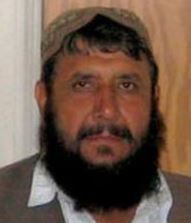
Haji Juma Khan
The Intercept: In October 2008, the Justice Department and the Drug Enforcement Administration heralded the arrest of Haji Juma Khan on narcotics and terror charges. His capture, they said, dealt a punishing blow to the Taliban and the symbiotic relationship between the insurgent group and Afghan drug traffickers. Yet, unbeknownst to all but the closest observers of the largely forgotten Afghanistan War, Khan was quietly released from Federal Bureau of Prisons custody last month. After nearly 10 years at the Metropolitan Correctional Center in Lower Manhattan, the terms of his release – like nearly everything else about his case – remain shrouded in secrecy. Click here to read more (external link).
How many bombs have been dropped in Afghanistan?

Defense News: Just how many munitions have been released in Afghanistan and Iraq/Syria during the past few years? Well, a lot. Click here to read more (external link).
1TV Afghanistan Dari News May 2, 2018
Why Xi-Modi Vow to Cooperate in Afghanistan Has U.S. Strategic Planners Worried

Modi (left) and Xi (right)
Michael Hughes: It is only natural for the Pakistanis to be reeling over the recent marathon strategic talks between Chinese President Xi Jinping and Indian Prime Minister Narendra Modi – especially given the fact the two leaders pledged to launch a joint economic development project in Afghanistan. The implications of the meeting are quite clear from Islamabad’s viewpoint: Pakistan’s chief benefactor and protector, China, is looking to enhance ties with Pakistan’s mortal enemy, India. However, an Indo-Chinese détente will not only complicate President Donald Trump’s South Asia strategy, it is likely to send a chill right through Washington’s foreign policy establishment. Click here to read more.