
 Foreign Policy: As in Iraq and Syria, the long war in Afghanistan has been particularly harsh on religious minorities. Afghanistan once had thriving Sikh and Hindu communities, but today, the numbers have been reduced to only the most determined and persistent. Click here to read more (external link).
War stories: the strange lives of Soviet fighters who stayed in Afghanistan

Soviet Troops (file photo)
The Times (UK): Some were wounded and came to rely on their captors, others feared what would happen to them back in Russia. Their lives now are very different to how they thought they would turn out when Soviet tanks rolled in to Afghanistan 39 years ago. Click here to read more (external link).
Tolo News in Dari – July 6, 2018
Pakistan Played Role in Afghanistan’s Eid Cease-Fire
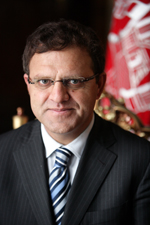
Omar Zakhilwal
Ayesha Tanzeem
VOA News
July 6, 2018
ISLAMABAD — Pakistan played a key role in the June cease-fire Afghanistan made with the Taliban designed to allow the country to celebrate the holy festival of Eid peacefully, Afghanistan’s ambassador to Islamabad said Thursday.
“The recent cease-fire … I should acknowledge that Pakistan did have a role to play in that. We are grateful for that,” said Hazrat Omar Zakhilwal, during a daylong conference organized by Islamabad based think tank the Jinnah Institute.
He also thanked Pakistan in advance for what he said would be the country’s role if the cease-fire became permanent.
This move bodes well for relations between Pakistan and Afghanistan, which have been rocky for almost two years.
“The high-level visits from both countries significantly reduced negative rhetoric against each other, significantly reduced incidents or irritants between the two countries, and (we have seen) a more robust cooperation from Pakistan with respect to peace and stability,” Zakhilwal said.
When the cease-fire was announced, scores of Taliban fighters headed to the cities, several of them posted selfies with the local population. Others offered Eid prayers with members of the security forces — their battlefield enemies. Several of them told the media they were tired of the war.
But the temporary cease-fire, termed a crucial step for any reconciliation process to succeed in Afghanistan, failed to begin a new phase of talks among key stakeholders in the region, with the Taliban rejecting an extension proposed by Afghanistan President Ashraf Ghani.
According to Ambassador Zakhilwar, the leadership refused to extend the cease-fire out of fear it might lead to an end of war without a negotiation.
“Certainly for the leaders, after fighting for so many years, at a minimum, they want to get something out of it,” he said.
However, Khalilullah Safi, a peace activist who has worked on the peace process for a long time and has contacts with both sides, alleged that one of the reasons the Taliban did not extend the cease-fire was the Ghani administration failed to deliver on commitments it made to them.
“During Ramadan, the Afghan government gathered Muslim clerics to issue a fatwa (edict) against the Taliban, which angered the Taliban,” Safi said.
He said both sides had also agreed to release certain prisoners and the Afghan government failed to do so.
“Taliban said the Afghan government did not keep its commitment, which is why they did not extend the cease-fire,” Safi said.
Zakhilwal also claims the cease-fire was not extended because the Taliban leadership got scared when they saw the reaction from their own fighters.
“The cease-fire showed … that their fighters were indeed tired of the ongoing war, indeed were open for peace talks, indeed were thirsty for peaceful days,” he said, adding that it dealt a blow to the Taliban leadership’s narrative that any signs of negotiations will lead to resistance or even rebellion in their own ranks.
But Taliban leaders say the cease-fire proved they were a unified force and claims of ruptures within its ranks are baseless.
Related
Playing cards in Helmand under the Taliban’s nose
 BBC News: People in Helmand Province might be exhausted and desperate after many years of war and violence. But every Friday night, they still gather in dimly-lit rooms for a laugh and card games – right under the Taliban’s nose. Click here for more (external link).
1TV Afghanistan Dari News – July 5, 2018
Breakthrough made in fight to end virginity testing in Afghanistan
 The Guardian (UK): New policy will stop clinics and hospitals from performing examinations that lead to imprisonment and exclusion – Condemned by the World Health Organization as degrading, discriminatory and unscientific, the practice of virginity testing has been widely used to ascertain whether a woman has committed adultery or had sex before marriage. Click here to read more (external link).
Thousands affected by ongoing drought in Afghanistan

International Federation of Red Cross And Red Crescent Societies: The drought which struck [Badghis] province earlier this year resulted in a shortage of grazing land and drinking water, affecting almost 95% of the farmers who rely on agriculture and livestock as their main source of income and food. Children living within these communities are also affected, having to miss school so that they could find small jobs to help make ends meet and purchase basic household items. Click here to read more (external link).
Faryab protesters block road to key port on border with Turkmenistan

1TV: Protesters in northern Faryab province on Thursday blocked road to key port of Aqina on border with Turkmenistan and threatened to block more roads and government offices. Hundreds of residents took to streets in Faryab after Nizamuddin Qaisari, a district police chief close to First Vice President Abdul Rashid Dostum, was detained by the government. The protest entered third day on Thursday and it has spread to other provinces in the north including Jowzjan and Takhar. Click here to read more (external link).
Related
Pakistan Rejects US Call to Single-Handedly Push Afghan Taliban Into Peace Talks

Ayaz Gul
VOA News
July 5, 2018
ISLAMABAD — Pakistan has urged the Taliban to accept the Afghan government’s unconditional offer of peace talks and rejected once again U.S. demands to single-handedly bring the insurgents’ leaders to the negotiating table.
At a weekly news conference Thursday, Foreign Ministry spokesman Mohammad Faisal reiterated Pakistan’s “full support” for efforts by Afghan President Ashraf Ghani to promote a peace dialogue with the Taliban to end decades of hostilities in Afghanistan.
“There is no military solution to the decades-long conflict in Afghanistan. We hope that the Taliban would grab the opportunity of unconditional peace talks,” Faisal said.
The spokesman vehemently dismissed U.S. assertions that Islamabad is responsible for single-handedly trying to bring the Taliban to the table.
“Absolutely not. We have repeatedly stated that all stakeholders in Afghanistan will have to share this responsibility and Pakistan is ready to play its role in it,” Faisal noted.
Faisal made his remarks just two days after a senior U.S. diplomat for the region, Alice Wells, visited the two countries and reiterated the U.S. call for Pakistan to take “sustained and decisive action” to bring the Taliban to peace talks.
Wells also noted insurgent leaders “who aren’t residing in Afghanistan” are obstructing efforts to find a negotiated political settlement to the war.
The American diplomat was apparently referring to long-running Afghan and U.S. allegations that Taliban leaders are sheltering in Pakistan and directing the insurgency from sanctuaries there with the help of the neighboring country’s spy agency.
Islamabad denies the accusations, although it promises to use “whatever leverage” it has to persuade the Taliban to enter peace talks.
The Taliban refuse to engage in a peace process with what it dismisses as the “puppet” government in Kabul and demands withdrawal of all U.S.-led forces before participating in any intra-Afghan discussions. The Islamist insurgency is seeking direct talks with Washington, saying the U.S. is its main adversary in the war.
A senior Taliban official has rejected assertions Pakistan can influence and force the insurgency to reviews its policy of not holding talks with Kabul.
“Pakistan has no influence whatsoever. Afghanistan is an issue for Afghans and, therefore, U.S. pressure on Pakistan is misplaced,” the insurgent official told VOA on condition of anonymity.
Pakistani officials also insist that lately Russia and Iran have both increased overt contacts with the Taliban while Islamabad’s influence has receded.