
Ata Mohammad Noor met with Kandahar Police Chief Gen. Raziq in Kabul

General Raziq (left) with Mohammad Atta Mohammad Noor (right)
Khaama Press: The Chief Executive of Jamiat Islami Ata Mohammad Noor met with the police chief of southern Kandahar province General Abdul Raziq in Kabul. Noor said the meeting focused on the situation of the country, upcoming elections of the parliament and districts councils, future programs, and presidential elections. Both Noor and Gen. Raziq are among the main critics of the government of national unity who have often criticized the government policies and leaders in strong words. Click here to read more (external link).
At Least 25 Killed In Afghan Suicide Bombings
 RFE/RL’s Radio Free Afghanistan
August 3, 2018
Afghan police say at least 25 people have been killed in twin suicide blasts at a Shi’ite mosque in southeastern Afghanistan.
Raz Mohammad Mandozai, the police chief of Paktia Province, said two suicide bombers detonated their explosives inside the Khawaja Hassan mosque in the provincial capital of Gardez on August 3.
Mandozai said the suicide bombers, who he said were disguised in burqas, first killed two security guards at the entrance of the mosque before firing on worshippers and detonating their explosives.
Mandozai said at least 40 people were wounded in the attack and were rushed to nearby hospitals.
Sardar Wali Tabasun, the police spokesman for Paktia Province, said the attack occurred after Friday Prayers.
Officials warned that the death toll could rise.
There was no immediate claim of responsibility, although similar attacks in the past have been claimed by the Islamic State (IS) extremist group, which has a presence in eastern Afghanistan.
The Sunni extremist group has frequently targeted Afghanistan’s Shi’ite minority, which IS calls “apostates.”
The stronghold of the IS group is in neighboring Nangarhar Province, which has been the scene of multiple IS attacks in recent months that have killed dozens.
Many of those killed in the blasts in Gardez were Pashtun Shi’a, known as the Turi or Torai.
Most Turi live in Pakistan’s northwestern Kurram tribal district, while a smaller population lives in Paktia.
The Turi have been targeted in both countries for decades by extremist groups, including the Afghan Taliban, the Pakistani Taliban, and Al-Qaeda.
The attack in Gardez comes as U.S. and Afghan forces are intensifying ground and air offensives against IS, and the Taliban is stepping up its war with the group.
Afghanistan has mostly avoided the sectarian violence that has hit countries such as Iraq, but there have been increasing numbers of attacks on Shi’ite targets in recent years.
In April, IS militants claimed responsibility for an attack on a voter registration office in a heavily Shi’ite-populated area in the Afghan capital, killing 57 people and wounding over 100 others.
According to the UN Assistance Mission in Afghanistan, 161 people were killed and 257 others were wounded in 2017 in targeted sectarian attacks against Shi’ite places of worship or worshippers.
With reporting by Reuters and AFP
Copyright (c) 2018. RFE/RL, Inc. Reprinted with the permission of Radio Free Europe/Radio Liberty, 1201 Connecticut Ave NW, Ste 400, Washington DC 20036.
Other Security News
Will Khan’s Rise Make Pakistan Even More Dangerous?

Imran Khan
Michael Hughes: Imran Khan has been referred to as Pakistan’s Donald Trump, an apt comparison on one level given they are both mercurial, egoistical, nationalistic and demagogic. However, one main difference is that the playboy cricketer turned Islamic firebrand colluded with the deep state to win his election. Although Rawalpindi has always called the shots, having a prime minister entirely beholden to the military will likely make Pakistan an even bigger threat to Afghanistan – unless the laws of nature are magically suspended.
With respect to Afghanistan’s national interest, it is difficult to find anything positive to say about Pakistan electing a man nicknamed Taliban Khan who has mainstreamed jihadi extremist factions and supports EU-like “open borders.” Not to mention that Khan is on record as saying the Taliban insurgency in Afghanistan is a legitimate jihad justified by Islamic law. Click here to read more.
Tolo News in Dari – August 2, 2018
The Tricksters of Afghanistan’s New Online-Dating Scene
 The Atlantic: When makiz nasirahmad, a 24-year-old Afghan American who recently lived in Afghanistan, received a Facebook friend request from a woman with an unfamiliar name, she didn’t think twice about accepting it. The woman’s profile picture had clearly been copied off the internet, but Nasirahmad figured that the woman could be a relative of hers, trying to hide her identity; many families in Afghanistan disapprove of women posting their pictures online, so women sometimes hide behind fake names and photos. Click here to read more (external link).
Video Shows Islamic State Militants Who Surrendered In Afghanistan
Radio Free Europe/Radio Liberty | August 2, 2018: Dozens of Islamic State (IS) militants who surrendered to Afghan forces on July 31 have been moved to a compound in Shibirghan, in the northern province of Jowzjan, where they are now being held. RFE/RL filmed inside the compound on August 2.
Copyright (c) 2018. RFE/RL, Inc. Reprinted with the permission of Radio Free Europe/Radio Liberty, 1201 Connecticut Ave NW, Ste 400, Washington DC 20036.
Related
Former NDS Chief Launches New Political Movement
Tolo News: A new political movement, led by former National Directorate of Security (NDS) chief Assadullah Khalid, was officially launched in Afghanistan on Thursday. Supporters from around the country converged on the streets on Thursday morning to attend the launch of the movement, called Omid-e-Sabah. Khalid blasted the president and said the president does not care about lives being lost and “that no one even returns the bodies to the families” of soldiers killed on the battlefields He said ethnic division in the country must end and that there was no way he wanted the country to return to the turmoil experienced throughout the 1990s. Click here to read more (external link).
Related
Foreigners Found Dead in Kabul
 VOA News
Ayesha Tanzeem
August 2, 2018
ISLAMABAD — Afghan police found the bodies of three foreign nationals shot and killed in the capital, Kabul, Thursday afternoon. The three, from India, Malaysia, and Macedonia, were abducted earlier in the day.
According to Bahar Mehr, an official with the Ministry of Interior, the three got out of their company car Thursday morning and moved into a private car by choice, indicating that someone they knew helped plan their abduction. He said authorities were investigating the matter.
Hashmatullah Stanikzai, a spokesman for the Kabul police, said they were kidnapped from Kabul’s District 9, in the east of the city but their bodies were found in the southern part of town.
The three worked for the international company Sodexo, which provides food and catering services around the world. It recently won a bid in Paris to operate Eiffel Tower restaurants with two Michelin starred chefs.
No group has claimed responsibility for the killings.
Kidnapping is one of the most common crimes in war-torn Afghanistan. Most kidnappings happen for ransom and target Afghans but foreigners have been targeted as well.
Related
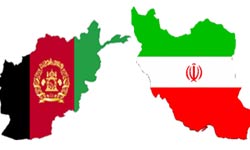
Things Are So Bad In Iran That Afghan Migrants Are Going Home
Radio Free Europe/Radio Liberty
Frud Bezhan
Nusrat Parsa
August 1, 2018
KABUL — Sporting a long, graying beard and a dusty scarf, Noor Mohammad exits a gritty restaurant in the Afghan capital, where he has been trying to find work for weeks.
Mohammad moved back to his native Kabul after living more than 10 years in Iran, where he washed cars and worked in construction to earn money to send back to his family of eight in Afghanistan.
Mohammad is among the hundreds of thousands of Afghan migrants who once flocked to Iran for work but who have returned to their war-torn homeland amid a crippling economic crisis. It is unclear if the returnees plan to stay in Afghanistan temporarily or for the long-term.
Iran’s economic turmoil, which has sent unemployment soaring and the national currency plummeting — has hit Afghan migrants particularly hard. The demand for work in the gray economy, where most Afghans work, has declined sharply. Iran’s currency, the rial, has weakened against the afghani and is at record lows against the U.S. dollar, which is widely used in Afghanistan.
“It’s better here than in Iran. Even if I earn [$4 per day], it’s still more than I would make in Iran. I don’t think many Afghans will stay in Iran.”
— Sediqullah, an Afghan man who has returned from Iran
More than 400,000 undocumented Afghan migrants left Iran in 2018, according to the International Organization for Migration (IOM) — a massive increase from 2017, when 187,000 returned over the course of the entire year. The mass exodus has been “largely driven by recent political and economic issues in Iran, including massive currency devaluation,” according to the IOM’s July report.
‘Better Here Than In Iran’
The dire state of Afghanistan’s economic and security situation underlines the extent of Iran’s economic woes. The war-torn country that Afghans are returning to suffers from around 40 percent unemployment, is heavily dependent on dwindling foreign aid, and is in the midst of the worst drought in decades. Humanitarian groups say the returnees, should they stay, could exacerbate the problems Afghanistan is facing.
Yet for Mohammad and many others, Afghanistan still represents an improvement.
“The rial has really come down,” says Mohammad. “The rial is worthless. I couldn’t even make enough money to cover my own expenses. So I couldn’t send any money back to my family in Afghanistan.”
Mohammad is not alone. Bus drivers taking passengers from the western city of Herat, near the Iranian border, to Kabul say that up to 300 Afghans are returning from Iran every day.
Among them was Sediqullah, who spoke to RFE/RL’s Radio Free Afghanistan after getting off a bus at Kabul’s main bus terminal.
Wearing a traditional piran-tumban and a checkered scarf, the 32-year-old says he lived for several years in the Iranian city of Zahedan, near the Afghan border, and found work in construction.
“It’s better here than in Iran,” says Sediqullah. “Even if I earn 300 afghanis ($4) [per day], it’s still more than I would make in Iran. I don’t think many Afghans will stay in Iran. Many will come back to Afghanistan.”
‘Massive Currency Devaluation’
Nick Bishop, emergency response officer for IOM Afghanistan, says that because “Afghans in Iran primarily work in the informal economy — [in] construction, agriculture, and other forms of labor — the demand for this type of work is drastically reduced.”
On January 1, a U.S. dollar was worth 42,900 rials. On July 31, the rial traded at a record low of 119,000 to the dollar.
The plummeting value of the rial has coincided with U.S. President Donald Trump’s decision in May to withdraw from the 2015 nuclear deal between Iran and world powers. Washington is reimposing sanctions on Tehran in two stages, in August and November.
Economists say U.S. sanctions will severely affect Iran’s ability to conduct trade and restrict access to finances and foreign investment. It will also adversely affect Iran’s ability to sell oil, Tehran’s most lucrative export.
In April, Iran fixed the rial at 42,000 to the U.S. dollar, but black-market rates skyrocketed as Iranians rushed to illegal traders, seeking to protect their savings by buying dollars. In June, the government softened its stance after many banks refused to sell dollars at the artificially low rate.
The currency crisis has resulted in a spike in unemployment and in the cost of everyday goods.
Afghans Targeted In Iran
The downturn in Iran has particularly affected the estimated 1 million registered Afghan refugees and the estimated 1.5 million to 2 million undocumented Afghans living there. But its effects could be even more far-reaching.
“Afghans [in Iran] typically send home the main parts of their earnings in the form of monthly remittances. The Afghan economy itself will suffer direct and immediate effects. Less money coming from working males who are instead returning home to few jobs, combined with an ongoing drought and resource competition with other returnees, will mean a significant decline in the economy,” says the IOM’s Bishop.
For decades, Afghans have turned to Iran to earn a living, despite widespread reports of migrants facing violence and injustice there.
Tehran has expelled many Afghans, who are often blamed for insecurity and unemployment in Iran, and periodically threatens those who remain with mass expulsion.
Many of them moved to Iran following the Soviet occupation of Afghanistan and the civil war that followed the Soviet withdrawal. Others sought refuge in Iran after the Taliban took power in Afghanistan. Many have taken on menial work that is of little interest to Iranians.
In 2015, Iranian Supreme Leader Ayatollah Ali Khamenei issued a decree allowing all Afghan children to be allowed an education. But Afghans are still denied basic services, including access to health care, jobs, and even housing.