
 Ariana: “With the opening of new office in Tashkent (Uzbekistan), the Doha office remains open and another new office will set to open for Taliban in Dubai,” Asadullah Barikzai, deputy of High Peace Council (HPC) said. Sources close to Taliban say the Doha office will be a training center for the group, Dubai office will be for commuting and Tashkent will be for political affairs of the group. Click here to read more (external link).
Afghan Forces Kill Senior Taliban Commander in Country’s Northeast – Police
 MOSCOW, August 9 (Sputnik) – The Afghan security forces eliminated on Wednesday night the Taliban shadow governor of Shohada district, Mohammad Sangaryar, in the country’s northeastern province of Badakhshan, local police said Thursday.
“The clash between the security forces and the Taliban lasted for nearly half an hour and [once it was over] the forces discovered the bodies of Sangaryar and two other Taliban with weapons. There were no casualties among security forces in the clash,” provincial police chief Saber Aryan said, as quoted by the TOLOnews broadcaster.
Afghanistan has long been suffering from an unstable security situation. The government has been fighting against Taliban radical movement, which has been waging a war against Kabul for almost two decades, and the Islamic State terrorist group (IS, banned in Russia), which has been operating in Afghanistan since 2015.
No Afghan Security Personnel Killed In U.S. Air Strike, Army Says
 Radio Free Europe/Radio Liberty
August 8, 2018
The U.S. military says it has determined that no Afghan security forces were killed in an air strike during a battle against the Taliban in eastern Afghanistan earlier this week.
A U.S. Forces-Afghanistan spokesman, Lieutenant Colonel Martin O’Donnell, said in a statement e-mailed to RFE/RL on August 8 that the assessment was based on a review of footage from the strike and “first-hand accounts from Afghan security force leaders and members present during the incident.”
The military a day earlier said it was investigating reports that nine police were killed and 14 wounded in its air strike in Logar Province’s Azrah district.
Afghan Interior Ministry spokesman Nasrat Rahimi said that during an overnight battle against the Taliban, police “called in air support, but unfortunately foreign forces mistakenly bombed their positions.”
The Taliban also suffered heavy losses, he said.
There are about 14,000 U.S. ground troops in Afghanistan, making up the bulk of NATO’s Resolute Support force.
Also on August 8, eight civilians, including women and children, were reported killed when their vehicle struck a roadside bomb in the northern province of Balkh.
Six other civilians were wounded in the explosion, which happened in Shulgar district, said Sher Jan Durrani, the spokesman for the provincial police chief.
Durrani blamed the attack on the Taliban.
Elsewhere in Afghanistan, the Taliban attacked a police checkpoint in the western Herat Province, killing eight police, according to the provincial governor’s spokesman.
Gelani Farhad, the spokesman for the provincial governor, said six insurgents were killed in the ensuing gunbattle.
Meanwhile, the bodies of three Czech soldiers killed in a suicide bombing claimed by the Taliban in Afghanistan arrived in Prague.
The three were killed by an attacker on foot in Parwan Province on August 5, the deadliest attack on NATO soldiers in several months.
With reporting by AFP, AP, dpa, and Reuters
Copyright (c) 2018. RFE/RL, Inc. Reprinted with the permission of Radio Free Europe/Radio Liberty, 1201 Connecticut Ave NW, Ste 400, Washington DC 20036.
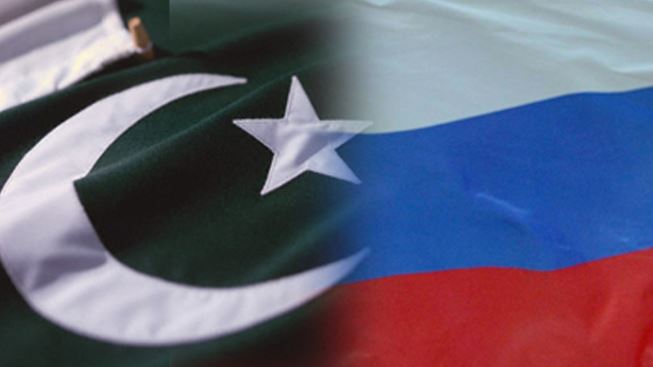
Pakistan, Russia Sign Rare Military Cooperation Pact
 Ayaz Gul
VOA News
August 8, 2018
ISLAMABAD — Pakistan has wrapped up a groundbreaking contract with Russia that would, for the first time, open doors for Russian military training of Pakistani army officers.
The rare deal comes amid deteriorating relations between Islamabad and the United States, which has resulted in the halt of all military exchange programs with Pakistan and left a void that Moscow has stepped in to fill.
The security training agreement concluded Tuesday at the end of the two-day inaugural meeting of the Russia-Pakistan Joint Military Consultative Committee (JMCC), said a Pakistan Defense Ministry statement.
Pakistani Defense Secretary Zamir ul Hassan Shah and visiting Russian Deputy Defense Minister Col. Gen. Alexander Fomin led their respective delegations at the talks in Rawalpindi, where the army is headquartered.
“The two sides also held in-depth discussions on avenues of future cooperation. At the end, both countries signed the Contract on Admission of Service Members of Pakistan in the RF [Russian Federation’s] Training Institutes,” said the ministry statement.
The Islamabad-Moscow security partnership has strengthened and expanded since late 2014, when the two former rivals signed their defense cooperation agreement.
Russia sold four Mi-35M combat helicopters to Pakistan under the deal, and both countries have since held two rounds of counterterrorism military drills on each other’s soil.
Navies of the two countries also recently participated in joint antidrug exercises in the Arabian Sea. The latest naval collaboration took place last week in St. Petersburg, where a Pakistani warship participated in the major Russian Navy Day parade.
“It was a very important event for us. Actually, illustration of this importance is that this parade was taken by the commander-in-chief of Russian armed forces, President Mr. Putin,” Russian ambassador to Pakistan, Alexey Dedov, said last week.
“This cooperation is developing into many directions. So, there is quite a wide spectrum. And, of course, this is a reflection of our approach to the relations with Pakistan, which to our country has their own independent value for us.”
Pakistan-U.S. ties
Pakistan’s relations with the U.S., meanwhile, have deteriorated since President Donald Trump took office and blamed Islamabad in his South Asia strategy for harboring terrorists and not doing enough to stop insurgent attacks in neighboring Afghanistan.
Trump suspended all military assistance to Pakistan in January until it takes decisive action against militants on its soil.
Pakistani leaders have rejected terrorism and other charges, saying they stem from U.S. security failures in Afghanistan. They also say that halting decades-old military diplomacy will fuel misunderstandings between the two countries.
“Training at Russian military institutes would bring about a major shift in the world view of top [Pakistan] military officers,” noted Baqir Sajjad, an Islamabad-based journalist and defense analyst. “Until now, the brightest officers poised for leadership positions were trained in U.S.”
Pakistan’s Prime Minister-elect Imran Khan vowed Wednesday that his would-be government will work to improve relations with the U.S.
“Pakistan and the United States have witnessed many ups and downs in their relationship, which were the outcome of a trust deficit between the two countries,” Khan told acting American ambassador to Islamabad, John Hoover, who called the Pakistani leader to congratulate him on his election victory.
An official statement issued after the meeting said the prime minister-in-waiting said his government will engage with the U.S. to make the relationship more balanced and trustworthy. Khan called on the U.S. and the region in general to work collectively to find a political settlement to Afghanistan.
He also emphasized the “revitalization of diplomatic ties between the two countries and stressed the need to transform it for the benefit of both Pakistan and the United States.”
Countering terrorism
While American leaders are skeptical and critical of Pakistan’s counterterrorism efforts, Russian leaders praise Islamabad for eliminating terrorism from Pakistani soil.
“It [Pakistan] is a very, very important party, not only in the regional stability, the stability worldwide. It’s our very valuable partner of tackling such challenges and threats as terrorism, illegal drug trafficking, etc. Our countries face similar challenges and threats to national security,” said Russian ambassador Dedov, while speaking at a seminar in Islamabad.
Russia is determined, he said, to give “practical assistance” to strengthen Pakistan’s counterterrorism efforts.
Russia and Pakistan both have openly expressed concerns over the emergence of Islamic State’s Afghan branch, known as ISK-P, in “ungoverned spaces” of the war-shattered country.
Former Pakistani army general Yasin Malik said Afghanistan remains at the center of growing cooperation with Russia.
“This [Afghanistan] is a common denominator for both of us. And the presence of IS is a threat to both the Russian Federation and to Pakistan. Very serious efforts are there to jointly meet the challenge of IS in Afghanistan. I think that will be the hallmark of cooperation in security and military between Russia and Pakistan,” Malik noted.
Aiding the Taliban?
There are also growing allegations that Moscow and Islamabad — under the pretext of fighting IS — are providing covert military support to the Taliban.
Russia and Pakistan insist their ties with the Taliban are meant solely to encourage the insurgents to engage in peace talks with the Afghan government to help end the conflict and deter terrorists from using the country for international terrorism.
Dedov noted that last month, the chief of Russia’s external intelligence agency also visited Pakistan to participate in a four-nation meeting, with Chinese and Iranian spymasters in attendance. The rare meeting, officials said, focused on the buildup of IS in turmoil-hit Afghanistan.
The Russian ambassador credited improved relations with Pakistan to regular exchanges of high-level civilian and military delegations between Pakistani and Russia. He noted that the volume of bilateral trade has increased by 82 percent in the first five months of 2018 and stood at $450 million. Moscow also is working to help Pakistan build an 1,100-kilometer gas pipeline linking Karachi to Lahore.
Dedov, while delivering last week’s lecture at the Islamabad Policy Research Institute (IPRI), did not rule out nuclear cooperation with Pakistan for peaceful purposes, saying, “We do not see obstacles in this matter.”
1TV Afghanistan Dari News – August 8, 2018
Gov’t Fails in Fight against Human Trafficking: Religious Scholars
 Ariana: A number of religious scholars and civil activists have criticized the government, saying it fails in fighting against human trafficking and “Bacha Bazi” practice. “The Bacha Bazi practice has an ancient history on this country. This unjustified act is contrary to human nature. Our religious doctrines condemn this as a big crime,” Mawlavi Wasiq, a religious scholar said. Click here to read more (external link).
Related
Roadside Bomb Kills Eight Civilians In Afghanistan, Says Local Official
 Radio Free Europe/Radio Liberty
August 8, 2108
Eight Afghan civilians, including women and children, were killed on August 8 when their vehicle struck a roadside bomb in the northern Balkh province, an official says.
Six other civilians were wounded in the explosion, which happened in the Shulgar district, said Sher Jan Durrani, the spokesman for the provincial police chief in Balkh.
Durrani blamed the attack on the Taliban.
Elsewhere in Afghanistan, the Taliban attacked a police checkpoint in the western Herat Province, killing eight police.
Gelani Farhad, the spokesman for the provincial governor, says six insurgents were killed in the ensuing gunbattle. .
Roadside bombs, also known as improvised explosive devices (IED), remain the leading cause of civilian casualties in Afghanistan’s conflict, accounting for 45 percent of cases, the UN said in a report last month.
Based on reporting by AP and dpa
Copyright (c) 2018. RFE/RL, Inc. Reprinted with the permission of Radio Free Europe/Radio Liberty, 1201 Connecticut Ave NW, Ste 400, Washington DC 20036.
Other Security News
‘We Want Peace,’ Say Afghan Amputee Marchers
 RFE/RL’s Radio Free Afghanistan
August 7, 2018
Twenty amputees have kicked off a trek of more than 600 kilometers across Afghanistan to call for an end to the country’s 17-year war.
The marchers, some on crutches and others in wheelchairs, began their journey on August 7 from the western city of Herat to the Afghan capital, Kabul, defying scorching summer heat and the risk of roadside bombs and militant attacks.
“We want peace, we want a normal life, we want to work and serve our country,” Mahmud Majruh, a member of the so-called peace convoy, told RFE/RL’s Radio Free Afghanistan.
“People are being killed every single day in every region of our country. We want all sides of the conflict — the government, the Taliban, and the others involved — to negotiate, to come to an agreement, to make peace,” Majruh added.
“They must stop the war to prevent more deaths and destruction,” said another peace activist who identified himself as Murtaza.
“We lost our limbs, and we don’t want it to happen to our children, to our next generation,” he also said.
The march kicks off weeks after a group of Afghan peace activists walked 700 kilometers from the southern city of Lashkar Gah to Kabul, most of it during the fasting month of Ramadan.
The Helmand Peace Convoy reached the capital June 18 following a three-day truce between the Taliban and government forces coinciding with the Eid al-Fitr holiday that ends the Muslim holy month of Ramadan.
The government is expected to announce another truce coinciding with the three-day Eid-al-Adha festival later in August.
The Western-backed government has been struggling to fend off the Taliban and other militant groups since the withdrawal of most NATO troops in 2014.
The Taliban has ignored an offer by the government of direct peace negotiations.
Copyright (c) 2018. RFE/RL, Inc. Reprinted with the permission of Radio Free Europe/Radio Liberty, 1201 Connecticut Ave NW, Ste 400, Washington DC 20036.
Related
IS in Afghanistan Just Won’t Go Away, US Officials Say

ISIS trainees
Jeff Seldin
VOA News
August 7, 2018
PENTAGON — Intensified efforts to root out and destroy the Islamic State terror group in Afghanistan are making progress in some areas but have so far failed to prevent the terror group from maintaining a foothold in the country, based on the latest U.S. intelligence estimates.
IS-Khorasan is thought to have more than 1,000 fighters, most of them located in Afghanistan’s southern Nangarhar province, with a small number operating in the country’s eastern Kunar province.
Those remaining loyal to IS’s black flag include local Afghans, as well as fighters from Pakistan and Uzbekistan, a senior counterterrorism official told VOA, adding that IS-Khorasan fighters are believed to also be carrying out operations in Pakistan.
While U.S. defense and intelligence officials emphasize such numbers should always be viewed with caution, as counting terrorist fighters is far from an exact science, the estimates suggest IS-Khorasan fighters are finding ways to withstand U.S. efforts to wipe them out.
Those efforts included the use of the largest non-nuclear bomb in the U.S. arsenal, a GBU-43 Massive Ordnance Air Blast, to target what the Pentagon described as an extensive IS cave-and-tunnel system in Nangarhar province in April 2017.
Weeks later, also in Nangarhar, U.S. and Afghan forces killed the then-emir of IS-Khorasan, Abdul Hasib, following a three-hour firefight.
Hasib’s replacement, Abu Sayed, was killed not much later in July 2017, at which point U.S. officials said IS’s ranks in Afghanistan had been cut to 600, from a high of about 3,000 at the terror group’s peak.
‘Persistent’ terror threat
Despite such efforts, there is seemingly little impact on IS-Khorasan’s ability to carry out terror operations.
A report from the U.N. Mission in Afghanistan (UNAMA) found that through the first half of 2018, IS-Khorasan was responsible for more than 50 percent of civilian casualties, due to suicide bombings and other complex attacks.
In recent weeks, the terror group also claimed a series of attacks against Afghan Shiites, as well as high-profile attacks on Kabul itself.
“ISIS-K remains a persistent threat,” Pentagon spokesman Colonel Rob Manning said Monday, using an acronym for the group. “We have eliminated several ISIS-K emirs and are relentlessly targeting their leadership hierarchy.”
Afghan officials, though, are concerned such efforts may not be enough.
For months, they have warned IS-Khorasan has been bolstered by an influx of foreign fighters — first by a surge of about 3,000 from Pakistan and Uzbekistan, and later by hundreds of jihadists fleeing Iraq and Syria.
U.S. defense officials, including some familiar with border security measures that have been put in place by the U.S.-led coalition in Afghanistan and by Afghanistan’s neighbors, are skeptical.
One official described the chances that large groups of IS-linked fighters could move freely across the border undetected as low.
Still, U.S. officials involved in the global campaign against IS warn that the terror group remains incredibly resilient, retaining key capabilities, even as its numbers shrink.
Afghan Taliban, IS-K rivalry
They also say IS-Khorasan has been especially savvy about turning local grievances to its advantage. And while some of the IS-Khorasan fighters are motivated by the terror group’s ideology, many are also disgruntled former Taliban fighters looking for a bigger cut of the drug trade.
Over the past few months, it seems the United States may have been able to turn that rivalry to its advantage.
“The Taliban are fighting ISIS, and we encourage that because ISIS needs to be destroyed,” said General John Nicholson, the commander of U.S. forces in Afghanistan.
In northern Afghanistan in Jowzjan province, in particular, the combination of what U.S. officials described as a series of “intensive operations” against IS-Khorasan, along with a Taliban ground campaign, appears to have paid off.
“All the northern provinces have been purged from Daesh militias,” the Taliban announced earlier this month, using the Arabic acronym for the group.
About 250 IS-Khorasan fighters, along with their commander, Mawlawi Habib Rahman, are currently in Afghan government custody, where U.S. and Afghan officials say they will be prosecuted for their crimes “to the fullest extent of the law.”
“I just think it speaks to the fact that our South Asia strategy has been working with the persistent pressure that’s been placed on ISIS-K,” Manning said. “They’ve only got a few options, and that is to surrender, or fight and die. And it looks like a lot of them are choosing the wiser option.”
But such optimism is guarded. U.S. defense and intelligence officials are wary of declaring victory over a terror group that has found ways to repeatedly regroup and grow.
“There is hard fighting ahead. That’s all there is to it,” U.S. Defense Secretary Jim Mattis told Pentagon reporters Tuesday. “I don’t declare victory until it’s in the rearview mirror.”
Ariana Afghan News in Dari – August 7, 2018