
Afghan Peace Talks Suspended Amid Conflict Over Delegates
 By RFE/RL’s Radio Free Afghanistan
April 19, 2019
Disputes over the size of delegations have roiled critical peace talks between the Afghan government and the Taliban, with new talks in Qatar now suspended and Washington urging both sides to return to the table.
The talks, which had been scheduled for April 19, were considered a significant first step toward finding a negotiated end to the war in Afghanistan and the eventual withdrawal of U.S. troops.
But a statement released April 18 by the Afghan government blamed the Qatari government for the disruption.
The head of the organization hosting the talks in Doha, however, said the dispute stemmed from disagreement over the size and composition of the respective delegations.
“This unfortunate postponement is necessary to build further consensus as to who should participate in the conference,” Sultan Barakat, of the Center for Conflict and Humanitarian Studies, said in a statement.
President Ashraf Ghani’s administration earlier in the week had announced a list of 250 people, including government figures, to attend the so-called intra-Afghan dialogue in Doha.
The Taliban criticized the lengthy list, saying that they would not meet with so many people.
The Taliban also insisted they would not be negotiating with Kabul at the conference.
The list was also criticized by some powerful opposition figures, including the powerful former warlord, Atta Mohammad Noor, who said it was not inclusive.
The U.S. Special Representative to Afghanistan, Zalmay Khalilzad, said he was disappointed by the delay.
“We’re in touch with all parties and encouraged that everyone remains committed to dialogue,” the envoy said in a post to Twitter. “I urge all sides to seize the moment and put things back on track by agreeing to a participant list that speaks for all Afghans.”
The United States has been holding separate bilateral peace negotiations with the Taliban in Doha as part of a months-long peace push.
In Afghanistan, meanwhile, the Taliban have launched their so-called spring offensive, unleashing violence in many parts of the country.
The militants now control or influence about half the country, and last year was the deadliest yet for civilians.
With reporting by AP, AFP
Copyright (c) 2019. RFE/RL, Inc. Reprinted with the permission of Radio Free Europe/Radio Liberty, 1201 Connecticut Ave NW, Ste 400, Washington DC 20036.
Related
- Critics Label Qatar Meeting Cancelation ‘A Lost Opportunity’
- Khalilzad ‘Disappointed’ Over Qatar Meeting Delay
- ‘Afghanistan Has Changed’: Post-2001 Generation On Prospects Of Peace With Taliban
- NATO Envoy Sees Good Opportunity For Peace In Afghanistan
- Former top US general skeptical about Taliban peace talks
Official: Taliban, IS Deprive Afghan Kids of Polio Vaccine

Child getting polio drops (file photo)
Mohammad Habibzada
VOA News | April 18, 2019
Some information in this report came from Reuters.
More than 1 million Afghan children, particularly in conflict-stricken regions of the country, were deprived of polio vaccinations in 2018 because of actions taken by Taliban and Islamic State militants, Afghanistan health officials tell VOA.
“Overall, 1.2 million children were deprived of vaccinations in the country,” Dr. Gula Khan Ayoubi, public affairs director of the mass immunization program at the Afghan Ministry of Public Health, told VOA. “And the hope this year is to bring down the number to about 200,000 children. The remaining 200,000 children are living in areas where the Islamic State terror group has a strong presence and does not allow any vaccinations.”
“To a large extent, the southern provinces of Zabul, Kandahar, Helmand, Uruzgan, and in the east, Kunar, have been affected the most due to the Taliban’s opposition,” Ayoubi added.
Afghanistan, Pakistan and Nigeria are the only three countries in the world where polio is still not eliminated and continues to threaten the lives of millions of children.
In 2018, Afghanistan had the most cases of polio among the three, with 21 cases reported across the country.
Afghan officials charge that contentious fighting, unrest, and the Taliban, IS and other armed groups are the main obstacles in the hard-to-reach areas in southern, southeastern and eastern Afghanistan.
Immunization ban
The Afghan Taliban last week told Reuters the group had banned the activities of World Health Organization and the International Committee of the Red Cross in areas under their influence until further notice.
“They [vaccinators] have not stuck to the commitments they had with Islamic emirates, and they are acting suspiciously during vaccination campaigns,” Taliban spokesman Zabihullah Mujahid said.
Polio vaccinators often go house to house to vaccinate children, and they mark the doors of houses where members are not present at the time to ensure the residents are vaccinated at a later date.
The Taliban consider these vaccinators spies for the government and foreign forces, and are sensitive to their presence in areas under their influence.
Conditional agreement
Afghan health officials told VOA this month that they had reached a conditional agreement with the Taliban to continue their vaccination campaign in Taliban-controlled areas.
“With the help of religious leaders and local influential elders, local Taliban commanders have agreed to allow the children under their controlled areas to be vaccinated,” Ayoubi said at the time. “Their condition, however, is that the mass vaccinations take place at a mosque or a similar place. Our vaccinators would not be allowed to go house by house and mark the doors.”
WHO reaction
In a statement issued last week, WHO said the Taliban’s ban would negatively affect its operations across the war-torn country.
“We are deeply concerned that the temporary ban will negatively impact delivery of health services to affected populations,” the organization said. “WHO has been supporting health activities in all parts of Afghanistan, including primary health care, response to health emergencies, vaccination and polio eradication.”
Sanela Bajrambasic, spokesperson for the International Committee of the Red Cross in Geneva, also said her organization was seeking clarification from the Taliban and that it would work with the group to find a solution to the issue.
“What we can say at this point is that we have seen the same statement on their website, and we will be seeking to engage bilaterally with the Taliban on it,” she told Reuters.
Negative campaign
Some experts charge that in addition to militant groups, negative campaigns and rumors that swine are used to prepare the polio vaccine or that it has dangerous side effects have also made it difficult for vaccination campaigns to succeed in rural areas, which contribute to the spread of polio.
“The groups that spread these rumors are those opposing the mass immunization programs,” said Dr. Najib Safi, WHO program manager of health system development. “These groups have always been trying to confuse people. In 2016, Afghan religious scholars decreed that it is permissible to use the polio vaccine. In addition to that, there are Islamic decrees from Egypt’s al-Azhar University, [Saudi Arabia’s] Jeddah and India’s Deobandi Islamic school that the polio vaccine is permissible to administer.”
“Polio, and all other immunizing vaccines that are being administered to children, have no side effects. There are no links between the polio vaccine and impotency,” Safi added.
Dr. Alam Shinwari, a medical expert who follows health-related developments, including polio in Afghanistan, charges that public awareness is the key to overcoming this issue.
“Polio is mainly endemic in areas around the border between Pakistan and Afghanistan, where traditional conservative religious tribes are residing, who have been influenced by their local religious scholars and local traditions beliefs that have negatively impacted their perceptions toward polio vaccination,” Shinwari said.
“To overcome such barriers, we need to increase the level of public awareness by involving local religious scholars and imams, local educational experts, and finally, local leaders and elders. They have significant influence among people in tribal areas between Afghanistan and Pakistan and can help overcome this problem,” he said.
1TV Afghanistan Dari News – April 18, 2019
Poppies bloom across Afghanistan as drought eases

AFP: A vast field of towering white poppies sways gently in the breeze, silky petals sometimes tumbling to the ground, a visible marker of the resilience of Afghanistan’s lucrative opium trade. The sight of a seemingly endless expanse of opium-producing flowers is common across rural Afghanistan, but this farm is in the centre of government-controlled Lashkar Gah city — the capital of Helmand province. Click here to read more (external link).
Presidential Candidates Begin Consultations On Interim Govt

Tolo News: As the National Unity Government’s (NUG) term will end within the next one month, a group of 11 presidential candidates have started consultations on the establishment of an interim government to prevent “power gap” as elections are scheduled for September 28. The candidates said the incumbent government’s term ends on May 22 and that it will lose its “legitimacy”, so they have started negotiations to establish an interim government. Click here to read more (external link).
Related
‘American Taliban’ Lindh To Be Released From Prison Next Month

John Walker Lindh
Radio Free Europe/Radio Liberty
April 18, 2019
John Walker Lindh, an American who pleaded guilty in 2002 to fighting for the Taliban, is to be released in May after serving 17 years in prison.
Court papers filed this month said the 38-year-old, dubbed the “American Taliban,” will be released from a prison in Indiana on May 23.
Documents filed last week with the federal court in the state of Virginia showed Lindh has agreed to restrictive conditions during a three-year probation period after his release.
Those restrictions include accepting that he cannot have an Internet-capable device without permission from his probation office, cannot view or access extremist or terrorism videos, and must allow the probation office to monitor his Internet use.
Lindh, born to a Catholic family, traveled to Yemen to study Arabic in 1998 and then moved to Afghanistan four months before Al-Qaeda’s September 11, 2001, terror attacks in the United States.
Lindh was captured by the anti-Taliban Northern Alliance in December 2001, just two months after a U.S.-led invasion of Afghanistan, and handed to U.S. forces.
In 2002, he was sentenced to 20 years in prison after he pleaded guilty to supplying services to the Taliban and carrying explosives in commission of a felony.
His jail term has been shortened for good behavior.
Based on reporting by AFP, NBC, and The Washington Post
Copyright (c) 2019. RFE/RL, Inc. Reprinted with the permission of Radio Free Europe/Radio Liberty, 1201 Connecticut Ave NW, Ste 400, Washington DC 20036.
1TV Afghanistan Dari News – April 17, 2019
Taliban Has No Way Except Talks With Afghan Govt: Ghani
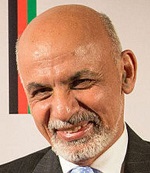
Ashraf Ghani
Tolo News: President Ashraf Ghani on Wednesday met with members of the delegation who will hold a meeting with the Taliban in Qatar on April 20. He said the Afghan delegation which is preparing to hold discussion with the Taliban in Doha are carrying an important mission which is a dignified peace within the framework of the Islamic Republic of Afghanistan. “Representation of the Islamic Republic of Afghanistan and the people of Afghanistan is important because no one can represent the nation outside the framework of the state. The absolute right is that we all represent entire government and nation,” said Ghani. Click here to read more (external link).
Related
UN Concerned About Conflict-Related Torture of Afghanistan Detainees
 Ayaz Gul
VOA News
April 17, 2019
ISLAMABAD, PAKISTAN — A new United Nations report has documented a modest decline in torture allegations in Afghan prisons, but noted its ongoing concern at the “disturbingly” high number of conflict-related detainees still alleging serious abuses.
In its biannual report on the treatment of security detainees issued Wednesday, the U.N. Assistance Mission in Afghanistan (UNAMA) has found nearly a third of conflict-related detainees interviewed provided “credible and reliable” accounts of having been subject to torture or ill-treatment.
The abuses included severe beatings, electric shocks, suffocation, pulling of genitals and suspension from ceilings.
UNAMA said its findings are based on interviews with 618 prisoners in 77 facilities across 28 of the 34 Afghan provinces between January 1, 2017 and December 31, 2018.
The report has credited the Afghan government for implementing steps under a national plan on the elimination of torture that led to a reduction in abuses during the monitoring period. But the “decline in use of torture or ill-treatment is not yet significant enough to indicate that the remedial measures taken are sufficient,” the report cautioned.
Rule of law
UNAMA chief Tadamichi Yamamoto stressed that respect for the rule of law and human rights is the best way to create conditions for sustainable peace in Afghanistan. “As our report illustrates, there is still a long way to go to eradicate this horrendous practice among conflict-related detainees,” said Yamamoto.
The report noted the most significant decreases in abuse occurred in facilities under the control of the Afghan intelligence agency, NDS. But it said there was almost no improvement in other security institutions, especially the Afghan National Police (ANP).
UNAMA reported the rate of conflict-related detainees being subjected to brutal torture and other ill-treatment in the ANP facility in southern Kandahar province was a “very disturbing 77 percent. Allegations of enforced disappearances in Kandahar also persisted during the reporting period, it added. The southern Afghan region and adjoining provinces are where Taliban insurgents are in control of large territory.
Overall picture remains grim
While commenting on the UNAMA report, the New York-based Human Rights Watch appreciated the Afghan government for aligning its legislation on torture with international standards and ratifying related treaties. But the watchdog lamented the overall picture remains grim, citing Kabul’s “abysmal” record on accountability.
“In the very few cases of torture that have been investigated, the perpetrators have faced at most only minor disciplinary sanctions. Nor have the victims received compensation as required by law. So long as torturers face no real consequences, serious abuse will continue,” observed the New York-based watchdog.
UNAMA’s latest findings give credence to repeated Taliban allegations insurgent prisoners in Afghan jails are being subjected to “brutal and abusive” treatment.
The Taliban, late last summer, had briefly withdrawn its security assurances for staff of the International Committee of the Red Cross, accusing the relief agency of not taking steps to deter authorities from inflicting abuses on insurgent prisoners. The Taliban last week again banned ICRC from working in insurgent-controlled Afghan districts, alleging the international aid group was not living up to its pledges. The insurgent group did not elaborate.
ICRC officials say they are seeking to engage bilaterally with the Taliban to resolve the issue. “We would like to reiterate that we remain committed to the people and communities of Afghanistan who are our first and foremost concern,” the agency said in a statement sent to VOA.