
Afghanistan Opens Loya Jirga To Discuss Peace Talks
 Radio Free Europe/Radio Liberty
April 29, 2019
Afghan President Ashraf Ghani has opened a four-day Loya Jirga, or grand assembly, with more than 3,200 delegates seeking to agree on a common approach to peace talks with the Taliban.
The Loya Jirga bringing together politicians, tribal elders, and other prominent figures was overshadowed by no-shows by several high-ranking officials, including Chief Executive Abdullah Abdullah, Ghani’s partner in a unity government.
President Ghani’s special envoy, Omar Daudzai, said that delegates from Afghan refugees in Iran and Pakistan were among the participants of the gathering taking place under tight security in Kabul on April 29.
Ghani told the gathering that he wanted to create a “unified stance” on peace. He called the participants “ambassadors of peace” in Afghanistan, and said the Loya Jirga delegates would determine the “direction” of the peace process.
The Taliban has vowed that any decisions or resolutions made at the Loya Jirga are “never acceptable to the real and devout sons of this homeland.”
Taliban representatives have so far refused to negotiate with the government, calling it a puppet of the West, and have insisted on the withdrawal of foreign forces before talks with Kabul can begin.
The United States has about 14,000 troops in Afghanistan as part of Resolute Support, a NATO-led mission that provides training and assistance to security forces in Afghanistan as they battle Taliban fighters and other extremist groups, including Islamic State extremists and Al-Qaeda.
Last week, the United States, Russia, and China said in a joint statement that they had agreed on the goal of withdrawing foreign forces from Afghanistan and to seek an “inclusive Afghan-led” peace process.
The Taliban now effectively controls or influences about half of the conflict-torn country. Dashing hopes for any quick cease-fire, the militant group announced the start of its annual spring offensive earlier in April, despite taking part in several rounds of talks with U.S. envoy Zalmay Khalilzad.
After several meetings with Taliban representatives in Qatar, Khalilzad has narrowed the gaps on a deal under which U.S. forces would withdraw in return for guarantees that Afghanistan will not revert to a haven for international terrorists. But he has struggled to get Afghans to agree on a road map for the country’s future.
A Loya Jirga is an ancient Afghan tradition that has been convened at times of national crisis or to settle major disputes.
The most recent jirga was held in 2013, when the Afghan government endorsed a security agreement allowing U.S. troops to stay in Afghanistan beyond their planned withdrawal in 2014.
With reporting by Tolo News, AP, AFP, and dpa
Copyright (c) 2019. RFE/RL, Inc. Reprinted with the permission of Radio Free Europe/Radio Liberty, 1201 Connecticut Ave NW, Ste 400, Washington DC 20036.
Related
- Loya Jirga Serves Personal Purposes of President Ghani: CEO Office
- Sayyaf Invites Displeased Politicians to Attend Peace Jirga
- Jirga Will Determine Framework For Talks With Taliban: Ghani
- Peace Jirga Begins With 3,200 Delegates In Attendance
- Road Block Amid Peace Jirga Irks Kabul Residents
- Afghanistan Certainly Needs Peace After Four Decades Of War: Imran Khan
- Russia Accuses Afghan Govt Of Disrupting Doha Meeting
- Peace Is Impossible without Regional Consensus: Experts
Pakistan: Afghan Peace to Boost China-Funded Regional Connectivity Effort
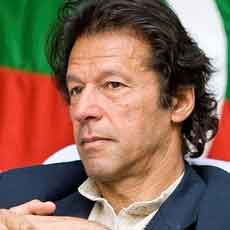
Imran Khan
Ayaz Gul
VOA News
April 28, 2019
ISLAMABAD — Pakistan said Sunday peace in Afghanistan is key to increasing economic connectivity with Central Asian countries under China’s global Belt and Road Initiative (BRI), of which Islamabad is a major beneficiary.
Pakistani Prime Minister Imran Khan told a gathering of business leaders in Beijing that leaders from all the Central Asian countries attended last week’s second BRI conference in the Chinese capital and they mostly talked about Afghan peace as well benefits it would bring for the region.
“This will have dividends for Afghanistan, and Afghanistan certainly needs peace after almost four decades of war, but it will have a huge impact on Pakistan and Central Asian countries. Peace in Afghanistan would increase connectivity between Pakistan and Central Asia, and of course connect China,” Khan said.
The Pakistani leader noted again that his country is helping the peace process in Afghanistan. He was apparently referring to efforts the United States is making to secure a politically negotiated end to the conflict through an intra-Afghan dialogue, involving Taliban insurgents.
“For the first time, after almost 17 years, there is a prospect of peace. Pakistan is now playing its part in getting the Taliban and the (Afghan) government together and hoping that there will be a political settlement,” Khan stressed.
China’s investment
China has invested more than $19 billion in infrastructure and development of power plants in Pakistan, helping the South Asian neighbor improve its transportation networks and energy shortages.
The two countries have vowed to extend to Afghanistan their multi-billion dollar bilateral China-Pakistan Economic Corridor (CPEC) cooperation, which is considered as a flagship pilot project of BRI.
American special envoy for Afghan political reconciliation, Zalmay Khalilzad, is scheduled to arrive Monday in Islamabad for consultations with Pakistani officials about his ongoing discussions with the Taliban, stakeholders in Afghanistan, and countries around the war-shattered nation.
1TV Afghanistan Dari News – April 28, 2019
Afghanistan To Hold Loya Jirga Grand Assembly To Discuss Peace Talks
Radio Free Europe/Radio Liberty
April 28, 2019
Afghanistan is scheduled on April 29 to convene a rare Loya Jirga — a traditional gathering of elders, religious scholars, and prominent Afghans — with more than 2,000 people from across the country having been invited to discuss U.S.-led peace efforts.
Afghan President Ashraf Ghani’s Special Envoy Omar Daudzai said on April 28 that the Loya Jirga will provide the ground for “intra-Afghan talks” with the Taliban.
Several high-ranking officials, including Chief Executive Abdullah Abdullah, have refused to participate in the four-day gathering. Abdullah boycotted the Loya Jirga on the grounds that his team had not been consulted prior to the decision to hold the assembly.
Daudzai said negotiations are under way to convince Abdullah and others to attend the Loya Jirga, which would lay out the government’s negotiating position for future talks with the Taliban.
On April 27, Ghani held a meeting with U.S. special envoy Zalmay Khalilzad, who is trying to find a peaceful resolution to the 17-year war.
“Both sides once again emphasized an intra-Afghan dialogue between the Afghan government and the Taliban, led by the Afghan government,” Ghani’s office said in a statement.
The comments came a day after the United States, Russia, and China said in a joint statement that they have agreed on the goal of withdrawing foreign forces from Afghanistan and to seek an “inclusive Afghan-led” peace process.
Khalilzad has been engaged in a series of talks with the Taliban in Qatar as he looks to bring the extremist group into peace negotiations with the government in Kabul.
Taliban negotiators have so far refused to negotiate with the government, calling it a puppet of the West, and have insisted on the withdrawal of foreign forces before talks with Kabul can begin.
Khalilzad is on a multination tour of the region and is scheduled to visit Qatar — the usual site for negotiations with representatives of the Taliban militants.
The United States has about 14,000 troops in Afghanistan as part of a NATO-led mission, known as Resolute Support, that is training and assisting the Afghan government’s security forces in their battle against Taliban fighters and extremist groups such as Islamic State and Al-Qaeda.
With reporting by tolonews.com, AFP, AP, and Reuters
Copyright (c) 2019. RFE/RL, Inc. Reprinted with the permission of Radio Free Europe/Radio Liberty, 1201 Connecticut Ave NW, Ste 400, Washington DC 20036.
Related
Sayaf urged to chair Loya Jirga

Sayaf
1TV: Afghan President Ashraf Ghani has asked former Jihadi leader Abdu Rabur Rasool Sayaf to chair the upcoming consultative Loya Jirga on peace due to begin on Monday. Participants from 32 provinces have arrived in Kabul to attend the four-day assembly under a large tent near Polytechnic University. Around 3,000 people are expected to attend the event where they will discuss ways to end the 17-year war. Click here to read more (external link).
Related
Women’s Muay Thai Contest In Kabul Wrapped Up
Tolo News: At least 24 women fighters from Kabul attended an annual Muay Thai championship in which eight fighters were selected for the national team. Fighters from different age and weight categories attended the competition – which was kicked off on April 21 and continued until Saturday, April 27. Click here to read more (external link).
Other Sports News
1TV Afghanistan Dari News – April 27, 2019
How the US military’s opium war in Afghanistan was lost

BBC News: Despite the incredible resources the American military were pouring in, Dr Mansfield and his team are now convinced that the US Air Force was using 21st century fighter jets to bomb little more than mud huts. Opium now accounts for around a third of Afghanistan’s GDP, he says. It is by far the country’s biggest cash crop and provides almost 600,000 full-time jobs. Click here to read more (external link).
Ghani Inaugurates New Afghan Parliament
Ayesha Tanzeem
VOA News
April 26, 2019
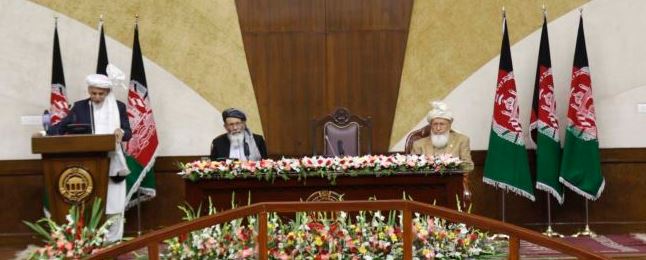
KABUL — Afghan President Ashraf Ghani inaugurated the term of the nation’s new parliament, the Wolesi Jirga, Friday even as Kabul awaits results from an election held last October.
The election for the third parliament since the fall of the Taliban in 2001 was delayed by three years due to differences between the camps of President Ghani and Chief Executive Abdullah Abdullah that dragged the process of electoral reforms.
The constitutional term of the previous parliament ended in 2015, but Ghani allowed it to continue through a presidential decree.
After the elections were finally held in October 2018, the announcement of results was delayed due to controversies surrounding the fairness and transparency of the process and allegations of voter fraud.
Addressing the inaugural ceremony, Ghani hailed the election of mostly young people, who he said would guard women’s and human rights.
He also demanded a deadline for the announcement of results from Kabul province that includes the capital city and surrounding districts. The results are held back as electoral bodies try to verify the results after a large number of allegations of fraud.
Responding to opposition demands for Ghani to step down at the end of his term and allow the formation of an interim government, the president said he would continue in his position until the next election scheduled for September 28.
Constitutionally, Ghani’s term would end on May 22. However, the presidential elections that were supposed to be held earlier this year were delayed until September.
The new parliament starts its business as talks continue between the United States and the Taliban to try to find an end to the ongoing conflict in the country, which has become the longest American conflict in the nation’s history.
The Taliban do not accept the Afghan constitution in its current form and are likely to demand changes if the talks proceed to the next level.
Related