
Boys With Brides: Afghanistan’s Untold Dilemma Of Underage Marriages

By Ron Synovitz & Freshta Jalalzai
Radio Free Europe/Radio Liberty
August 12, 2019
KABUL — Mohammad Wali was just 12 years old when his widowed mother began arranging his marriage to a 24-year-old woman from their village in Ghazni Province.
“I don’t want to be married,” the young Afghan boy is said to have pleaded with his mother. “I just want to play soccer and cricket. I want to go to school.”
But his mother insisted on the marriage to ensure that she and Mohammad Wali’s two teenage sisters would not become street beggars — a possibility she feared because of local inheritance customs for widows who don’t have any male heir.
“Your father is dead and you are my only son,” she explained to him. “If you are killed or something happens to you, all of our property will be divided up by your uncles. Your sisters will get nothing.”
“You must get married,” she is said to have begged her son. “You must marry soon and you must have a son of your own or we could become destitute, without any property, and your sisters will have no say about anything that happens to them.”
Reluctantly, after his mother also promised he could marry a second wife of his own choosing when he was older, young Mohammad agreed to the wedding — consent required from him for the marriage to be valid under Islamic law.
The impoverished family scrimped and saved to gather the double dowry the bride’s father demanded to marry off his daughter to a boy who was too young to support his own family.
Mohammad Wali was married on December 8, 2017, at the age of 13. Within a year, the couple’s first child was born — but to the disappointment of Wali’s mother, it was a baby girl.
Now, shortly after turning 15 and finishing his 10th-grade exams, Wali is expecting his 27-year-old wife to give birth to their first son in October.
His mother is ecstatic.
What About The Boys?
Farzan Hussaini, UNICEF’s child-protection chief for western Afghanistan, says there is no accurate data on how many boys across the country marry before they reach 18. He says that’s because research and public debate about underage marriage in Afghanistan has focused almost exclusively on the plight of child brides.
“It is a fact that it is underreported,” Hussaini says about Afghan boys with brides. “The research that has been conducted does not highlight the situation for boys. This is now a point for us that we definitely will consider as we design future studies on child marriage.”
UNICEF’s available data suggests at least 15 percent of all Afghan girls are married off by their families before they are 16. About one-third of all Afghan girls are married by the time they turn 18 — the legal definition of a child under the Child Protection Act signed into law by Afghan President Ashraf Ghani in March.
It’s a situation that undermines girls’ participation in decision making, their educational opportunities, and their employment prospects — leaving them vulnerable to health risks and the threat of domestic violence.
Hussaini says there is no doubt that underage Afghan brides are more common than child grooms. But in a country where 42 percent of surveyed households have at least one family member who was married before the age of 18, he says the plight of Afghan child grooms remains a painful and largely untold story.
Afghan boys in rural areas are often impelled to marry because of long-held local or tribal traditions — customs on the inheritance rights of widows, the settlement of blood feuds, or prearranged agreements between families to exchange their children for marriage.
Poverty and the displacement of families in war-ravaged regions contribute to the dilemma, Hussaini says.
UNICEF’s latest research on the issue, a 2018 study funded by the UN child-protection agency, found that many Afghans have a “deeply economic and transactional view of marriage.” It says this attitude “provides ongoing impetus to use child marriage as a coping mechanism” for poverty and the devastation of war.
“We know that Afghan boys are also being married below the age of 18,” Hussaini tells RFE/RL. “Unfortunately, people do not talk about it in Afghanistan. This is the reality.”
He says he has seen indications in drought-stricken western Afghanistan that many underaged boys are obliged by their families to agree to arranged marriages.
Hussaini says UNICEF has recently been registering about 200 Afghan boys each month, aged 11 to 17, as they return to Herat Province from Iran where they’ve being working to help support their families.
Nearly half say they’ve already been engaged for an arranged marriage and have been working in Iran to earn the dowry their family must pay to their bride’s father.
Meanwhile, out of 188 child marriages recently documented by UNICEF among displaced families in western Afghanistan, Hussaini says 82 involved boys under the age of 18.
UNICEF’s 2018 study on child marriage in Afghanistan recognizes that its negative impacts “do not stop with young girls, but extend to child grooms and to the families and communities who perpetuate and participate in the practice.”
“Young men and their families are compelled to meet the demands of high bride prices,” it concludes. “Husbands who marry young are often ill-equipped to provide for their new family or understand their wife’s needs.”
War Groom
One well-known Afghan who has spoken out publicly about early marriage in the country is Rahmatullah Nabil, the former head of the National Directorate of Security who is now running for president in Afghanistan’s September 28 election. “Particularly in rural areas, it is very common and it should be changed,” he tells RFE/RL.
Born in a rural district of Wardak Province in 1968, Nabil says his own widowed mother married at the age of 15 and compelled him to marry at a “very young age” after the Soviet-Afghan war began.
“When my father passed away, I was the only remaining son of my mom,” explains Nabil, who was 11 years old in 1979 when Soviet forces invaded the country. “After the Russian invasion in Afghanistan and there was fighting everywhere — particularly in rural areas — my mom said: ‘OK, since the situation is bad, I do not want [it]…to be the end of the family. It means, if something happens to you then nobody will remain.’
“The situation was very tense. A lot of people were killed,” Nabil says. “That was the only worry of my mom, that I should get married earlier and that I should have some kids [so that] if something happened to me, there would be a continuation of the family.”
Contradictory Laws
Afghanistan’s Civil Code sets the marriage age at 18 for males and 16 for girls. It says a father can agree to allow his daughter to marry at 15. There are no circumstances under Afghanistan’s national laws in which a child under 15 can be legally married.
But the Afghan Civil Code is not the only source of law regarding child marriage in Afghanistan. Islamic law and customary rules or local tribal traditions also govern child marriage and sometimes contradict the national laws.
Hussaini notes that the Shari’a and customary laws hold sway across rural Afghanistan, where the majority of Afghans live.
According to Islamic law, a marriage is not valid if the individuals are either unwilling or too young to understand the implications that marriage entails. But Islamic law is vague about a specific age that is considered old enough for “understanding,” leaving the question up to different interpretations by local religious leaders.
Hussaini says pronouncements by various local mullahs across Afghanistan, particularly in rural areas with high illiteracy rates, have been used to justify the marriage of children as young as nine.
Customary laws and local tribal traditions also allow marriage at ages younger than the Afghan Civil Code. Such rules are not officially recognized by the Afghan government in Kabul. But out of political necessity, Afghan government officials often speak in general terms about the need to preserve tribal customs and traditional “Afghan values.”
According to UNICEF, research shows that the judicial system in rural areas of Afghanistan tends to emphasize the “preservation of social order” under customary laws rather than the protection of individual rights under the Civil Code — including child-protection laws.
UNICEF concludes that these shortcomings to the implementation and enforcement of the country’s Civil Code mean the practice of child marriage continues to be prevalent across the country — including the practice of arranged marriages for boys who are younger than 18.
UNICEF’s latest research on Afghan attitudes about child marriage also challenges narratives that suggest decision making about the practice is dominated by Afghan elders. It says decisions are “firmly centered within the family unit” and that male household members are “likely to have greater or final say.” But it finds that women and other family members are also involved in the process.
“It was common to report that children ought to have a say in their marriage, even if they were not allowed to make the final decision, representing a more collective decision-making process,” the 2018 UNICEF study says.
“As such, solutions cannot be simply girl-focused, but must also consider households, communities, and the role of government in providing the necessary structures to support change,” it concludes.
Written by Ron Synovitz in Prague with reporting from Kabul by Freshta Jalalzai and RFE/RL’s Radio Free Afghanistan
Copyright (c) 2019. RFE/RL, Inc. Reprinted with the permission of Radio Free Europe/Radio Liberty, 1201 Connecticut Ave NW, Ste 400, Washington DC 20036.
Tajik Man Emerges In Afghanistan As Leader Of IS Unit Of Central Asian Fighters

Sayvaly Shafiev
By Farangis Najibullah
Radio Free Europe/Radio Liberty
August 12, 2019
A little-known, 31-year-old Tajik man who grew up in a Dushanbe suburb has emerged as a unit leader of the Islamic State (IS) affiliate in Afghanistan as the extremist group tries to expand its footprint in the war-torn country.
A recent report by the UN Security Council says Sayvaly Shafiev leads a group of approximately 200 fighters who hail from Tajikistan, Uzbekistan, and other Central Asian countries.
Shafiev is also involved in recruiting Tajik fighters for IS and using online propaganda in the Tajik language, says the study by the UN Analytical Support and Sanctions Monitoring Team.
Authorities in Dushanbe believe Shafiev and his associates are training their Tajik recruits in Afghanistan and sending them back to Tajikistan to create a terrorist sleeper cell.
A Tajik law enforcement official said Shafiev has been “under the Tajik security services’ radar for quite some time.”
“We know that Shafiev has become a key IS figure in Afghanistan,” he told RFE/RL on August 8. The official spoke on condition of anonymity as he wasn’t authorized to speak to the media.
Shafiev goes by the nom de guerre Mauaviya, while Tajik security services say that among the Tajik recruits he is also known as Jalolobodi.
The IS affiliate in Afghanistan calls itself the Khorasan Province, a territory that historically included parts of modern day Afghanistan, Central Asia, and Iran.
According to the UN report, Shafiev is a member of the IS-Khorasan top leadership, the shura, highlighting his significance among the ranks of the notorious terrorist organization.
‘Religious Student’
Little is known about Shafiev’s life in Tajikistan, where he was born and raised in the Mirzo Rizo village of the Hisor district, west of the capital, Dushanbe, in what the official described as an “ordinary, low-income” family.
Shafiev “showed great interest” in religion from an early age and left Tajikistan in 2011 or 2012 to “study religion” in Pakistan, the official said. He spent at least two years abroad.
Shafiev left Tajikistan for the second time in 2014 when the IS was capturing significant territory in Syria and Iraq.
“Shafiev’s exact movements are not known, but Tajik security services believe he left for Turkey and spent some time there campaigning for IS,” the Tajik official said.
“He wanted to go to Syria, but it’s not clear if he entered Syria or went to Afghanistan instead,” the official added.
Shafiev’s father has told Tajik authorities that his son hasn’t contacted his family in the past two years.
But Shafiev has reportedly been active online in recent years, urging Tajiks to join IS and its “jihad.”
Tajikistan’s National Security Committee authorities say Shafiev promotes IS ideology under the guise of Islam, mostly using the increasingly popular Zello app and mainly targeting Tajik migrant workers in Russia, where there are several hundred thousand.
He allegedly helps some of the recruits obtain tickets, visas, and fake passports to travel from Russia to Afghanistan to get terrorist training in camps in the territories controlled by various militant groups.
Shafiev’s name was mentioned in a terrorism-related case in a Dushanbe court as recently as May 8.
The defendant in the case was a 36-year-old Tajik man who was allegedly radicalized by online IS recruiters while working in Russia in 2016.
According to the court document, the defendant, Tojiddin Nosirov, eventually pledged alliance to IS and returned to Tajikistan in 2017 as a member of an alleged IS sleeper cell waiting for an order to stage attacks.
The court heard that Nosirov had been listening to lectures and instructions by Shafiev and others about the jihad and IS ideology via Zello.
‘Thwarted Attacks’ In Dushanbe And Shafiev
More prominently, however, Shafiev’s name has been linked by Tajik security services to an alleged thwarted plot to carry out several major terrorist attacks in Dushanbe in 2018.
In a raid in February 2018, the National Security Committee reportedly detained 14 people who were subsequently accused of planning to attack several high-profile targets, including foreign embassies, a Russian military base, and government buildings.
According to the security services, the attacks were going to be carried out during Norouz, the Persian New Year celebrations in March 2018.
While the claim of the alleged attack cannot be independently verified and scant evidence was shown to prove it, the 14 men went on trial on terrorism-related charges. Twelve of the defendants were sentenced to seven years in prison each and two alleged ringleaders were handed 26-year sentences.
In July 2018, state TV aired a documentary, The Mercenaries, prepared by the National Security Committee about the alleged thwarted plot.
Parading the defendants before the camera, the documentary claimed that the men had undergone training in Afghanistan, where they allegedly learned how to use weapons and make improvised explosive devices.
The defendants said the thwarted plot was aimed at creating chaos in Tajikistan and undermining public trust in the country’s stability.
One of the alleged leaders, 26-year-old Mahmudjon Azamov, said he had been in online contact with Shafiev since November 2015.
“Shafiev…would call on people to join the religion, to jihad, and to the Islamic State,” said Azamov, who was a migrant worker in Russia at the time.
Just three months later, in February 2016, Shafiev and his associates helped Azamov take several flights through Moscow, Dubai, and Mashhad to finally arrive in Kabul.
Azamov said he spent two years in the Achin district of Nangarhar Province in eastern Afghanistan, where he underwent terrorist training from Shafiev’s associates until December 2017.
Azamov claimed he was sent back to Tajikistan with an order by Shafiev to join the sleeper cell of other IS followers there and wait for an order to carry out attacks.
RFE/RL cannot independently verify Azamov’s and other defendants’ claims and it remains unknown whether their accounts were obtained under duress.
‘Radicalized By Shafiev’
In January 2019, Afghan authorities handed over eight Tajik nationals arrested in Afghanistan for their alleged connections to IS.
“Two of them were captured during an Afghan security operation, three were detained in Kabul, and another Tajik national was arrested along his wife and child while crossing into Afghanistan from the Iranian border,” the Tajik law enforcement official said.
During interrogations in Dushanbe, six of the eight claimed they were in direct contact with Shafiev and that it was Shafiev who convinced them to join IS, the official told RFE/RL.
Speaking from Kabul, Afghan Defense Ministry spokesman Rohullah Ahmadzai told RFE/RL that the Afghan and Tajik governments have established close cooperation, intelligence sharing, and a “coordinated campaign against IS, which they see as a common threat to the stability of the entire region.”
Ahmadzai said a “number of Tajik nationals, including both men and women with links to IS,” have been detained in Afghanistan and are currently being held in Afghan custody.
IS Footprint In Tajikistan
With ongoing clashes and air strikes in Afghanistan, it’s not known if Shafiev is alive or dead. But he marks a second Tajik national becoming a significant figure in the notorious terrorist network.
In 2015, Gulmurod Halimov, a former commander of the Tajik Interior Ministry’s special forces (OMON), joined IS in Syria.
In 2016, the U.S. State Department named Halimov as a key member of IS and offered a $3 million reward for information on his whereabouts.
IS claimed a terrorist attack that brutally killed four Western cyclists in southern Tajikistan in July 2018.
The government, however, blames the attack on the banned opposition group, the Islamic Renaissance Party, a claim the party strongly denies.
Two outbreaks of deadly prison violence in Tajikistan have also been linked by the government to alleged IS members in recent months.
Tajik authorities say three prison guards and 29 inmates were killed in a riot in a maximum-security facility in the Vahdat district outside Dushanbe late on May 19.
The Interior Ministry said the violence was instigated by 30 inmates, including 17 IS members. The claim cannot be independently verified.
In November 2018, violence broke out at another maximum-security prison in the northern city of Khujand. The government said 21 prisoners and two prison guards were killed in that incident.
A website linked to IS claimed that one of its “fighters” was responsible for starting the riot in Khujand, a claim impossible to confirm.
The government in Dushanbe says some 1,900 Tajik nationals had joined IS in Syria and Iraq before the terrorist group was largely defeated there.
Hundreds of the Tajik fighters and their families were killed in fighting and air strikes. Some have returned to Tajikistan, taking advantage of an amnesty and have been reintegrated back into society.
In April, Tajikistan repatriated 84 children and teenagers from Iraq whose Tajik mothers have been imprisoned by Iraqi authorities under charges of belonging to IS.
According to the UN Analytical Support and Sanctions Monitoring Team, approximately 100 fighters from Tajikistan are currently believed to be based in Afghanistan with various militant groups. Up to 30 of them belong to Jamaat Ansarullah, the study says.
RFE/RL’s Tajik Service correspondent Mumin Ahmadi contributed to this report.
Copyright (c) 2019. RFE/RL, Inc. Reprinted with the permission of Radio Free Europe/Radio Liberty, 1201 Connecticut Ave NW, Ste 400, Washington DC 20036.
Taliban: Afghan Peace Talks With U.S. ‘Long And Useful’; Sides To Consult
 Radio Free Europe/Radio Liberty
August 12, 2019
U.S. and Taliban negotiators will consult their leaders following an eighth round of peace talks to end the nearly 18-year war in Afghanistan, the Taliban says.
Taliban spokesman Zabihullah Mujahid said the negotiations in the Qatari capital, Doha, ended early on August 12, adding: “It was long and useful. Both sides decided to consult with their leaders/seniors for the next steps.”
U.S. officials didn’t immediately comment.
But on August 11, as Afghans were marking the Muslim festival of Eid Al-Adha, U.S. peace envoy Zalmay Khalilzad expressed hope that “this is the last Eid where Afghanistan is at war.”
“I know Afghans yearn for peace. We stand with them and are working hard toward a lasting & honorable peace agreement and a sovereign Afghanistan which poses no threat to any other country,” Khalilzad tweeted.
“Many scholars believe that the deeper meaning of [Eid Al-Adha] is to sacrifice one’s ego. Leaders on all sides of the war in Afghanistan must take this to heart as we strive for peace,” he wrote in a separate tweet.
Few details have emerged, but a U.S.-Taliban deal would cover the withdrawal of foreign forces from Afghanistan in exchange for guarantees by the Taliban that Afghanistan would not become a haven for other extremist groups.
Such an accord would be followed by intra-Afghan peace negotiations on a political settlement and a permanent cease-fire.
The Taliban has so far refused to negotiate with the Western-backed government in Kabul, calling it a “puppet regime.”
Upcoming Presidential Election
As U.S. and Taliban negotiators appeared to be closing in on an accord, Afghan President Ashraf Ghani on August 11 said Afghanistan’s future “cannot be decided outside.”
Ghani insisted that peace was only possible “between the Islamic Republic of Afghanistan and the Taliban movement.”
Washington has said it wants a peace deal finalized by September 1, and some U.S. officials have hinted at the possibility that the Afghan presidential election set for September 28 could be canceled in the event of a peace settlement and the formation of an interim government that the Taliban would join.
Ghani called for the vote to be held as planned, saying: “Without a legitimate and strong government that comes through an election, Afghans won’t be able to achieve a dignified peace.”
Earlier this month, the militants denounced the election as a “sham,” and warned fellow Afghans to stay away from campaign rallies and the polls, saying such gatherings could be targeted.
On August 12, Afghanistan’s National Directorate For Security intelligence service announced in a statement that 35 Taliban prisoners will be released as “a clear sign” of the government’s “strong will” for peace.
With reporting by Reuters, AP, AFP, and RFE/RL’s Radio Free Afghanistan
Copyright (c) 2019. RFE/RL, Inc. Reprinted with the permission of Radio Free Europe/Radio Liberty, 1201 Connecticut Ave NW, Ste 400, Washington DC 20036.
Related
1TV Afghanistan Dari New – August 11, 2019
Afghans Spend First Day Of Eid In Peace
 Tolo News: Afghans around the country spent the first day of Eid al-Adha in peace as the Ministry of Interior says twelve security incidents were prevented on Sunday. Residents of different provinces called on the Taliban to quit violence and celebrate Eid together with other Afghans in a peaceful environment. Click here to read more (external link).
Related
Afghanistan’s Fate ‘Can’t Be Decided Outside,’ President Says

Ghani
By RFE/RL’s Radio Free Afghanistan
August 11, 2019
KABUL — Afghan President Ashraf Ghani has rejected foreign interference and called for the presidential election to be held next month as planned, amid talks between the United States and the Taliban aimed at bringing the nearly 18-year war in Afghanistan to an end.
“Without a legitimate and strong government that comes through an election, Afghans won’t be able to achieve a dignified peace,” Ghani said in a televised speech on August 11 marking the Muslim festival of Eid al-Adha.
Ghani insisted that peace was only possible “between the Islamic Republic of Afghanistan and the Taliban movement.”
“Our future cannot be decided outside, he said, adding: “The fate of Afghanistan will be decided here in this homeland. We don’t want anyone to intervene in our affairs.”
Ghani made the comments as U.S. and Taliban negotiators appeared to be closing in on a peace agreement without the Western-backed government in Kabul at the table.
Both sides have cited “progress” in their negotiations in Qatar, where the militant group has a political office.
Few details have emerged, but a U.S.-Taliban deal would cover the withdrawal of foreign forces from Afghanistan in exchange for guarantees by the Taliban that Afghanistan would not become a haven for other extremist groups.
Such an accord would be followed by intra-Afghan peace negotiations on a political settlement and a permanent cease-fire.
Washington has said it wants a deal finalized by September 1, and some U.S. officials have hinted at the possibility that the presidential polls scheduled for September 28 could be canceled in the event of a peace settlement and the formation of an interim government that the Taliban would join.
In his August 11 speech, Ghani said: “We don’t want a peace in which Afghans wouldn’t have dignity. We don’t want a peace that would cause people to leave their country. We don’t want brain drain and we don’t want investment drain.”
Meanwhile, Taliban spokesman Suhail Shaheen issued a statement expressing hope that Afghanistan “will celebrate future Eids under the Islamic system, without occupation, under an environment of permanent peace and unity.”
The Taliban has so far refused to negotiate with the Afghan government, calling it a “puppet regime.”
On August 6, the militants denounced the presidential vote as a “sham,” and warned fellow Afghans to stay away from campaign rallies and the polls, saying such gatherings could be targeted.
With reporting by AP and dpa
Copyright (c) 2019. RFE/RL, Inc. Reprinted with the permission of Radio Free Europe/Radio Liberty, 1201 Connecticut Ave NW, Ste 400, Washington DC 20036.
Related
Bamyan tourist arrivals decline 30 percent: officials
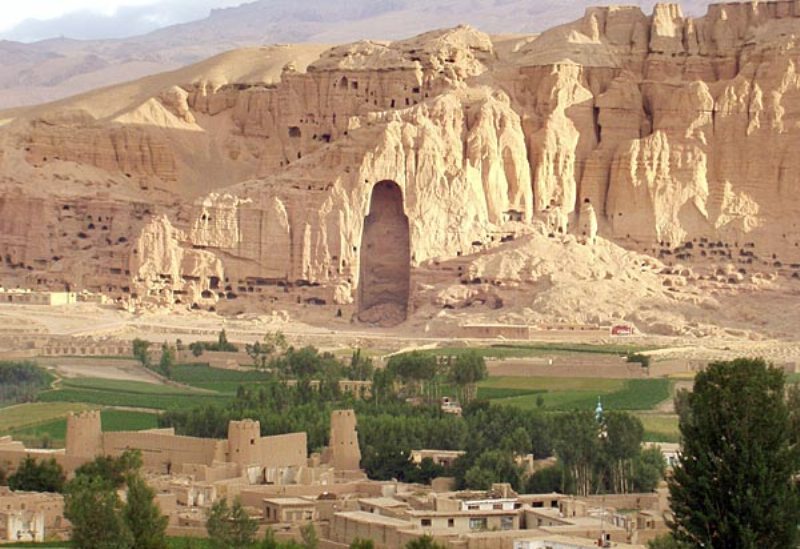
1TV: Tourist arrivals in central Afghan province of Bamyan have declined 30 percent, local officials said. The decline is driven in large part by insecurity on Maidan Wardak-Bamyan and Ghorband Valley. Click here to read more (external link).
Shahzad’s contract suspended by Afghanistan Cricket Board

Mohammad Shahzad
1TV: Afghanistan wicket-keeper batsman Mohammad Shahzad has been suspended by cricket board of the country for breaching the Player Code of Conduct. In a statement, Afghanistan Cricket Board said that Shahzad had travelled out of the country without its permission. The statement did not say which country Shahzad had travelled to. Click here to read more (external link).
1TV Afghanistan Dari News – August 10, 2019