
 Ariana: An intra-Afghan meeting that was scheduled to be held in China [was] delayed for an unspecified period of time after representatives of United States, China, Russia, and Pakistan met in Moscow on Friday. The two-day conference was scheduled for October 28 between representatives of Taliban and Afghan politicians including Kabul government officials. Click here to read more (external link).
NATO Renews Partnership With Afghans, Urges Resumption of Talks

Scott Miller
Tolo News: Gen. Scott Miller, the commander of US Forces in Afghanistan on Saturday commended the Afghan National Security and Defense Forces for their role in the recent elections and said that these forces are developing well and are upgraded. Speaking at a press conference on the sidelines of NATO’s Defense Ministers’Meeting in Brussel, the top US general in Afghanistan said that all NATO nations are fully committed to their partnership with Afghanistan. Click here to read more (external link).
Under 18 Female Rugby Competitions Held in Kabul

Tolo News: The first round of female Under 18 rugby qualifying competitions will be Kabul on Saturday. In this one-day competition, 48 athletes from four schools from Kabul will participate and 18 players will be eligible to try out for the women’s national rugby team. Click here to read more (external link).
Dressing Afghanistan: young designers get creative in Kabul

Rahiba Rahimi
The Guardian (UK): In a deeply conservative society ravaged by years of war, Afghan women still want to be free to wear clothes with style -There’s a steady stream of customers coming through the doors of Rahiba Rahimi’s fashion studio. The 25-year-old’s bold, intricate designs are fitted on mannequins and hung on rails around her showroom in Kabul. Rahimi is the lead designer and co-proprietor of Laman, a clothing label she helped build in the Afghan capital five years ago. Click here to read more (external link).
1TV Afghanistan Dari News – October 25, 2019
Three NDS Members, Two Civilians Killed in Suicide Attack

Tolo News: At least two civilians—one of whom was a child–and three National Directorate of Security members were killed in a suicide attack on an NDS forces’ convoy in Jalalabad, a spokesman for the provincial governor, Attaullah Khogyani confirmed. The attack took place at approximately 2 pm in Jalalabad’s PD4 area after a suicide bomber detonated his explosives close to a convoy of the NDS, Khogyani said. Click here to read more (external link).
More Security News
U.S. Official: Accuracy More Important Than Speed As Afghan Vote Count Continues

Alice Wells
Radio Free Europe/Radio Liberty
October 25, 2019
A top U.S. official has called for patience as Afghanistan attempts to finalize counting of its September 28 election results following last weekend’s delay.
Alice Wells, the assistant secretary of state for South and Central Asia, said on October 24 after a visit to Kabul that all major candidates had vowed to accept the results.
“I stressed the need for a transparent and credible tallying process and for the ability of Afghanistan’s electoral institutions to lead the process without pressure or interference,” she told reporters after returning to Washington.
“At this stage, accuracy in tabulating the results is more important than speed, and I encouraged all candidates to exercise restraint and to await the official announcement of election results,” she said.
Preliminary results from the presidential election were expected to be reported on October 19 but were delayed by Afghanistan’s Independent Election Commission (IEC).
IEC chief Hawa Alam Nuristani told a Kabul news conference that the delay would “further ensure the transparency of the [electoral] process” and “restore the people’s confidence in it.”
“Unfortunately, because of some technical issues and for transparency, we could not announce the results based on the election timetable,” she said.
Election officials reported trouble from the beginning in collecting and transferring massive amounts of information to the main IEC computer server from biometric devices used to record voter fingerprints and pictures. A time-consuming exercise of identifying fraudulent votes was cited as another major factor for the slow data entry.
All of the previous elections in Afghanistan held since the Taliban government was forced out in 2001 have been marred by allegations of fraud, leading the IEC to use biometric devices for the first time.
The commission vowed to release the preliminary results as soon as possible but did not give a possible date.
Two senior IEC members had told VOA the results would likely be delayed a week.
The presidential election was beset by violence and accusations of fraud.
The United Nations Assistance Mission in Afghanistan on October 15 said 85 people were killed and another 373 wounded in election violence during the period from June 8 to September 30.
On polling day alone, 28 civilians were killed and 249 injured. Children accounted for more than one-third of the victims.
Afghan President Ashraf Ghani insisted on holding the controversial vote despite the abrupt collapse in U.S.-Taliban peace talks earlier in September.
Fifteen candidates were on the ballot, but the election was widely seen as a two-horse race between Ghani, seeking another five-year term, and Chief Executive Abdullah Abdullah.
With reporting by AFP, VOA, and RFE/RL’s Radio Free Afghanistan
Copyright (c) 2019. RFE/RL, Inc. Reprinted with the permission of Radio Free Europe/Radio Liberty, 1201 Connecticut Ave NW, Ste 400, Washington DC 20036.
Cricket: Afghanistan Against South Africa Starts World Cup 2020
 Tolo News: Afghanistan’s U19 Cricket Team will face host South Africa in the opening game of 2020 U-19 World Cup on January 17. The schedule for the 16-team tournament, to be played over 24 days across eight venues, was announced by the International Cricket Council on Thursday. Afghanistan is playing against South Africa, UAE and Canada in Group D of the competition. Click here to read more (external link).
New Pakistani Energy Proposal Could Keep Kyrgyz, Tajiks Warm In Winter — But At A Price
 By Bruce Pannier
Radio Free Europe/Radio Liberty
October 25, 2019
A new proposal by Pakistani officials could bring much needed energy to people in Kyrgyzstan and Tajikistan during the frigid winters in a long-planned project that will also see Central Asian energy go to Afghanistan and Pakistan.
A chain of hydropower plants strung across Tajikistan and Kyrgyzstan are a key part of the Central Asia-South Asia 1000 (CASA-1000) energy project that aims to bring some 300 megawatts (MW) of electricity to Afghanistan and 1,000 MW to Pakistan annually.
Kyrgyz President Sooronbai Jeenbekov said on a visit to the 1,200 MW Toktogul hydropower plant (HPP) on October 18 that “the effective implementation of the CASA-1000 project will greatly increase the export potential of the country to states in South Asia.”
Toktogul has been the key domestic source of power for Kyrgyzstan for more than 40 years and, according to Jeenbekov, after its current modernization the HPP will continue to operate for at least another 40 years.
That is not only important for Kyrgyzstan but for the entire CASA-1000 project.
As the governments in Bishkek and Dushanbe have anxiously watched the project develop, they have been looking forward to reaping new revenues from the sale of power to Pakistan and Afghanistan.
But Pakistan has just asked for a change to that equation that would benefit the Tajik and Kyrgyz people during cold months but make CASA-1000 a bit less profitable for the state coffers of their countries.
Fantastic News?
Waseem Mukhtar, Pakistan’s power division additional secretary, said in September that Islamabad wants CASA-1000 to be an “open access” power line, meaning that Pakistan could export its electricity as well as receive it from Kyrgyzstan and Tajikistan.
In comments published by Pakistan’s The News on September 22, Mukhtar claimed Pakistan now has a surplus of electricity during some months and could supply Kyrgyzstan and Tajikistan with electricity during the winter when those two countries need it most.
At the same time, Islamabad would import the 1,000 MW annually that it agreed to take during the summer when its needs are greatest.
Looking at CASA-1000 as a regional power project, this announcement appears to be fantastic news.
Kyrgyzstan and Tajikistan have done a lot in the last decade to improve their ability to generate and distribute power across their countries in the winter.
But power outages and rationing continue — and a new source of power brought via a transmission line that should soon exist would benefit many people in the two Central Asian countries.
Outside Help
With a great deal of outside help, Kyrgyzstan and Tajikistan have been busy preparing their HPPs and building new power transmission lines in expectation of exporting electricity and earning extra revenue.
Pakistan’s proposal suggests there would simply be an exchange during certain months — take some energy now and give some later.
This would significantly diminish the profits going to Bishkek and Dushanbe.
Jeenbekov spoke at Toktogul not only to remind people of the reservoir’s importance, but also to announce that the HPP’s modernization — due to be finished in 2023 — is currently ahead of schedule.
The modernization was necessitated by the fact that three of the four turbines at Toktogul went out of operation at the end of 2015.
The Asian Development Bank and the Eurasian Development Bank are financing the replacement of all four turbines, to be carried out by French and Swiss companies.
As part of the CASA-1000 project, a 500-kilovolt power transmission line still needs to be built from the Datka power substation in Kyrgyzstan to the Khujand substation in Tajikistan.
There are also huge costs for construction and upgrades in Tajikistan, Afghanistan, and Pakistan.
International financial organizations are covering some of the costs, but the individual governments will have to pay for much of the HPP and substation upgrades as well as power transmission lines.
Tajikistan’s Sangtuda-1 HPP, built with Russian help, and Sangtuda-2 HPP, built with Iranian aid, are both part of the CASA-1000 project and both HPPs have consistently been in the red since they were launched, in 2009 and 2011, respectively.
Security Concerns
Pakistan’s Mukhtar also mentioned another change Islamabad wants to make to CASA-1000.
Security in Afghanistan has always been a concern and Mukhtar said if there was a disruption in the supply of electricity from Central Asia to South Asia “during the period from May to October then Pakistan will penalize the electricity supplier countries.”
This is crucial because power lines from Tajikistan and Uzbekistan to Afghanistan have been cut temporarily several times in recent years.
That last demand appears to be a new requirement from Pakistan on multinational energy projects that transit Afghanistan. The News reported in July that Islamabad had conveyed a similar demand for the Turkmenistan-Afghanistan-Pakistan-India (TAPI) natural gas pipeline project.
“In case of a halt of gas provision to Pakistan because of any subversive activity in Afghanistan, Pakistan will never take the risk at any cost, rather Turkmenistan will have to bear the risk,” the report said.
In the case of CASA-1000, it is worth mentioning that fighting in Afghanistan increases during the spring and summer, the months when Kyrgyzstan and Tajikistan would be exporting their electricity south.
The potential of CASA-1000 would be augmented by Pakistan’s reverse flow of electricity, though it remains unclear how much electricity Pakistan could provide or why it now says it has a surplus of energy in the winter.
But the new option does require a new explanation of the importance of the project for people in Kyrgyzstan and Tajikistan.
Profit from the project would be in increased production capacity at factories and plants, as well as healthier populations sitting in well-heated, well-lit homes — not entirely in export revenues from the sale of electricity.
Copyright (c) 2019. RFE/RL, Inc. Reprinted with the permission of Radio Free Europe/Radio Liberty, 1201 Connecticut Ave NW, Ste 400, Washington DC 20036.
How Iran Found Its Feet in Afghanistan
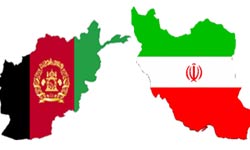
Foreign Affairs: Iran wants to see stability in Afghanistan. The Soviet occupation and subsequent instability sent an estimated three million Afghan refugees into Iran, where their presence strained resources and public services in many towns and cities across the country. Moreover, Tehran fears that Saudi Arabia will exploit volatility in Afghanistan to cultivate proxies on Iran’s eastern flank. Click here to read more (external link).