
 Tolo News: At least five employees of the Da Afghanistan Breshna Sherkat (DABS), Afghanistan’s largest power distribution company, were killed in a roadside mine blast in Zabul province on Thursday, officials said. One other was wounded in the blast, according to officials. Click here to read more (external link).
Taliban Ready For Reduction in Afghan Violence To Advance Talks With US, Says Pakistan

Shah Mahmood Qureshi
Ayaz Gul
VOA News
January 16, 2020
ISLAMABAD – Pakistan announced Thursday the Taliban is ready to reduce violence in Afghanistan, calling it a major breakthrough toward reaching a long-awaited peace deal the insurgent group has been negotiating with the United States.
Foreign Minister Shah Mehmood Qureshi revealed in a video message that Islamabad has been helping in the peace process to bring stability to Pakistan, Afghanistan and the region.
“Today a major development has taken place in this effort. The Taliban has accepted the demand for a reduction in violence. I believe it is a major step toward the (U.S.-Taliban) peace agreement,” Qureshi said. He did not share further details.
“The good thing for Pakistan is that the responsibility it took for promoting the (Afghan) reconciliation has effectively been discharged,” the foreign minister noted. Pakistan hoped the effort would lead to peace so it would benefit the people in both neighboring countries, Qureshi added.
The foreign minister, who is currently visiting Washington, made the revelation ahead of his meetings with U.S. Secretary of State Mike Pompeo and National Security Advisor Robert O’ Brien.
The announcement comes amid media reports Taliban chief Haibatullah Akhund has approved a week-long cease-fire with U.S.-led foreign forces to end the deadlock in signing a foreign troop withdrawal agreement U.S. and Taliban interlocutors have negotiated in their yearlong talks, held mostly in Qatar.
Chief Taliban spokesman Zabihullah Mujahid when asked for a confirmation on whether his leadership has agreed to a cease-fire, told VOA: “I am in the process of collecting the information and will share the details as soon as I get them.”
U.S. chief negotiator Zalmay Khalilzad has been demanding the Taliban agree to a brief cessation in hostilities before the two adversaries in the 18-year-old Afghan war could sign the deal.
Insurgent negotiators in Doha, reports said, were expected to share their cease-fire decision with Khalilzad on Wednesday. The U.S. envoy is said to be staying in the Qatari capital to hear from the insurgents whether they were ready to accept his demand, though U.S. officials have not commented on his presence in the Gulf nation.
Khalilzad paused the dialogue process last month after insurgents staged a major attack on the largest U.S. military base of Bagram in Afghanistan that killed several Afghan civilians and injured scores of others.
The proposed agreement, if signed, would require the Taliban to immediately enter into negotiations with Afghan stakeholders to discuss a nationwide cease-fire and a power-sharing understanding to bring an end to decades of deadly hostilities in the country.
Related
Iran’s New Quds Force Leader Has A Long History With Afghanistan
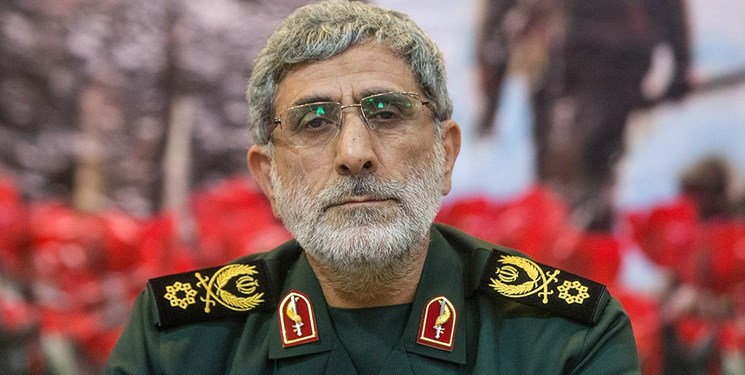
Qaani
By Frud Bezhan
Radio Free Europe/Radio Liberty
January 15, 2020
It was in the late 1980s when Ismail Qaani — then a local commander in Iran’s powerful Islamic Revolutionary Guards Corps (IRGC) — first became active in Afghanistan.
It was to be the start of Qaani’s decades-long involvement in Iran’s eastern neighbor, where Tehran has carved up influence by arming and offering political and economic backing mostly to the Shi’ite and Persian-speaking communities.
Qaani on January 3 became the chief of Iran’s elite Quds Force, the overseas operations arm of the IRGC, established following the 1979 Islamic Revolution to defend the country’s theocratic system.
The 63-year-old general succeeded Major General Qasem Soleimani, who was killed in a U.S. drone strike in the Iraqi capital, Baghdad, early on January 3. He had long served as Soleimani’s deputy.
Mysterious Visit
Soon after Qaani’s appointment, photos of the media-shy general appeared in the Afghan media from a mysterious trip he took to Afghanistan in 2018.
Qaani was in several photos alongside Mohammad Tahir Zuhair, the governor of Bamiyan Province, a predominately Hazara area in central Afghanistan.
Zuhair told RFE/RL’s Radio Free Afghanistan on January 9 that Qaani introduced himself as Iran’s deputy ambassador to the country and said his name was “Ismaili.” He says he didn’t know that Qaani was the deputy chief of the Quds Force.
“We were informed by Kabul that an Iranian delegation was coming to Bamiyan to visit a hospital that was being built with Iranian funds,” said Zubair. “They went straight from the airport to the hospital. They were at the hospital for around 45 minutes. Then they came to my office. I held talks with them for around 10 minutes. They assured us that the construction of the hospital would be completed.”
Afghanistan’s acting foreign minister, Idrees Zaman, said on January 7 that Kabul was investigating the “exact nature” of Qaani’s visit.
“At this point, I can assure you that he was never the deputy ambassador in Afghanistan,” said Zaman.
Qaani also visited Kabul in the same year.
He was among an Iranian delegation that held talks with Afghan President Ashraf Ghani and Chief Executive Officer Abdullah Abdullah, local media reported.
History Of Violence
Qaani’s recent trips to Afghanistan are just the latest examples of his activities in the war-torn country.
Born in the northeastern Iranian city of Mashhad — less than 200 kilometers from Afghanistan — Qaani joined the IRGC in 1980.
After the 1980-88 Iran-Iraq War, Soleimani spearheaded Tehran’s operations in the west, spreading Tehran’s influence in the Middle East. Qaani, meanwhile, led Iranian activities in the east: Afghanistan, Pakistan, and Central Asia. He was also stationed in Iran’s Khorasan Province, which shares a border with Afghanistan and Turkmenistan.
In the 1990s, Afghanistan was consumed by a vicious civil war among the warring mujahedin factions that had toppled the communist regime in Kabul just three years after the end of the Soviet Union’s decade-long occupation. The civil war ended when the Taliban seized power of the capital in 1996.
“In the 1990s, as a local IRGC commander, Qaani got involved in Iran’s war against Afghan drug cartels and later in the war in Afghanistan,” said Ali Alfoneh, a senior fellow at The Arab Gulf States Institute in Washington.
Tehran provided support to the Northern Alliance, a loose coalition of mujahedin militias that maintained control of a small section of northern Afghanistan as it battled the Taliban. The military front was led by Ahmad Shah Masud, the famed anti-Soviet commander.
Afghanistan’s Tolo News published a photo of what it said was Qaani and Masud in Tajikistan in 1999.
Alfoneh, an IRGC expert, said Qaani was involved in providing logistical, financial, and military support to the Northern Alliance. Tehran was one of the main backers of the alliance alongside India, Russia, and the United States.
He added that Qaani frequently visited Tajikistan — Afghanistan’s northern neighbor — where the Northern Alliance sent its fighters for treatment and received weapon shipments from allies abroad.
“Qaani appears to have traveled into Afghanistan to establish a presence,” said Alfoneh. “That is particularly true after the Taliban seizure of Kabul.”
It was around this time that Soleimani made Qaani his deputy.
Shi’ite-majority Iran backed the alliance because it was concerned about the growing strength of the Taliban, a fundamentalist Sunni group that was backed by Tehran’s regional rivals — Saudi Arabia, the United Arab Emirates, and Pakistan.
Iran and the Taliban were on the verge of war in 1998 after eight Iranian diplomats and an employee of Iran’s state-run IRNA news agency were killed at the Iranian Consulate when Mazar-e Sharif was overrun by Taliban fighters. The Taliban denied any involvement in their deaths. Outraged by the deaths, Tehran deployed tens of thousands of troops along the border with Afghanistan — but stopped short of invading the country.
The Northern Alliance toppled the Taliban regime after the U.S. invasion in 2001.
Afghan Proxy
When the Syrian civil war erupted in 2011, the IRGC sent military advisers and deployed thousands of trained Shi’ite fighters to prop up the regime of President Bashar al-Assad. Among them was the Fatemiyoun Brigade, comprising mainly Afghans from the Shi’ite Hazara minority.
The Fatemiyoun Brigade included veterans of the Abuzar Brigade, an Afghan militia made up of Shi’a that fought on Iran’s side in the war against Iraq.
“Qaani may have been personally involved in its reorganization,” said Alfoneh, although he added that it was midlevel Quds Force commanders who deployed the Fatemiyoun in Syria and not Qaani himself.
Qaani is also reported to have visited Afghanistan on several occasions at the height of the Syrian conflict.
Related
1TV Afghanistan Dari News – January 15, 2020
Ceasefire Necessary for Talks: Mohib

Hamdullah Mohib
Tolo News: Hamdullah Mohib, Afghanistan’s National Security Adviser, on Wednesday at the Raisina Dialogue multilateral conference in New Delhi, said that “Peace for our people means the end of violence – this is why we insist that a ceasefire is necessary to create a conducive environment for talks.” “First and most importantly, peace in our land is long overdue. People still long to see a day where they can send their children to school and visit friends without the persistent fear that they might be the target of terrorism,” said Mohib. Click here to read more (external link).
Over 130 killed as avalanches and floods hit Pakistan, Afghanistan
 Press TV
January 15, 2020
Avalanches, flooding and harsh winter weather has claimed lives of more than 130 people across Pakistan and Afghanistan in recent days, local officials say.
Search teams found the bodies of 14 people buried by avalanches and heavy snowfall in Pakistani-administered Kashmir Wednesday, with harsh weather hampering rescuers as they race to find any survivors, officials said.
The death toll from days of bad weather now stands at 76 in Kashmir and at least 100 across the country, according to a statement from the National Disaster Management Authority (NDMA).
Most were killed in Kashmir’s picturesque Neelum Valley, which had been hard hit by avalanches earlier in the week, said operations director of the Kashmiri disaster management authority Saeed ur Rehamn Qureshi.
He said “scores” of houses had been damaged, and put the death toll slightly higher than the national authorities, at 77 dead with 94 wounded.
One Neelum Valley resident, Lal Hussain Minhas, said he had pulled his cousin’s wife from under the snow and debris when her house was hit by an avalanche.
Now, he told AFP by telephone, he and other locals are trying to reach two of her children trapped beneath a collapsed roof.
Some two dozen people were killed in heavy snowfall in other parts of the country, the NDMA said.
Frequent avalanches and landslides occur in Kashmir during winter, often blocking roads and leaving communities isolated.
“The severe snowfalls and landslides in AJK have caused misery & deaths,” tweeted Pakistan’s prime minister, Imran Khan, referring to the part of Kashmir controlled by Islamabad.
Pakistan’s Prime Minister Imran Khan on Wednesday visited some of the injured in a hospital in Muzaffarabad, the capital of Pakistan-administered Kashmir.
Authorities have shuttered schools, while several highways and roads were closed across the country’s northern mountainous areas, according to officials.
To the south-west, in Balochistan province, at least 31 people have been killed in separate weather-related incidents.
“Most of those who died were women and children,” said Mohammad Younus, an official with the provincial disaster management authority, adding that hundreds remained stranded.
Forecasts suggest more harsh weather is on the way.
Across the border in Afghanistan, more than 300 houses were either destroyed or partially damaged throughout the country, said Ahmad Tamim Azimi, a spokesman for the natural disaster management authority.
“A cold snap, heavy snowfall and rains that started two weeks ago have caused damage,” he said.
Most casualties were caused after roofs collapsed under thick snow, he added. Hardest hit were southern Kandahar, Helmand, Zabul and western Herat provinces.
In Herat, seven people – all members of the same family and including children – died when their roof caved in, Azimi said.
Harsh winters often take a heavy toll in mountainous Afghanistan, and the country remains poor despite billions of dollars in aid from the international community.
Avalanches kill 12 in Indian-controlled Kashmir
In Indian-administered Kashmir, avalanches triggered by heavy snowfall killed at least 12 people, including six soldiers.
Officials said army men and a paramilitary soldier died in two separate avalanches along the highly militarized border dividing the Himalayan territory between India and Pakistan.
“Five army soldiers and a border security force personnel were killed in the snow avalanches on the Line of Control,” Srinagar-based army spokesperson Colonel Rajesh Kalia told AFP.
Separately, a top official from Kashmir’s civil administration said six people were killed after their house came under a massive snow avalanche in the northern part of the valley, which saw heavy snow in recent days.
In India’s adjacent state of Himachal Pradesh, an avalanche buried an elderly person alive, while three others died in landslides, officials cited by the Press Trust of India said.
(Source: Agencies)
Afghan U19 Cricketers Beat England By 21 Runs in Warm-up Match
 Tolo News: Afghanistan’s U19 has beaten England by 21 runs in in their U19 World Cup warm-up match in South Africa. The World Cup will kick-off in two days and Afghanistan is to face host South Africa in their opening match. Click here to read more (external link).
China-Built Pakistani Port Begins Handling Afghan Transit Trade
 Ayaz Gul
VOA News
January 14, 2020
ISLAMABAD – Pakistan’s newly opened southwestern Gwadar seaport has begun handling transit cargo headed to and from landlocked Afghanistan, marking a significant outcome of Islamabad’s multi-billion-dollar collaboration with China.
Officials said the first ship full of Afghan cargo containers reached Gwadar on Tuesday. The containers will be loaded onto trucks for transport to Afghanistan through the Pakistani border town of Chaman.
Kabul traditionally has relied on Pakistani overland routes and the two main southern seaports of Karachi and Port Qasim for international trade under a bilateral deal with Islamabad, known as the Afghan Transit Trade Agreement (ATTA).
The recent Chinese financial and construction efforts, though, have activated the strategically located Arabian Sea deep-water port of Gwadar, which offers a much shorter overland link, particularly to southern regions of Afghan, for the rapid delivery of goods.
The port is at the center of the China-Pakistan Economic Corridor (CPEC), which is building Pakistani roads, power plants, economic zones and a major airport in Gwadar to improve connectivity between the two allied nations and the region in general.
The massive project is hailed as the flagship of Beijing’s trillion-dollar Belt and Road Initiative, which has brought about $30 billion to Pakistan in direct investment, soft loans and grants over the past six years.“
CPEC and the Belt and Road Initiative are promoting regional economic ties,” said the Chinese Embassy in Islamabad while announcing the arrival of the first Afghan cargo containers at Gwadar.
Officials in Islamabad say Pakistan constitutes roughly 47 percent of total Afghan exports, while some 60 percent of Afghan transit trade goes through the northwestern Pakistan border crossing of Torkham. The Gwadar Port, they say, will increase the transit trade activity between the two countries.
China and Pakistan say they also plan to link CPEC to Afghanistan once the security situation improves in the war-torn neighbor.
Beijing recently announced it would fund and install modern reception centers, drinking water and cold storage facilities at Chaman and Torkham to better serve the daily movement of thousands of people as well as trade convoys moving in both directions.
China also has initiated a trilateral dialogue to help ease tensions between Kabul and Islamabad to encourage political, security and economic cooperation in the region.
Critics say Chinese infrastructure investments, however, are burdening economically struggling and debt-ridden economies, like Pakistan, with expensive loans that ultimately would turn into a “debt trap” for these nations. Islamabad and Beijing reject those concerns as misplaced.
1TV Afghanistan Dari News – January 14, 2020
US Wants Taliban to Cut Iran Ties: Hekmatyar

Hekmatyar
Tolo News: The US has asked the Taliban to cut its ties with Iran and to agree to the presence of some US forces in Afghanistan after a potential peace agreement between the two sides, said Gulbuddin Hekmatyar, the reconciled leader of Hizb-e-Islami, on Tuesday. Hekmatyar said the US brought these two issues as preconditions for signing a peace agreement with the Taliban, and said the preconditions seem to be the main obstruction in the way of both sides signing the peace deal. Click here to read more (external link).