
logo

Daily Updated Afghan News Service

  • Home
  • About
  • Opinion
  • Links to More News
  • Good Afghan News
  • Poll Results
  • Learn about Islam
  • Learn Dari (Afghan Persian/Farsi)

Recent Posts

  • Afghanistan Freedom Front Reports Killing and Wounding Three Taliban Fighters in Kabul November 14, 2026
  • Young Man in Panjshir Dies by Suicide After Being Tortured by the Taliban November 14, 2026
  • CPJ Urges US to Release Afghan Journalist Facing Deportation November 14, 2026
  • Five Years Into Taliban Rule, Filmmakers in Afghanistan Battle Poverty and Unemployment November 14, 2026
  • Tolo News in Dari – November 14, 2026 November 14, 2026
  • Amid Ongoing Battle Over Afghan Deportations, US Legislators Push Law Granting Protection November 13, 2026
  • Judges close part of ICC Afghanistan investigations that could look at US troops November 13, 2026
  • Debutant Naseer Khan strikes four as Afghanistan fight back against Zimbabwe in second Test November 13, 2026
  • Tolo News in Dari – November 13, 2026 November 13, 2026
  • Afghan women told to ‘go home’ after de facto ban on male doctors treating them November 12, 2026

Categories

  • Afghan Children
  • Afghan Sports News
  • Afghan Women
  • Afghanistan Freedom Front
  • Afghanistan United Front
  • Al-Qaeda
  • Anti-Government Militants
  • Anti-Taliban Resistance
  • AOP Reports
  • Arab-Afghan Relations
  • Art and Culture
  • Australia-Afghanistan Relations
  • Book Review
  • Britain-Afghanistan Relations
  • Canada-Afghanistan Relations
  • Censorship
  • Central Asia
  • China-Afghanistan Relations
  • Civilian Injuries and Deaths
  • Corruption
  • Crime and Punishment
  • Drone warfare
  • Drugs
  • Economic News
  • Education
  • Elections News
  • Entertainment News
  • Environmental News
  • Ethnic Issues
  • EU-Afghanistan Relations
  • Everyday Life
  • France-Afghanistan Relations
  • Germany-Afghanistan Relations
  • Haqqani Network
  • Health News
  • Heroism
  • History
  • Human Rights
  • India-Afghanistan Relations
  • Interviews
  • Iran-Afghanistan Relations
  • ISIS/DAESH
  • Islamophobia News
  • Japan-Afghanistan Relations
  • Landmines
  • Media
  • Misc.
  • Muslims and Islam
  • NATO-Afghanistan
  • News in Dari (Persian/Farsi)
  • NRF – National Resistance Front
  • Opinion/Editorial
  • Other News
  • Pakistan-Afghanistan Relations
  • Peace Talks
  • Photos
  • Political News
  • Reconstruction and Development
  • Refugees and Migrants
  • Russia-Afghanistan Relations
  • Science and Technology
  • Security
  • Society
  • Tajikistan-Afghanistan Relations
  • Taliban
  • Traffic accidents
  • Travel
  • Turkey-Afghanistan Relations
  • UN-Afghanistan Relations
  • Uncategorized
  • US-Afghanistan Relations
  • Uzbekistan-Afghanistan Relations

Archives

Dari/Pashto Services

  • Bakhtar News Agency
  • BBC Pashto
  • BBC Persian
  • DW Dari
  • DW Pashto
  • VOA Dari
  • VOA Pashto

CIA mystery: Did Iran kill ‘Ayatollah Mike?’

7th February, 2020 · admin

Michael D’Andrea

Asia Times: Nobody is talking after Michael D’Andrea, the CIA’s top Iran Mission Center chief, is allegedly killed in plane crash –  A USAF Bombardier E11A intelligence gathering jet was cruising over Afghanistan on a secret mission, transporting two crewmen and allegedly, a mysterious chain-smoking CIA operative, Michael D’Andrea — also known as Dark Prince and Ayatollah Mike — when something bad happened over a remote, mountainous region. Many who were following the story were inclined to believe the account circulated by Iran and other media outlets because the US has a horrible track record of lying about nearly everything… Click here to read more (external link).

Posted in Iran-Afghanistan Relations, Other News, Security, Taliban, US-Afghanistan Relations |

Is Afghan Intelligence Building a Regime of Terror With the CIA’s Help?

7th February, 2020 · admin

National Directorate of Security logo

Foreign Policy: As dissidents are attacked and murdered, critics liken the National Directorate of Security to the brutal intelligence service of the Afghan communists in the 1980s. When Nazar Mohammad Motmaeen talks about the National Directorate of Security (NDS), the Afghan intelligence service with close ties to the CIA, he becomes nervous. “They are dangerous, and they do not make any compromises,” he said in a recent interview. According to some people, the NDS is not just the official successor of KhAD—it is also imitating its brutal tactics to turn Afghanistan into a new police state with the help of U.S. intelligence, which is supporting the regime. Click here to read more (external link).
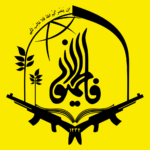
Posted in Human Rights, Security, US-Afghanistan Relations | Tags: CIA activities in Afghanistan, NDS |

Herat’s restored synagogues reveal Afghanistan’s Jewish past

7th February, 2020 · admin

The hand-painted dome inside the Aw Yu Synagogue [Hikmat Noori/Al Jazeera]

Al Jazeera: The narrow road that leads to the Yu Aw synagogue in the ancient city of Herat in western Afghanistan is lined with traditional mud homes that, despite their rough exterior, are fine examples of centuries-old architectural dexterity. Ghulam Sakhi, the caretaker of some of the heritage sites, leads the way, taking short quick steps and pausing every so often to share an anecdote from the area’s history. Click here to read more (external link).

Posted in History, Reconstruction and Development | Tags: Herat, Jews in Afghanistan |

1TV Afghanistan Dari News – February 7, 2020

7th February, 2020 · admin

Posted in News in Dari (Persian/Farsi) |

The Return Of Pro-Iranian Militia Fighters To Afghanistan Fuels Fears In Kabul, Washington

7th February, 2020 · admin

Frud Bezhan
Radio Free Europe/Radio Liberty
February 7, 2020

When Syria’s civil war erupted, Iran’s powerful Islamic Revolutionary Guards Corps (IRGC) recruited, trained, and deployed thousands of Shi’ite fighters to prop up the regime of President Bashar al-Assad.

Among them was the Fatemiyoun Brigade, comprised mainly of Afghans from the country’s Shi’ite Hazara minority. From 2011, the IRGC recruited thousands of Afghan migrants and refugees within its own borders and covertly drafted hundreds of Shi’a inside Afghanistan.

The majority of Muslims in Afghanistan are Sunni, but around 15 percent of its population — mainly Hazara — are Shi’a with religious links to the Shi’ite majority in Iran.

With the Syrian war ebbing, several thousand Fatemiyoun fighters have returned to their homeland, prompting fears that Iran could mobilize the proxy group to target U.S. interests in neighboring Afghanistan, where some 13,000 American troops are stationed.

Tensions between Washington and Tehran have soared following the U.S. killing of Iran’s top military commander, Major General Qasem Soleimani, in a drone strike at the Baghdad airport on January 3. In retaliation, Tehran fired missiles at an Iraqi air base that houses U.S. forces.

“We should certainly be concerned about the risk of Iran using this asset in Afghanistan to go after U.S. troops or other American interests in the country,” said Michael Kugelman, South Asia associate at the Woodrow Wilson International Center for Scholars in Washington.

“Let’s be clear: At least right now, there are more than 10,000 American soldiers across Iran’s eastern border. That’s a tempting target, and these [Shi’ite] fighters in Afghanistan give Tehran a potentially useful proxy to go after those troops,” he added.

‘Immediate Threat’

Rahmatullah Nabil, the two-time head of Afghanistan’s National Directorate of Security (NDS), the country’s main intelligence agency, estimated that between 2,500 to 3,000 Fatemiyoun fighters have returned to Afghanistan.

“At this stage it seems they are not in a position to pose an immediate threat to Afghanistan’s national security,” said Nabil, who was intelligence chief from 2010-12 and 2013-15. “They are not organized but scattered in different parts of the country.”

But he said the former members of the Fatemiyoun Brigade could pose a threat if they “establish a central command.”

Nabil said it was unclear if Afghan intelligence — predominately focused on the war against the Taliban and the Islamic State (IS) — was monitoring the movements of the fighters.

Most of the ex-fighters have settled in their homes in central Afghanistan, which is predominately Hazara, and in Hazara settlements in the western part of the country, along the border with Iran.

Many of the former combatants have kept a low profile and have refused to talk on the record with journalists.

“This is a group that has not indicated a willingness to stage attacks in Afghanistan,” said Kugelman. “To this point, Tehran has leveraged it to fight in Syria and help pursue Iranian goals there. But given the increasingly volatile state of play in the Middle East and Iran’s certain efforts to seek reprisals against U.S. interests, the situation could well change.”

‘Cannon Fodder’

The total number of Fatemiyoun members who fought in Syria is unclear. Experts estimate the number was between 5,000 to 20,000.

Ali Alfoneh is an IRGC expert and a senior fellow at The Arab Gulf States Institute in Washington. He said that according to his database, from January 2012 to September 2019 around 917 Afghan nationals were killed in Syria.

As the first line of attack, the poorly trained proxy force suffered from attrition rates as high as 20 percent, Alfoneh said, estimating that the Afghan presence in Syria was likely limited to 5,000 fighters.

Alfoneh says the IRGC considered the Afghan fighters “cannon fodder,” considering the seemingly minor investment made to train them and the exposure they faced on the battlefield.

Iranian authorities said the fighters traveled to Syria voluntarily to defend holy Shi’ite sites. Human rights groups said Afghan migrants and refugees in Iran were offered financial rewards and Iranian residency permits to join the fight in Syria.

The United Nations estimates the number of Afghan citizens in Iran at just under 1 million, but Tehran puts the figure closer to 3 million. Tehran has expelled many Afghans and periodically threatens those who remain with mass expulsions.

Readying For U.S. Withdrawal

Alefoneh said it was plausible that Iran was deploying Fatemiyoun members to Afghanistan as part of Tehran’s two-prong attempt to prepare for a U.S. military withdrawal from Afghanistan.

“On the one hand, Tehran has normalized relations with the Taliban, which in Tehran’s analysis will seize power in Kabul before long,” he said. “On the other hand, Tehran is preparing for a scenario in which the Taliban once again turns against Iran in the future.”

The Taliban controls or influences around half of Afghanistan. The militant group is locked in negotiations with the United States over the withdrawal of all foreign troops from the war-torn country. A withdrawal deal is expected to kickstart intra-Afghan talks over a political settlement that is likely to see the Taliban form part of a new government.

Iran and the Taliban were on the verge of war in 1998, when the group controlled most of Afghanistan. Eight Iranian diplomats and an employee of Iran’s state-run IRNA news agency were killed at the Iranian Consulate when Taliban fighters overran the Afghan city of Mazar-e Sharif. The Taliban denied any involvement in their deaths.

Outraged by the deaths, Tehran deployed tens of thousands of troops along the border with Afghanistan — but stopped short of invading the country.

Tehran backed the anti-Taliban Northern Alliance before the U.S.-led invasion in 2001. Iran provided help to U.S. forces that toppled the Taliban regime. But, in recent years, the Islamic republic and the Taliban have forged closer ties, with militant leaders even visiting Tehran.

Long History With Afghanistan

U.S. officials have accused Tehran of providing support to the Taliban, an allegation it denies. Tehran has confirmed it has contacts with the Taliban but insists that any communications are aimed at ensuring the safety of Iranian citizens in Afghanistan and encouraging the Taliban to join peace talks.

Marine General Frank McKenzie, the top U.S. commander for the Middle East, said there has been an increase in Iranian activity in Afghanistan that poses a risk to American troops.

McKenzie, who visited Afghanistan last week, said he was seeing a “worrisome trend” of Iranian malign interference.

“Iran has always sort of dabbled a little bit in Afghanistan, but they see perhaps an opportunity to get after us and the coalition here through their proxies,” McKenzie said. “So we are very concerned about that here as we go forward.”

Ismail Qaani, who in January succeeded Soleimani as head of Iran’s elite Quds Force, the overseas operations arm of the IRGC, has a long history with Afghanistan.

The 63-year-old general made a mysterious trip to Afghanistan in 2018. Qaani also visited Kabul in the same year.

In the 1980s, Qaani led the IRGC’s activities in Afghanistan.

In the 1990s, Qaani was involved in providing logistical, financial, and military support to the Northern Alliance, which was fighting the Taliban.

When the Syrian civil war erupted, Qaani is believed to have been personally involved in the organization of the Fatemiyoun Brigade. It included veterans of the Abuzar Brigade, an Afghan militia consisting of Shi’a who had fought on Iran’s side in the war against Iraq.

Copyright (c) 2020. RFE/RL, Inc. Reprinted with the permission of Radio Free Europe/Radio Liberty, 1201 Connecticut Ave NW, Ste 400, Washington DC 20036.
Posted in Iran-Afghanistan Relations, Security, US-Afghanistan Relations | Tags: Fatemiyoun Brigade |

Fact finding committee presents finding on Satar Ghorbandi’s case to Ghani

7th February, 2020 · admin

Satar Ghorbandi

Ariana: Members of the fact finding committee said in their meeting with President Ghani that they will share the details of the finding in a press conference Saturday. The presidential palace also announced that they will seriously consider the findings. This comes as some of the lawyers consider the ‘fact-finding committee’ a ‘political move’ and an attempt to bypass the judiciary. Around one month back, President Ghani formed a ‘fact-finding committee’ comprised of some MPs and officials to investigate the killing of Satar Ghorbandi, a Jihadi Commander of Jamiat-e Islami party. Click here to read more (external link).

Posted in Crime and Punishment, Political News | Tags: Jamiat-e-Islami, Satar Ghorbandi |

Afghans Outraged With Delay in Election Results

7th February, 2020 · admin

Afghan Election Workers (photo courtesy of IEC)

Tolo News: Afghan citizens at a gathering in Kabul on Friday expressed anger over the delay in the announcement of the final results of the presidential elections, which were held on September 28 last year. They said that the election stalemate has left a significant impact on the country’s political and security situation. “If the election commission does not announce the results, then we will not have any option except to go to the door of the election commission and raise our voice,” said Attaulhaq, a resident in Kabul. Click here to read more (external link).

Posted in Elections News | Tags: Election Fraud |

U.S. Citizen Believed Kidnapped In Eastern Afghanistan

7th February, 2020 · admin

Radio Free Europe/Radio Liberty
February 7, 2020

U.S. officials say an American appears to have been kidnapped in Afghanistan by a group linked to Taliban militants.

The officials on February 6 said they believe that 57-year-old Mark Frerichs of Illinois was kidnapped by the Haqqani network, which is based in Khost.

It was not immediately clear why Frerichs was in Afghanistan or where exactly he might have been kidnapped.

Newsweek, which first reported the kidnapping, said he was seized a week ago in the eastern province of Khost while working as a contractor in conflict zones.

The FBI-led Hostage Recovery Fusion Cell, a multiagency operation, is handling the investigation into the matter, officials said.

Art Frerichs, who identified himself as Frerichs’ father, told AP that he believed the Newsweek report was true.

“I don’t want to say any more now for security reasons,” he said. “I have the utmost faith in President [Donald] Trump and the FBI.”

The Taliban said it had no information on Frerichs or his possible kidnapping.

In November, Anas Haqqani, the younger brother of Sirajuddin Haqqani, the leader of the Haqqani network, was freed in exchange for the release of an American and an Australian, both professors at the American University in Afghanistan who were kidnapped in 2016 in the Afghan capital, Kabul.

Based on reporting by AP, Newsweek, and Reuters

Copyright (c) 2020. RFE/RL, Inc. Reprinted with the permission of Radio Free Europe/Radio Liberty, 1201 Connecticut Ave NW, Ste 400, Washington DC 20036.

Related

  • US security contractor kidnapped in Afghanistan
Posted in Haqqani Network, Security, Taliban, US-Afghanistan Relations | Tags: Khost, Kidnapping |

Afghan Leader Inaugurates Construction of Key Regional Energy Project

6th February, 2020 · admin

Ayaz Gul
VOA News
February 6, 2020

ISLAMABAD – Afghan President Ashraf Ghani laid foundation stone Thursday for building a key transmission line linking Central Asia and South Asia under a four-nation electricity generation project, known as CASA-1000.

The $1.2 billion plan aims to bring some 300 megawatts (MW) annually of much-needed electricity to Afghanistan and 1,000 MW to Pakistan from surplus generation in Tajikistan and Kyrgyzstan. The project is being financed by multilateral development banks, the United States and other countries.

Afghan officials said diplomats from the participating nations also were present at the groundbreaking site, east of the capital, Kabul.

Ghani was quoted as saying the CASA-1000 project would go a long way toward promoting connectivity, energy cooperation and prosperity in all of the countries involved.

Thursday’s landmark development comes as relations between Afghanistan and Pakistan continue to suffer from mutual suspicions and a trust deficit. The tensions stem from allegations Islamabad provides support to the Afghan Taliban and Kabul harbors anti-Pakistan militants.

Speaking to VOA after the ceremony, Pakistani ambassador to Kabul, Zahid Nasrullah Khan, said despite mutual tensions and disagreements, his government is determined to work closely with Afghanistan on projects like the CASA-1000 to promote regional connectivity.“

We are neighbors. Our destinies are tied and we have to work together to take our countries forward, and our opportunities are also interlinked. So, we will continue to push the relationship on the positive track,” Khan stressed.

The ambassador also underlined efforts Pakistan is making in facilitating a U.S.-led Afghan peace and political reconciliation process aimed at ending the 18-year-old war in the neighboring country.  “

There is no other choice but peace. This is the only way forward. I am sure that all parties and all important regional countries, including Pakistan, are very much committed to taking this process forward,” Khan said.

When completed, CASA-1000 would doubly benefit war-ravaged Afghanistan as a consumer and as a transit country generating revenue.

Under the long-planned project, a transmission line more than 1,200 kilometers long connecting the four countries would be used to export of electricity to Afghanistan and Pakistan during the summer months when Tajikistan and Kyrgyzstan have extra capacity. The two Central Asian nations have more power generation than they can use as melting ice swells rivers that flow through their hydroelectric generators.

Meanwhile, Pakistan has overcome its energy crisis as billions of dollars in Chinese investment over the past five years have led to the construction of nine new coal-based power plants in the country. Several more also are under construction, adding thousands of megawatts of new electricity to the national grid.

Islamabad recently has asked Tajikistan to revise certain clauses in the agreement under CASA-1000 project so surplus Pakistani electricity could be exported through the same transmission line, bringing much needed energy to people in Kyrgyzstan and Tajikistan during the harsh winters when they typically have an energy deficit.

Posted in Central Asia, Economic News, Reconstruction and Development | Tags: Electricity |

Women Enter Afghanistan’s Male Dominated Restaurant Industry

6th February, 2020 · admin

Women are slowly moving into Afghanistan’s male-dominated restaurant industry. And one entirely women-run restaurant in central Afghanistan’s Bamyan province is attracting food lovers from the region. VOA’s Zafar Bamyani gives us a taste of the restaurant in this report narrated by Bezhan Hamdard

Posted in Afghan Women, Economic News, Society | Tags: Bamiyan, Food |
Previous Posts
Next Posts

Subscribe to the Afghanistan Online YouTube Channel

---

---

---

Get Yours!

Peace be with you

Afghan Dresses

© Afghan Online Press
  • About
  • Links To More News
  • Opinion
  • Poll