
logo

Daily Updated Afghan News Service

  • Home
  • About
  • Opinion
  • Links to More News
  • Good Afghan News
  • Poll Results
  • Learn about Islam
  • Learn Dari (Afghan Persian/Farsi)

Recent Posts

  • Afghanistan Freedom Front Reports Killing and Wounding Three Taliban Fighters in Kabul November 14, 2026
  • Young Man in Panjshir Dies by Suicide After Being Tortured by the Taliban November 14, 2026
  • CPJ Urges US to Release Afghan Journalist Facing Deportation November 14, 2026
  • Five Years Into Taliban Rule, Filmmakers in Afghanistan Battle Poverty and Unemployment November 14, 2026
  • Tolo News in Dari – November 14, 2026 November 14, 2026
  • Amid Ongoing Battle Over Afghan Deportations, US Legislators Push Law Granting Protection November 13, 2026
  • Judges close part of ICC Afghanistan investigations that could look at US troops November 13, 2026
  • Debutant Naseer Khan strikes four as Afghanistan fight back against Zimbabwe in second Test November 13, 2026
  • Tolo News in Dari – November 13, 2026 November 13, 2026
  • Afghan women told to ‘go home’ after de facto ban on male doctors treating them November 12, 2026

Categories

  • Afghan Children
  • Afghan Sports News
  • Afghan Women
  • Afghanistan Freedom Front
  • Afghanistan United Front
  • Al-Qaeda
  • Anti-Government Militants
  • Anti-Taliban Resistance
  • AOP Reports
  • Arab-Afghan Relations
  • Art and Culture
  • Australia-Afghanistan Relations
  • Book Review
  • Britain-Afghanistan Relations
  • Canada-Afghanistan Relations
  • Censorship
  • Central Asia
  • China-Afghanistan Relations
  • Civilian Injuries and Deaths
  • Corruption
  • Crime and Punishment
  • Drone warfare
  • Drugs
  • Economic News
  • Education
  • Elections News
  • Entertainment News
  • Environmental News
  • Ethnic Issues
  • EU-Afghanistan Relations
  • Everyday Life
  • France-Afghanistan Relations
  • Germany-Afghanistan Relations
  • Haqqani Network
  • Health News
  • Heroism
  • History
  • Human Rights
  • India-Afghanistan Relations
  • Interviews
  • Iran-Afghanistan Relations
  • ISIS/DAESH
  • Islamophobia News
  • Japan-Afghanistan Relations
  • Landmines
  • Media
  • Misc.
  • Muslims and Islam
  • NATO-Afghanistan
  • News in Dari (Persian/Farsi)
  • NRF – National Resistance Front
  • Opinion/Editorial
  • Other News
  • Pakistan-Afghanistan Relations
  • Peace Talks
  • Photos
  • Political News
  • Reconstruction and Development
  • Refugees and Migrants
  • Russia-Afghanistan Relations
  • Science and Technology
  • Security
  • Society
  • Tajikistan-Afghanistan Relations
  • Taliban
  • Traffic accidents
  • Travel
  • Turkey-Afghanistan Relations
  • UN-Afghanistan Relations
  • Uncategorized
  • US-Afghanistan Relations
  • Uzbekistan-Afghanistan Relations

Archives

Dari/Pashto Services

  • Bakhtar News Agency
  • BBC Pashto
  • BBC Persian
  • DW Dari
  • DW Pashto
  • VOA Dari
  • VOA Pashto

UN: Afghan War Killed, Wounded More Than 10,000 Civilians in 2019

22nd February, 2020 · admin

Ayaz Gul
VOA News
February 22, 2020

ISLAMABAD – The United Nations reported Saturday the conflict in Afghanistan killed more than 3,400 civilians and injured nearly 7,000 others in 2019.

The U.N. Assistance Mission in Afghanistan (UNAMA) blamed the Taliban, Islamic State and other militant groups for causing 49% of the deaths, saying pro-government forces, including the U.S.-led coalition, were responsible for 43% deaths. The rest were caught in crossfire and other conflict-related incidents.

The report came as a seven-day mutually agreed reduced fighting truce went into effect Saturday to pave the way for the United States to sign a peace agreement with the Taliban on February 29, with the aim of ending the 18-year-old Afghan war, America’s longest.

UNAMA noted in its report the number of civilians killed or injured in conflict-related incidents in Afghanistan in the last 10 years alone surpassed a “grim milestone” of more than 100,000 casualties.

“Almost no civilian in Afghanistan has escaped being personally affected in some way by the ongoing violence,” said UNAMA chief Tadamichi Yamamoto.

“It is absolutely imperative for all parties to seize the moment to stop the fighting, as peace is long overdue; civilian lives must be protected and efforts for peace are underway,” he stressed.

The Taliban swiftly rejected the UNAMA report that the insurgent group was responsible for most of the casualties. It alleged in a statement that the U.N. mission in Afghanistan was running a campaign in support of American “occupation forces.”

The signing of the US-Taliban agreement this coming Saturday in Qatar will be witnessed by international dignitaries. It would set the stage for a gradual withdrawal of roughly 13,000 American troops from the country and open peace talks between Afghan parties to the conflict to agree on a permanent nationwide cease-fire and power-sharing in postwar Afghanistan.

US not looking to cut and run

The upcoming U.S.-Taliban agreement has raised concerns among Afghans that Washington could again abandon their country, just like it did after the withdrawal of Soviet occupation forces that led to a deadly civil war and brought the radical Taliban to power in the 1990s.

U.S. chief negotiator Zalmay Khalilzad, however, dismissed those concerns while speaking at an international conference on Afghan refugees in neighboring Pakistan earlier this week.

“We are not looking for cutting and running, as some say, because if that was the case I wouldn’t be working on a peace process, we would do just a (troop) withdrawal and we don’t need anyone’s permission to withdraw. We could do it unilaterally,” Khalilzad stressed.

The veteran Afghan-born U.S. diplomat insisted his team’s off-and-on protracted negotiations with Taliban interlocutors spread over the past 18 months were meant to leave behind “a good legacy” in Afghanistan.

“All this effort that we have made is to get a peace agreement, not to repeat the mistakes that we have made in the (19)90s,” Khalilzad said.

Khalilzad said there were a lot of challenges facing the Afghan peace process but he was “cautiously optimistic.”

“I believe that may be better than any time in the last couple of decades there is an opportunity,” he said.

Afghan political crisis

However, deepening Afghan political tensions following the outcome of the controversial presidential election earlier this poses an immediate challenge to the U.S. peace initiative.

The Afghan election commission has declared incumbent President Ashraf Ghani the winner of the election held nearly five months ago.

But runner-up incumbent Afghan Chief Executive Abdullah Abdullah rejected the results as manipulated in favor of Ghani and has threatened to establish his own government in Kabul. Abdullah has even issued decrees as head of his new governed, ordering replacement of several provincial governors.

The U.N. mission in Kabul warned Saturday it was “extremely concerned” at the ongoing events to replace government officials.

“Resorting to force or any other unlawful means at the very time that efforts are ongoing to realize a reduction in violence — with the expectation that it can lead to the start of an intra-Afghan negotiations on peace — jeopardizes the population’s hope for peace.”

The political rivalry raises questions about whether Afghan political forces would be able to form a united team to engage in much-sought negotiations with the Taliban to end hostilities in the country.
Posted in Civilian Injuries and Deaths, Security, Taliban, UN-Afghanistan Relations, US-Afghanistan Relations |

Afghan ‘Reduction In Violence’ Deal Appears To Hold During First Hours

22nd February, 2020 · admin

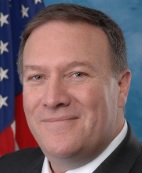
Mike Pompeo

By RFE/RL’s Radio Free Afghanistan
February 22, 2020

KABUL — A “reduction in violence” agreement with the Taliban appeared to be largely holding on February 22, a hopeful initial indication that a peace deal between the United States and the militant group will be signed as expected in a week.

The quiet start to the day comes after U.S. Secretary of State Mike Pompeo said the peace deal is scheduled to be signed on February 29 provided the partial truce that entered into force at midnight proves successful.

Pompeo’s statement said the United States and the Taliban have been engaged in talks to facilitate a political settlement to end the conflict in Afghanistan and reduce the U.S. presence in the region.

“In recent weeks, in consultation with the Government of National Unity, U.S. negotiators in Doha have come to an understanding with the Taliban on a significant and nationwide reduction in violence across Afghanistan,” Pompeo said.

“Upon a successful implementation of this understanding, signing of the U.S.-Taliban agreement is expected to move forward. We are preparing for the signing to take place on February 29,” Pompeo said, adding that intra-Afghan negotiations will start soon thereafter, with the final aim of delivering “a comprehensive and permanent cease-fire and the future political roadmap for Afghanistan.”

In a written statement, the Taliban confirmed the planned signing of a deal on February 29 “in front of international observers” and said that “the groundwork for intra-Afghan talks will be resolved,” although it did not mention when such talks would start.

The Taliban has previously refused to speak directly to the Afghan government, which it labeled a U.S. puppet.

In some parts of the country, the announcement of the reduction in violence was met with celebration.

Hundreds of residents in eastern Paktia Province, hit hard by Taliban attacks over the years, gathered in the capital city, Gardez, calling upon the Afghan government, the Taliban, and international community to redouble efforts to end the war.

In Jalalabad, the capital of insurgency-racked Nangarhar Province, residents gathered for a mass cycling event to mark the beginning of the reduction in violence. Cyclists from Nangarhar and other areas of Afghanistan took part in the event, including women.

Since the 2001 invasion to drive the Taliban from power, about 2,400 U.S. soldiers have been killed, along with tens of thousands of Afghan soldiers, extremist fighters, and civilians.

A UN report released on February 22 says that more than 100,000 civilians have been killed or injured in the past 10 years since it began documenting casualties in the Afghan war. The report said 3,493 civilians were killed last year and 6,989 were injured.

“Almost no civilian in Afghanistan has escaped being personally affected in some way by the ongoing violence,” said Tadamichi Yamamoto, the secretary-general’s special representative for Afghanistan.

“It is absolutely imperative for all parties to seize the moment to stop the fighting, as peace is long overdue. Civilian lives must be protected and efforts for peace are under way.”

‘Tired Of War’

Bismillah Watandost, a senior member of the People’s Peace Movement of Afghanistan, was quoted by AFP as saying, “Afghans are tired of war.”

He called on Afghans to march and “demand an end to this tragic war.”

The talks between U.S. and Taliban representatives began in Qatar in 2018.

U.S. Defense Secretary Mark Esper said on Twitter that “our NATO allies and partners agree the best path forward in Afghanistan is a negotiated and conditions-based political settlement between all Afghans.”

“The Taliban must demonstrate their commitment to a meaningful reduction in violence.”

“Should the Taliban reject the path of peace, we remain prepared to defend ourselves and our Afghan partners,” he added.

President Donald Trump has said he wants to bring home as many as possible of the 12,000-13,000 U.S. troops currently in Afghanistan, where they advise and train local troops and conduct anti-terror operations.

Afghan government troops will keep up normal military operations against other militants, such as the Islamic State (IS) group, during the reduction-in-violence period, officials said.

The details of the partial truce remain uncertain.

AFP quoted an insurgent in the Taliban stronghold of southern Kandahar Province as saying he had received orders to stand down.

Another Taliban commander there said he had only been ordered to halt attacks on major cities and highways.

With reporting by AFP, AP, and Reuters

Copyright (c) 2020. RFE/RL, Inc. Reprinted with the permission of Radio Free Europe/Radio Liberty, 1201 Connecticut Ave NW, Ste 400, Washington DC 20036.

Related

  • ‘Best Shot At Peace’: Explaining The Finer Points Of The U.S.-Taliban Deal
  • 8 Taliban Clashes Reported on First Day of Reduced Violence Pact
  • Afghan peace process moving in right direction: Pakistan PM
Posted in Pakistan-Afghanistan Relations, Peace Talks, Security, Taliban, US-Afghanistan Relations | Tags: Pakistan takeover of Afghanistan via Taliban |

Abdullah Meets Politicians About Election Crisis

21st February, 2020 · admin

Dr. Abdullah

Tolo News: Abdullah Abdullah’s Stability and Convergence campaign team on Friday reported that Abdullah has held meetings with some of the country’s prominent political figures and they discussed issues related to the election results and the prospects for the establishment of a “reconciliation government” in the country. According to the CE’s office, Abdullah met former Afghan President Hamid Karzai, the leader of Hizb-e-Islami party Gulbuddin Hekmatyar, Mohammad Mohaqiq, the leader of Hizb-e-Wahdat-e-Islami and Mohammad Karim Khalili, the head of the High Peace Council (HPC). Click here to read more (external link).

Related

  • Abdullah Slams EU For Recognizing Afghan Presidential Election Results
  • Khalili Criticizes Intl. Silence on Election Results
  • Council of Presidential Candidates Calls to Annul Election Result
  • Russia concerned over Afghan election controversy
Posted in Elections News, Political News | Tags: Dr. Abdullah, Election Fraud |

Tolo News in Dari – February 21, 2020

21st February, 2020 · admin

Posted in News in Dari (Persian/Farsi) |

US, Taliban Set to Sign Deal

21st February, 2020 · admin

Ayesha Tanzeem
VOA News
February 21,2020

ISLAMABAD – In simultaneously issued statements, U.S. Secretary of State Michael Pompeo and the Taliban announced Friday that a deal between the U.S. and the Taliban will be signed February 29, paving the way toward ending the longest American war in history.

The deal calls for a phased withdrawal of all U.S. forces from Afghanistan in return for guarantees from the Taliban it will not allow Afghan soil to be used for terrorism, and it will participate in a reconciliation process with other Afghans.

“Intra-Afghan negotiations will start soon thereafter, and will build on this fundamental step to deliver a comprehensive and permanent cease-fire and the future political road map for Afghanistan,” Pompeo’s statement said.

A signing ceremony is to be preceded by a seven-day reduction in violence period starting at midnight Saturday (Feb. 22) that will be observed by all parties to the conflict, the U.S. forces, Taliban, and the Afghan security forces. All sides have clarified they reserve the right to respond to an attack.

The period is supposed to act as a confidence-building measure, as well as a gauge as to whether the Taliban have full control over their fighting forces.

“Both parties will now create a suitable security situation in advance of agreement signing date, extend invitations to senior representatives of numerous countries and organizations to participate in the signing ceremony,” a Taliban statement said.

The ceremony will be held in Qatar’s capital, Doha, where the Taliban have maintained an unofficial political office for years, and where the two sides have engaged in grueling negotiations for almost 18 months.

Phase 1 

In the first phase, the U.S. is expected to reduce its forces from the current 13,000 to around 8,600. Barnett Rubin, a leading expert on Afghanistan who has advised the U.S. government on policy in the country, says a complete U.S. withdrawal will be linked to developments on the ground.

“The agreement overcomes mistrust by sequencing the components and stating that all are interdependent. As each measure is implemented, the parties will monitor compliance before taking the next step,” he wrote in his opinion piece in The Washington Post newspaper this week.

The Taliban also mentions making “arrangements for the release of prisoners,” a detail missing in the U.S. statement.

The deal is a culmination of years of efforts to bring the Taliban to the negotiating table. Earlier efforts failed because the U.S. wanted the Afghan government to be part of direct talks with the Taliban while the insurgent group refused to sit with what it claimed was a “puppet” regime without legitimacy.

Breakthrough moment

A breakthrough occurred in the summer of 2018 when high-level U.S. officials began meeting directly with the Taliban in Qatar, including U.S. Acting Assistant Secretary of State for South and Central Asia Alice Wells.

In September 2018, Zalmay Khalilzad was appointed as the U.S. special representative for Afghanistan reconciliation, and in October of that year he held his first official round of negotiation with the Taliban in Doha.

“When our representatives started negotiating with the United States in 2018, our confidence that the talks would yield results was close to zero,” Sirajuddin Haqqani, the deputy leader of the Taliban and the head of the deadly Haqqani network wrote in an opinion piece in The Washington Post Thursday.

In September 2019, the two sides seemed ready to sign a deal. Severe criticism in the U.S. and Afghanistan generated by a perception the U.S. was cutting and running without guarantees of reduction in violence or human rights protection from the Taliban, coupled with bloody attacks by the Taliban that claimed an American life, led to U.S. President Donald Trump canceling it at the last minute.

While the deal signals the end of one phase of this conflict, many Afghanistan experts say the real work of ending the conflict, which would require all Afghan factions to come to an understanding on the future framework of their country, is just beginning.

“Challenges remain, but the progress made in Doha provides hope and represents a real opportunity. The United States calls on all Afghans to seize this moment,” Pompeo said in his statement.

Related

  • U.S.-Taliban Deal Signing Expected Next Week, If Reduction In Violence Is Successful
  • Pompeo: US prepares to sign troop withdrawal deal with Taliban on February 29
  • Sirajuddin Haqqani: What We, the Taliban, Want
  • Afghan Taliban’s Haqqani Seeks US ‘Partnership’ in Post-Peace Deal
  • Ending domestic differences ends the war in Afghanistan – Sirajuddin Haqqani 
  • Next Steps toward a U.S. Agreement with the Taliban
  • NATO Secretary-General welcomes US-Taliban peace agreement 
  • Pakistan Welcomes Announcement of US-Taliban Agreement Plan
Posted in Haqqani Network, Pakistan-Afghanistan Relations, Peace Talks, Security, Taliban, US-Afghanistan Relations | Tags: Pakistan takeover of Afghanistan via Taliban, Sirajuddin Haqqani |

Afghanistan war: Families say homes destroyed by US bombs

20th February, 2020 · admin · 1 Comment

Al Jazeera: New statistics show the US dropped more than 7,400 bombs on Afghanistan last year, more than any year since 2013. And while there are signs of hope of a deal with the Taliban, it is too late for families already caught up in the crossfire. Al Jazeera’s Zein Basravi reports.

Posted in Civilian Injuries and Deaths, US-Afghanistan Relations |

1TV Afghanistan Dari News – February 20, 2020

20th February, 2020 · admin

Posted in News in Dari (Persian/Farsi) |

Violence Reduction – Details

20th February, 2020 · admin

Ariana: In accordance with the plan of ‘violence reduction’, the Taliban’s daily attacks will decrease from 75 to 15. They will not attack highways, cities, US bases and key Afghan military spots.  Sources have shared parts of the ‘violence reduction’ plan with Ariana News. Based on the plan, Afghan forces will be on standby. Moreover, Suhail Shaheen, the spokesperson for the political office of the Taliban in Qatar, has said in an interview that in a day or two, the time for ‘violence reduction’ and the signing of the agreement with the US, will be determined. Click here to read more (external link).
Posted in Peace Talks, Security, Taliban, US-Afghanistan Relations |

India congratulates Ghani on his reelection

20th February, 2020 · admin · 1 Comment

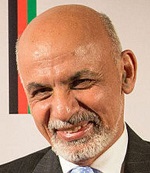
Ashraf Ghani

1TV:  India congratulated Afghan President Ashraf Ghani on his reelection victory expressing commitment to work with the new administration. Click here to read more (external link).

Related

  • UN, EU ready to work with new Afghan administration
Posted in Elections News, India-Afghanistan Relations | Tags: Ashraf Ghani |

‘All Bets Off’: Afghanistan Plunges Into Crisis After Losing Presidential Candidate Alleges ‘Coup’

20th February, 2020 · admin


Abdullah (left) and Ghani (right)

Radio Free Europe/Radio Liberty
February 19, 2020

The long-awaited result of Afghanistan’s bitterly disputed presidential election was expected to end months of uncertainty.

Instead, President Ashraf Ghani’s reelection has triggered a political crisis that has threatened to spill over into violence and derail a historic peace deal between the United States and the Taliban.

Though Ghani was finally declared the winner of the September 28 vote, main challenger Abdullah Abdullah, the country’s chief executive officer, has rejected the result, declared himself the winner, and vowed to form his own government.

He then slammed the result as a “coup” and vowed to form “an all-inclusive government.” He also accused election authorities of favoring Ghani.

Ghani’s vice president, the powerful former warlord Abdul Rashid Dostum, called on his supporters on February 19 to take to the streets to celebrate what he described as a victory for Abdullah.

The international community has remained unusually silent following the release of the final result on February 18, despite contributing millions of dollars into the election process.

It is unclear if the United States is willing to try to mediate a solution to this new standoff.

In 2014, when both Ghani and Abdullah alleged massive fraud, Washington brokered a power-sharing deal that produced a deeply unpopular and fractured national unity government.

With Ghani and Abdullah representing rival communities, the dispute has exposed the ethnic fault lines in Afghanistan, where Ghani is viewed with suspicion by many members of the country’s ethnic Tajik, Uzbek, and Hazara groups.

“Afghanistan could be headed for a fresh political crisis at a critical moment, when the nation is in need of a united front to chart a path towards peace,” said Michael Kugelman, South Asia associate at the Woodrow Wilson International Center for Scholars in Washington.

‘All Bets Off’

The political infighting in Kabul has threatened to disrupt a proposed U.S.-Taliban deal on the withdrawal of American troops from Afghanistan, a major step toward ending the nearly 19-year war.

Following 18 months of grueling negotiations, the United States and the Taliban have agreed to a seven-day reduction of violence ahead of signing the deal, expected at the end of the month.

The Afghan Interior Ministry said on February 18 that the temporary truce would begin in the next five days.

As part of the deal, the Taliban is obliged to launch direct negotiations with the Western-backed Kabul government and other Afghans over a permanent cease-fire and a power-sharing agreement.

“The effect of this emerging crisis on the country and the peace crisis will depend on how far Abdullah goes in carrying out his threat of setting up a separate government,” said Kugelman.

“If he decides that it’s best to back down for the sake of peace and stability, then the damage would be limited. But if he digs in, then all bets would be off,” he added.

Given that Abdullah believes he has been wronged electorally three times in a row — he also claimed to have won the 2009 and 2014 votes — Kugelman said he was unlikely to back down in the immediate term.

But Andrew Watkins, a senior analyst for Afghanistan at the International Crisis Group, said he believes the political crisis would not necessarily derail the peace process.

“It has been widely understood that the pro-government side of intra-Afghan negotiations will include some political opposition figures as well as government officials,” he said.

“Political figures may calculate that limiting their responses to the election results and ensuring that the intra-Afghan negotiations move forward is actually the best route to securing the interests of their supporters and communities,” Watkins added.

U.S. officials have said that they do not intend to mediate any election disputes in Afghanistan. Some experts are unsure the Trump administration has the will to carry out high-stakes mediation in this situation.

But there has been evidence that Washington has continued to listen to the concerns of key stakeholders, with senior U.S. officials recently meeting with Abdullah and his key ally Dostum.

In 2014, a bitter, fraud-marred presidential election pushed Afghanistan to the brink of civil war before then-U.S. Secretary of State John Kerry brokered a power-sharing deal between Ghani and Abdullah.

The agreement created the new position of chief executive officer, given to Abdullah to qualm his doubts about the election result.

“It is unclear to what extent the United States would mediate or intervene, but it is a safe bet that it will be much less publicly and openly involved than in 2014,” said Watkins.

Suppress Or Accommodate

The Independent Election Commission said on February 18 that Ghani had secured victory with 50.64 percent of the vote, narrowly giving him an outright win with no need for a runoff.

Abdullah was named runner-up with 39.52 percent. But the vote was marred by allegations of vote-rigging, technical problems with biometric devices used for voting, and militant attacks.

When preliminary results of the election announced in December gave Ghani the lead, Abdullah disputed about 300,000 votes from the record-low turnout of around 1.8 million. Those included 100,000 ballots cast before or after voting hours, an irregularity that election authorities blamed on human error. Abdullah said those votes were fraudulent and cast in favor of Ghani.

The Transparent Election Foundation of Afghanistan (TEFA), a Kabul-based civic-action body that monitors elections, said the IEC’s work was not transparent and the commission violated “all standards.”

TEFA “finds the announcement of the final election results a poorly thought-out decision,” the group said, pointing to a high number of unresolved complaints that were still being scrutinized.

The IEC removed just 453 votes from the ballots counted in its preliminary results, though some 300,000 ballots had been questioned, TEFA said.

Ali Adili, a researcher at the Afghanistan Analysts Network, an independent think tank in Kabul, said he envisioned two scenarios: Ghani could “suppress Abdullah’s faction, which seems to be dangerous given the major parties that are in his camp, or he could accommodate Abdullah’s faction” within a new government.

Ethnic Fault Lines

Abdullah has received the public backing of the predominately ethnic Tajik Jamiat-e Islami party, most of the Hazara-dominated Hezb-e Wahdat party, and the Junbish Party led by Dostum, a powerful ethnic Uzbek leader accused of human rights abuses.

Those three major parties on February 19 congratulated Abdullah on his “victory.”

Even before the election result was announced, Dostum threatened to form a parallel government if their grievances were not addressed.

Analysts said those threats not only underscore the political schisms in Afghanistan, but also its ethnic cleavages.

Adili said the political implications of ethnic tensions were felt in the voting patterns.

From the country’s 34 provinces, “18 provinces overwhelmingly voted for Abdullah, whereas 16 other provinces overwhelmingly voted for Ghani,” he said.

“Abdullah counts on support from many non-Pashtuns, and a protracted crisis along ethnic lines would accentuate just how difficult it will be to carry out a full-scale reconciliation process that reflects a consensus of as many constituencies and communities as possible,” said Kugelman.

Copyright (c) 2020. RFE/RL, Inc. Reprinted with the permission of Radio Free Europe/Radio Liberty, 1201 Connecticut Ave NW, Ste 400, Washington DC 20036.

Related

  • Abdullah Asks EU’s ‘Clarification’ on Election Stance
  • Nabil Suggests ‘Reconciliation Govt,’ Rejects Election Results
  • Hekmatyar Rejects Results: Ghani Chose ‘Path of Crisis’
Posted in Corruption, Elections News, Ethnic Issues, Political News, US-Afghanistan Relations | Tags: Ashraf Ghani, Dostum, Dr. Abdullah, Election Fraud |
Previous Posts
Next Posts

Subscribe to the Afghanistan Online YouTube Channel

---

---

---

Get Yours!

Peace be with you

Afghan Dresses

© Afghan Online Press
  • About
  • Links To More News
  • Opinion
  • Poll