
logo

Daily Updated Afghan News Service

  • Home
  • About
  • Opinion
  • Links to More News
  • Good Afghan News
  • Poll Results
  • Learn about Islam
  • Learn Dari (Afghan Persian/Farsi)

Recent Posts

  • Afghanistan Freedom Front Reports Killing and Wounding Three Taliban Fighters in Kabul November 14, 2026
  • Young Man in Panjshir Dies by Suicide After Being Tortured by the Taliban November 14, 2026
  • CPJ Urges US to Release Afghan Journalist Facing Deportation November 14, 2026
  • Five Years Into Taliban Rule, Filmmakers in Afghanistan Battle Poverty and Unemployment November 14, 2026
  • Tolo News in Dari – November 14, 2026 November 14, 2026
  • Amid Ongoing Battle Over Afghan Deportations, US Legislators Push Law Granting Protection November 13, 2026
  • Judges close part of ICC Afghanistan investigations that could look at US troops November 13, 2026
  • Debutant Naseer Khan strikes four as Afghanistan fight back against Zimbabwe in second Test November 13, 2026
  • Tolo News in Dari – November 13, 2026 November 13, 2026
  • Afghan women told to ‘go home’ after de facto ban on male doctors treating them November 12, 2026

Categories

  • Afghan Children
  • Afghan Sports News
  • Afghan Women
  • Afghanistan Freedom Front
  • Afghanistan United Front
  • Al-Qaeda
  • Anti-Government Militants
  • Anti-Taliban Resistance
  • AOP Reports
  • Arab-Afghan Relations
  • Art and Culture
  • Australia-Afghanistan Relations
  • Book Review
  • Britain-Afghanistan Relations
  • Canada-Afghanistan Relations
  • Censorship
  • Central Asia
  • China-Afghanistan Relations
  • Civilian Injuries and Deaths
  • Corruption
  • Crime and Punishment
  • Drone warfare
  • Drugs
  • Economic News
  • Education
  • Elections News
  • Entertainment News
  • Environmental News
  • Ethnic Issues
  • EU-Afghanistan Relations
  • Everyday Life
  • France-Afghanistan Relations
  • Germany-Afghanistan Relations
  • Haqqani Network
  • Health News
  • Heroism
  • History
  • Human Rights
  • India-Afghanistan Relations
  • Interviews
  • Iran-Afghanistan Relations
  • ISIS/DAESH
  • Islamophobia News
  • Japan-Afghanistan Relations
  • Landmines
  • Media
  • Misc.
  • Muslims and Islam
  • NATO-Afghanistan
  • News in Dari (Persian/Farsi)
  • NRF – National Resistance Front
  • Opinion/Editorial
  • Other News
  • Pakistan-Afghanistan Relations
  • Peace Talks
  • Photos
  • Political News
  • Reconstruction and Development
  • Refugees and Migrants
  • Russia-Afghanistan Relations
  • Science and Technology
  • Security
  • Society
  • Tajikistan-Afghanistan Relations
  • Taliban
  • Traffic accidents
  • Travel
  • Turkey-Afghanistan Relations
  • UN-Afghanistan Relations
  • Uncategorized
  • US-Afghanistan Relations
  • Uzbekistan-Afghanistan Relations

Archives

Dari/Pashto Services

  • Bakhtar News Agency
  • BBC Pashto
  • BBC Persian
  • DW Dari
  • DW Pashto
  • VOA Dari
  • VOA Pashto

Taliban Says US ‘Violating’ Deal, US Calls Claims ‘Baseless’

5th April, 2020 · admin

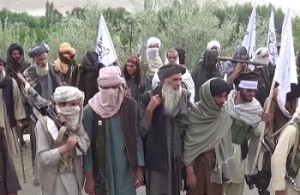
Tolo News: The Taliban in a statement on Sunday said the deal that they signed with the US on Feb. 29 has been “violated” in clear instances by the United States and its allies. In their statement, the group connected the violation of the deal to the delay in the release of 5,000 prisoners from the Afghan government’s custody and claims of attacks on Taliban targets even in non-combat areas… Click here to read more (external link).
Posted in Peace Talks, Security, Taliban, US-Afghanistan Relations |

Living Scared: In Kabul’s Shi’ite Enclave, Hazara Fear A Taliban Return

5th April, 2020 · admin · 22 Comments


Taliban militants (file photo)

Radio Free Europe/Radio Liberty
April 5, 2020

By Frud Bezhan

KABUL — Ahmad Zia was sitting behind his wooden registration table when a suicide bombing ripped through Kabul’s Maiwand Wrestling Club, where scores of athletes were in the middle of a training session.

The blast flung Zia, the club administrator, off his chair and into a wall.

Covered in dust, the 28-year-old stumbled through the debris to help pull the bodies of the dead and wounded out of the burning sports club. The floor was covered with blood and the wrestling hall was strewn with dismembered bodies.

Less than an hour after the blast at Maiwand, a car laden with explosives detonated outside the same club in the western part of the Afghan capital, targeting journalists and emergency responders.

The twin bombings killed 30 people and wounded more than 90.

“There was fire, dust, and body parts everywhere,” said Zia, who added that there were around 150 people inside the club when an Islamic State (IS) suicide bomber struck that September day in 2018. Many were wrestlers aspiring to make Afghanistan’s Olympic team. “I’m haunted by what happened.”

The attacks occurred in Dasht-e Barchi — a predominately Shi’ite enclave in Kabul that is home to the Hazara minority.

IS and Taliban militants — Sunni extremist groups that consider Shi’a apostates — have been blamed for devastating attacks that have killed hundreds of Hazara in the area in recent years.

Fears of more mass killings of Hazara have amplified after the United States and the Taliban signed an agreement aimed at ending America’s 18-year war in Afghanistan.

Signed on February 29, the deal envisages a power-sharing arrangement that is likely to bring the militants back into government.

But many Hazara fear that a deal with the Taliban will bring persecution rather than peace.

“Peace with the Taliban will not be a peace at all,” said Zia, wearing a black jacket over a sky blue pirhan tumban, the traditional baggy shirt and pants common in Afghanistan. “How could I ever accept them? When they have killed our children and torn apart our families, how can we?”

Zia lost two cousins in the bombings — one a guard and the other a young wrestler.

Dasht-e Barchi has been the scene of a string of gruesome attacks by IS militants, including bombings targeting Shi’ite mosques and holy sites, public gatherings, schools, and sports clubs.

Outside of the capital, Taliban militants have kidnapped and executed Hazara civilians and stormed Hazara areas that have forced thousands to flee their homes.

Many here do not distinguish between the Taliban and IS, which experts said is comprised of disgruntled former members of the Afghan Taliban, the Pakistani Taliban, and other Islamic militant groups in the region.

“The Taliban and Daesh are both terrorist groups that kill poor and innocent people,” said Zia, as he walked on the mats of the empty wrestling hall, referring to the Arabic acronym for the IS group. “They are both the enemies of the people, not just the enemies of one ethnicity or religion.”

History Of Violence

Militant violence has transformed Dasht-e Barchi, a thriving urban enclave, into a war zone.

The Maiwand Wrestling Club is barricaded behind high concrete blast walls and razor wire. The wrestling hall, even after extensive renovations, is still pockmarked with shrapnel from the 2018 bomb blast. Yet the club has more wrestlers than ever, with around 400 people training each day in four sessions.

The Taliban strictly prohibited most forms of sport during their 1996-2001 reign, deeming them un-Islamic, and used sports venues for public executions.

Soldiers, police officers, and even armed plainclothes civilians — paid and trained by the government — guard the entrances and the rooftops of mosques, schools, and sports clubs. There have been growing calls for the community, where suspicion of the government is rife and anger is widespread, to take its security into its own hands.

The civilian forces are controversial in Afghanistan, where ethnic militias fought over control of Kabul during the country’s devastating civil war from 1992-96 that killed some 100,000 people and left most of the capital in ruins.

The beleaguered Hazara minority has long been persecuted.

During the 19th century, Afghan monarchs attempted to forcibly convert the Hazara, seize their lands, and bring Hazara regions in the country’s highlands under the control of the central government. They were campaigns that killed thousands and forced even more to flee their homes, including many to British India. Hazaras who resettled to Kabul and other cities suffered discrimination and were often employed only in low-paying jobs.

During their oppressive rule, the Taliban terrorized the Hazara, wrestling control of Hazara regions in Afghanistan through a campaign of targeted killings and what rights groups have suggested amounted to ethnic cleansing.

Historically the poorest and most marginalized ethnic group in Afghanistan, the community has made major inroads since the U.S.-led invasion in 2001 toppled the Taliban regime, becoming powerful figures in politics and the media.

Although there is no census, Shi’a are believed to make up around 15 percent of Afghanistan’s 30 million people, which is largely Sunni. Hazara account for the overwhelming majority of Shi’a in the country.

Aside from past Taliban atrocities against the Hazara, the extremist group’s strict interpretation of Shari’a law and its policies on women and education could threaten advancements made by the Hazara in recent years. Socially and culturally more progressive than other ethnic groups, the Hazara fear their rights to education and to practice their religion will be threatened under a peace deal.

‘Ball Of Fire’

Amir Hamza was among the more than 400 people packed inside the Imam Zaman mosque in Dasht-e Barchi in October 2017.

As the worshippers knelt in rows to pray, a suicide bomber at the front detonated his explosives.

Blood spattered the walls inside the mosque as bits of flesh sprayed the ceiling. Broken glass and concrete littered the praying mats.

That bombing — claimed by IS militants — killed 58 worshippers and wounded more than 100.

“I was sitting in the same row as the suicide bomber,” said the 72-year-old Hamza, a caretaker at the mosque, whose hearing was impaired after the attack.

“There was a ball of fire that burnt my beard, the left side of my face, my left leg, and even the money I had in my top shirt pocket.”

Hamza, a father of eight, was rushed to the hospital where he spent several days in intensive care.

“This was the work of the Taliban or Daesh,” said Hamza, who trudged inside the renovated prayer hall with a limp. “They are the same. They claim they defend Islam but they bombed God’s house and destroyed the holy books inside.”

Guards brandishing AK-47 Kalashnikov rifles guarded the entrance to the mosque, which can fit around 2,000 worshippers. Worshippers are searched and vehicles are prohibited from parking near the mosque for fear of car bombings.

But the security measures did not prevent the horrific attack from taking place.

Hamza’s family was among the first to move to Dasht-e Barchi in the late 1990s.

Once a largely barren area with just several settlements, the crowded enclave is now home to hundreds of thousands of people, mostly Hazara who have fled war and poverty in neighboring provinces. Many residents here are poor, although some affluent neighborhoods have also sprung up.

Hamza came to Dasht-e Barchi during Taliban rule from the southeastern province of Ghazni, where he said the Hazara population was persecuted, arbitrarily jailed, and their land confiscated.

“If the Taliban came back to power as part of a political deal, then we won’t be able to live as we do now,” said Hamza. “Would this mosque be open? Would all the schools be open?”

‘We Cannot Accept The Taliban’

In August 2018, dozens of high school graduates were hunched over their wooden desks inside a crowded classroom at the Mawoud Academy in Dasht-e Barchi.

In the middle of a lesson, a suicide bomber stormed into the classroom and detonated his explosives.

Forty students were killed and nearly 70 wounded inside the destroyed classroom, which was full of broken bodies strewn over smashed desks and chairs.

All the dead were students under the age of 20. They were attending extra lessons to prepare for university entrance exams that were just weeks away.

Sabara Ahmadi, an 18-year-old student, had been taking lessons at the academy. Although she was not there that day, she lost two close friends in the attack.

“I’m very scared,” said Ahmadi, sitting on a bench in her school garden, chatting with classmates between lessons. “But the attack also made me even more determined. I want to carry on for my classmates who were killed.”

Ahmadi’s parents moved to Kabul from the neighboring province of Maidan Wardak after 2001.

Life for the family was difficult in Kabul, an overcrowded city of 5 million people at risk of near-constant militant attacks and plagued by mass unemployment. The family rented a room in a neighborhood where running water and electricity worked only sporadically.

But for Ahmadi’s uneducated parents, the sacrifice would almost certainly be worth it — their eight children would have a better life.

Ahmadi’s three older brothers, who grew up during Taliban rule, were denied an education. But she has been able to attend school and hopes to study for a computer science degree.

The Taliban was notorious for its poor treatment of women, banning them from working or going to school.

Since 2001, millions of Afghan girls have gone back to school, women have joined the workforce, and dozens of them are members of parliament.

The militant group has suggested it is committed to guaranteeing women their rights, although only in accordance with their strict interpretation of Islam.

Ahmadi, donning jeans and a pink head scarf, fears the return of the Taliban as part of a peace deal could jeopardize the future of young Afghans, especially girls.

“We cannot accept the Taliban,” she said. “Everything will get worse. Even though I’m scared, I can still go to study. But the Taliban will probably take that away from me, too.”

Copyright (c) 2020. RFE/RL, Inc. Reprinted with the permission of Radio Free Europe/Radio Liberty, 1201 Connecticut Ave NW, Ste 400, Washington DC 20036.
Posted in Civilian Injuries and Deaths, Ethnic Issues, History, Security, Taliban | Tags: Hazaras, Taliban War on Muslims |

Pakistan to Reopen Border for Afghan Visitors Stranded Due to COVID-19 Closure

4th April, 2020 · admin

Ayaz Gul
VOA News
April 4, 2020

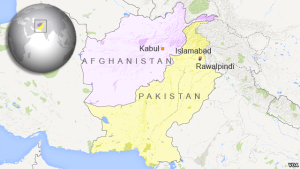
ISLAMABAD – Pakistan announced Saturday it will briefly reopen the border with Afghanistan early next week to allow an unspecified number of stranded nationals of the neighboring country to return home.

The coronavirus outbreak prompted Islamabad to seal borders with all neighboring countries last month in a bid to limit the regional spread of the disease.

The abrupt border closure prevented Afghan visitors from returning home. They include patients seeking better medical treatment in Pakistan, traders, visitors meeting relatives and attending wedding ceremonies and refugee communities, housing around three million Afghan refugees and economic migrants.

The Pakistani Foreign Ministry, in a statement, cited a “special request” by the Kabul government and “humanitarian considerations” for reopening the main border crossings of Torkham and Chaman for four days starting Monday to allow the exit of Afghan nationals.

“As a neighbor and in view of fraternal bilateral relations, Pakistan remains in abiding solidarity with the people of Afghanistan, particularly at this time of global pandemic,” the statement stressed.

The number of confirmed COVID-19 cases in Pakistan stood at more than 2,700 as of Saturday, with at least 41 deaths.

Afghan COVID-19 cases

In Afghanistan, the Ministry of Public Health reported 25 new coronavirus cases Saturday, raising the national tally of infections to 300 and the number of deaths to at least seven.

Afghan and U.N. officials say the western city of Heart, on the border with Iran, is the most affected part of the country, with more than 200 confirmed cases, including dozens of health workers.

Almost all the Afghan cases are said to be nationals returning from Iran, one of several countries worst-hit by the deadly virus.

Iran, which hosts several million Afghan refugees and economic immigrants, has reported more than 3,600 deaths and at least 56,000 confirmed cases of COVID-19.

The Iranian outbreak prompted more than 150,000 Afghans, including deportees, to return to Afghanistan in the last month alone, according to the International Organization for Migration.

That has raised fears the actual number of coronavirus cases could be much higher.

Afghan officials acknowledge the low rate of testing suspected patients due to capacity challenges may account for the relatively low number of confirmed cases, given the high number of people crossing the border from Iran.

Related

  • Afghanistan to release prisoners as it battles against COVID-19 spread
  • Only Peace Can Avert a COVID-19 Catastrophe in Afghanistan
  • Govt to Add More Restrictions to Kabul Lockdown
Posted in Health News, Pakistan-Afghanistan Relations | Tags: Coronavirus (COVID-19) in Afghanistan |

1TV Afghanistan Dari News – April 4, 2020

4th April, 2020 · admin

Posted in News in Dari (Persian/Farsi) |

NDS arrests Deash Khurasan leader

4th April, 2020 · admin

Orakzai

Ariana: National Directorate of Security, in a statement, says that it has arrested, Abdullah Orakzai aka Aslam Farooqi, the Khurasan leader of Daesh, along with 19 of his men, including Qari Zahid and Saifullah aka Abu Talha Pakistani, in an operation conducted by the special forces of the directorate. Click here to read more (external link).

Posted in ISIS/DAESH, Security | Tags: NDS |

Haneef Atmar Appointed as Acting Foreign Minister

4th April, 2020 · admin

Mohammad Hanif Atmar

Tolo News: President Ghani issued two separate decrees on Saturday: the first decree appointed former national security adviser Mohammad Haneef Atmar as acting foreign minister, and the second decree stated that Atmar was a nominee for the same but full-fledged foreign minister position, pending the Afghan parliament’s confirmation. Click here to read more (external link).

Related

  • What Do President Ghani’s Recent Appointments Reveal?
Posted in Political News | Tags: Ashraf Ghani Government, Mohammad Hanif Atmar |

Gunmen Shoot Dead Afghan Presidential Guard On Kabul Outskirts

4th April, 2020 · admin

Radio Free Europe/Radio Liberty
April 4, 2020

Afghanistan’s Interior Ministry says gunmen have shot and killed a member of the presidential guard in the outskirts of the capital, Kabul.

Interior Ministry spokesman Tariq Arian said on April 4 that another member of the Presidential Protective Service (PPS) was wounded in the same attack late on April 3 in the Paghman district of Kabul Province.

It was unclear if the guards were on duty.

Arian said an investigation had been launched into the attack.

No group has claimed responsibility for the attack, although similar attacks in the past have been blamed on the Taliban.

The U.S.-trained PPS serves as President Ashraf Ghani’s elite guard.

Based on reporting by Khaama and Tolo News

Copyright (c) 2020. RFE/RL, Inc. Reprinted with the permission of Radio Free Europe/Radio Liberty, 1201 Connecticut Ave NW, Ste 400, Washington DC 20036.
Posted in Security |

Positive cases of Coronavirus rise to 274 in Afghanistan

3rd April, 2020 · admin

Ariana: The Ministry of Public Health announced that the number of positive cases of COVID-19 has jumped to 274, with six deaths in Afghanistan. The Ministry said that most of affected individuals were recorded in Herat and Kabul provinces. According to the latest statistics, 15 new cases were diagnosed in Herat, 14 cases in Kabul and one new case in eastern Nangarhar province. Click here to read more (external link).

Related

  • Coronavirus: World Bank grants $100.4 Million in aid to Afghanistan
  • With Taliban Help, Afghanistan Girds for a Virus
  • With fake hand sanitizer and 12 ventilators, Afghanistan expects millions of coronavirus cases
Posted in Health News | Tags: Coronavirus (COVID-19) in Afghanistan |

1TV Afghanistan Dari News – April 3, 2020

3rd April, 2020 · admin

Posted in News in Dari (Persian/Farsi) |

Ghani Proposes Abdullah Leads Peace Process

3rd April, 2020 · admin

Abdullah (left) and Ghani (right)

Tolo News: President Ashraf Ghani has publicly proposed that the leadership of the peace council be taken on by his political opponent Abdullah Abdullah, who disputed the recent election results and has announced a parallel government. The two sides could not reach an agreement when US Secretary of State Mike Pompeo visited Kabul last month and held meetings with both leaders (together and separately). As a consequence, the US announced a $1 billion reduction of its annual aid to Afghanistan, but mentioned that the decision will be reviewed if a solution is found to the political impasse.   Click here to read more (external link).

Related

  • Politicians Seek Agreement Between Abdullah, Ghani Camps
  • NATO Welcomes Peace Negotiating Team, Vows Support to Afghans
Posted in Peace Talks, Political News | Tags: Ashraf Ghani, Dr. Abdullah |
Previous Posts
Next Posts

Subscribe to the Afghanistan Online YouTube Channel

---

---

---

Get Yours!

Peace be with you

Afghan Dresses

© Afghan Online Press
  • About
  • Links To More News
  • Opinion
  • Poll