
 By Ayesha Tanzeem
VOA News
April 14, 2020
ISLAMABAD – Senior U.S. officials met with the Taliban in Qatar Monday to discuss possible violations of a deal the two sides signed February 29, among other issues, according to a Taliban spokesman.
“They talked about complete implementation of the Agreement as well as delay in the release of the prisoners. Violations of the Agreement and other issues and ways of their solutions were also discussed,” tweeted Suhail Shaheen, spokesman of the Taliban political team in Doha.
The top U.S. commander in Afghanistan, General Austin Miller, accompanied Zalmay Khalilzad, the architect of the U.S.-Taliban deal, to the meeting hosted by Qatar’s foreign minister, Sheikh Mohammed bin Abdur Rahman al-Thani. The Taliban delegation was led by Mullah Abdul Ghani Baradar, the head of its political office.
The militant group has repeatedly asserted that the Americans have violated their end of the agreement by attacking either civilians or Taliban forces not involved in fighting. U.S. officials deny this.
In a recent message, Taliban spokesman Zabiullah Mujahid claimed that “American invaders and their local puppets” dropped bombs killing civilians and destroying their homes in Badakhshan province.
Earlier, in an interview with VOA, Shaheen claimed U.S. forces attacked Taliban forces in violation of the agreement.
“They attacked our guards while there was no fighting. They attacked residential houses of our military people at night when they were resting or carried out night raids,” Shaheen said.
The February agreement allows the two sides to defend themselves when attacked but forbids initiating attacks on each other.
Earlier this month, Colonel Sonny Leggett, the spokesman for U.S. forces in Afghanistan, Tweeted a denial of such allegations.
“USFOR-A has upheld, and continues to uphold, the military terms of the U.S.-TB agreement; any assertion otherwise is baseless. USFOR-A has been clear — we will defend our ANDSF partners if attacked, in compliance with the agreement.”
Afghan officials, on the other hand, accuse the Taliban of continuing to kill civilians.
“Taliban killed at least 30 civilians and wounded two others across nine provinces in the last seven days,” spokesman for the Afghan National Security Council Javid Faisal tweeted Sunday.
Afghanistan’s independent Human Rights Commission said Tuesday 83 Afghan civilians were killed and 119 others wounded since the signing of the deal between the U.S. and Taliban on February 29. The human rights body blamed Taliban for half of the killings. Islamic State and other groups were blamed for the other half.
U.S. officials have repeatedly urged the Taliban to reduce the level of violence in Afghanistan. According to Afghanistan’s Tolo News channel, General Miller’s focus Monday was on the need to reduce violence and creating conditions for the intra-Afghan negotiations.
Negotiations between the Taliban and other Afghan factions were the second phase of the deal and were supposed to start by March 10. They were held up when the Afghan government, which was not officially part of the U.S.-Taliban deal, refused to release Taliban prisoners before the start date.
The deal called for the U.S. to push for the release of up to 5,000 militants in return for 1,000 members of Afghan security forces held by the Taliban.
In the last two weeks though, the Afghan government has released 361 Taliban prisoners. Spokesman Faisal said the “releases will continue across other prisons to free a total of 1,500 as part of our efforts to advance peace.”
In return, the Taliban have released 20 Afghan security personnel.
Welcoming the release of prisoners from both sides, U.S. envoy Khalilzad urged them to “accelerate efforts to meet targets specified in the U.S.- Taliban agreement as soon as possible.”
Related
 Tolo News: The Health Ministry spokesman, Wahidullah Mayar, at a press conference on Monday said that 58 new COVID-19 cases have been registered in the country in the past 24 hours, bringing the total to 665. The 58 new cases were registered in Kandahar (28), Kabul (13), Helmand (7), Nimruz (6), Takhar (3) and Kunduz (1), according to the Health Ministry. The total cases in Herat is now 280.
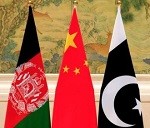 Yun Sun via warontherocks.com: With the U.S. troop withdrawal in sight, Afghanistan’s future seems less certain than ever. As a neighboring state with significant interests at stake, how does China view and prepare for Afghanistan’s future? The enhancement of Pakistan’s role in Afghanistan will not only indirectly contribute to China’s influence but also potentially improve the negotiation positions of both Islamabad and Beijing vis-à-vis Washington. Although China bears a negative and pessimistic view over the internal peace and stability of Afghanistan following the peace deal, there are some silver linings in terms of regional geopolitics.

 Tolo News: As positive cases of the coronavirus increase in the country, President Ghani says the government “has the capacity to fight COVID-19” and that it has the situation “under control,” but “unity” is required. Speaking at an event at the Presidential Palace on Sunday, Ghani said overcoming a health and economic crisis requires a “unified” perspective.

 Ayaz Gul