
Ghani, Pompeo discuss next steps in peace process

Pompeo (front-left), and Ghani (back-right). File photo.
1TV: Afghan President Ashraf Ghani spoke with US Secretary of State Mike Pompeo via video link on Monday, discussing the next steps in peace process. The video conference was attended also by head of High Council for National Reconciliation Abdullah Abdullah, US special envoy Zalmay Khalilzad, Resolute Support commander Scott Miller and other officials. Click here to read more (external link).
Related
Taliban gunned down four civilians in Badakhshan: official
 Ariana: The incident has taken place in the Shewa area in the Arghanchkhah district of the province on Monday evening. Nek Mohammad Nazari, a spokesman for the provincial governor told Ariana News that the militants have shot dead two men along with their sons. Click here to read more (external link).
Related
Taliban Officials Deny Report That Top Leader Died From Coronavirus

Mullah Hibatullah Akhundzada
RFE/RL’s Radio Free Afghanistan
June 2, 2020
Taliban officials have denied a report that its leader, Mullah Haibatullah Akhundzada, died after contracting the coronavirus.
Foreign Policy magazine, citing unnamed Taliban officials, reported on June 1 that Mullah Akhundzada contracted COVID-19 and possibly died while receiving treatment abroad.
Foreign Policy quoted Mawlawi Mohammad Ali Jan Ahmad, a senior Taliban military official, as saying that Mullah Akhundzada was “sick” after contracting the virus but was “recovering.”
But three other Taliban figures in the Pakistani city of Quetta, where the Taliban leadership is believed to be based, told Foreign Policy on condition of anonymity that they believed Akhunzada had died of the illness.
Foreign Policy said the coronavirus has stricken a number of senior Taliban leaders in Quetta and in Qatar, where the militant group has a political office.
Taliban spokesman Zabiullah Mujahid on June 2 denied that Mullah Akhundzada or any other senior leaders had contracted the disease or died.
In a tweet, Mujahid accused Foreign Policy of spreading “propaganda” and said Mullah Akhundzada was well and “busy with his daily activities.”
Sayed Mohammad Akbar Agha, a former Taliban military commander who lives in the Afghan capital, Kabul, told RFE/RL that the report of Mullah Akhundzada’s death was “untrue.”
But a Taliban official in Quetta told RFE/RL that he could neither confirm nor deny the leader’s death.
Mullah Akhundzada took over leadership of the Taliban after his predecessor, Mullah Akhtar Mohammad Mansur, was killed in a U.S. drone strike in Pakistan in May 2016.
The reclusive leader is a former Taliban chief justice and heads the militant group’s religious council.
An Islamic scholar, he is said to have strong religious credentials, and has been responsible for issuing fatwas, or Islamic decrees, to justify military and terrorist operations.
Taliban officials told Foreign Policy that Mullah Akhundzada had not been seen for the past three months and had not made any voice recordings.
Some Taliban sources in Quetta told Foreign Policy that Mullah Akhunzada went to Russia for treatment.
Foreign Policy reported that many of the Taliban’s senior leaders in Quetta had caught COVID-19, including Mullah Akhunzada’s deputy, Sirajuddin Haqqani, the leader of the Haqqani network.
The network, a Taliban faction, is believed to have been behind some of the deadliest attacks on Afghan and international forces and civilians in Afghanistan.
With the top two leaders out of action, Foreign Policy reported that the Taliban was now being run by Mullah Mohammad Yuqub, the eldest son of the Taliban’s founder and spiritual leader, Mullah Mohammad Omar.
Mullah Omar’s death was revealed in 2015, more than two years after he had died in Pakistan.
Mullah Yuqub is a graduate of a seminary in the Pakistani port city of Karachi.
Believed to be in his early 30s, he is said to have the backing of a considerable number of field commanders and the Taliban’s rank-and-file.
Experts say that Mullah Yuqub supports the U.S.-Taliban agreement signed in February that is aimed at negotiating an end to the 18-year Taliban insurgency.
It is unclear how a possible change in the Taliban leadership would affect that deal, which calls for the withdrawal of all foreign forces from Afghanistan in exchange for counterterrorism guarantees from the Taliban, which is committed to negotiating a permanent cease-fire and a power-sharing arrangement with the Kabul government.
Copyright (c) 2020. RFE/RL, Inc. Reprinted with the permission of Radio Free Europe/Radio Liberty, 1201 Connecticut Ave NW, Ste 400, Washington DC 20036.
Pompeo signals impending action against ICC for investigating alleged U.S. war crimes
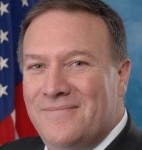
Mike Pompeo
Politico: Secretary of State Mike Pompeo on Monday previewed imminent action by the Trump administration aimed at countering the International Criminal Court’s investigation of alleged war crimes committed by U.S. personnel in Afghanistan. In an interview on the “What the Hell Is Going On?” podcast, produced by the conservative-leaning American Enterprise Institute think tank, Pomepo said he is “very concerned” about the probe being conducted by the Hague-based tribunal. Click here to read more (external link).
Tolo News in Dari – June 1, 2020
COVID-19 Infections Rise 684% in Afghanistan
 VOA News
June 1, 2020
COVID-19 infections in Afghanistan rose by 684% in May, the International Rescue Committee said in a statement Monday.
“The country’s extremely low testing capacity means many more are going untested and undetected,” according to the Committee.
Millions of Afghans were already facing food insecurity after decades of conflict and now the economic strain of the COVID pandemic “leaves Afghanistan on the brink of a humanitarian disaster,” IRC said.
Russia reported 9,035 new COVID-19 infections Monday. Only the U.S. and Brazil have more cases than Russia.
South African schools were scheduled to open Monday, but those plans were canceled at the last minute. The health ministry had received pushback from teacher unions, school staff and governing boards about the opening date.
South African President Cyril Ramaphosa said on Twitter that there is a need for “transparency about the level of preparedness of each of the schools.”
The White House announced Sunday that it has delivered two million doses of hydroxychloroquine, or HCQ, to Brazil to help the South American country in its fight against the coronavirus.
“HCQ will be used as a prophylactic to help defend Brazil’s nurses, doctors, and healthcare professionals against the virus,” the White House said in a statement Sunday. “It will also be used as a therapeutic to treat Brazilians who become infected.”
HCQ is a widely used malaria drug. U.S. President Donald Trump, in a controversial move, has ignored his public health advisers and has pushed for the use of the drug in the fight against the coronavirus even though there is no hard evidence that the drug is effective against the virus.
Trump recently announced that he has taken a round of HCQ, even though he says he does not have the virus.
The White House statement also said the two countries have entered a joint “research effort that will include randomized controlled clinical trials. These trials will help further evaluate the safety and efficacy of HCQ for both prophylaxis and the early treatment of the coronavirus.”
There are more infections in the U.S. and Brazil than anywhere else. The U.S. has 1.7 million cases while Brazil, which is emerging as the world’s hotspot for the virus, has more than 514,000, according to Johns Hopkins University.
U.S. health officials say they are bracing for a surge in coronavirus infections, following protests around the country over the death of George Floyd, an African American man who died in police custody in Minneapolis.
Some protesters wore masks, and some did not. Social distancing was non-existant.
The prime minister of Armenia has tested positive for the coronavirus. Nikol Pashinyan told Public Radio of Armenia that he and his family have tested positive, but all of them are asymptomatic.
Australia is continuing to ease coronavirus restrictions, allowing more people to gather in restaurants, public parks and other attractions.
Gatherings in the country’s largest state, New South Wales, had been limited to 10 people. That limit has been increased to 50.
Museums, libraries and zoos are reopening.
Australian Prime Minister Scott Morrison said he hopes the easing of restrictions will help the economy rebound which, like so many other global economies, has been hit hard by the pandemic.
But Morrison said another government stimulus package may be necessary.
About 90,000 mosques across Saudi Arabia opened for the first time in more than two months Sunday, but some restrictions remain in place.
Worshippers 15 years old and younger are not allowed inside, and the elderly are being encouraged to stay home to pray. Mecca, Islam’s holiest city, remains closed, but Jerusalem’s al-Aqsa mosque — Islam’s holiest site outside Saudi Arabia — was open again Sunday for the first time since mid-March. All who enter must have their temperatures checked.
With the U.S. Atlantic hurricane season officially starting Monday, the Associated Press reports many counties across the southern U.S. still do not have complete plans on how to open up public shelters if a storm strikes during the coronavirus outbreak.
“Our biggest change to our hurricane plan is sheltering. How are we going to shelter those that have to evacuate? How are going to shelter those that are positive COVID patients? There are multiple ideas that we are considering right now,” Mississippi Emergency Management Agency Director Greg Michel said.
Vice President Mike Pence said last week that the federal government is ready should there be the twin disaster of a hurricane and COVID-19.
The federal emergency plan includes urging people to stay in hotels. But some state officials say that may not be an option because of the current unemployment crisis caused by the pandemic.
U.S. forecasters expect this will be an unusually busy hurricane season with as many as six major storms hitting the U.S.
Related
Taliban ties with al-Qaida remain close despite US deal: UN report
 1TV: Relations between the Taliban, especially the Haqqani Network, and Al-Qaida remain close despite the former signing a peace deal with the United States, a recent UN report said. Al-Qaida has 400 to 600 operatives active in 12 Afghan provinces and is running training camps in the east of the country, according to the report. Click here to read more (external link).
COVID-19 Cases Over 15,000 in Afghanistan
 Tolo News: On Sunday, the Ministry of Public Health reported 680 new positive cases of COVID-19 out of 1,112 samples tested in the last 24 hours. The total number of known deaths is 257 and recovered cases is 1,328. Click here to read more (external link).
Related
The Taliban, The Government, And Islamic State: Who Controls What In Afghanistan?
 Radio Free Europe/Radio Liberty
May 31, 2020
By Frud Bezhan
After 18 years of fighting, the Afghan war is at a deadly stalemate.
Afghanistan is divided up among government forces backed by international troops, the Taliban and its militant allies, the Islamic State (IS) extremist group, and a collection of smaller foreign terrorist groups.
The United States and the Taliban signed a landmark agreement in February aimed at “bringing peace to Afghanistan.” That deal foresees a power-sharing arrangement between the Afghan government and the Taliban, and the full withdrawal of all foreign troops.
As a Taliban delegation arrived in Kabul for talks on prisoner releases and the Afghan government and the Taliban prepare to launch direct peace talks, most of the country is fiercely contested and ravaged by violence, with warring factions pursuing a “fight and talk” strategy.
Government
The Afghan government controls the capital, Kabul, provincial capitals, major population centers, and most district centers, according to Resolute Support, the NATO-led mission in Afghanistan.
Around 30 percent of Afghanistan’s 407 districts are in government hands, the Taliban commands some 20 percent, and the rest of the country is contested, according to the Long War Journal (LWJ), a project run by the Foundation for Defense Of Democracies, a Washington-based think tank.
The LWJ’s “living map,” based mostly on media reports, is the only publicly available source that tracks district control in Afghanistan, after Resolute Support stopped assessing territorial control and enemy-initiated attacks over the past two years.
Afghan security forces have been on the defensive since NATO’s combat mission in Afghanistan ended in 2014, losing much-needed assistance with logistics, air support, and intelligence.
Resolute Support is training, advising, and assisting the 273,000-strong Afghan National Army and Afghan National Police. Additionally, the Afghan government employs around 20,000 militiamen who are part of the Afghan Local Police.
Meanwhile, a separate U.S. counterterrorism force is combating foreign terrorist groups like Al-Qaeda and the IS group and also elements of the Taliban. The United States also funds and supports special Afghan paramilitary units.
The Afghan forces have a large numerical advantage: There are an estimated 60,000 full-time Taliban militants and some 90,000 seasonal fighters.
But government forces are suffering from record casualties, high attrition, and low morale. That is widely blamed on a resurgent Taliban, ineffective leadership in the armed forces, and chronic corruption.
President Ashraf Ghani said in January 2019 that about 45,000 Afghan soldiers and policemen had been killed since he took office in September 2014 — or a staggering 849 per month. In 2018, the government stopped publicizing fatalities.
“The internationally recognized and elected government doesn’t have a monopoly on the use of force nor control over the majority of the country,” says Jonathan Schroden, a security expert with the U.S.-based nonprofit research and analysis organization CNA, who has provided assessments on the security situation in Afghanistan to the U.S. military and Congress.
The Taliban, which claims to be a government in exile, “has eroded much of the government’s control but cannot do so to the point of becoming the recognized government,” Schroden says.
The result, he says, is a “strategic stalemate.”
Government forces had been in an active defensive mode since a weeklong reduction-of-violence agreement preceding the U.S.-Taliban deal. But after two devastating terrorist attacks this month that the government blamed on the Taliban, Ghani ordered government forces to go on the offensive.
The political crisis over the disputed presidential election in September also affected the government’s military posture. There were fears of civil war after Ghani’s leading challenger, Abdullah Abdullah, threatened to form a parallel government and proclaimed himself the president, a scenario that threatened the cohesion of the security forces.
The standoff was resolved after Ghani and Abdullah signed a power-sharing deal — their second after consecutive elections — on May 17.
“The government faced serious challenges for months,” says Obaid Ali, an expert on the insurgency at the Afghanistan Analysts Network, an independent think tank in Kabul. “The government didn’t have a military strategy because the leadership was focused on the internal crisis after the presidential election’s outcome and the U.S.-Taliban talks.”
Ali says the months-long political feud sank morale and complicated logistics within the security forces.
Taliban
The Taliban controls more territory than at any time since the U.S.-led invasion in 2001 toppled the fundamentalist group from power.
The fundamentalist militant group’s leadership fled to neighboring Pakistan, where it allegedly received sanctuary, training, and arms, an accusation Islamabad has denied. From its safe havens in Pakistan, the Taliban has waged a deadly insurgency against Afghan and international troops.
The Taliban has been following what security experts call an “outside-in” strategy that was effectively employed by other insurgencies in Afghanistan, including the mujahedin who fought Soviet and Afghan government forces in the 1980s.
From its sanctuaries in Pakistan, the Taliban captured rural areas of Afghanistan and consolidated control over larger swaths of the countryside while generating recruits and resources. In recent years, the Taliban has encroached on more populated areas with the aim of isolating and then seizing them.
The militants have twice briefly seized control of the northern city of Kunduz, the country’s fifth-most populous.
“The Taliban has so far been successful in seizing and contesting ever larger swaths of rural territory, to the point where they have now almost encircled six to eight of the country’s major cities and are able to routinely sever connections via major roads,” Schroden says.
“The major thing holding the Taliban back at this point is the government’s supremacy of the air and its superior strike forces in the form of the commandos and special police units. But those units are being worn down and the Afghan Army has been slowly failing as an institution for the past five years.”
The Taliban insurgency has been a unifying cause for some smaller foreign militant groups.
Around 20 foreign militant groups are active in Afghanistan, including Pakistani extremist groups like the Pakistani Taliban, Lashkar-e Jhangvi, Lashkar-e Taiba, Jaish-e Muhammad, and Central Asian militant groups including the Islamic Movement of Uzbekistan (IMU), the Islamic Jihad Union, and the East Turkestan Islamic Movement, a militant group fighting for Uyghur independence in China.
Ali says the Taliban has ties to some of these foreign militant groups. “Some of these groups operate under the Taliban umbrella,” he says. “They can’t operate in Afghanistan without the Taliban’s permission. Each of these groups has a unique relationship with the Taliban — operationally, ideologically, or economically.”
Al-Qaeda is a largely diminished force, with only several hundred fighters in Afghanistan. But it remains a crucial part of the Taliban insurgency. The two groups have been longtime partners and are co-dependent, according to experts.
According to the U.S. State Department, the “implementation of the U.S.-Taliban agreement will require extensive long-term monitoring to ensure Taliban compliance, as the group’s leadership has been reluctant to publicly break with Al-Qaeda.”
Under that deal, the Taliban committed to “preventing any group or individual, including Al-Qaeda, from using the soil of Afghanistan to threaten the security of the United States and its allies.”
A January report from the UN’s Analytical Support and Sanctions Monitoring Team stated that ties between Al-Qaeda and the Taliban “continue to be close and mutually beneficial, with Al-Qaeda supplying resources and training in exchange for protection.”
Islamic State
Afghan security forces said on May 11 that they captured the IS group’s regional leader for South Asia, Abu Omar Khorasani, in an operation in Kabul.
This was the latest in a string of recent setbacks for the group.
In April, Afghan security forces in the southern city of Kandahar captured the leader of the IS branch in Afghanistan, Abdullah Orakzai, along with several other militants.
According to the United Nations, since October 2019, over 1,400 IS fighters and affiliates have surrendered to Afghan or U.S. forces.
The U.S. military said the IS group’s stronghold in the eastern province of Nangarhar was “dismantled” in November 2019 due to U.S. air strikes, operations by Afghan forces, and fighting between the Taliban and IS militants.
The U.S. military said around 300 IS fighters and 1,000 of their family members surrendered.
The fighters and family members who did not surrender have relocated to Pakistan or the neighboring province of Kunar, a remote, mountainous region along the border with Pakistan, it added.
The U.S. military estimates that there are between 2,000 and 2,500 IS fighters active in Afghanistan.
Ali says that the IS group has bases in a few districts of Kunar Province, and they are also likely present in parts of neighboring Nuristan Province, another remote, mountainous province. But he says recent reports that IS militants were active in northern Afghanistan are “unreliable.”
“The group has lost most of the territory it held in eastern Afghanistan,” Ali says. “The recent operations against IS have severely weakened them and most have gone underground.”
But he says the recent arrests of IS fighters and leaders in major urban areas shows that there are still IS “sleeper cells” in the country.
Most IS fighters are thought to be former members of Pakistani militant groups, especially the Pakistani Taliban.
“There are a smaller number of Afghans, Central Asians, and even fewer from other regional countries,” Ali adds.