
 Ayaz Gul
VOA News
November 25, 2020
ISLAMABAD – Pakistan Prime Minister Imran Khan is commending outgoing U.S. President Donald Trump for initiating the landmark peace process aimed at ending the Afghan conflict, America’s longest war.
“It is after a long time that there is a prospect of [Afghan] peace. … It was a great achievement of his [Trump’s] because he literally forced this peace process to take place,” Khan said Wednesday during a World Economic Forum virtual dialogue.
“I feel that President Trump did a great job here, and I am convinced that President-elect [Joe] Biden is not going to reverse this because there is no other solution. Therefore, I think everyone will be trying to push this peace process,” Khan said.
He said Pakistan has played “a huge part” in arranging peace talks between the United States and Afghan Taliban insurgents.
The talks lasted nearly 20 months before producing a landmark peace-building agreement this past February between the two adversaries in the 19-year-old Afghan war.
The deal allowed the Trump administration to immediately begin a U.S. troop withdrawal from Afghanistan, reducing the number of U.S. troops to about 4,500 from about 13,000 at the time of the signing of the pact. Trump has announced plans to withdraw an additional 2,000 soldiers in coming weeks.
The February 29 accord also opened the door to the first direct peace talks between the Taliban and representatives of the Afghan government, which began in Qatar in September. The so-called intra-Afghan dialogue has stalled for the most part, however.
“The great hope here is that these peace talks succeed and there is peace in Afghanistan,” Khan said Wednesday.
He noted with concern, however, the growing level of violence in the neighboring country, reiterating that a peaceful Afghanistan is key to Pakistan’s stability. The prime minister cautioned against expecting quick results from the Afghan peace process and underscored the need for not reverting to military means to seek a resolution to the war.
Battlefield violence between Afghan government forces and the Taliban has lately intensified even as representatives of the two warring sides hold peace talks.
The conflict continues to kill several people every day, including combatants on both sides and Afghan civilians.
Critics warn Afghan hostilities are likely to intensify if all U.S. and NATO troops eventually pull out from the country by May 2021, as has been outlined in the U.S.-Taliban deal.
In return, the insurgent group is required to fight transnational terrorist groups on Afghan soil and cut ties with the al-Qaida terror network. U.S. officials have stressed repeatedly that the troop drawdown is “conditions-based,” and they have lately expressed skepticism about whether the Taliban are living up to their part of the deal.
 Ariana: Afghan Ministry of Women’s Affairs said on Wednesday that violence against women in Afghanistan has increased in the past year. Speaking on the occasion of International Day for the Elimination of Violence Against Women and the launch of the 16 Days of Activism Against Gender-Based Violence campaign, the ministry said that 2,582 cases of violence against women have been reported to them in the past year.
 By Ayaz Gul

 Radio Free Europe/Radio Liberty
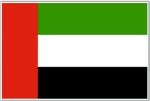 Reuters: The United Arab Emirates has stopped issuing new visas to citizens of 13 mostly Muslim-majority countries, including Afghanistan, Pakistan, and Iran, according to a document issued by a state-owned business park. A source briefed on the matter told Reuters the UAE had temporarily stopped issuing new visas to Afghans, Pakistanis, and citizens of several other countries over security concerns.
 Tolo News: The Ministry of Public Health on Wednesday reported 212 new positive cases of COVID-19 out of 1,476 samples tested in the last 24 hours. The data by the ministry shows that the cumulative number of total cases is now 45,490, the number of total reported deaths is 1,728, and the total number of recoveries is 36,145.
 BBC News: Heroin has long been a problem in Kabul but now many are turning to meth, a cheaper but equally dangerous drug. A new report released on Tuesday warns that Afghanistan is becoming a significant global producer of methamphetamine. The country’s opium poppy fields are already the source of the majority of the world’s heroin, and now this report, by the European Monitoring Centre for Drugs and Drug Addiction (EMCDDA), warns that crystal meth could eventually become just as big an industry. The boom is the result of a discovery by drug traffickers that a plant commonly found growing wild in parts of Afghanistan, ephedra, can be used to create the key component of meth: ephedrine.