
World Bank says Afghan central bank not sharing data needed for disbursement of $180 million
 1TV: The World Bank has said that the Afghan central bank is not giving data needed for the disbursement of $180 million allocated for the country. In a letter to President Ashraf Ghani, the World Bank’s office in Afghanistan has said that the bank is obligated to assess the country’s macroeconomic policy framework prior to disbursing budget support funds. Click here to read more (external link).
First Iranian Freight, Passenger Trains Arrive in Herat
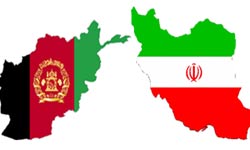
Tolo News: Local officials in Afghanistan’s western province of Herat on Wednesday said that, for the first time, imported goods arrived in the province from Iran via the Herat-Khawaf railway. The cargo was “500 (metric) tons of cement,” said officials. Meanwhile, another passenger train carrying Iranian officials also arrived in the Ghoryan district of Herat. Click here to read more (external link).
Parliament Approves 3 of 5 Ministers, Votes Out Central Bank Head

Ahmadi
Tolo News: The Afghan parliament on Wednesday approved three ministers and rejected two ministerial nominees–for Ministry of Education and Rural Rehabilitation and Development– and also did not confirm the head of the Central Bank [Ajmal Ahmadi]. Click here to read more (external link).
Even If It Achieves Peace, Can Afghanistan Ever Be Financially Independent?
 By Nilly Kohzad
December 1, 2020
Radio Free Europe/Radio Liberty
Ending America’s “endless war” has been a top goal of successive U.S. administrations since more than 100,000 troops were deployed to the country a decade ago.
Today, the U.S. troop presence in the country is markedly smaller, and there are expected to be around 2,500 after a troop cut ordered by President Donald Trump is implemented before his successor, Joe Biden, assumes office on January 20.
Even after all international troops have departed, Afghanistan will continue to be reliant on foreign aid for the foreseeable future. Pledges at an international donors’ conference last week underscored Kabul’s continued dependence on foreign largesse to survive and look after an impoverished population of over 35 million.
As the Afghan government and the Taliban inch forward in a fledgling peace process, the country’s lack of financial independence is being touted as the main incentive for them to form a single political system that will still need to work hard to attract foreign aid.
Last week, Afghan President Ashraf Ghani said aid “is important not only for development but also for peace.” He warned a reduction in foreign assistance would lead to “major setbacks” in public services, economic activity, and living standards, and that this would, in turn, threaten any hard-won peace.
A History of Aid Dependence
Kabul has relied on international aid for more than a century, ever since the current state began to take shape under a British Raj-backed monarch. Decades of fighting and global superpower invasions have forced Afghanistan to focus largely on survival rather than growth, leaving it crippled from an economic point of view.
“Afghanistan has been dependent on foreign aid and inflows of money through most of its existence, especially if you go back to the late 19th century,” said William Byrd, senior Afghanistan expert at the U.S. Institute of Peace, a think tank in Washington, D.C.
Considering its track record, Byrd says, Afghanistan’s struggling economy will require foreign dependence for a while. “When Afghanistan was not dependent on foreign aid of some kind, like in the ’90s, the civil war, or under the Taliban regime, those were disastrous times for the country,” he said.
The United States and the Soviet Union jostled over a neutral Afghanistan from the 1950s to the 1970s. Moscow invested more than $1 billion in economic assistance while most of Afghanistan’s large infrastructure projects such as hydroelectric dams and roads were constructed with aid from the two countries.
During the Soviet occupation from 1979 to 1989, the Kremlin provided billions of dollars for the development of roads, schools, and buildings, and kept the Afghan state running by financing its government and military.
Post-War Dependence
But the issue of foreign dependence is still a significant concern for post-war Afghanistan, especially as the government tries to broker a meaningful power-sharing deal with the Taliban amid fragile peace talks.
Last week’s 2020 Afghanistan donors’ conference, hosted by Finland, the United Nations and the government of Afghanistan in Geneva, pledged a total of $12 billion dollars of financial assistance for 2021-2024 to help move the country toward peace, prosperity and self-reliance. The donations come with strict conditions such as annual assessments to be made in exchange for aid.
At the previous conference in 2016, donors gave roughly $15.2 billion.
With an imminent drawdown of foreign troops in the coming months, heightened violence in the country, and growing Taliban influence in a number of provinces, the international community remains uneasy over whether progress in human rights, education, and development will be safeguarded.
Byrd, who is also a former country director for Afghanistan at the World Bank, says foreign assistance to Kabul is not likely to dry up anytime soon because the country’s dependence runs so deep. He says the bigger issue is whether aid can be absorbed effectively.
“It’s no question that large flows of money are an enabling factor for corruption, particularly at surge periods,” he told Gandhara. “More money increases the risk of corruption, waste, and side costs. All of this also means less of the funds will be beneficial to ordinary Afghans.”
Transparency International ranks Afghanistan third globally for corruption, which contributes to its extreme poverty and lack of functioning institutions. But vital security and political interests prompt Washington and its allies to continue pouring hefty amounts of aid into the country.
According to a report by the Special Inspector General for Afghanistan Reconstruction (SIGAR), a government watchdog, Washington has given Afghanistan approximately $132 billion for reconstruction efforts, mainly for the military, since 2001.
Only a small part of international aid has gone to humanitarian assistance and development compared to the many billions spent annually on security forces and funding the government.
In a report earlier this year, Doctors Without Borders warned that despite decades of international aid Afghans will continue to struggle to access essential medical care amid rising violence and poverty.
Recent Economic Gains
Since the Taliban was ousted from power in 2001, successive Afghan governments have taken steps to boost the country’s chances at self-reliance.
“Afghanistan became a member of the World Trade Organization and trade routes have diversified, limiting reliance on products such as wheat from Pakistan,” said Samim Arif, a senior presidential adviser. “The bankruptcy law has been reformed, increasing investor confidence in banking.”
He said gains made under the Ghani administration have helped Kabul to follow a sustainable path toward prosperity. “Large water dams have been built, mining laws have been reformed, and the Afghan government recently signed an agreement with Siemens Energy to build a unified national grid, which will reduce waste and dependence on neighbors for energy,” he said.
In order for Afghanistan to recover from decades of conflict and corruption, the country must wait and hope that a path materializes from the ongoing peace talks.
“If the peace process makes decent progress, then there is potential. But several things need to come together for the potential to be realized such as improvements in agriculture, mining, etc.,” Byrd noted.
From a government perspective, Arif says Afghanistan will likely be dependent on aid for years to come until there is full stability and the political landscape can shape the economic outlook.
“With a political settlement, Afghanistan can start more trade routes and agreements with neighboring countries and can finally exploit the full potential of its mining and extractive sectors while also focusing on building infrastructure and the energy and power sectors, which give impetus to economic growth,” he said.
Arif says a successful peace process and improved economic outlook may come at the cost of rescinding certain gains since 2001. Many Afghan officials and activists fear a deal with the Taliban will mean compromises on human rights and freedoms such as women’s right to education, work, and mobility.
“Businesses will make a comeback because of stability, investor confidence will soar, and a war economy will transform into a peace economy,” he said. “Participation and market entry will be easier, and traders and investors will make choices based on laws and regulations instead of worrying about losing their investment in case of rising insecurity.”
Despite the economic uncertainty that comes with an impending U.S. troop withdrawal, politicians like Vice President Amrullah Saleh are confident. In a recent interview, he said he hoped Afghanistan’s natural resources will put the country on the road to prosperity.
“Daikundi has the biggest deposit of lithium. Logar and Kabul have the biggest copper mines; northern provinces have gas,” he said, listing the various mineral deposits in Afghan provinces. “We are sitting on treasure,” he added. “When peace comes, we will lift everything from underground and use it to be self-sufficient.”
For a country with high civilian casualties, more than a century of financial dependence, and a weak political landscape, the goal of self-sufficiency amid a power-sharing government will require effort from all sides, patience, and above all true peace, which might be in sight but still difficult to achieve.
Copyright (c) 2020. RFE/RL, Inc. Reprinted with the permission of Radio Free Europe/Radio Liberty, 1201 Connecticut Ave NW, Ste 400, Washington DC 20036.
This female tattoo artist from Afghanistan is breaking stereotypes with her creations

Shahidy
Times Now: Soraya Shahidy of Afghanistan is an artist in the conservative country who is breaking stereotypes with her creations. Shahidy believes she is the first-ever females tattoo artist in a country where many scholars say that tattoos are forbidden under Islam. Click here to read more (external link).
Tolo News in Dari – December 1, 2020
Australian soldier drinks beer from dead Taliban fighter’s prosthetic leg

Ariana: A photograph obtained by The Guardian shows a senior Australian special forces soldier drinking beer out of the prosthetic leg of a dead Taliban fighter at an unauthorised bar on a base in Uruzgan province, in Afghanistan, in 2009. The picture of the beer swilling soldier comes amid a growing scandal following the release of a report recently that Australia’s special forces were allegedly responsible for the unlawful death of 39 Afghans. Click here to read more (external link).
Central Bank Chief Gave Extra Income to Appointees: Documents
Ahmadi
Tolo News: A document seen by Tolo News suggests that Ajmal Ahmadi, the governor of the Central Bank of Afghanistan, has made dozens of new appointments over the recent months with special privileges offered to the candidates. The documents show that some of the newly appointed employees were paid more than 450,000 Afs under the name of an exceptional salary difference. Click here to read more (external link).
150 new cases of HIV registered in Afghanistan in past 9 months
 1TV: A total of 150 new cases of HIV were registered over the past nine months in Afghanistan, the country’s health ministry said on Tuesday. Data with the Ministry of Public Health shows that 3,033 people have been infected with HIV since 1989. Click here to read more (external link).