logo

Daily Updated Afghan News Service

  • Home
  • About
  • Opinion
  • Links to More News
  • Good Afghan News
  • Poll Results
  • Learn about Islam
  • Learn Dari (Afghan Persian/Farsi)

Recent Posts

  • Forced Displacement: Taliban Demolish Homes in a Sar-e Pol Province Village November 1, 2026
  • Tolo News in Dari – November 1, 2026 November 1, 2026
  • Afghanistan crowned 2026 Hong Kong Sixes champions after beating Australia in final November 1, 2026
  • Trump administration plans to deport Afghan refugees to Pakistan: Report October 31, 2026
  • Taliban Governor Dismisses Opposition Claims Of Capturing Territory October 31, 2026
  • Residents Protest Against Taliban In Nuristan’s Waygal District October 31, 2026
  • Tolo News in Dari – October 31, 2026 October 31, 2026
  • Afghanistan storm into Hong Kong Sixes final after beating Scotland October 31, 2026
  • 16 Attacks Kill 18 Taliban Fighters In One Week, Says Afghanistan United Front October 30, 2026
  • In Afghanistan, musicians defy music ban to keep traditions alive October 30, 2026

Categories

  • Afghan Children
  • Afghan Sports News
  • Afghan Women
  • Afghanistan Freedom Front
  • Afghanistan United Front
  • Al-Qaeda
  • Anti-Government Militants
  • Anti-Taliban Resistance
  • AOP Reports
  • Arab-Afghan Relations
  • Art and Culture
  • Australia-Afghanistan Relations
  • Book Review
  • Britain-Afghanistan Relations
  • Canada-Afghanistan Relations
  • Censorship
  • Central Asia
  • China-Afghanistan Relations
  • Civilian Injuries and Deaths
  • Corruption
  • Crime and Punishment
  • Drone warfare
  • Drugs
  • Economic News
  • Education
  • Elections News
  • Entertainment News
  • Environmental News
  • Ethnic Issues
  • EU-Afghanistan Relations
  • Everyday Life
  • France-Afghanistan Relations
  • Germany-Afghanistan Relations
  • Haqqani Network
  • Health News
  • Heroism
  • History
  • Human Rights
  • India-Afghanistan Relations
  • Interviews
  • Iran-Afghanistan Relations
  • ISIS/DAESH
  • Islamophobia News
  • Japan-Afghanistan Relations
  • Landmines
  • Media
  • Misc.
  • Muslims and Islam
  • NATO-Afghanistan
  • News in Dari (Persian/Farsi)
  • NRF – National Resistance Front
  • Opinion/Editorial
  • Other News
  • Pakistan-Afghanistan Relations
  • Peace Talks
  • Photos
  • Political News
  • Reconstruction and Development
  • Refugees and Migrants
  • Russia-Afghanistan Relations
  • Science and Technology
  • Security
  • Society
  • Tajikistan-Afghanistan Relations
  • Taliban
  • Traffic accidents
  • Travel
  • Turkey-Afghanistan Relations
  • UN-Afghanistan Relations
  • Uncategorized
  • US-Afghanistan Relations
  • Uzbekistan-Afghanistan Relations

Archives

Dari/Pashto Services

  • Bakhtar News Agency
  • BBC Pashto
  • BBC Persian
  • DW Dari
  • DW Pashto
  • VOA Dari
  • VOA Pashto

The Sweet Sting Of Success: Afghanistan’s Fledgling Beekeeping Industry Stuck With Glut Of Honey

4th March, 2023 · admin

March 04, 2023
By RFE/RL’s Radio Azadi

Beekeeping became much more than a hobby when the industry was reborn in Afghanistan over the past two decades. For many Afghan farmers, honey became their lifeblood.

But with the decline of the Afghan economy, the sweet commodity has become a luxury item as cash-strapped customers focus their spending on basic food staples and other necessities. And with the Afghan product competing on the shelves with cheaper imports, beekeepers have been left with a glut of honey they cannot sell.

Ghancha Gul was one of the beneficiaries of the industry’s revival, which aside from providing an additional option for farmers also offered a viable entrepreneurial career for many women.

Known as the “mother of bees,” Gul has plied her trade as the owner of a beekeeping farm in the western province of Herat for 13 years, often dressing in men’s clothing to avoid discrimination as she traveled by motorcycle to deliver honey to local markets.

Business was good for years, she told RFE/RL’s Radio Azadi last month. But that was before the Taliban seized power in 2021, which triggered a devastating economic crisis that led to soaring inflation and mass unemployment and took a toll on household incomes and their purchasing preferences.

Farmers have also been hit hard by drought and floods, while the sharp rise in prices for food, fuel, and fertilizer have greatly increased their operating costs.

“I used to sell between 30 and 40 kilos of honey each month, but now I sell between 10 and 15 kilos,” Gul said. These days, she explained, “instead of buying honey, people buy rice and oil.”

Sting Of Success

International efforts were made over the past two decades to boost the industry as an alternative to opium-poppy cultivation.

The province became one of the centers of the fledgling honey-production industry, boasting about 800 beekeeping farms that employed around 3,000 people, about 10 percent of them women. Beekeeping enterprises have also been prominent in eastern Nangarhar Province and the southern provinces of Helmand and Kandahar.

Seen as an effective way to alleviate poverty in rural areas while also protecting biodiversity and supporting food security, the UN’s Food and Agriculture Organization has continued to boost the industry with training programs and the provision of startup kits, including tens of thousands of honeybees, hive boxes, and beekeeping suits, to get new farmers on their way.

The Taliban government, which has dealt with a free-falling economy and a raft of environmental disasters that have hit the agricultural sector, has also supported beekeeping.

Last year, the Taliban authorities announced the expansion of the industry with more than 400 new beekeeping farms in Helmand as well as the establishment of a berry forest in Nangarhar to sustain the local honeybee population.

The efforts to build the industry had opened export markets to countries like Kuwait, the United Arab Emirates, and India, as well as neighboring Iran and Pakistan. But while honey production showed resilience to the droughts that have ravaged Afghanistan’s agriculture sector in recent years, the export market has largely dried up, leaving beekeepers to compete with cheaper imports from Pakistan and Iran as they try to sell their product to Afghans.

In Helmand alone, honey production rose “significantly” last year following a drought-hit season that saw nearly 40 tons of honey produced in the province in 2021, according to the region’s deputy director of agriculture, Mawlawi Zainullah Zahid.
In Herat, officials suggested that production this year could nearly double to 150 tons, even as many beekeepers and honey processors reduce production as supply swells.

Other provinces have reported similar increases in production in recent years, greatly adding to the reported output of 2,150 tons produced nationwide in 2019.

Glut Of Honey

Khalil Ahmadi Bahmanesh, a beekeeper in Herat, said that half of his yield from last season has gone unsold, and that he cannot compete with imports from Iran.

“While we produce good honey, poor quality Iranian honey saturates the Herat market,” Bahmanesh said. “Iranian honey is sold at a cheap price and leads people to question purchases of our honey.”

Mohammad Aref, who started his beekeeping farm in Helmand’s Karukh district more than a decade ago with just two hives, now has more than 400.

He told Radio Azadi last year that his yields had risen more than 40 percent over the previous season but that he was unable to sell his product in the face of Iranian competition.

“When there are no patrons or customers, we are forced to avoid investing in the next season, to transfer our capital to another sector, or stop altogether,” Aref said.

Shir Agha, who manages 160 hives in Helmand, says he has more than 3,000 kilograms of honey that he cannot sell.

“There are no sales. Honey is still left over from last year. There is no market,” Agha said. “At the same time, we are punished by the honey from Iran and Pakistan.”

Whereas a kilogram of Afghan honey used to sell for about 1,000 afghanis ($11), producers say, the same amount of Iranian honey costs only 150 to 400 afghanis ($1.70 to $4.50).

Aziz Naseri, who runs a honey shop in Lashkargah, the provincial capital of Helmand, says he has been forced to lower his prices for Afghan honey by half.

“People’s economic situation is bad,” he said. “When we look at them, we sell our honey for 700 afghanis ($7.85).”

While Seyyed Masoom Sadat, the head of Herat’s Agriculture Department, says that the province is more than self-sufficient and there is no need to import honey, the rules of international commerce prevent the elimination of competition.

“We cannot ban the import of Iranian honey because of [Afghanistan’s] membership in the World Trade Organization,” he said.

Agriculture officials in the province have said they are working to find suitable markets to boost honey sales.

Based on reporting by Radio Azadi correspondents in the region whose names are being withheld for security reasons.

Copyright (c) 2023. RFE/RL, Inc. Reprinted with the permission of Radio Free Europe/Radio Liberty, 1201 Connecticut Ave NW, Ste 400, Washington DC 20036.
Posted in Economic News | Tags: Beekeeping in Afghanistan |

Afghan Women Following Taliban’s Rules Still Banned from NGO Work

4th March, 2023 · admin

VOA News
March 3, 2023

Roshan Noorzai, Fawzia Ahsan, Sahar Azimi, and Waheed Faizi

WASHINGTON — Every morning since 2021, 26-year-old Sabira Saidi would wear her black hijab and face mask and go to work accompanied by her father or brother.

Saidi, who worked as a case worker for London-based Children in Crisis in Kabul and Maidan Wardak provinces, put up with all the restrictions imposed on women after the fall of Kabul into the hands of the Taliban to keep her job and support her family of 10.

But things changed for Saidi and thousands of women working with nongovernment organizations after the Taliban barred women from working with national and international NGOs on December 24 of last year.

The Taliban’s Ministry of Economy sent a letter to NGOs ordering them to suspend Afghan female employees “until further notice.”
In the letter, the Taliban said that the ban was imposed because female employees of NGOs were not wearing the hijab properly.

Saidi and other women working with NGOs, who spoke to VOA Afghanistan, say they abided by the Taliban’s dress codes.

They say the Taliban’s ban on women working in NGOs was part of the Taliban’s strategy to erase women from public space.

A few days before the NGO ban, the Taliban ordered universities to suspend female students’ access to the universities. The group had already banned girls’ secondary education.

After returning to power in August 2021, the Taliban steadily imposed some repressive measures against women, including banning them from secondary education, working in the government, traveling long distance without a close male relative and going to parks and gyms.

The U.N. special rapporteur on the situation of human rights in Afghanistan, Richard Bennett, in a report released February 9, considered these measures as an attempt to “erase women from all public spaces.”

The report added that “the cumulative effect of the Taliban’s systematic discrimination against women raises concerns about the commission of international crimes.”

Lost hope

Saidi said that now she spends all day at home, which has taken its toll on her.

“We suffer psychologically and financially,” she said.

Saidi said for now her organization pays her, but she is “not sure for how long it will continue.”

“My work as a case worker was to visit them [children] to see their lives from near and assess their living conditions. And then to see how we could provide them services,” said Saidi. “How can I do my job from home?”

She talks to her colleagues “daily to see if there is a change in the Taliban’s policies,” but “no one knows how long we will have to stay at home.”

“I lost my hopes,” said Saidi, adding that, “If I had my passport, I would not stay for a day in Afghanistan.”

Humanitarian crisis

Last month, the U.N. deputy special representative and humanitarian coordinator for Afghanistan, Ramiz Alakbarov, told journalists that 28 million people in the country depend on humanitarian aid for survival.

Since the Taliban’s return to power, “the gross domestic product [GDP] declined by up to 35 percent, the cost of a basic food basket rose by 30 percent and unemployment by 40 percent,” according to Alakbarov.

The Taliban’s restrictions have made it difficult for aid organization to work in Afghanistan, said Janti Soeripto, president and CEO of Save the Children, U.S. adding that the country is facing a humanitarian crisis.

“Operationally, it’s really impossible to do our work well and effectively without women. Women help us reach women and children in particular,” said Soeripto.

She said Save the Children has “made it clear” to the Taliban that “we will not work without our female colleagues,” adding the organization abided by the Taliban’s dress codes and female employees were accompanied by a “mahram,” a close male relative.

Save the Children has been in Afghanistan since 1976, working in 17 out of 34 provinces, with 5,000 employees in the country and half of them are women, according to Soeripto.

She added that among the 55,000 people working with NGOs in Afghanistan, one-third of them were women.

Soeripto told VOA that though her organization was able to start back its activities in the health and in the education sectors, they must get authorization not only at national but provincial level as well.

She said the Taliban gave them more assurances, but “we want to see actions not just the words.”

International pressure

Shinkai Karokhail, a former member of the Wolesi Jirga, the lower house of Afghanistan’s parliament, told VOA that the international community should increase pressure on the Taliban’s leaders.

“It should not be something that the people of Afghan pay the cost. … It should be sanctions on those Taliban who are making decisions,” said Karokhail.

“But the world should not remain silent,” said a 27-year-old woman, who asked VOA to use the pseudonym “Arizo” for security reasons.

Arizo was the only breadwinner of her family and lost her job with an international NGO after the Taliban’s ban on women working with NGOs.

“The world should not recognize the Taliban as they have imposed restrictions on women and violated human rights,” she told VOA.

Arizo, Saidi and thousands of other women working with NGOs, now staying home after the Taliban ban, are worried about what the future holds for them.

Under the Taliban, “I see a bleak future for me and my family,” said Arizo.

This story originated in VOA’s Afghan service.

Related

  • US’s West Not Optimistic Afghan Women Will Return to Classes This Month
Posted in Afghan Women, Economic News, Taliban | Tags: Life under Taliban rule, Taliban war on women |

Local museum inaugurated in Afghanistan’s Ghor province

3rd March, 2023 · admin

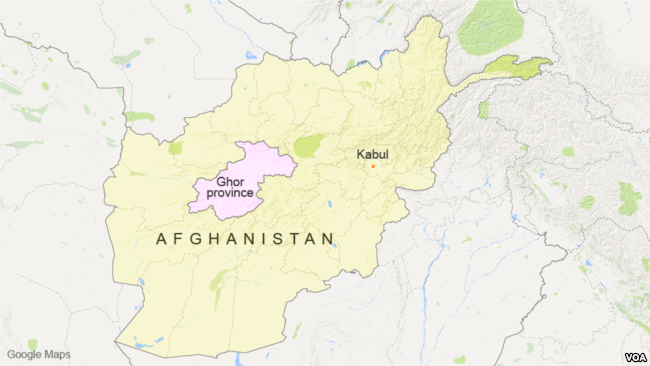
Ariana: The directorate of information and culture in Ghor says it has inaugurated a local museum in the province and showcased almost 170 artifacts at this new museum in Firozkoh city, the capital of the province. According to the directorate, most of these artifacts are related to the period of Ghaznavid and the sultans of the Ghurid Empire. “We opened the Museum of Ghor province to preserve and care for the antiquities. In this museum, we have 169 pieces of ancient artifacts related to the period of Ghaznavid and the sultans of the Ghurid Empire,” said Nizamuddin Nizami, the director of the Ghor Museum. Click here to read more (external link).

Posted in Art and Culture, History, Reconstruction and Development | Tags: Ghor, Mahmud Ghazni |

Tolo News in Dari – March 3, 2023

3rd March, 2023 · admin

Posted in News in Dari (Persian/Farsi) |

Taliban-Appointed Agriculture Head in Panjshir Arrested on Corruption Charges

3rd March, 2023 · admin

8am: Sources informed Hasht-e Subh on Friday that Abdul Mujib was taken into custody in Kabul city five days ago by the Taliban intelligence on allegations of abusing official powers, financial and administrative corruption, and immorality crimes. Contradictory reports suggest that Abdul Mujib may have been apprehended for colluding with ISKP, with explosives allegedly discovered in his possession at the time of his arrest. Click here to read more (external link).

Posted in Corruption, Crime and Punishment, ISIS/DAESH, Taliban | Tags: Panjshir, Taliban vs. ISIS |

Ban on Women’s Work Causes ‘Food and Medicine’ Shortage in Afghanistan: Blinken

3rd March, 2023 · admin

Blinken

Khaama: US Secretary of State Antony Blinken once again condemned the Taliban’s ban on female employees’ work, adding that gender-based restrictions will lead to a shortage of food, medicine, and other life-saving supplies, affecting vulnerable people including women and girls. The Secretary of State in a recorded speech sent to the United Nations Human Rights Council, described the ban on the education of female students in secondary schools and universities, as part of a repressive policy towards Afghan women and girls. Click here to read more (external link).

Related

  • University Professor and Activist ‘Ismail Mashal’ Not Released: Sources
Posted in Afghan Children, Afghan Women, Economic News, Human Rights, Taliban, US-Afghanistan Relations | Tags: Life under Taliban rule, Taliban war on women |

Iran Is New Center of Al-Qaeda, Says Khalilzad

2nd March, 2023 · admin

Khalilzad

Khaama: The former US special representative for the reconciliation in Afghanistan, Zalmay Khalilzad, said that Iran “would be the centre of Al-Qaeda,” impacting Iran’s ties with the rest of the world. In an interview with Tolonews, Khalilzad said Iran would serve as the group’s centre more than anywhere else.   “Once Afghanistan was a centre for Al-Qaeda, but Al-Qaeda has changed, and its small groups have become a network in various world areas. However, if any centre exists, it should be Iran,” he said. Click here to read more (external link).

Posted in Al-Qaeda, Iran-Afghanistan Relations, US-Afghanistan Relations | Tags: Zalmay Khalilzad |

Tolo News in Dari – March 2, 2023

2nd March, 2023 · admin

Posted in News in Dari (Persian/Farsi) |

Taliban Announce Reopening of Universities, but Only for Male Students

2nd March, 2023 · admin

Akmal Dawi
VOA News
March 1 , 2023

WASHINGTON — De facto Taliban authorities have announced the reopening of state-run universities in the Afghan capital, Kabul, and several other cities, but say only male students will be allowed to attend.

“According to a decision by the Supreme Council for Higher Education,” reads a short statement from the Taliban’s Ministry of Higher Education, “studies of the male students at governmental higher education institutions in the colder provinces will officially start from [March 6] of the current year.”

Schools and universities go on annual winter break in about 24 of Afghanistan’s 34 provinces.

The Islamist government banned higher education for female students last year, saying women had not appropriately observed gender-based religious restrictions under the prior government, which was backed by the United States.

Since seizing power in August 2021, the Taliban have also shut down secondary schools for female students, saying the ban is temporary.

“Taliban are running out of time to make a decision on reopening girls’ secondary, high school and universities,” said Orzala Nemat, an Afghan activist and researcher at the School of Oriental and African Studies at the University of London. “This is the demand of the general public, community elders, religious scholars and even some of their own members feel embarrassed to support this un-Islamic and unjustified act.”

Afghanistan is the only country where women and girls are officially barred from education and work, according to human rights groups.

The gender-based discriminatory policy has been maintained even while it costs hundreds of millions of dollars for Afghanistan’s beleaguered economy, the United Nations has reported.

Possible internal divisions

Facing domestic and global condemnation, some Taliban officials have reportedly shown disapproval of the government’s misogynistic policies.

“The Taliban leader, Hibatullah Akhundzada, appears to insist upon these measures out of personal conviction and to assert his authority over the movement and the country,” the International Crisis Group said in a report last month.

Not seen in public, Akhundzada is nevertheless revered as a god among the Taliban. He has no term limit and has unchecked powers over everything within the Taliban government.

“The Taliban are in an internal power struggle,” said Pashtana Durrani, director of Learn Afghanistan, a nongovernment organization supporting education for girls and women.

“Right now, the Taliban are in a stalemate where they can’t remove or impeach the amir, and the amir is a man who thinks women in schools and universities are haram,” Durrani told VOA, using the Islamic term for forbidden.

For Farahnaz Forotan, a prominent female journalist who fled Afghanistan after the Taliban captured Kabul, the denial of education for girls and women is a sadistic power play by the Taliban leader with catastrophic consequences for millions of Afghans.

“How can a poor country compensate for two years of no education for girls? The losses are catastrophic and irreparable,” said Forotan, who spoke to VOA from her home in the U.S. state of Maryland.

Cracking down on internal dissent, the Taliban have defied international calls, including from renowned Islamic institutions, to lift the bans on women’s work and education, saying the world should not interfere in Afghanistan’s internal affairs.

“It’s an Islamic obligation and in the national interest of Afghanistan to have its women as educated as its men,” said the University of London’s Nemat. “A well-educated new generation of women and men will eventually … dismantle the vicious cycle of colonialism in the country where our political leaders become a pawn in the hands of the superpowers of their time.”

Posted in Afghan Women, Education, Taliban | Tags: Life under Taliban rule |

Women’s Sports Going Downhill In Afghanistan As Taliban Denies The Right To Ski

2nd March, 2023 · admin

By Mansoor Khosrow
Radio Free Europe/Radio Liberty
March 1, 2023

The majestic mountains in the central province of Bamiyan are known as Afghanistan’s skiing capital. But due to a new Taliban ban, women are no longer welcome on the slopes.

Hundreds of amateur and professional skiers took to the mountains to hone their skills far from the violence that gripped large swathes of the country over the past two decades.

For girls and women, especially, the sport provided a high-altitude refuge that gave them an opportunity to enjoy an activity taken as a given throughout the world.

“I felt happy and free,” said 16-year-old Elina Hussaini of her experiences racing down the slopes of Koh-e Baba, a local Bamiyan skiing hub, with her father.

But like most sporting activities, skiing is now just a memory for the ninth-grader and other Afghan girls and women following a recent Taliban decision to ban them from the slopes.

Afghanistan’s second winter since the hard-line extremist group seized power has proven to be particularly harsh for skiers like Hussaini, as the Taliban has continued to reintroduce many of the draconian limits on women’s rights and activities that it infamously imposed during its first stint in power from 1996 to 2001.

As the Taliban has slowly but surely rebuilt its Islamic emirate, it has banned teenage girls and women from education and work, and restricted women’s mobility and how they can appear in public.

The ban on skiing is just the latest among the sports activities denied to girls and women.

“We are now just restricted to our homes,” Hussaini told RFE/RL’s Radio Azadi.

To fill her newfound and unwelcomed free time after she was barred from attending school and taking part in sports, Hussaini is learning embroidery from her mother to fill her hours stuck at home.

Farahnaz Mohammadi, a 10th-grader who once dreamed of becoming a professional skier, echoes the feeling expressed by Hussaini and an estimated 50 fellow female skiers in the Bamiyan region. “It is very boring and excruciating,” Mohammadi told Radio Azadi. “The Taliban has deprived us of education and leisure.”

In Bamiyan, Taliban officials confirmed the ban on girls and women skiing. “Women athletes are here, but they are not allowed to practice skiing in the mountains,” said Ziauddin Begzad, the provincial head of the General Directorate of Physical Education and Sports.

The Taliban issued a blanket ban on women’s sports within weeks of seizing power in Kabul in August 2021, forcing many professional and amateur women athletes to continue their training in secret or to flee Afghanistan altogether.

Outside the country, some have found opportunities to continue their training abroad.

Afghanistan’s women’s soccer team disintegrated when its members fled to Australia after the Taliban returned to power. But the country’s exiled soccer federation secured world soccer body FIFA’s support in restoring its right to represent Afghanistan on the playing field, and this week the federation announced it would soon hold a training camp for the women’s national team.

The Taliban’s ban on women’s sports has reached well beyond the arena and even into the most routine activities. In November, for example, the Taliban banned women from using public gyms and encouraged those who wanted to exercise to do so at home.

The following month the International Olympic Committee warned that it could quit working with Afghanistan unless the Taliban gave “safe and inclusive access” to women athletes and also allowed women to take part in sports administration.

Written by Abubakar Siddique based on reporting by Mansoor Khosrow of RFE/RL’s Radio Azadi

Copyright (c) 2023. RFE/RL, Inc. Reprinted with the permission of Radio Free Europe/Radio Liberty, 1201 Connecticut Ave NW, Ste 400, Washington DC 20036.
Posted in Afghan Sports News, Afghan Women, Taliban | Tags: Bamiyan, Life under Taliban rule, skiing, Taliban war on women |
Previous Posts
Next Posts

Subscribe to the Afghanistan Online YouTube Channel

---

---

---

Get Yours!

Peace be with you

Afghan Dresses

© Afghan Online Press
  • About
  • Links To More News
  • Opinion
  • Poll