
 Khaama: The World Health Organization (WHO) has reported that from January to July 20 of this year, nearly 40,000 suspected cases of measles, particularly among women and children, have been recorded across Afghanistan. On Wednesday, July 24, the WHO released a report stating that among the 39,826 suspected measles cases, 170 deaths related to the disease have been registered in Afghanistan. Previously, Médecins Sans Frontières (Doctors Without Borders) expressed concern over the rise in measles among children and infants in Afghanistan, particularly in Balkh, Herat, and Helmand provinces. The organization reported that many children in Afghanistan’s provinces are not receiving the necessary measles vaccination to prevent the disease. Click here to read more (external link).
Iran demands Kamal Khan dam redesign for water rights, contradicting Helmand River Accord

The Helmand river stretches for 1,150 km from the Hindu Kush mountains into Hamoun wetlands which once supported great plant and animal diversity in Iran’s Sistan Basin.
Khaama: Iranian officials have announced that negotiations with representatives of the Taliban administration regarding Iran’s water rights from the Helmand River are ongoing and have entered a new phase. According to IRNA on Thursday, July 25th, 2024, Issa Bozorgzadeh, a spokesperson for Iran’s Water Industry, reported that the Kamal Khan Dam needs to be modified to ensure Iran’s water rights are met. Bozorgzadeh emphasized, “Iran’s request is for the Kamal Khan Dam to be re-engineered.” The Iranian negotiating team has presented this demand during their meetings with officials from the de facto authorities. Click here to read more (external link).
Minister of defense claims Afghanistan will claim ‘sovereignty of airspace soon’
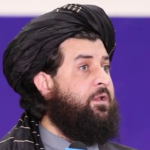
Yaqoob Mujahid
Ariana: The acting Minister of Defense Mohammad Yaqoob Mujahid said Thursday just as there is terrestrial sovereignty, airspace sovereignty will be secured soon. Addressing an “appreciation ceremony” for security forces, Yaqoob said that if anyone looks at Afghanistan with disrespect, the Islamic Emirate will respond using available means and will not accept anyone’s orders in this regard. Click here to read more (external link).
Related
Central Asian military spending surges amid border tension, regional conflict fears

VOA News: Military spending is surging in the former Soviet republics of Central Asia, a development officials link to regional conflicts such as the war in Ukraine, although experts doubt the buildup will increase stability. While Russia was the dominant arms supplier to these countries for more than three decades, other countries including Turkey, China and the United States have now entered the market. Click here to read more (external link).
Only Four Percent of Afghans Want Recognition of Taliban, Says UNAMA

Taliban militants (file photo)
Afghanistan International: UNAMA has republished a survey from April highlighting that only four percent of Afghans want the Taliban government to be recognised. According to the survey, 45 percent of respondents said that to improve the situation for women in the country, the international community should facilitate direct dialogue between them and the Taliban. Click here to read more (external link).
Pakistan Reopens Key Border Point With Afghanistan After Months Of Closure
 RFE/RL’s Radio Mashaal: Pakistan after a nine-month closure that resulted in financial losses and rising anger on both sides. Click here to read more (external link).
Tolo News in Dari – July 24, 2024
Iran begins major border sealing project to secure Northeast frontier with Afghanistan
 Khaama: According to the Iranian Mehr News Agency on Tuesday, July 23, General Akbari reported that the project to seal the shared borders between the Khorasan Razavi region and Herat province spans 300 kilometres and is currently underway. Akbari emphasized that the walls of this project will be 4 meters high, 3 meters and 70 centimetres long, and 1 meter and 10 centimetres thick. Click here to read more (external link).
Related
AFF Claims Attack on Taliban Intelligence Officers in Kabul
 Afghanistan International: On Monday, the Afghanistan Freedom Front (AFF) stated that its members had attacked a “convoy of Taliban intelligence militia” in the Karte Sakhi area of Kabul city. The AFF claimed that four Taliban members had been killed and another individual had been injured in this attack. This is the second attack by this group in the past two days. The Afghanistan Freedom Front also claimed on Monday that it had targeted the director of Taliban transportation in Baghlan province. Click here to read more (external link).
Interview: Pakistani Islamist Leader Opposes Military Operation To Root Out Militants
 By Tahir Khan
Radio Free Europe/Radio Liberty
July 23, 2024
Maulana Fazlur Rehman, leader of the largest Islamist party in Pakistan, has voiced his opposition to a planned operation by the military to root out militants along the Afghan border.
In an interview with RFE/RL’s Radio Mashaal on July 22, the controversial cleric called for peace talks between Pakistan and Tehrik-e Taliban Pakistan (TTP), the most lethal militant group waging war against Islamabad.
The comments from Rehman, the head of the Jamiat Ulema Islam-Fazl (JUI-F) party, came as militant violence has surged across the predominately Muslim nation of some 240 million people.
A high-profile bomb-and-gun attack on a military base in the northwestern city of Bannu on July 15 killed 10 government security personnel.
But residents of Khyber Pakhtunkhwa, the northwestern province that has been the scene of devastating military operations that uprooted millions of people and killed thousands of civilians in the past, have protested against any new military operations in the region.
“People are not ready to suffer yet again,” Rehman, who hails from Khyber Pakhtunkhwa, told Radio Mashaal. “We have been through bitter times.”
Thousands of people waving white flags and calling for peace rallied in Bannu on July 19 calling for an end to military operations in the region. The demonstration turned violent and security forces fired on protesters, killing one person.
Since then, thousands of people have been participating in a sit-in protest in Bannu.
“The voices in Bannu are the voices of all the residents of Pakhtunkhwa,” Rehman said.
Islamabad earlier this year said the military would launch a new offensive to combat militants along the Afghan border, without offering details.
Pakistani military spokesman Lieutenant General Ahmed Sharif on July 22 said the planned operation would be a “comprehensive counter-terrorism campaign” that would not displace locals.
But those comments have done little to quell the concerns of protesters and locals who fear for their lives and livelihoods in any new military offensive.
Since 2003, tens of thousands of civilians have been killed in major counterterrorism offensives in Khyber Pakhtunkhwa, where more than 6 million people have been displaced. The province was a former stronghold of the Afghan Taliban, the Haqqani network, and Al-Qaeda.
“People are ready to be buried in the ruins of their homes,” Rehman said. “But they do not want to be humiliated again.”
Peace Prospects
The TTP has intensified its deadly insurgency against Pakistan since the Afghan Taliban seized power in Kabul.
Islamabad has repeatedly accused the Afghan militants of sheltering the TTP, with which it has close ideological and organizational ties. Kabul has rejected the claim, and ties between Pakistan and the Taliban, which have been close allies for decades, have plummeted.
In January, the 71-year-old Rehman visited Afghanistan to repair ties. During his stay in Kabul, he met with Taliban officials, including its reclusive chief, Mullah Haibatullah Akhundzada, and TTP leaders.
In his interview with Radio Mashaal, Rehman said he presented a plan to resolve the conflict between Islamabad and the TTP with the mediation of the Afghan Taliban.
“But our [security] establishment and rulers are so incompetent that they didn’t accept that solution,” said Rehman.
Rehman said a peace deal was the only way to end the TTP’s 17-year insurgency against Islamabad.
In 2022, the Afghan Taliban brokered yearlong peace talks between the TTP and Islamabad. But the talks broke down and the TTP resumed its attacks.
Rehman has courted controversy for his support of the Afghan Taliban.
A JUI-F-led coalition governed Khyber Pakhtunkhwa between 2002-2007. Critics blame the party for sheltering the Afghan Taliban whose presence in the region led to the emergence of the TTP. Many Afghan Taliban leaders were educated in Islamic seminaries run by JUI-F leaders.
Written by Abubakar Siddique based on reporting by Tahir Khan of RFE/RL’s Radio Mashaal