
 Afghanistan International: The council alleges that the Taliban employed horrific methods, including beheading, gouging out eyes, executing individuals in front of their parents, and severe torture. The council condemned the Taliban’s actions in Panjshir, calling them “unacceptable and criminal” under Islamic rulings, as well as national and international laws. Click here to read more (external link).
Afghan refugee breaker disqualified for wearing ‘Free Afghan Women’ cape

Talash
AP: Refugee breaker Manizha Talash, or “b-girl Talash,” was disqualified from the first Olympic breaking competition on Friday after she wore a cape that said, “Free Afghan Women” during her prequalifier battle against India Sardjoe — known as “b-girl India.” The 21-year-old, originally from Afghanistan and representing the Olympic Refugee Team, lost in the prequalifier battle against Sardjoe and would not have advanced even if she hadn’t been disqualified. Click here to read more (external link).
Tolo News in Dari – August 10, 2024
Polio vaccination campaign begins in five provinces of Afghanistan

Child getting polio drops (file photo)
Ariana: The Ministry of Public Health has announced that nearly 2.4 million children under the age of five are expected to receive the polio vaccination during a four-day campaign commenced Saturday in five provinces of Afghanistan. Click here to read more (external link).
Zabihullah Mujahid: Daesh in Afghanistan No Longer a Threat

Zabihullah Mujahid
Tolo News: Zabihullah Mujahid, the spokesperson for the Islamic Emirate, has dismissed Western countries’ concerns about the activities of Daesh and other terrorist groups in Afghanistan as baseless and mere propaganda. Mujahid said that the geography of Afghanistan is under the complete control of the Islamic Emirate, and no foreign or domestic rogue groups are allowed to operate. Click here to read more (external link).
Washington Sleeps as Afghanistan Becomes Breeding Ground For Global Jihad
 Michael Hughes
August 10, 2024
The Taliban have long represented themselves as a group with a local vision and little to no aspirations of carrying jihad beyond Afghan borders. Putting aside that aligning with al-Qaeda, an international terrorist group, single-handedly undermines this narrative, evidence continues to mount that Afghanistan has become an ideal base for foreign terrorist groups to recruit, train, and launch attacks globally.
Taliban support for terrorist groups and/or inability to counter them has had significant consequences for the region, including attacks in Russia, Iran, and Pakistan. Most countries in the region have either been hit with a terrorist attack or are under direct threat of one. But the U.S. could soon become a target as well.
Charges Unclear As Trial In Taliban’s Court Underway For Ex-Afghan MP Allah Gul Mujahid
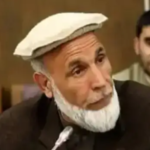
Allah Gul Mujahid
Afghanistan International: Reliable sources have informed Afghanistan International that the trial of Allah Gul Mujahid, a former Afghan parliament member, is still underway in the Taliban’s court and the final verdict has not been reached yet. Sources close to Mujahid allege that his arrest by the Taliban was driven by “political motives”. Mujahid returned to Kabul in July last year, after which he was promptly arrested and imprisoned. Allah Gul Mujahid had initially returned to Afghanistan at the invitation of the Taliban’s Commission for Contact with Afghan Personalities. Click here to read more (external link).
Tolo News in Dari – August 9, 2024
Afghan refugees worry as Iran continues forced deportation
 By Meena Barek and Roya Zamani
VOA News
August 8, 2024
Washington — When the Taliban overran the northern Afghan city of Mazar-e Sharif in August 2021, Aminullah Ranjbar, a police officer, says he had “no option” but to flee with his family to Iran.
The Ranjbars have been living in Tehran as undocumented refugees for the past three years, fearing deportation to Afghanistan, where Aminullah’s life is in danger.
“We know that many [former Afghan security officials] were killed by the ruling group in Afghanistan,” Ranjbar said.
Thousands of former Afghan security forces fled to Iran after the Taliban’s takeover in August 2021 for fear of reprisals.
The United Nations Assistance Mission in Afghanistan says it documented “at least 60 instances of arbitrary arrest and detention, at least 10 instances of torture and ill-treatment, verbal threats and at least five killings of former government officials and former ANDSF members” between April 1 and June 30, 2024.
The U.N. has also recorded at least 800 human rights violations, including 218 extrajudicial killings, against government officials and security forces from the Taliban’s takeover in 2021 to June 2023.
UNHCR said an estimated 1 million Afghans fled to Iran after the Taliban took power in 2021.
According to the UNHCR, 4.5 million Afghan refugees are in Iran, of whom only 750,000 are registered as refugees.
Many Afghan refugees living in Iran share Ranjbar’s concerns.
“I just go to work and come back to the hostel. I am afraid of going anywhere else,” said Shah Mahmood, a daily laborer who has been living in Iran for the past five years.
Mahmood told VOA that the Iranian government’s behavior toward Afghan refugees changed after the fall of Afghanistan in 2021, which forced many more Afghans to flee to Iran.
“Harassment, detention and deportation of Afghan refugees increased in the past three years,” he said. “It is becoming difficult for Afghans to live in Iran, but we are desperate, and there is nothing if we return to Afghanistan.”
In a statement on Monday, the Hengaw Organization for Human Rights, a Norway-based human rights nongovernmental organization reporting on human rights violations in Iran, reported an increase in “anti-Afghan racism within both governmental and social spheres in Iran.”
Videos of the mistreatment of Afghan refugees in Iran are circulating on social media. A viral video posted Tuesday shows Iranian policemen kneeling on a young Afghan refugee. VOA cannot verify the authenticity of the videos.
Meanwhile, Iranian officials said that undocumented foreigners should leave Iran by the end of this year.
In May, the Iranian government said it deported 1.3 million foreigners, primarily Afghan refugees, in one year.
Fearing deportation, Mahmood hopes the new Iranian government, headed by Masoud Pezeshkian, will adopt a more tolerant policy toward the refugees.
However, Abdul Ghafoor Liwal, former Afghan ambassador to Iran, told VOA that he does not think the Iranian policy toward Afghan refugees and Afghanistan will change.
“In general, it is the Iranian policy, in their own words, to expel undocumented Afghans from Iran. I don’t think that there would be any changes,” Liwal said, adding, “The region is not in the hands of the civilian governments in Iran.”
Iran-Taliban relations
Iran has cultivated close relations with the Taliban since the group seized power in 2021.
The country handed over the Afghan Embassy in Tehran to the Taliban in early 2023.
“Iran’s policy toward Afghanistan is security-focused,” said Liwa. “Iran does not want to open another front on its eastern border while it is involved in the Middle East,” he said.
Fatemeh Aman, a senior fellow at the Middle East Institute, agreed that Iran’s relations with the Taliban are driven by security concerns. “As recently as this year, there have been terrorist attacks in Iran. Terrorists could enter the border undercover,” she said.
In January, twin suicide bombings in the Iranian city of Kerman killed at least 95 people.
Iranian officials traced the attack to Islamic State-Khorasan Province based in Afghanistan.
Aman said that migrant flow from Afghanistan is another important issue that Iran’s regime is facing.
This story originated in VOA’s Afghan Service.
Related
‘Overwhelmed By Misery’: Taliban’s Harvest Tax Squeezes Impoverished Afghan Farmers

Taliban (file photo)
By RFE/RL’s Radio Azadi
August 8, 2024
Fawad was already reeling from the deadly earthquake that struck western Afghanistan in October and severely damaged his home and crops.
But the Taliban dealt the small-scale farmer from the western Herat Province another crippling financial blow.
Fawad, who grows lentils and wheat, was recently forced to pay “ushr,” an Islamic tax on harvests.
“We are overwhelmed by misery,” Fawad, whose name has been changed to protect his identity, told RFE/RL’s Radio Azadi. “But we are forced to pay taxes to the Taliban.”
Since seizing power in 2021, the unrecognized and cash-strapped Taliban government has levied the harvest tax in a bid to boost revenue. While tax collection was initially sporadic and uneven across the country, it has been expanded nationwide.
But the tax have angered many farmers, who say the militant group has not taken into consideration the losses they have incurred.
Afghanistan has been the scene of a series of deadly natural disasters in recent years, including earthquakes, floods, and a severe drought, that have exacerbated the devastating humanitarian crisis in the country, the world’s largest.
Taliban Taxes
The Taliban has imposed a 10 percent tax on harvests from irrigated land and a 5 percent levy on rainfed crops. It has described the payments as an obligation under Islamic law.
The Taliban has relied heavily on aggressive taxation to raise revenue. The militants have levied taxes on everything from moving goods on highways to hanging a sign in front of a shop.
But the Taliban government’s lack of transparency and the loss of essential services has led to complaints about what Afghans are getting in return.
The previous Western-backed Afghan government did not impose Islamic taxes, including “zakat,” a 2.5 percent levy on the estimated value of a person’s possessions that the Taliban has also collected.
Zakat is one of the five pillars of Islam that are considered obligations for all Muslims.
During its 19-year insurgency, the Taliban collected ushr and zakat from Afghans living under its rule, including farmers who cultivated opium. Tax collection was a major source of revenue for the militants.
‘I Have Nothing’
Awalmir is another Afghan farmer who is critical of the Taliban’s aggressive tax collection.
Awalmir, who owns a farm outside of Kabul, says he was forced to give the Taliban around 45 kilograms of wheat from his 450-kilogram harvest this year.
“They made me pay it despite all the losses I had incurred because of torrential spring rains” that triggered deadly flash floods in parts of Afghanistan, he told Radio Azadi.
Ali Reza, a farmer in the northern Sar-e Pul Province, says the Taliban is levying high taxes on impoverished Afghans without providing any basic services to citizens in return.
“We want the Taliban government to fix our roads, build health-care clinics, and rebuild schools,” he told Radio Azadi.
Qasim, a subsistence farmer in the northeastern province of Badakhshan, said floods in the spring destroyed some of his crops and he will be unable to pay ushr.
“I have nothing to give them,” he said.
The Taliban’s Agriculture Ministry did not respond to Radio Azadi’s requests for comment.
Most Islamic countries do not impose compulsory Islamic taxes on their citizens. In some countries, citizens can donate zakat, which is meant for the poor and needy.
Critics of governments’ collection of zakat include Islamic scholars and aid workers who say that the practice has failed to alleviate poverty in the Muslim world. They argue that the funds are often wasted and mismanaged.
One Afghan cleric, who spoke on condition of anonymity for fear of retribution, said the Taliban “is not even authorized” to collect Islamic taxes.
Under Islam, he said, Muslims are encouraged to make donations to the poor in their communities. Governments, he said, have no authority to impose and collect Islamic taxes.
Written by Abubakar Siddique based on reporting by RFE/RL’s Radio Azadi.