
Landslide In Afghanistan Kills At Least 5, Leaves 22 Trapped, Missing
 By RFE/RL’s Radio Azadi
February 19, 2024
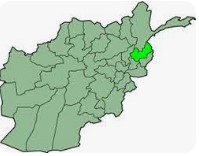
An avalanche has killed at least five people and left 22 more trapped or missing amid heavy rainfall in a mountainous region of an eastern Afghan province, locals and a Taliban official said on February 19. The landslide in the Nurgram district of Nuristan Province destroyed as many as six homes, according to Gohar Rahman, a deputy district governor for Afghanistan’s Taliban-led government. Afghanistan has been hit by heavy rainfall following an extended drought that worsened the humanitarian crisis in a country already hard-hit by decades of war.
Copyright (c) 2024. RFE/RL, Inc. Reprinted with the permission of Radio Free Europe/Radio Liberty, 1201 Connecticut Ave NW, Ste 400, Washington DC 20036.
Related
Khalil Haqqani’s Claims and Atta Muhammad Nur’s Response: Allegiance or Troubled Dreams?

Atta Mohammad Noor
8am: Over the past two years, senior officials from the former Afghan government have repeatedly accused each other of playing a role in the downfall of the republic system. Many political leaders in key positions have pointed fingers at Mohammad Ashraf Ghani and his decision-making circle, blaming them for the failure to defend the republic and the subsequent surrender to the Taliban. In a recent development, however, a senior Taliban official and a member of the Haqqani network have shifted the blame towards Hamed Karzai, Abdullah Abdullah, Atta Muhammad Nur, and some other political figures, accusing them of collusion in the collapse of the previous government with the Taliban. Click here to read more (external link).
At Afghanistan Meeting, UN’s Guterres Pledges Work To Appoint Envoy
 By RFE/RL’s Radio Azadi
February 19, 2024
UN Secretary-General Antonio Guterres on February 19 told a press conference at a two-day UN-sponsored meeting of more than two dozen nations but not including Taliban representatives in the Qatari capital to discuss the “evolving situation” in Afghanistan that he is starting consultations toward appointing a UN envoy to coordinate engagement between Kabul and the international community.
The Doha gathering is also aimed at discussing possible international engagement since the Taliban took control of Afghanistan in mid-2021.
Guterres held closed-door sessions with the representatives of several nations and organizations on the meeting’s first day.
Mahbouba Seraj, a civil-society and women’s rights representative who is in Doha along with a number of other Afghan participants not affiliated with the Taliban-led government, told Radio Azadi that priority topics on day two would include the plight of women and girls under the Taliban.
She expressed hope that hers and other women’s voices will “finally be heard, that this issue will be followed up on, and indeed someone” will take up the cause of Afghan women, who are routinely discriminated against and isolated under the hard-line fundamentalist Taliban.
Girls above the sixth grade have been barred from attending school, universities are closed to women, and work in the nongovernmental sector and among most government bodies has been banned for women, in addition to other restrictions.
The Taliban leadership declined the invitation from the UN Department of Political Affairs and Peacebuilding (DPPA) to attend the gathering.
Guterres said the Taliban set unacceptable conditions for attending the meeting, including the barring of Afghan civil society members and de facto recognition of the Taliban as Afghanistan’s legitimate rulers.
“I received a letter with a set of conditions to be present in this meeting that were not acceptable,” Guterres told a news conference. “These conditions denied us the right to talk to other representatives of Afghan society and demanded a treatment that, to a large extent, would be similar to recognition.”
Russia also said via its embassy in Afghanistan that it wouldn’t send a delegation to the Qatari meeting.
Moscow said it was acting “at the request of the Afghan authorities” and would not join “so-called Afghan civil activists, whose selection, by the way, was conducted nontransparently behind Kabul’s back.”
Organizers said participants from 25 nations and groups would include those from “Afghanistan, the wider region, and beyond.”
“Other regional organizations working actively on Afghanistan such as the Organization of Islamic Cooperation, the European Union, and the Shanghai Cooperation Organization” were also expected to be there.
The Taliban-led government remains overwhelmingly unrecognized internationally since taking over following the withdrawal in mid-2021 of the U.S.-led international coalition that spent two decades in Afghanistan after the events of 9/11.
The Taliban’s Foreign Ministry on February 17 said that due to the nonacceptance of its demands, it did not consider participation in the Doha meeting to be fruitful, expressing anger over the planned appearance of non-Taliban Afghan representatives at the sessions. The Taliban has long had a representative office in Qatar.
The DPPA said the current session would “take place in the context of Security Council resolution 2721 (2023), which encourages member states to consider increasing international engagement in the country, with the objective of a ‘clear end state of an Afghanistan at peace with itself and its neighbors, fully reintegrated into the international community, and meeting international obligations.’”
The gathering is the second such meeting organized by the UN in the past year following a session in May 2023.
With reporting by AP
Copyright (c) 2024. RFE/RL, Inc. Reprinted with the permission of Radio Free Europe/Radio Liberty, 1201 Connecticut Ave NW, Ste 400, Washington DC 20036.
Related
International Envoys Discuss Afghan Engagement In Doha; Taliban Rejects Invite

By RFE/RL’s Radio Azadi
February 18, 2024
Special envoys from more than two dozen countries gathered in the Qatari capital to discuss the “evolving situation” in Afghanistan and possible international engagement since the Taliban’s takeover of the country in mid-2021, organizers of the UN-led event said on February 18.
UN Secretary-General Antonio Guterres held closed-door sessions with the representatives of several nations and organizations on the first day of the two-day meetings in Doha sponsored by the UN’s Department of Political Affairs and Peacebuilding (DPPA). No details of the meetings were immediately released.
Organizers said participants from 25 countries and groups would include those from “Afghanistan, the wider region, and beyond.”
“Other regional organizations working actively on Afghanistan such as the Organization of Islamic Cooperation, the European Union, and the Shanghai Cooperation Organization” would be there, a statement said.
The DPPA said the “de facto authorities” from Afghanistan had been invited, but the Taliban’s Foreign Ministry on February 17 said that due to the nonacceptance of its demands, it did not consider participation in the Doha meeting to be fruitful, expressing anger over the planned appearance of non-Taliban Afghan representatives at the sessions.
The Taliban has long had a representative office in Qatar.
Reports in the Afghan media said Lotfollah Najafizadeh on behalf of civil activists and Mahbubeh Siraj, Mitra Mehran, and Shah Gul Rezaee representing Afghan women’s rights groups were participating.
The DPPA said the current session would “take place in the context of Security Council resolution 2721 (2023), which encourages member states to consider increasing international engagement in the country, with the objective of a ‘clear end state of an Afghanistan at peace with itself and its neighbors, fully reintegrated into the international community, and meeting international obligations.’”
In an interview with RFE/RL, Nicholas Kay, a former British diplomat and NATO representative in Afghanistan, said he is not optimistic about the situation in the war-torn country as its Taliban leaders continue to restrict rights and freedoms, especially for females.
Kay, NATO’s senior civilian representative in Afghanistan in 2018-20, said he sees little potential for change in Afghanistan in the near future with the Taliban holding a tight grip on society.
“I think it’s tough days ahead for Afghans, unfortunately,” he told RFE/RL’s Radio Azadi ahead the Doha sessions.
“I wish I could be more optimistic,” he said.
The gathering is the second such meeting organized by the UN in the past year following a session in May 2023.
Copyright (c) 2024. RFE/RL, Inc. Reprinted with the permission of Radio Free Europe/Radio Liberty, 1201 Connecticut Ave NW, Ste 400, Washington DC 20036.
Related
Afghan Province Orders Officials Not To Photograph Living Things
 AFP: Authorities in the Afghan province of Kandahar, the birthplace of the Taliban, ordered officials on February 18 not to take pictures or videos of “living things.” In a letter addressed to civilian and military officials, the provincial department of the interior directed them “to refrain from taking pictures of living things in your formal and informal gatherings, because it causes more harm than good.” Click here to read more (external link).
5.0-Magnitude Earthquake Jolts Northern Afghanistan
 dba: A relatively strong earthquake hit Afghanistan’s northern province of Balkh on February 18. The 5.0-magnitude quake occurred at a depth of 10 kilometers, according to the United States Geological Survey. Haji Zaid, the Balkh governor’s spokesman, said on social media that there were no immediate reports of damage or casualties. Click here to read more (external link).
Tolo News in Dari – February 18, 2024
Child Labor Under Taliban Rule: Exhausted Bodies, Limited Choices, and Meager Incomes

Child Laborers (file photo)
8am: For the elite and the middle class in Afghan society, the rule of the Taliban and the loss of rights and freedoms may be the most significant issue in Afghanistan at present, but for the poorer segment of society, bread is a more pressing concern. Perhaps the hungry do not contemplate freedom. Poverty has always been synonymous with Afghanistan. Click here to read more (external link).