
Censored Fish, Tinfoil Mannequins: How The Taliban Redacts Life In Afghanistan
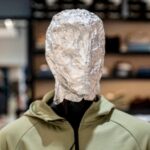 Radio Free Europe/Radio Liberty: New photos from Afghanistan show a Taliban law banning images of people and animals is now being enforced across most of the country, resulting in seafood censored from menus, blacked-out museum displays, and covered mannequins. Click here to view photos (external link).
Plastic: Kabul’s Silent Poison and a Serious Threat to the Environment
 8am: Many residents of Kabul say plastic bags have taken over daily life in the city. They argue that these bags harm the environment and that authorities should either stop or strictly limit their production and import into Afghanistan. According to residents, the low price and easy access to plastic bags and other plastic products have turned them into a serious environmental problem across the country. After use, people often throw these items away without proper management, which pollutes soil and water and causes damage to wildlife. Click here to read more (external link).
How Afghan Resistance Can Topple the Taliban

Afghan Resistance Leaders: Zia (left) and Massoud (right)
Small Wars Journal: Four years after the Taliban’s return to power, Afghanistan’s regime faces deepening economic collapse, ethnic alienation, and persistent internal and external pressures. The United States now possesses an ideal opportunity to subvert Taliban rule and deny Afghanistan’s further usage as a terrorist safe haven. While the past quarter-century has seen overt investment into Counter Insurgency Operations, this article explains how the United States can enable and empower a current insurgency to achieve strategic goals that went unrealized during 20 years of sustained ground operations. Drawing directly on T.E. Lawrence’s “Twenty-Seven Articles,” this article examines how fragmented anti-Taliban forces could adopt a mobility-focused, population-centric campaign to exploit these vulnerabilities and progressively erode Taliban control. It outlines a practical strategy built on unified command, indirect warfare, parallel governance, and targeted information operations. The article then specifies low-footprint Western support measures – such as intelligence sharing, precision weapons, exile training, and deniable funding – that could enable victory without reintroducing conventional forces. Finally, it addresses proliferation risks, Pakistani reactions, and moral hazards, concluding that calibrated external enablement offers the most viable path to deny the Taliban permanent consolidation. Click here to read more (external link).
Taliban Extend Ban On Images Of Living Beings To 24 Afghan Provinces
 Afghanistan International: The Taliban have expanded a ban on publishing and broadcasting images of living beings to 24 provinces across Afghanistan, further tightening restrictions on media and freedom of expression, the Afghanistan Journalists Center said. In a statement issued on Thursday, January 8, the Afghanistan Journalists Center said the Taliban’s Ministry for the Propagation of Virtue and Prevention of Vice has enforced the ban in Uruzgan province, ordering media outlets to stop publishing images and converting the provincial state television channel into a radio station. Click here to read more (external link).
Tolo News in Dari – January 9, 2025
Afghanistan names squad for ICC Under-19 Cricket World Cup 2026
 Amu: The squad features a group of young players selected after domestic age-group competitions and training camps, the board said in a statement. Mahboob Khan and Uzairullah Khan are included among the wicketkeeping options, while the squad also features Faisal Khan, Osman Khan, Khalid Ahmadzai, Azizullah Miakhil, Abdul Aziz Khan, Nazifullah Amiri, Khatir Stanikzai, Nasrat Nooristani, Wahidullah Zadran, Salam Khan, Zaitullah Shaheen, Rohullah Arab and Hafeez Zadran. Click here to read more (external link).
Fear of deportation turns deadly for Afghan refugees in Pakistan
 Ariana: Fear of arrest and forced deportation is pushing Afghan refugees in Pakistan into life-threatening situations, with women, children and the sick paying the heaviest price, humanitarian groups warn. Doctors Without Borders (Médecins Sans Frontières – MSF) has shared harrowing accounts of Afghan families too afraid to leave their homes, even for urgent medical care, due to Pakistan’s ongoing deportation drive. Click here to read more (external link).
More
Taliban Nepotism and Ethnic Favoritism: Widespread Unemployment Under the Shadow of Discrimination and Corruption

Mullah Hibatullah Akhundzada
8am: Many citizens speak openly about the growing spread of unemployment and the Taliban’s failure to address it. They say the lack of job opportunities has made daily life harder than at any other time they can remember. According to them, anyone with a broker or personal ties to Taliban members can quickly secure a job of their choosing. They believe a broken hiring system, the absence of transparency, and the concentration of jobs in the hands of one group have crushed the hopes of countless young people who once dreamed of a better future. Hibatullah Akhundzada, the Taliban Supreme Leader, said in a speech marking Eid al-Fitr that poverty is part of divine destiny and that poor people should not complain about their situation. Click here to read more (external link).
Tolo News in Dari – January 8, 2026