
Afghanistan Starts New Drive To Weed Out Poppies In Counternarcotics Campaign
Turkey offers to run Kabul airport, but puts conditions in place
 Ariana: Turkey has offered to guard and run Kabul’s airport after the United States and other NATO forces withdraw from Afghanistan, but U.S. officials say Ankara is imposing conditions which need to be resolved as their leaders prepare to meet next week, Reuters reported. Turkish Defence Minister Hulusi Akar said on Monday that Ankara’s offer was contingent on backup from those allies. Click here to read more (external link).
COVID-19: Afghanistan Reports 54 Deaths, 1,724 New Cases
 Tolo News: The Ministry of Public Health on Tuesday reported 1,724 new positive cases of COVID-19 in the last 24 hours and 54 deaths. These high numbers come amid continued reports of a lack of medical oxygen in hospitals to treat infected patients. Click here to read more (external link).
Afghan, Iranian Refugees To Compete At Tokyo Olympics
 Radio Free Europe/Radio Liberty
June 8, 2021
Three Afghans and three Iranians will be part of a refugee team of 29 athletes competing across 12 sports at next month’s Tokyo Olympics.
The team, which will compete under the Olympic flag and include athletes from countries also including Syria, South Sudan, and Eritrea, was unveiled at a virtual ceremony on June 8.
Kimia Alizadeh, Iran’s first female Olympic medalist when she won bronze in tae kwon do at the 2016 Rio Olympics, will be back for her second Olympic Games.
Alizadeh moved to Germany in early 2020 after she complained of being used by Iranian officials as a propaganda tool.
Also on the team are fellow Iranian canoe racer Saeid Fazloula, who reached Germany in 2015, and Hamoon Derafshipour, who won bronze at the 2018 Karate World Championships.
Derafshipour said he left for Canada in 2019 so that his wife could train him ahead of the Tokyo Games.
Three Afghan athletes -– Masomah Ali Zada (cycling), Nigara Shaheen (judo), and Abdullah Sediqi (tae kwon do) — will also be part of the team that International Olympic Committee President Thomas Bach said “will send a powerful message of solidarity, resilience, and hope to the world.”
Zada, Shaheen, and Sediqi are based in France, Russia, and Belgium, respectively.
The athletes will march into the stadium during the opening ceremony of the July 23-August 8 Tokyo Olympics immediately after the team from Greece.
They were selected from a pool of 56, supported by Olympic scholarships from 13 countries.
Copyright (c) 2021. RFE/RL, Inc. Reprinted with the permission of Radio Free Europe/Radio Liberty, 1201 Connecticut Ave NW, Ste 400, Washington DC 20036.
NATO Chief Admits Afghan Withdrawal ‘Entails Risks’
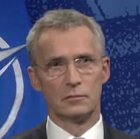
Jens Stoltenberg
Jeff Seldin
VOA News
June 7, 2021
WASHINGTON – There is no guarantee that Afghanistan’s government and security forces will succeed, or even survive, once the last U.S. and coalition troops leave the country, according to a blunt assessment from NATO’s top official.
“We have to face the reality there is, of course, a lot of uncertainty,” Secretary General Jens Stoltenberg told a virtual audience Monday before meetings at the Pentagon and the White House.
“The decision to leave entails risks,” he said.
According to U.S. Central Command (CENTCOM), which oversees American troops in the Middle East and South Asia, the U.S. withdrawal is nearing the halfway point, with the last U.S. forces, civilian contractors and equipment set to be out of Afghanistan by early September at the latest.
NATO’s own drawdown, involving approximately another 7,000 troops, is also “on track,” Stoltenberg said, defending the decision to send troops home after nearly two decades of battling the Taliban and terrorist groups like al-Qaida and Islamic State.
“You have to remember that in one way, this is a gradual development,” Stoltenberg said. “Not too many years ago, we had more than 100,000 troops in a big combat operation.”
“Over these years, we have been able to build, train Afghan security forces so they are now responsible for security in their own country,” he added.
Yet doubts about the ability of the Afghan security forces to function without substantial, on-the-ground support from U.S. and NATO forces persist.
Since U.S. troops began pulling out last month, Taliban forces have seized at least seven districts, taking some without meeting any resistance.
And a report issued last week by the United Nations Sanctions Monitoring Team for Afghanistan warned that Taliban commanders have increasingly positioned their forces to take by force what they cannot get through negotiations “when levels of departing foreign troops are no longer able to effectively respond.”
Top. U.S. military commanders have also voiced concern about “the ability of the Afghan military to hold on” once U.S forces and contractors leave.
Still, NATO’s secretary general emphasized Monday that even though NATO forces are departing Afghanistan, the alliance will continue to provide financial support and will also maintain a civilian presence in Kabul to advise Afghan security forces and help them build their capacity.
“We are not ending our support for the Afghans,” Stoltenberg said, adding that NATO is also continuing to explore ways to provide additional training for the Afghan special operation forces.
“We can train Afghan forces in other countries, and we are looking into how we can provide that kind of support,” he said.
But those plans are short on specifics, with much still to be worked out.
“We are now looking into the details and consulting closely on our next steps,” a NATO official told VOA when pressed for details.
Other plans, to maintain the U.S. and coalition’s ability to launch counterterrorism strikes, if needed, also remain unclear.
“We have had constructive discussions in the military, intelligence and diplomatic channels about the future of America’s capabilities,” White House National Security Advisor Jake Sullivan told reporters Monday, when asked about the possibility of opening bases for U.S. drones in Pakistan.
“In terms of the specifics of what that will look like, that will have to remain in those private channels as we work through them,” Sullivan said, adding the U.S. is talking to “a wide range of countries about how we build effective over-the-horizon capacity, both from an intelligence and from a defense perspective.”
In a separate phone briefing with reporters earlier Monday, the commander of U.S. forces in the Middle East and South Asia also defended the planning process.
“Our plans are very far advanced on what our posture is going to look like after we complete the withdrawal,” CENTCOM’s General Kenneth “Frank” McKenzie said, declining to elaborate.
“It’s not an appropriate time to share that information,” he said. “Those are tactical questions which could give advantage to those who would attack us.”
The U.S. has pledged to continue to provide Afghanistan’s security forces with financial support.
U.S. President Joe Biden’s proposed fiscal 2022 budget calls for $3.3 billion in military aid for Afghan forces — a slight increase over current funding levels.
On Sunday, an Afghan government spokesman said the U.S. has promised to sustain that level of funding through at least fiscal year 2023.
White House Bureau Chief Steve Herman contributed to this report.
Related
1TV Afghanistan Dari News – June 7, 2021
Australian Afghan War Veteran Denies Allegations of War Crimes
 By Phil Mercer
VOA News
June 7, 2021
SYDNEY – Australia’s most decorated Afghanistan veteran will deny alleged war crimes Monday at the start of his high-stakes defamation trial against one of the country’s biggest media companies. Ben Roberts-Smith will seek to prove he was unfairly portrayed in newspaper stories as having broken the moral and legal rules of war. He is seeking damages in Australia’s Federal Court from Nine Entertainment Co. and three journalists.
Newspaper reports in 2018 alleged Ben Roberts-Smith murdered a man in Afghanistan and encouraged his colleagues to drink beer from his victim’s prosthetic leg. He was also accused of killing an unarmed Afghan shepherd by kicking him off a cliff and ordering his fellow soldiers to shoot him.
The former Special Air Service Regiment (SAS) trooper, who received the Victoria Cross, Australia’s highest military honor, in 2011, has denied any wrongdoing. He said articles published by The Age, The Sydney Morning Herald and The Canberra Times newspapers portrayed him as a war criminal who disgraced his country by murdering Afghan civilians. Roberts-Smith said the stories were “baseless” and “flawed.”
His lawyer told the hearing Monday that he was “an exceptional soldier” but was the victim of “dishonest journalism” and “corrosive jealousy and lies.”
The trial in Sydney is expected to hear from about 60 witnesses over the next ten weeks.
Current and former members of Australia’s special forces are scheduled to give evidence anonymously. Other witnesses will testify via a video link from a law firm in Kabul.
Associate professor Ben Wadham, a military historian from Flinders University, told the Australian Broadcasting Corp., the case goes to heart of Australia’s conduct during times of conflict.
“It has brought into tension that question about: does everything and anything go in war, or do we actually have some responsibility to these higher values, and shouldn’t we be upholding them?” Wadham said.
Last November, a landmark inquiry into Australian special forces in Afghanistan found “credible evidence” of the “murder” of 39 prisoners, farmers, or other civilians.
A lengthy investigation examined claims of unlawful killings and other possible breaches by Australia’s elite special forces in Afghanistan between 2005 and 2016.
Ben Roberts-Smith left the army in 2013 and is currently the general manager of the Seven Network, a media company, in Brisbane and regional Queensland.
Taliban Pledge No Retaliation Against Afghans Who Worked for Foreign Troops

Taliban fighters (file photo)
Ayaz Gul
VOA News
June 7, 2021
ISLAMABAD – The Taliban have urged Afghans who worked for departing U.S. and NATO militaries in Afghanistan over the years not to “desert” their war-ravaged nation for fear of retribution by the insurgent group.
Monday’s Taliban pledge comes as thousands of Afghans employed, mostly as interpreters, by the United States and allied countries during their almost two-decade long stay in the country fear insurgent retaliation and are eager to get visas to the U.S.
“The Islamic Emirate [the Taliban] will not perturb them but calls them to return to their normal lives and if they do have expertise in any field, to serve their country,” the Taliban said in a statement sent to journalists and published on the group’s official website Monday. “They shall not be in any danger on our part.”
The United States and allied nations are expected to completely pullout their remaining troops from Afghanistan by September 11. Washington negotiated an agreement with the Taliban in February 2020 to end what has been the longest American war in history.
The U.S. military said last week it had completed nearly half of the withdrawal process.
An estimated 18,000 Afghans are awaiting word on special immigrant visas (SIV) to the U.S. amid concerns President Joe Biden’s administration might not be able to process them all in time. Biden has come under increasing pressure at home to move quickly to save lives of Afghans who risked their lives working with the American military.
The Taliban asserted in the statement that Afghans who worked for the foreign “occupation” forces were “misled” and they “should show remorse” for their past actions, saying they amounted to “treason” against Islam and Afghanistan.
“We viewed them as our foes when they were directly standing in the ranks of our enemies, but when they abandon enemy ranks and opt to live as ordinary Afghans in their homeland, they will not face any issues,” the statement said.
However, it added, if the Afghans in question are using retribution “as an excuse to bolster their fake asylum case then that is their own problem” and not that of the Taliban.
State Department spokesman Ned Price said last Thursday the U.S. has “a special commitment and a special responsibility to these brave Afghans.”
“We are always seeking ways to improve the SIV process while ensuring the integrity of the program and safeguarding our national security and affording opportunities to these Afghans,” Price explained to reporters.
He added that the administration has approved a temporary increase in consular staffing at the U.S. embassy in Kabul to conduct interviews and to process visa applications, allowing the diplomatic mission to address cases that were delayed due to COVID-19 staffing reductions and related closures.
Price said the administration has also requested funding for an additional 8,000 Special Immigrant Visas from Congress.
War intensifies
U.S. efforts to seek a negotiated settlement to the conflict between the Taliban and the Afghan government have so far met little success nor have deadly battlefield hostilities between the two Afghan adversaries eased.
The insurgents, who control or hotly contest more than half of Afghan territory, have captured at least 12 districts since the international forces began withdrawing from Afghanistan on May 1. The conflict has killed hundreds of combatants on both sides and many Afghan civilians.
Islamic State militants also have stepped up bombings and other attacks against civilians who have borne the brunt of years of fighting.
The U.S. peace envoy to Afghanistan, Zalmay Khalilzad, who negotiated and signed the deal with the Taliban, met with Afghan government leaders and other politicians in Kabul on Sunday to discuss bilateral cooperation after foreign troops leave the country.
Khalilzad told Afghan President Ashraf Ghani that Washington will annually provide $3.3 billion to Kabul over the next two years to support Afghan forces fighting the Taliban, according to an Afghan government spokesman.
Mohammad Amiri said that more U.S. facilities and equipment, including aircraft to strengthen the Afghan air force, will be among the main topics of bilateral talks in coming days.
Foreign air support has until now played a crucial rule in assisting local forces to keep the insurgents from threatening urban centers. There are fears that the absence of U.S. military support in post-withdrawal Afghanistan may enable the Taliban to regain power, though Afghan leaders dismiss those concerns.
Official: US Pledges $3.3 Billion in Funding for Afghan Forces

Ayaz Gul
VOA News
June 6, 2021
ISLAMABAD – The U.S. peace envoy to Afghanistan, Zalmay Khalilzad, along with a high-level delegation, met Sunday with leaders in Kabul to discuss bilateral cooperation after U.S. and coalition troops leave the country by a Sept. 11 deadline.
The discussions come as Taliban insurgents have intensified battlefield attacks against government forces, capturing nine Afghan districts, including six in the past week, since the foreign military withdrawal began a month ago. Hundreds of combatants on both sides and Afghan civilians have also been killed.
A spokesman for Afghan President Ashraf Ghani said Sunday the talks with Khalilzad’s team focused on three sectors, including defense, economy and humanitarian assistance.
Mohammad Amiri said the U.S. envoy told Ghani that Washington will annually provide $3.3 billion to Kabul over the next two years to support Afghan security forces battling the Taliban.
Amiri noted that more U.S. facilities and equipment, including aircraft, to strengthen the Afghan Air Force, will be among the main topics of bilateral talks in coming days.
There has been no response from the U.S. embassy in Kabul regarding Khalilzad’s discussions with Afghan officials.
The Afghan government has long relied on close U.S. air support in battling the Taliban. Afghan officials dismiss concerns their forces may not be able to take on the insurgents in the absence of foreign military support.
Khalilzad and his delegation also held a meeting with Abdullah Abdullah, who oversees Kabul’s peace process with the insurgents.
The two sides discussed the Afghan peace process and “the new chapter of corporation” between two countries, Abdullah, who heads the High Council for National Reconciliation, wrote on Twitter.
“We reiterated our commitment for a just & durable peace with (the) Taliban through negotiations using the available opportunity,” Abdullah added.
A U.S. statement issued Saturday prior to Khalilzad’s visit said his delegation would include representatives from the Department of Defense, the National Security Council and USAID.
It said the inter-agency delegation would underscore enduring U.S. support for Afghanistan’s development and a political settlement that will end the war.
The statement added that Khalilzad will also travel to Doha, Qatar, to encourage the Taliban and Afghan government peace negotiators “to make tangible progress towards of a political settlement that protects the gains of the last two decades.”
Taliban and Kabul negotiators have held multiple rounds of peace talks in the Qatari capital since last September, but the slow-moving process has mostly been deadlocked, with each side blaming the other for stalling it.
The U.S. military withdrawal, along with NATO allies, and the ensuing peace talks between the two Afghan advisories stemmed from an agreement Washington negotiated with the Taliban in February 2020 to end nearly two decades of involvement in the Afghan war.
Khalilzad negotiated and signed the landmark deal.
Last week, the U.S. announced more than $266 million in humanitarian assistance to Afghanistan, where an estimated 18 million people are in need of it.
The money, an official statement said, will provide lifesaving protection, shelter, livelihoods opportunities, essential health care, emergency food aid, water, sanitation, and hygiene services.
Related