logo

Daily Updated Afghan News Service

  • Home
  • About
  • Opinion
  • Links to More News
  • Good Afghan News
  • Poll Results
  • Learn about Islam
  • Learn Dari (Afghan Persian/Farsi)

Recent Posts

  • National Resistance Front Claims Killing Two Taliban Fighters in Baghlan May 2, 2026
  • Painful Account of Ethnic Discrimination: Amiri Says His Father Was Removed from Operating Room Because He Is Hazara May 2, 2026
  • Taliban Members Criticise Leader, Say He Acts As Prophet May 2, 2026
  • Tolo News in Dari – May 2, 2026 May 2, 2026
  • Taliban Seize More Than 2,500 Hectares of Land in Khost May 2, 2026
  • Women in Badghis report rising deaths amidst lack of maternal care May 2, 2026
  • Afghanistan’s wushu team to compete in Asian championships in Japan May 2, 2026
  • Border clashes leave 136,000 cut off for weeks in eastern Afghanistan, ICRC says May 1, 2026
  • Tolo News in Dari – May 1, 2026 May 1, 2026
  • Karzai warns continued ban on girls’ education will deepen Afghanistan’s foreign dependence April 30, 2026

Categories

  • Afghan Children
  • Afghan Sports News
  • Afghan Women
  • Afghanistan Freedom Front
  • Al-Qaeda
  • Anti-Government Militants
  • Anti-Taliban Resistance
  • AOP Reports
  • Arab-Afghan Relations
  • Art and Culture
  • Australia-Afghanistan Relations
  • Book Review
  • Britain-Afghanistan Relations
  • Canada-Afghanistan Relations
  • Censorship
  • Central Asia
  • China-Afghanistan Relations
  • Civilian Injuries and Deaths
  • Corruption
  • Crime and Punishment
  • Drone warfare
  • Drugs
  • Economic News
  • Education
  • Elections News
  • Entertainment News
  • Environmental News
  • Ethnic Issues
  • EU-Afghanistan Relations
  • Everyday Life
  • France-Afghanistan Relations
  • Germany-Afghanistan Relations
  • Haqqani Network
  • Health News
  • Heroism
  • History
  • Human Rights
  • India-Afghanistan Relations
  • Interviews
  • Iran-Afghanistan Relations
  • ISIS/DAESH
  • Islamophobia News
  • Japan-Afghanistan Relations
  • Landmines
  • Media
  • Misc.
  • Muslims and Islam
  • NATO-Afghanistan
  • News in Dari (Persian/Farsi)
  • NRF – National Resistance Front
  • Opinion/Editorial
  • Other News
  • Pakistan-Afghanistan Relations
  • Peace Talks
  • Photos
  • Political News
  • Reconstruction and Development
  • Refugees and Migrants
  • Russia-Afghanistan Relations
  • Science and Technology
  • Security
  • Society
  • Tajikistan-Afghanistan Relations
  • Taliban
  • Traffic accidents
  • Travel
  • Turkey-Afghanistan Relations
  • UN-Afghanistan Relations
  • Uncategorized
  • US-Afghanistan Relations
  • Uzbekistan-Afghanistan Relations

Archives

Dari/Pashto Services

  • Bakhtar News Agency
  • BBC Pashto
  • BBC Persian
  • DW Dari
  • DW Pashto
  • VOA Dari
  • VOA Pashto

Taliban Threaten Turkish Troops with ‘Jihad’ if They Stay in Afghanistan

13th July, 2021 · admin

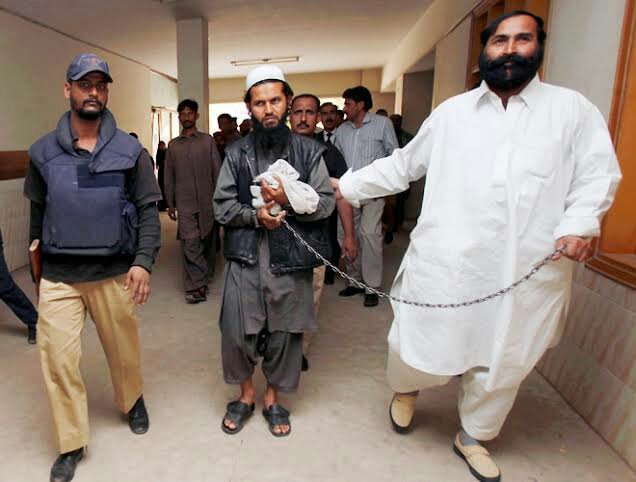
Taliban fighters (file photo)

Ayaz Gul
VOA News
July 13, 2021

ISLAMABAD, PAKISTAN – The Taliban warned Tuesday that if Turkey extends its military presence in Afghanistan the Islamist group will view Turkish troops as “occupiers” and wage “jihad” against them.

The warning came amid fresh battlefield moves that critics say show the Taliban are planning a military takeover of Afghanistan in defiance of their peace pledges, raising the prospects of a full-blown civil war.

The United States has asked Turkey to secure Kabul’s airport after all American and NATO allied troops withdraw from the country by the end of next month.

Turkish President Recep Tayyip Erdogan said on Friday without elaborating that he had agreed with Washington on the “scope” of how to secure and manage the airport.

The Taliban condemned the deal as “reprehensible” and demanded Turkey review its decision.

“We consider stay of foreign forces in our homeland by any country under whatever pretext as occupation,” the group said in a media release. “The extension of occupation will arouse emotions of resentment and hostility inside our country towards Turkish officials and will damage bilateral ties.”

The security and smooth running of the Hamid Karzai international airport in the Afghan capital is crucial for preserving diplomatic missions and foreign organizations operating out of Kabul, where a bomb explosion Tuesday killed at least four people. Hostilities elsewhere in Afghanistan also have escalated to record levels.

Turkish Defense Minister Hulusi Akar told reporters after a cabinet meeting on Monday evening that Turkey agreed to some points with U.S. counterparts on running the airport.  He said work towards a deal continues.

“If the airport does not operate, the countries will have to withdraw their diplomatic missions there,” Akar said.

Hundreds of American troops are expected to stay in the Afghan capital, guarding the sprawling U.S. embassy compound there.

Taliban forces have dramatically extended their territorial control across Afghanistan by overrunning scores of districts without any resistance since U.S. troops formally started withdrawing from the country in early May.

In most cases, government forces either retreated to safety or surrendered to the advancing insurgents.

The battlefield gains have enabled the Taliban to effectively encircle major Afghan cities, including provincial capitals.

In Washington, Pentagon Press Secretary John Kirby on Monday also voiced concern that the Taliban are planning to militarily take control of the country.

“It is clear from what they are doing that they have governance designs certainly of a national scale. It is clear from what they are doing that they believe there is a military solution to the end of this conflict,” Kirby told reporters.

“We continue to believe that the most sustainable and the most responsible end and solution to this war is a political one, one through negotiated diplomacy,” Kirby stressed.

Afghan authorities have vowed to defend and keep the Taliban from major cities, saying security forces have killed hundreds of insurgents in recent days.

Kabul has also protested and criticized regional countries for stepping up their diplomatic engagements with the Taliban in pursuit of a peaceful settlement to the war.

“The Taliban delegation is traveling to the regional countries at a time when its brutal attacks have killed more than 3,500 people, displaced more than 200,000 of our compatriots, disrupted public order and life, and economic activities in tens of districts,” ministry said.

The Taliban took control of Afghanistan after emerging victorious in the civil war of the 1990s and introduced harsh Islamic laws to govern the conflict-torn country before they were ousted by the U.S.-led foreign invasion in late 2001.

The Islamist movement has since been waging a violent insurgency against the U.S.-backed government in Kabul.

Washington negotiated and signed a troop withdrawal deal with the Taliban in February 2020 in return for security assurances and pledges the insurgents would negotiate a peace arrangement with Afghan rivals for a sustainable peace in the country.

However, the slow-moving U.S.-brokered intra-Afghan negotiations, which started in Qatar last September, have failed to produce a peace deal and remain deadlocked.

Some information in this report was provided by Reuters.

Posted in Security, Taliban, Turkey-Afghanistan Relations, US-Afghanistan Relations | Tags: Kabul Airport |

Afghanistan: 754 New Cases of COVID-19, 72 Deaths Reported

13th July, 2021 · admin

Tolo News: The Ministry of Public Health on Tuesday reported 754 new cases of COVID-19 out of 3,135 samples tested in the last 24 hours. The ministry also reported 72 deaths and 1,263 recoveries from COVID-19 in the same period. The number of total recorded cases is 136,643 and the total number of deaths is 5,921, according to figures by the Public Health Ministry. Click here to read more (external link).

Posted in Health News | Tags: Coronavirus (COVID-19) in Afghanistan |

How Afghanistan’s President Helped His Brother and a U.S. Contractor Secure a Lucrative Mineral Processing Permit

13th July, 2021 · admin

Ghani

occrp.org: In late 2019, SOS International (SOSi), a Virginia-based company with links to the U.S. military and intelligence apparati, obtained exclusive access to various mines across Afghanistan. As part of the deal, Ghani’s family got a little something on the side. Click here to read more (external link).

Posted in Corruption, Economic News | Tags: Ashraf Ghani, Chromite in Afghanistan, Corrupt Ghani, Natural Resources |

How Americans invaded, destroyed and abandoned Afghanistan

12th July, 2021 · admin

Press TV
July 12, 2021

Syed Zafar Mehdi

After 20 long years of costly and futile military adventurism, Americans are retreating from war-ravaged Afghanistan, the ‘graveyard of empires’, as the Taliban make rapid gains across the country.

Militaristic meddling in developing nations – or in other words ‘foreign military invasions’ – has been a defining feature of American foreign policy from the late 1940s.

Vietnam, Guatemala, El Salvador, Panama, Cuba, Nicaragua, Congo, Haiti, Grenada, Greece, Cambodia, Iraq, Syria, Yemen, Afghanistan et cetera – the marauding US mercenaries have left a trail of destruction and death in virtually every corner of the world.

As American author Noam Chomsky writes in ‘Western State Terrorism’, “The guiding principle, it appears, is that the US is a lawless terrorist state and this is right and just, whatever the world may think, whatever the international institutions may declare.”

That the US miserably lost the plot in Afghanistan is no secret, but to come back after 20 years of bloody mayhem and say there is no ‘military solution’ to the protracted crisis is an affront to humanity.

To understand reasons behind America’s crushing defeat in its longest war, it’s imperative to wind back to 2001, after the cataclysmic events of 9/11.

A few weeks after the attacks, George Bush administration launched the so-called ‘global war on terror’. Afghanistan, ruled then by the Taliban, was chosen as the first battleground.

On the afternoon of Oct. 7, 2001, as the US and its allies started the deadly bombing campaign in Afghanistan, then-US Defense Secretary Donald Rumsfeld said the objective was to decimate the Taliban and al-Qaeda hideouts in the country. Bush vowed to “crush” them.

Twenty years down the line, the US is beating the hasty retreat, having faced a disgraceful defeat, while the Taliban have overrun about one-third of the country, marching with force and ferocity.

After the 9/11 attacks, the Taliban had reportedly offered to hand over Osama bin Laden, the alleged mastermind of the devastating attacks, to a third country to be tried, dropping the demand for evidence of his guilt. But the US administration rejected the offer and launched deadly air raids.

It was the same Bin Laden, a Saudi-born former CIA ally used as a mercenary fighter against the Soviet forces in Afghanistan during the Cold War. And 9/11 hijackers were all Saudi citizens, a key US ally.

Anand Gopal, a long-time journalist and author of ‘No Good Men Among the Living: America, the Taliban, and the War through Afghan Eyes’, in a 2015 interview told me that the top Taliban leadership had indeed tried to surrender soon after the US invasion.

“The mood at the time was that, like Bush said, “You are either with us or against us.” America’s goal was to wage a war on terror, and the fact that its enemies were trying to switch sides was something that did not mesh easily with the ideology of counterterrorism,” he said.

Some reports from that time suggest that the Taliban had written to then Afghan President Hamid Karzai, offering to lay down arms and recognize his government. The move was blocked by Gul Agha Sherzai, an influential tribal leader from eastern Afghanistan and one of the blue-eyed boys of the US.

Sherzai got them imprisoned and tortured by the CIA-created Afghan spy agency in the months after the US invasion. Some of these jailed insurgents later ended up in the dreaded Guantanamo Bay prison.

Occupation and oppression

The dogged insistence on carpet bombing the country was clearly evident as the hawks in Washington and their mercenaries in Afghanistan snubbed all calls to resolve the issues without fighting.

Over the years, the US so-called “counterterrorism” operations in Afghanistan spawned horrible human rights abuses: killing of innocent civilians in drone strikes, summary executions during night raids, illegal detentions, custodial torture, and patronage of former warlords and militia commanders.

Airstrikes, in particular, have been a constant feature of the US industrial military complex’s engagement in Afghanistan, starting from Dec. 23, 2001, barely two months after the US forces invaded the country, when 65 tribal elders travelling to Kabul for Hamid Karzai’s inauguration as the president were mowed to death in an American airstrike.

US officials claimed that the victims were al-Qaeda members, but the evidence suggested otherwise. It was the first of many US-orchestrated massacres over the years, which were swiftly brushed under the carpet, both by the US officials and their Afghan partners, whose salaries came from US coffers.

In one of the devastating US airstrikes in August 2008, at least 90 Afghan civilians, mostly children, were killed in western Afghanistan. The destruction from aerial bombardment, the UN said at that time, was evident with some seven to eight houses having been totally destroyed. No heads rolled over it.

A few months later, in May 2009, at least 150 civilians were massacred, many of them children, in western Farah province. Some of them were blown into “unrecognizable pieces.” In its report on the incident, the New York Times wrote that “it is bombings like this one that have turned many Afghans against the American-backed government and the foreign military presence.” No heads rolled.

In September 2015, a US gunship attacked a hospital in northern Kunduz province run by Doctors Without Borders, leaving at least 42 doctors, patients and other medical staff dead. No heads rolled.

During Donald Trump’s presidential tenure, civilian casualties in US airstrikes in the war-torn country touched a new high as the occupation forces went berserk. Trump administration removed directives prohibiting strikes on residential buildings, which virtually gave US troops a license to kill.

According to conservative estimates, between 2016 and 2020, 40 percent of all civilian casualties from US airstrikes in Afghanistan – almost 1,600 – were children, even surpassing those resulting from attacks by the Taliban and Daesh. That is how American ‘war on terror’ has looked like in Afghanistan.

Naturally, the justice was never done. The move by the International Criminal Court (ICC) seeking a probe into US war crimes in Afghanistan was blocked by the US. No one objected.

The US also enabled some of the most horrendous crimes in Afghanistan through its local allies – notorious warlords, strongmen, and militia commanders.

The ruthless human rights abuses by US-backed warlords only created more insecurity and undermined efforts of the government to promote good governance. Worse, it helped the Taliban recruit more insurgents and make greater gains in its war against the foreign occupation.

Some of these allies included Gul Agha Sherzai, the powerful tribal leader from eastern Nangarhar province; Abdul Rashid Dostum, the Uzbek warlord and former vice president; Asadullah Khalid, a hugely influential CIA contractor; and Abdul Raziq, the notorious former police chief from southern Kandahar province, who was killed by the Taliban in 2018.

Doomed to fail

Last week, US President Joe Biden declared that the US military mission in Afghanistan will come to an end on Aug. 31, ahead of his previous deadline of Sept. 11. “Speed is safety,” he remarked.

“We did not go to Afghanistan to nation-build,” Biden said, adding, “Afghan leaders have to come together and drive toward a future.”

The talk of military withdrawal from Afghanistan began during the Trump administration. The former US President even sidestepped the democratically-elected Afghan government and signed a secret deal with the Taliban on February 29, 2020.

It was a deal to allow US safe passage out of the war and eliminated all prospects of result-oriented negotiations between the Afghan government and the militant group. The US actions essentially weakened the position of state actors and strengthened that of non-state actors.

The withdrawal is now more than 90 percent complete. The US troops also vacated the Bagram Air Base last week, its largest military base in the country that once hosted around 100,000 US and NATO troops.

Strangely, it took 20 years, trillions of dollars and tens of thousands of civilian and military lives for Washington to understand that its longest war in history will not end on the battlefield.

As Noam Chomsky told me in an interview in 2014, America owes huge reparations to Afghans for the damage it has caused to their country without achieving anything. They cannot get away with it.

Asking Afghans to put their house in order is refusing to clean the mess it created in the first place. It is the Americans that created insecurity and chaos in the country. They invaded the country, occupied it for two decades, destroyed it, and are now abandoning it without any accountability.

The future looks bleak for the war-weary people in Afghanistan. Taliban now hold twice as much of the country as they did two months ago, including in northern provinces, which once represented the bastion of resistance against the group.

On the other hand, the US-backed government in Kabul is losing the grip, abandoned by its international allies and challenged by the militant group.

As former Afghan president Karzai said recently, US’ legacy in Afghanistan is a “war-ravaged nation in total disgrace and disaster.” That is what it will be remembered for, long after the empire is gone.

Syed Zafar Mehdi is a Tehran-based journalist editor and blogger with over 10 years of experience. He has reported extensively from Kashmir, India, Pakistan, Afghanistan and Iran for leading publications worldwide.

(The views expressed in this article do not necessarily reflect those of Press TV.)

Posted in Civilian Injuries and Deaths, Opinion/Editorial, Security, Taliban, US-Afghanistan Relations | Tags: War Crime |

Regional Actors Boost Diplomatic Engagement with Taliban as US Exits Afghanistan

12th July, 2021 · admin

Ayaz Gul
VOA News
July 12, 2021

ISLAMABAD – As the American military withdrawal from Afghanistan nears completion, regional countries are stepping up diplomatic efforts aimed at pressing warring Afghans to resume the stalled U.S.-brokered peace talks and prevent the conflict from escalating into a full-blown civil war.

The fears of further bloodshed stem from the Taliban’s rapid territorial gains since U.S. and NATO allied troops formally began leaving the country in early May under orders by President Joe Biden.  The withdrawal is due to be completed by August 31.

Fighting has escalated between the insurgent group and Afghan security forces in provinces next to the country’s long border with Pakistan.
Last week, Tajikistan ordered 20,000 reservists to bolster border security following the Taliban battlefield advances. Iranian and Turkmen authorities also have taken additional border security measures, fearing the violence could spill over into their territories.

The Islamist group has downplayed the prospect of a civil war erupting in Afghanistan after the exit of all foreign troops and sought to reassure anxious neighbors that they pose no threat to regional stability.

Intra-Afghan peace talks have been mostly stalled. Beijing, Tehran, Moscow and Islamabad have all tried to engage the Taliban in an effort to press the Afghan warring sides to negotiate a political settlement before the U.S. drawdown creates a security vacuum and the situation spirals out of control.

Foreign ministers of the China-led Shanghai Cooperation Organization, or SCO, are scheduled to meet this week in Tajikistan to discuss the Afghan crisis. The SCO brings together Russia, Pakistan, Kazakhstan, Kyrgyzstan, India, Uzbekistan, Tajikistan and Turkmenistan.

Analysts say all of Afghanistan’s immediate neighbors and regional countries look at the Taliban as legitimate political stakeholders and a possible firewall against militants linked to Islamic State terrorists who operate out of Afghan bases.

“The region is more amenable to engaging with the Taliban now than it was in the 1990s, because it sees the group as a more legitimate actor,” said Michael Kugelman, deputy Asia program director at Washington’s Wilson Center.

“The Taliban agreement with the U.S. last year conferred the group with a degree of international recognition that it had long sought, and that makes regional players see it as less of a pariah,” noted Kugelman in his written remarks he sent to VOA.

Influential Pakistani Senator Mushahid Hussain, who heads the Defense Affairs committee of the upper house of parliament, says China, Iran and Russia apparently “are reconciled to a Taliban-dominated Afghanistan.”

“China, Iran and Russia have a certain comfort level with the Taliban and they are willing to cooperate with them and give them legitimacy, unlike 1990s, when only Pakistan, UAE and Saudi Arabia recognized them,” Hussain told VOA.

Hussain noted, however, prevailing concerns in his country that the Islamist movement’s battlefield advances in Afghanistan would embolden extremist forces in Pakistan and could threaten years of domestic gains against terrorism.

“Ironically, for Pakistan there is growing realization, a lesson learned the hard way, that the foes they’ve been fighting in our own inland war on terror may end up being friends of the incoming Taliban regime in Afghanistan,” cautioned Hussain.

Both Iran and Russia hosted Taliban leaders over the past week to discuss concerns arising out the militia’s military advances. Observers say this points to a growing political synergy between the Taliban and their regional supporters.

Washington has warned the Taliban against any military takeover and continued to call for finding a negotiated settlement to the long Afghan conflict, emphasizing that “legitimacy and assistance” for any government in Afghanistan “can only be possible if that government has a basic respect for human rights”.

A total Taliban takeover of Afghanistan has raised the prospects of a prolonged civil war like that of the 1990s, which erupted shortly after the withdrawal of Soviet occupation forces.

The ensuing intra-Afghan fighting paved the way for the Islamist Taliban to seize power in Kabul in September 1996 before they were ousted by the U.S.-led international military invasion in late 2001 for harboring leaders of the al-Qaida terrorist network.

Pakistan, the United Arab Emirates and Saudi Arabia were the only three countries in the world that had recognized the Taliban regime at the time.

The rest of the global community refused to recognize Taliban-ruled Afghanistan, citing controversial harsh Islamic laws the group introduced to govern the country and allowing safe haven for leaders of the al-Qaida terror network whom the U.S. accused of plotting the September 11, 2001 attacks on America.

On Sunday, a Taliban delegation held talks with Foreign Ministry officials in the Turkmen capital, Ashgabat. A spokesman for the group, Suhail Shaheen, said two sides discussed “political, economic and security issues of mutual interests.”

On Friday, a group of senior Taliban members concluded a two-day visit to Russia, where they met Zamir Kabulov, the Russian presidential envoy for Afghanistan.

“The situation in Afghanistan today is worrisome because it can spillover into our neighbors’ territory,” Russian Foreign Minister Sergey Lavrov told reporters on Friday after his meeting with the visiting Indian counterpart.

Lavrov downplayed the Taliban’s advances, however, and reiterated Moscow’s call for the two warring sides to find a political solution to the Afghan conflict.

Last week, Shiite Iran also hosted a meeting between the rival Afghan parties, calling on both to end hostilities.

Tehran’s tensions had dangerously escalated with Kabul in 1998 when the Sunni-based Taliban were ruling the country. The tensions stemmed from the killings of seven Iranian diplomats in the northern Afghan city of Mazar-i-Sharif in factional fighting.

Beijing, which maintains diplomatic ties with Kabul and developed close contacts with the Taliban in recent years, has cautioned “the future of the Afghan conflict is a practical challenge” to China and Pakistan.

“We call on parties to the peace negotiation to put the interests of the country and people first, sustain the momentum for intra-Afghan talks, work for the return of the Afghan Taliban in a moderate way to the political mainstream,” Chinese Foreign Ministry spokesman Wang Wenbin told reporters on Thursday.

Critics, however, anticipate Afghan hostilities will intensify once all U.S. and NATO allied troops are out of the country.

Zalmay Khalilzad, the U.S. special envoy for Afghan reconciliation returned to the region this week to “engage in determined diplomacy and the pursuit of a peace agreement between the Islamic Republic [Afghan government] and the Taliban,” according to the State Department.

Khalilzad, who negotiated the troop withdrawal deal with the Taliban in February 2020 under then-President Donald Trump, is scheduled to travel to Pakistan, Uzbekistan after concluding meetings in Qatar, where he signed the deal with the Taliban.

The Qatari capital of Doha, which houses the Taliban’s political office, has also been hosting slow-moving peace talks between insurgent leaders and Afghan government negotiators since last September, but the so-called intra-Afghan negotiations have seen little success.

Analysts say there is still a “narrow, but fast-closing window to collectively push forward the peace process.

“Let it not be said that diplomacy failed the people of Afghanistan who have already suffered so much through decades of war, turmoil and strife. And let history not judge that Afghanistan and the region all lost the peace,” Maleeha Lodhi, former Pakistani ambassador to the U.S. and the United Nations, wrote an opinion article published by the Dawn newspaper Monday.

Posted in Central Asia, Iran-Afghanistan Relations, Pakistan-Afghanistan Relations, Security, Taliban, US-Afghanistan Relations |

Taliban Seizes Civilian Homes In Kandahar As Government Forces Fight To Defend City

12th July, 2021 · admin

Fighting between Afghan security forces and Taliban militants broke out in the southern city of Kandahar on July 9, leaving at least 18 people dead and more than 100 wounded. Government troops say the militants have seized homes in residential neighborhoods, forcing civilians to flee and complicating efforts to drive the Taliban out of the city.

Posted in Civilian Injuries and Deaths, Security, Taliban | Tags: Kandahar |

1TV Afghanistan Dari News – July 12, 2021

12th July, 2021 · admin

Posted in News in Dari (Persian/Farsi) |

Top US Commander in Afghanistan Steps Down

12th July, 2021 · admin

Scott Miller

Carla Babb
VOA News
July 12, 2021

PENTAGON – The top U.S. general in Afghanistan stepped down on Monday as Taliban fighters continue to make gains across the war-torn country.

The Biden administration has said the official end date of the U.S. troop withdrawal will be August 31, but Gen. Austin “Scott” Miller’s relinquishing of command is a symbolic end to the troop pullout.

U.S. Central Command (CENTCOM) chief Gen. Frank McKenzie arrived in Kabul early Monday to assume command of the remaining forces in a “short” transfer of command ceremony that includes a flag handover, a U.S. defense official told VOA.

The withdrawal is “more than 90 percent” complete, according to U.S. Central Command. Most of the American troops and equipment have left, with fewer than 1,000 troops remaining to protect the U.S. embassy and help with securing the international airport in Kabul.

“Yesterday versus today versus tomorrow, there’s no significant difference in terms of the way we are operating in Afghanistan,” the defense official added on Monday.

McKenzie already had authority over American military operations in Afghanistan and several other neighboring nations as head of CENTCOM, and he will continue his oversight from his headquarters in the United States while two-star officer Rear Adm. Peter Vasely helps oversee the mission on the ground.

Miller was the longest-serving senior U.S. military officer of the Afghan war. He served for about three of the nearly 20 years of U.S. military involvement, overseeing the drawdown after the Trump administration’s February 2020 deal with the Taliban and the final withdrawal called for by President Joe Biden in April.

McKenzie will still be able to order U.S. air strikes against the Taliban in support of the Afghan government through the end of August. But after the withdrawal’s completion, U.S. strikes in Afghanistan will solely support counter-terrorism operations against al Qaida and Islamic State, he told VOA in a recent interview.

On Sunday, Pentagon press secretary John Kirby told the “Fox News Sunday” show the U.S. is “watching with deep concern” as Taliban insurgents take control of more and more territory in Afghanistan while American forces are quickly returning home under President Joe Biden’s withdrawal orders.

“This is the time for [Afghan government troops] to step up and defend their country,” Kirby said. “This is a moment of responsibility.”

Taliban insurgents say they already control 85% of the country, a contested claim. But Kirby did not dispute a Fox News assessment that 13 million Afghans live under Taliban control, 10 million under Afghan government rule and 9 million in contested regions.

Since the official start of the withdrawal on May 1, the Taliban has nearly tripled the number of districts it controls, from about 75 to now more than 210 of Afghanistan’s 407 districts, according to the Foundation for Defense of Democracies’ Long War Journal.

U.S. troops first entered the country in 2001 to overrun bases where al-Qaida terrorists trained to launch the September 11 hijacked airliner attacks on New York’s World Trade Center and the Pentagon that killed nearly 3,000 people.

Biden last week staunchly defended the U.S. troop withdrawal, even in the face of Taliban advances.

“We did not go to Afghanistan to nation build,” Biden said at the White House. “It’s the right and the responsibility of the Afghan people alone to decide their future and how they want to run their country.”

He said the U.S. went to Afghanistan to bring former al-Qaida leader Osama bin Laden through “the gates of hell” and to eliminate al-Qaida’s capacity to deal more attacks against the United States.

“We accomplished both of those,” Biden said. “That’s why I believe that this is the right decision, and quite frankly overdue.”

Ken Bredemeier contributed to this story

Posted in Al-Qaeda, ISIS/DAESH, Security, Taliban, US-Afghanistan Relations |

Ten foreign nationals granted Afghan citizenship

12th July, 2021 · admin

Ariana: The Afghan Ministry of Justice said in a statement on Monday that ten foreign nationals have been granted Afghan citizenship. According to the statement, seven foreign nationals have applied for Afghan citizenship in the past six months. The Ministry of Justice has, so far, finalized ten cases including three cases from last year. Click here to read more (external link).

Posted in Other News, Refugees and Migrants |

1,236 New Cases of COVID-19, 58 Deaths Reported in Afghanistan

12th July, 2021 · admin

Tolo News: The Ministry of Public Health on Monday reported 1,236 new cases of COVID-19 out of 3,603 samples tested in the last 24 hours. The ministry also reported 58 deaths and 1,509 recoveries from COVID-19 in the same period. The number of total recorded cases is 135,889 and the total number of deaths is 5,849, according to figures by the Public Health Ministry. Click here to read more (external link).

Related

  • US embassy in Kabul resumes immigrant visa interviews
Posted in Health News | Tags: Coronavirus (COVID-19) in Afghanistan |
Previous Posts
Next Posts

Subscribe to the Afghanistan Online YouTube Channel

---

---

---

Get Yours!

Peace be with you

Afghan Dresses

© Afghan Online Press
  • About
  • Links To More News
  • Opinion
  • Poll