logo

Daily Updated Afghan News Service

  • Home
  • About
  • Opinion
  • Links to More News
  • Good Afghan News
  • Poll Results
  • Learn about Islam
  • Learn Dari (Afghan Persian/Farsi)

Recent Posts

  • National Resistance Front Claims Killing Two Taliban Fighters in Baghlan May 2, 2026
  • Painful Account of Ethnic Discrimination: Amiri Says His Father Was Removed from Operating Room Because He Is Hazara May 2, 2026
  • Taliban Members Criticise Leader, Say He Acts As Prophet May 2, 2026
  • Tolo News in Dari – May 2, 2026 May 2, 2026
  • Taliban Seize More Than 2,500 Hectares of Land in Khost May 2, 2026
  • Women in Badghis report rising deaths amidst lack of maternal care May 2, 2026
  • Afghanistan’s wushu team to compete in Asian championships in Japan May 2, 2026
  • Border clashes leave 136,000 cut off for weeks in eastern Afghanistan, ICRC says May 1, 2026
  • Tolo News in Dari – May 1, 2026 May 1, 2026
  • Karzai warns continued ban on girls’ education will deepen Afghanistan’s foreign dependence April 30, 2026

Categories

  • Afghan Children
  • Afghan Sports News
  • Afghan Women
  • Afghanistan Freedom Front
  • Al-Qaeda
  • Anti-Government Militants
  • Anti-Taliban Resistance
  • AOP Reports
  • Arab-Afghan Relations
  • Art and Culture
  • Australia-Afghanistan Relations
  • Book Review
  • Britain-Afghanistan Relations
  • Canada-Afghanistan Relations
  • Censorship
  • Central Asia
  • China-Afghanistan Relations
  • Civilian Injuries and Deaths
  • Corruption
  • Crime and Punishment
  • Drone warfare
  • Drugs
  • Economic News
  • Education
  • Elections News
  • Entertainment News
  • Environmental News
  • Ethnic Issues
  • EU-Afghanistan Relations
  • Everyday Life
  • France-Afghanistan Relations
  • Germany-Afghanistan Relations
  • Haqqani Network
  • Health News
  • Heroism
  • History
  • Human Rights
  • India-Afghanistan Relations
  • Interviews
  • Iran-Afghanistan Relations
  • ISIS/DAESH
  • Islamophobia News
  • Japan-Afghanistan Relations
  • Landmines
  • Media
  • Misc.
  • Muslims and Islam
  • NATO-Afghanistan
  • News in Dari (Persian/Farsi)
  • NRF – National Resistance Front
  • Opinion/Editorial
  • Other News
  • Pakistan-Afghanistan Relations
  • Peace Talks
  • Photos
  • Political News
  • Reconstruction and Development
  • Refugees and Migrants
  • Russia-Afghanistan Relations
  • Science and Technology
  • Security
  • Society
  • Tajikistan-Afghanistan Relations
  • Taliban
  • Traffic accidents
  • Travel
  • Turkey-Afghanistan Relations
  • UN-Afghanistan Relations
  • Uncategorized
  • US-Afghanistan Relations
  • Uzbekistan-Afghanistan Relations

Archives

Dari/Pashto Services

  • Bakhtar News Agency
  • BBC Pashto
  • BBC Persian
  • DW Dari
  • DW Pashto
  • VOA Dari
  • VOA Pashto

China Cautiously Eyes New Regional Leadership Role As Afghanistan Fighting Intensifies

14th July, 2021 · admin

Reid Standish
Radio Free Europe/Radio Liberty
July 14, 2021

As the security situation in Afghanistan worsens, Chinese Foreign Minister Wang Yi has begun a high-profile tour of Central Asia that analysts say is an effort by Beijing to boost its interests in the region.

The weeklong visit to Turkmenistan, Tajikistan, and Uzbekistan comes as the Taliban continues to take territory from Afghan government forces amid the withdrawal of U.S. and NATO troops from the country, which is set to be completed by August 31.

Wang will look to shore up Beijing’s rising clout while discussing the growing security concerns in the region as the departure of foreign troops winds down and fighting between the Taliban and government forces intensifies.

The Taliban offensive has left Beijing and the Central Asian states — as well as regional players Iran, Pakistan, and Russia, all with key interests in Afghanistan — anxiously eyeing the tenuous security situation on their doorstep. Afghanistan’s neighbors have also stepped up their diplomatic efforts with the main parties in the conflict as they scramble to prevent it from spilling across their borders.

“I wouldn’t expect any surprises from this trip, but Beijing will use this as an opportunity to show its regional power ambitions,” Temur Umarov, an expert on China in Central Asia at the Carnegie Moscow Center, told RFE/RL.

The trip began with a two-day visit to Turkmenistan on July 12 followed by meetings in Uzbekistan and Tajikistan, where Wang will attend an annual gathering of the foreign ministers of the Shanghai Cooperation Organization (SCO) in the Tajik capital, Dushanbe, to focus on what Chinese Foreign Ministry spokesman Wang Wenbin called Afghanistan’s “post-troop withdrawal era.”

The SCO — a Eurasian political bloc focused on counterterrorism that includes China, Kazakhstan, Kyrgyzstan, India, Pakistan, Russia, Tajikistan, and Uzbekistan — has been one of the main vehicles through which Beijing has expanded its influence in Central Asia and the wider region, which could grow amid the fluid situation in Afghanistan.

China’s future role, however, is still being defined. Beijing maintains a strategic relationship with Pakistan, the Taliban’s main backer, and strong ties with Iran. China’s political and economic influence in Central Asia has also expanded dramatically in the last decade.

But while Beijing holds influential cards for Afghanistan, its “strategy is unclear and vague,” Umarov said, who adds that even though “China doesn’t want to replace the United States” in Afghanistan, it also won’t be taking a hands-off approach.

“In the future, we can likely expect more [Chinese] engagement with different parties in the Afghan conflict, but only if it fits China’s interests in the region,” said Umarov. “The most important goal for China is to seal the chaos inside Afghanistan’s borders.”

The View From Central Asia
Those spillover fears, as well as concerns over an uptick in Islamist extremist activity, are shared by Afghanistan’s northern neighbors in Central Asia. They have also been at the heart of a series of recent moves across the region and will be on the table in Dushanbe during the SCO summit.

Turkmenistan moved heavy weaponry closer to its border with Afghanistan on July 11 and put reservists on alert in Ashgabat, the capital. The reclusive Central Asian country, which shares an 804-kilometer border with Afghanistan, also hosted a Taliban delegation for talks on July 10, RFE/RL’s Turkmen Service reported.

Taliban representatives have also visited Islamabad, Moscow, and Tehran in recent weeks as the group has looked to reach out to Afghanistan’s anxious neighbors and calm fears over a security vacuum emerging in the country following the U.S. withdrawal.

On July 5, Tajikistan — where two-thirds of the country’s 1,357-kilometer-long border with Afghanistan is now under Taliban control — sent 20,000 army reservists to guard the border and called for assistance from the Collective Security Treaty Organization (CSTO), a Moscow-led military bloc of which Tajikistan is a member.

Similarly, both Uzbekistan and Tajikistan have seen refugees and defeated Afghan forces flee across their borders amid intensified fighting in recent weeks.

Tajikistan in particular remains a crucial focal point for wider security issues in the region. The country hosts approximately 7,000 Russian troops at a major military base and is also home to a Chinese military outpost along the Afghan-Tajik border, which is Beijing’s only military facility in the region.

The collection of military compounds is reportedly used by Chinese personnel for intelligence gathering focused on counterterrorism, specifically on Uyghur militant groups based in Afghanistan whom Beijing wants to monitor and prevent from crossing into its western Xinjiang Province.

Moscow remains a regional military leader and views Central Asia as within its “sphere of influence.” While China and Russia share similar concerns over regional stability, the Kremlin remains apprehensive about an expanded Chinese military footprint in the area, a factor that analysts note Beijing will need to be mindful of amid the evolving situation in Afghanistan.

“I think it would be difficult for Moscow to accept Beijing playing the first violin in the region,” Nargis Kassenova, a senior fellow at Harvard who focuses on China’s role in the region, told RFE/RL.

China And The Taliban

While China holds broader regional ambitions, its most pressing concerns for Afghanistan remain narrowly focused on Uyghur militants and its own security.

The Taliban’s historical connections to Uyghur extremist groups affiliated with Al-Qaeda go back decades and have been a source of alarm for Beijing in the past, particularly the East Turkestan Islamic Movement.

The United States and other countries previously branded the group a terrorist organization, but the Trump administration removed that designation in 2020, sparking a backlash from Beijing.

China has, in part, used the existence of such extremist groups to justify its crackdown in Xinjiang, where it has interned more than 1 million Uyghurs, Kazakhs, Kyrgyz, and other Muslim minorities in a vast camp system, according to United Nations human rights officials.

Many Uyghur militants previously based in Afghanistan moved to Syria in recent years, but a 2020 United Nations Security Council report estimated that several hundred militants remained in the country.

Despite this tense history, the Taliban has refused to condemn China’s treatment of Muslims in Xinjiang and has begun courting Beijing’s favor by saying it will not harbor Uyghur militants in the territory it controls.

“We are seeing some sophisticated statements from the Taliban about working with China,” Niva Yau, a researcher at the OSCE Academy in Bishkek, Kyrgyzstan, told RFE/RL. “It shows that there is interest from the Taliban in gaining legitimacy and recognition from China.”

In an attempt to assuage Beijing’s concerns, Taliban representatives have engaged in public outreach, giving statements to Chinese media and to the foreign press that China is a “welcome friend” in Afghanistan.

Taliban spokesman Suhail Shaheen told reporters in Qatar on July 8 that Afghan territory under the groups’ control would not be used against other countries and that the Taliban would not interfere in China’s internal affairs.

While Beijing officially supports the government of President Ashraf Ghani in Kabul, China is reportedly pressing the Taliban to limit its ties to Uyghur militant groups in return for financial investment in Afghan infrastructure should the hard-line Islamist group gain control over the country.

“The Taliban know that if they get control [of Afghanistan] they will need recognition of statehood and legitimacy from its neighbors. That includes Central Asia [and] China,” Yau said.

Copyright (c) 2021. RFE/RL, Inc. Reprinted with the permission of Radio Free Europe/Radio Liberty, 1201 Connecticut Ave NW, Ste 400, Washington DC 20036.
Posted in Central Asia, China-Afghanistan Relations, Security, Taliban | Tags: Uyghurs |

Bush: Mistake for Biden to Withdraw US Troops From Afghanistan

14th July, 2021 · admin

Bush

Ken Bredemeier
VOA News
July 14, 2021

WASHINGTON – Former U.S. President George W. Bush, who sent U.S. troops to Afghanistan in 2001 to wipe out training grounds for al-Qaida terrorists after the September 11th attacks, says he thinks it is a mistake for U.S. troops to be pulled out now as Taliban insurgents take control of more and more territory in the country.

Bush, since leaving office in 2009, has rarely commented on the actions of three subsequent U.S. presidents — Barack Obama, Donald Trump and now Joe Biden.

But with Biden rapidly pulling American forces out of Afghanistan and saying they all will return home by the end of August, Bush says he is worried how the Taliban, if they take power again after American forces ousted them two decades ago, will treat women and children, along with others who have supported U.S. and NATO forces.

In an interview released Wednesday, Bush, from his summer estate in the northeastern U.S., told German state broadcaster Deutsche Welle, “I’m afraid Afghan women and girls are going to suffer unspeakable harm.”

Asked if it is a mistake for Biden to pull troops out of Afghanistan, Bush said, “I think it is, yeah, because I think the consequences are going to be unbelievably bad, and I’m sad.”

The Taliban claims it already controls 85% of the country, a figure which the U.S. disputes even as Pentagon officials express concern about militant group’s rapid takeover of territory and its advance toward the capital, Kabul. Already, more Afghans are said to live in territory controlled by the Taliban than that overseen by the Afghan government.

Bush launched the U.S. war in Afghanistan in his first year in office in the aftermath of the September 11, 2001, attacks that killed nearly 3,000 people in the U.S.  American forces helped Afghan resistance units to overthrow the Taliban-run government and targeted al-Qaida. It became America’s longest war.

Bush said Afghan women, who have been terrorized by the Taliban, are “scared” by the prospect of living under Taliban rule again. Bush said he is also worried about the fate of thousands of Afghans who acted as interpreters for U.S. and NATO troops over the last 20 years.

“I think about all the interpreters and people that helped not only U.S. troops, but NATO troops and they’re just, it seems like they’re just going to be left behind to be slaughtered by these very brutal people, and it breaks my heart,” Bush said.

Biden has vowed to grant the interpreters and their families visas to move to the United States and says the processing of their visas has been “dramatically accelerated,” but it is far from complete.

Trump, while he was in office, also committed to ending the U.S. presence in Afghanistan and Biden followed suit, although with a longer troop withdrawal period than Trump envisioned.

Although some opposition Republicans have criticized Biden’s troop withdrawal, polls show the American public supports it.

Biden staunchly defended bringing the troops home last week, saying the U.S. did not go to Afghanistan to “nation build.”

“It’s the right and the responsibility of the Afghan people alone to decide their future and how they want to run their country,” Biden said.

He described the troop drawdown as proceeding in a “secure and orderly way.” Days ago, U.S. forces withdrew from the mammoth Bagram Airfield, the central point of U.S. military operations.

“Nearly 20 years of experience has shown us — and the current security situation only confirms — that just one more year of fighting in Afghanistan is not a solution, but a recipe for being there indefinitely,” he said.

A reporter questioning the troop withdrawal drew a sharp response from Biden. Asked whether he trusted the Taliban, Biden responded: “Is that a serious question?”

“It’s a silly question. Do I trust the Taliban? No. But I trust the capacity of the Afghan military, who is better trained, better equipped and more competent in terms of conducting war,” Biden said.

Trump, defeated by Biden in last November’s election, has said he would have withdrawn all troops by May 1, which Biden decided was too hasty.

But Biden said he was the fourth U.S. president to preside over American forces in Afghanistan and that he would not hand the responsibility to a fifth.

As he first announced plans in April to end the U.S. presence in the country, he said the U.S. “cannot continue the cycle of extending or expanding our military presence in Afghanistan hoping to create the ideal conditions for our withdrawal and expecting a different result.”

The foreign troop exit is the outcome of an agreement negotiated by Washington with the Taliban in February 2020 under then-President Trump. It requires the insurgents to fight terrorism on Afghan soil and negotiate a political peace deal with the Kabul government.

However, the U.S.-brokered intra-Afghan peace negotiations have moved slowly since they started last September in Qatar and have met with little success.

Related

  • U.S. To Begin Evacuation Flights From Afghanistan In July
Posted in Afghan Women, Peace Talks, Security, Taliban, US-Afghanistan Relations |

Aircraft Carrying New Daikundi Governor Diverted to Bamiyan

14th July, 2021 · admin

Murad

Tolo News: A plane carrying Murad Ali Murad, the newly appointed governor of Daikundi province, and members of Afghanistan’s Wolesi Jirga—the lower house of Parliament–were diverted to Bamiyan while en route to Daikundi on Thursday. Click here to read more (external link).

Posted in Political News | Tags: Ashraf Ghani Government, Daikundi, General Murad Ali Murad |

COVID-19: 1,210 New Cases, 60 Deaths Reported in Afghanistan

14th July, 2021 · admin

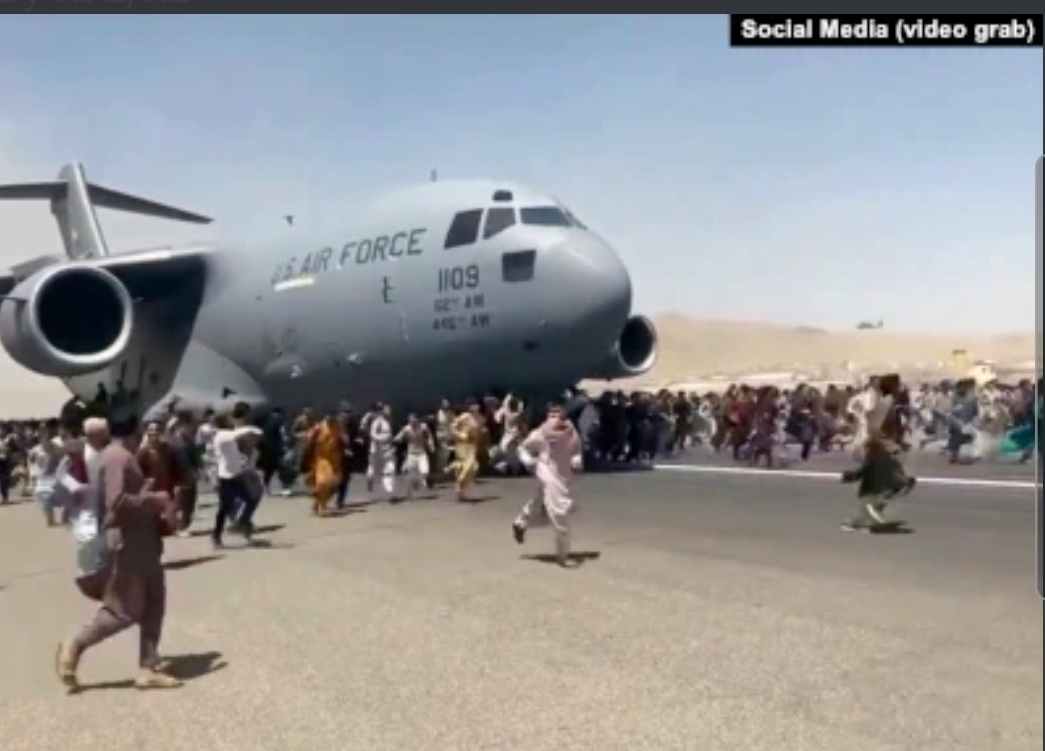
Tolo News: The Ministry of Public Health on Wednesday reported 1,210 new positive cases of COVID-19 out of 3,866 samples tested in the last 24 hours.  The ministry also reported 60 deaths and 757 recoveries from COVID-19 in the same period. Data by the Public Health Ministry indicates that the total reported number of cases is 137,853, and total death count is 5,983. Click here to read more (external link).
Posted in Health News | Tags: Coronavirus (COVID-19) in Afghanistan |

Uzbekistan Promotes Connectivity to Enhance its Regional Leadership

14th July, 2021 · admin

Navbahor Imamova
VOA News
July 13, 2021

WASHINGTON – Uzbekistan’s goal of securing new trade routes to the Indian Ocean — the focus of a conference this week featuring many of the region’s top diplomats — has been complicated by rising uncertainty about the future of a major country along the way: Afghanistan.

The goal of enhancing regional connectivity between Central and South Asia is a long-standing one; landlocked Central Asia would gain access to markets and trade routes to the south while South Asia would acquire access to resources and opportunities to the north.

Until now, however, such schemes have mostly proven to be pipe dreams. And Uzbekistan bears part of the blame.

For decades, Tashkent’s late leader, Islam Karimov, resisted many connectivity ideas, getting into spats with neighboring countries and battling over how to share water and electricity. But his successor, Shavkat Mirziyoyev, has improved relations with those neighbors, dropped resistance to some of these connectivity schemes, and positioned Uzbekistan as a potential leader.

The July 15-16 gathering will cement this shift through an Uzbek-hosted interregional dialogue to foster commerce, transportation and communications links.

But Tashkent’s plans relied heavily on a more peaceful Afghanistan, which straddles the most practical route into South Asia with the only alternative running through Iran. Now, with the Taliban rapidly seizing more and more Afghan territory, it has to hope the extremist group will cooperate.

Attendees at this week’s conference will undoubtedly urge peace talks and negotiations among the warring Afghan parties. But the Taliban may not attend and Afghan President Ashraf Ghani, who will, has an increasingly precarious hold on power.

The delegations will be led by prominent figures including Pakistani Prime Minister Imran Khan, Russian Foreign Minister Sergey Lavrov, U.S. Special Representative on Afghanistan Zalmay Khalilzad, White House Homeland Security Advisor Elisabeth Sherwood-Randall and Josep Borrell, the European Union’s high representative for foreign affairs and security policy.

The Chinese, Indian, Saudi, Turkish, and Bangladeshi foreign ministers as well as the top diplomats from the Central Asian states are also expected in the Uzbek capital.

According to the Uzbek Foreign Ministry, at least 160 guests, including experts, diplomats, policy makers, investors, and entrepreneurs, have confirmed plans to attend the conference, which will feature discussion sessions on economic cooperation, cultural ties and security relationships.

Tashkent aims at concrete proposals to unlock the potential of both regions. “South Asia has historically been tightly connected to Central Asia economically, socially, culturally,” states the ministry in the conference agenda.

Farkhad Tolipov, director of Knowledge Caravan center in Tashkent, says “the Uzbek government is determined to demonstrate that it has an active regional policy. If connectivity becomes real, Uzbekistan will have shorter transportation corridors to the sea.”

Tolipov expects no agreements, only joint statements. “Let’s wait and see but I doubt that there will be any practical results,” he says.

Washington has long promoted regional connectivity and economic integration and even reorganized the State Department in 2005 to promote it, creating a new Bureau of South and Central Asian Affairs. But its initiatives and rhetoric have not been matched by money. And so they have met skepticism at a time when China is pouring billions into the region via its Belt and Road infrastructure initiative.

Tolipov notes that U.S.-promoted energy projects such as a pipeline to deliver Turkmen gas to India via Afghanistan and Pakistan, and a scheme to supply Central Asian electricity to South Asia, “have mostly just been aspirations.”

Still, Jennifer Murtazashvili, director of the Center for Governance and Markets at the University of Pittsburgh, sees the Tashkent conference as an opportunity to generate enthusiasm and ultimately investment for double-landlocked Uzbekistan, which is dependent on trade routes through Kazakhstan and either Russia or China to reach seaports.

“Given the difficult relations between the U.S. and Iran, it would be difficult to secure funding for that southward route, so it is more politically feasible to connect Uzbekistan through Afghanistan and Pakistan than to go through Iran right now.”

Murtazashvili says fragmented markets separating Central and South Asia are costly to entrepreneurs, governments, and citizens. “Improved connectivity from agreements at this conference can facilitate economic prosperity in the region.”

U.S. partners in the region want technical assistance from America’s government and ramped up investment from its private sector. But Murtazashvili thinks that uncertainties in Afghanistan and conflict fatigue will make Americans unlikely to invest in ambitious projects.

“The U.S. has talked quite a lot about this but has not offered a concrete alternative.”

The Bush administration promoted economic connectivity and the Obama administration’s Northern Distribution Network carried non-military goods in and out of Afghanistan. But, says Murtazashvili, there was never much serious commercial investment or project finance from the U.S.

“The economic orientation of the Mirziyoyev government relies on international trade and investment for survival, where Karimov’s was inward-looking, autarkic, and eschewed trade.”

Uzbekistan seems to be hoping that these projects can move forward regardless of who is in power in Kabul, adds Murtazashvili. “Tashkent has maintained close relations with the Taliban and the government of Afghanistan’s ‘Heart of Asia’ [policy] aims to benefit from trade and connectivity.”

But, as experts point out, the real story of the conference is not Afghanistan but Uzbekistan. By stepping up on both Afghan peace and regional connectivity, Tashkent has made these the twin pillars of an activist foreign policy, giving Mirziyoyev’s government enhanced stature and newfound influence.

Posted in Central Asia, Economic News | Tags: Uzbekistan-Afghanistan Relations |

Pakistan Refuses to Host Additional Afghan Refugees

13th July, 2021 · admin

Ayesha Tanzeem
VOA News
July 13, 2021

ISLAMABAD – Pakistan’s government said it has reached its limit and cannot accept more Afghan refugees as the threat of violence looms in Afghanistan.

Pakistani officials are demanding that the world make arrangements for the refugees inside Afghanistan, amid fears that millions of Afghans may be forced to flee into neighboring countries if fighting between Taliban and Afghan government forces intensified or deteriorated into a civil war.

“As a matter of fact, we are not in position to accept any more refugees,” Pakistan’s National Security Adviser Moeed Yusuf told VOA in a one-on-one interview.

Almost 3 million Afghan refugees, half of them unregistered, have been living in Pakistan since the Soviet Union’s invasion of Afghanistan in the 1980s and subsequent waves of violence and later a civil war, according to the U.N.

“We are willing to help but we are in no position to take in new refugees this time around. The international forces and the U.N. should make arrangements for them inside Afghanistan,” Yusuf said.

Yusuf said there needs to be an effort to prepare for the refugees, highlighting his government’s policy.

“If such a situation arises, then the United Nations refugee agency, UNHCR, should set up camps for the refugees on the Afghan side of the border,” he said.

At present, there are two key border crossings between Pakistan and Afghanistan — Chaman in Balochistan and Torkham in Khyber Pakhtunkhwa — apart from several small trading points.

Of the 2,640-kilometer boundary with Afghanistan, Pakistan has fenced nearly 90% and deployed the army and the Frontier Constabulary, a militia under the federal interior ministry, to man it.

Yusuf said that because the countries share a long border and the terrain allows crossings on foot or mules, Pakistan cannot begin to enumerate the threats and fallout of a civil war in Afghanistan.

“There are fears that members of the banned terror outfits like the Tehrik-e-Taliban Pakistan (the TTP or Pakistani Taliban) might enter Pakistan from Afghanistan in the guise of refugees and create unrest in the country,” he said. The Pakistani Taliban are based in Afghanistan but differ from the Afghan Taliban.

He also expressed concern that India, Pakistan’s eastern neighbor with whom it has a hostile relationship, might use this opportunity against his country.

“We have evidence about the involvement of India in terrorist activities in Pakistan by using the Afghan soil,” he said. “Movement of such a large number of refugees could provide the Indian agencies a chance to infiltrate into Pakistan.”

Pakistan’s army chief, General Qamar Javed Bajwa, and the head of the intelligence agency Inter-Services Intelligence (ISI), Lieutenant General Faiz Hameed, told the national security committee of the parliament earlier this month that Pakistan feared a new civil war in Afghanistan.

They said that Pakistan estimated it would receive as many as 700,000 new refugees in the first year alone, a parliament member present in the briefing told VOA on the condition of anonymity because the briefing was private.

Last month, in an interview with The New York Times, Prime Minister Imran Khan said Pakistan would not open its borders to refugees if the situation deteriorated in Afghanistan.

In a worst-case scenario, Pakistan plans to settle the refugees in camps along the border with Afghanistan to prevent them from settling in Pakistan, a senior official of the Interior Ministry who wasn’t authorized to speak to the media told VOA on condition of anonymity.

UNHCR Pakistan spokesperson Qaiser Khan Afridi said the deteriorating situation in Afghanistan was concerning and added that the government of Pakistan has not yet shared with the agency its policy regarding a new influx of Afghan refugees.

“The UNHCR is constantly in consultation with the government of Pakistan and would devise it’s strategy according to the policy of the Pakistan government,” Afridi said.

Afridi didn’t predict the number of refugees but said if refugees came in large numbers, it would be difficult for Pakistan to handle them without the support of the international community.

He said that UNHCR was ready to assist the government of Pakistan in the process of registration, providing them shelter and basic necessities.

Pakistani authorities say they have been hosting millions of refugees even though they are not a signatory to the 1951 Refugee Convention or the 1967 Optional Protocol for refugees.

U.S. President Joe Biden on Friday announced that the U.S. would complete the troop withdrawal in Afghanistan by August 31, nearly 20 years after the U.S. led an invasion of the country following al-Qaida’s attack on the U.S., September 11, 2001.

Al-Qaida’s top leadership was based in Afghanistan under the protection of the Taliban who refused to give them up, leading to the invasion.

Biden also said it was up to the people and the leadership of Afghanistan to decide their future.

The Taliban have intensified violence in Afghanistan in the last few months, especially since the start of the withdrawal of foreign forces two months ago.

This story originated from VOA’s Urdu service. Ayesha Tanzeem contributed to the report.

Posted in Pakistan-Afghanistan Relations, Refugees and Migrants, UN-Afghanistan Relations |

Why The Taliban Is Sweeping Northern Afghanistan

13th July, 2021 · admin

Taliban (file photo)

Abubakar Siddique
Radio Azadi
July 13, 2021

The lightning speed with which the Taliban has overrun large swathes of rural territories in Afghanistan’s north has shocked locals and surprised foreign observers with some worrying whether the internationally recognized government in Kabul can weather the storm.

But the speed of the Taliban’s advances has everyone asking how a group composed of ragtag militants could overrun dozens of districts in eight strategic provinces that share borders with Afghanistan’s neighbors: Pakistan, China, Tajikistan, Uzbekistan, Turkmenistan, and Iran.

“People are asking how so many districts can fall [into the hands of the Taliban] without a fight and all the [government] resources and equipment left intact,” said Abdul Hafeez Faroozan, a government employee in the northeastern province of Badakhshan, which was feared to become the first province to fall into Taliban hands last week. “People are terrified.”

The fighting escalated in northern Afghanistan after the final withdrawal of some 10,000 international troops began on May 1. In the past three weeks alone, the Taliban has overrun scores of districts and has virtually overtaken most trade routes, border crossings, and major roads in the region, prompting Afghanistan’s neighbors to assemble troops and turn to regional powers for help. The Taliban now claims to control some 100 districts in northern Afghanistan in addition to 85 districts elsewhere.

The militants’ success in the north is even more surprising considering the region offered some of the toughest resistance to the Taliban after its emergence as a student militia in the southern province of Kandahar in the mid-1990s that went on to sweep southern and southeastern Afghanistan.

The Northern Alliance, a coalition of various factions primarily comprising ethnic Tajiks, Uzbeks, and Hazars, fought the Taliban in the 1990s. It prevented the group from overrunning Badakhshan, Takhar, and Panjshir provinces, where a rival government mainly backed by India, Russia, and Iran fought hard against the Taliban, which was supported by Pakistan.

The Taliban regime quickly collapsed following the U.S.-led invasion in late 2001, but the group reemerged as an insurgency in 2003. In the following years, most of its attacks were limited to southern and eastern provinces along the country’s border with Pakistan.

By 2010, the militants had returned to northern Afghanistan and were carrying out attacks in the region, gaining some rural territories.

Tamim Asey, a former Afghan deputy defense minister, says the Taliban is now concentrating on northern Afghanistan to prevent the reemergence of the resistance it faced there in the 1990s.

Asey says the Taliban also wants to choke Kabul by depriving it of important revenues, trade routes, and resources in the north, which is connected to central and eastern Afghanistan by a Soviet-built road and tunnel network that is a key trade artery for trade with Central Asia. The northwestern province of Herat connects Afghanistan to Iran and Turkmenistan through vital border crossings.

“The Taliban concentrated on this strategic region because it generates vital revenues,” he told Radio Free Afghanistan, adding that divisions among the region’s strongmen paved the way for the Taliban’s advances.

Conspiracy And Civil War
Marshal Abdul Rashid Dostum, a former vice president and communist-era ethnic Uzbek military strongmen, has long competed for influence with Atta Mohammad Noor, a former Tajik commander of the Jamiat-e Islami political party. In recent weeks, the two have mobilized armed supporters to fight the Taliban.

“There is a real possibility of a civil war. This is a very dangerous possibility,” Noor said in an interview with the Associated Press last week.

Dostum, who is currently undergoing medical treatment in Turkey, says there’s a conspiracy behind the quick fall of northern territories.

“All districts [and] tanks were handed over to the Taliban without resistance. I don’t know what the plan is,” he was quoted as saying by Afghanistan’s Tolo TV late last month. He has vowed to return to the battlefield. “We will return to the north. It is our home. I was raised there…I would be proud to be killed and martyred there,” he said.

Like elsewhere in Afghanistan, however, the region is rife with rivalries, vendettas, and disputes, some of which the Taliban exploited to attract volunteers to its cause of fighting the international military presence and overthrowing the Western-backed government in Kabul.

Amrullah Aman, a former Afghan Army general, says the popular uprising that has seen saw civilians and former combatants take up arms against the Taliban prompted the group to hasten its offensive in the region. He also criticized Afghanistan’s neighbors for trying to cut separate deals with the Taliban to protect their countries from the possible fallout of Taliban victories along their borders.

“I want to warn the regional countries of disastrous consequences if they remain indifferent to [our plight] here,” he told Radio Azadi. “The region could face instability for a long time.”

Sher Mohammad Karimi, a former commander-in-chief for the Afghan Army, says the Taliban is pursuing a strategy to win.

“The militants are increasing the tempo of their attacks wherever they see success,” he told Radio Azadi. “Fighting is going on everywhere in Afghanistan, but it is more pronounced in the north because the Taliban is focused on this region.”

Hamdullah Mohib, Afghanistan’s national security adviser, however, is refusing to concede that the Taliban has overrun dozens of rural districts in northern Afghanistan. He told journalists last week that a lack of timely reinforcements and supplies prompted some units to abandon their places, which encouraged the Taliban to capture posts and offices — which does not equal capturing entire districts.

“Our forces are on the offensive in many districts, and we have recaptured some 14 districts during the past few weeks,” he said.

The Taliban has been quick to claim victory. Zabihullah Mujahid, a purported Taliban spokesman, said the group’s forces are advancing everywhere.

The Taliban appears confident in its ability to claim the victory that some Afghans say was handed to the militants by the departure of international forces. The movement’s military gains in Afghanistan are also bolstered by the apparent willingness of regional countries to engage them in an effort to protect themselves from the turmoil in Afghanistan.

Copyright (c) 2021. RFE/RL, Inc. Reprinted with the permission of Radio Free Europe/Radio Liberty, 1201 Connecticut Ave NW, Ste 400, Washington DC 20036.

Related

  • Concern For A Taliban-Led, Afghan Spillover Into Central Asia: Then And Now
  • Russia Opposes Possible US Military Deployment in Central Asia
Posted in Central Asia, Russia-Afghanistan Relations, Security, Taliban | Tags: Atta Mohammad Noor, Dostum, Taliban ethnically cleansing Northern Afghanistan |

1TV Afghanistan Dari News – July 13, 2021

13th July, 2021 · admin

Posted in News in Dari (Persian/Farsi) |

Forces Led by Ex-Jihadi Positioned in Herat to Fight Taliban

13th July, 2021 · admin

Ismail Khan

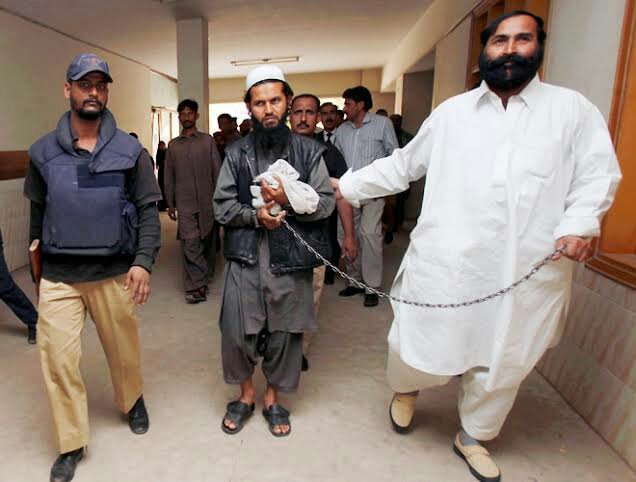
Tolo News: People’s Resistance Front’ forces led by Mohammad Ismail Khan, an ex-Jihadi leader, have been deployed alongside security forces in some parts of Herat city to prevent the Taliban from entering the city. Armed with light and heavy weapons, the forces warn the Taliban that they will be killed if they get closer to the city of Herat. Click here to read more (external link).
Posted in Security, Taliban | Tags: Afghan resistance against Taliban, Ismail Khan |

Four Killed In Kabul Blast As UN Warns Afghanistan ‘On Brink Of Humanitarian Crisis’

13th July, 2021 · admin

Radio Free Europe/Radio Liberty
July 13, 2021

At least four civilians were killed and five others were wounded in an explosion in Kabul on July 13, police said, as the United Nations warned that Afghanistan was “on the brink” of a new humanitarian crisis as violence intensified amid a hasty withdrawal of U.S.-led forces from the war-torn country.

No group has claimed responsibility so far for the blast, which came amid an ongoing offensive by the Taliban militants who have captured around one-third of Afghanistan’s districts since the start of the foreign forces’ pullout, raising fears that the government in Kabul could collapse.

The type of explosion and the target were not immediately clear, police said in a statement.

The blast occurred “in the center of Kabul” at rush hour, police spokesman Ferdaws Faramurz told journalists separately, adding that an investigation was under way.

The attack came as a senior Taliban leader on July 13 said that despite their military advances, the militants do not want to battle government forces inside Afghanistan’s cities and urged them to surrender.

“It is better…to use any possible channel to get in touch with our invitation and guidance commission,” said Amir Khan Muttaqi in a message tweeted by a Taliban spokesman, adding this would “prevent their cities from getting damaged.”

Muttaqi is the head of a Taliban commission that oversees government troops who surrender to the militants.

His call came the same day as a video emerged that CNN said it had verified showing a team of Afghan commandos being shot dead by the Taliban last month after surrendering.

Meanwhile, the UN refugee agency warned on July 13 that more Afghans are likely to flee their homes due to escalating violence.

“Afghanistan is on the brink of another humanitarian crisis. This can be avoided. This should be avoided,” Babar Baloch, spokesman of the UN High Commissioner for Refugees (UNHCR), told a Geneva news briefing.

“A failure to reach a peace agreement in Afghanistan and stem the current violence will lead to further displacement within the country, as well as to neighboring countries and beyond.”

According to the UNHCR, some 270,000 Afghans had been newly displaced inside the country since January, bringing the total population forced from their homes to more than 3.5 million.

The number of civilian casualties has gone up 29 percent during the first quarter compared with last year, the UNHCR said, citing figures from the UN Assistance Mission in Afghanistan.

“We urge the international community to step up support to the government and people of Afghanistan and its neighbors at this critical moment,” Baloch said.

With reporting by CNN, AFP, Reuters, and TOLO News

Copyright (c) 2021. RFE/RL, Inc. Reprinted with the permission of Radio Free Europe/Radio Liberty, 1201 Connecticut Ave NW, Ste 400, Washington DC 20036.
Posted in Civilian Injuries and Deaths, Security, Taliban, UN-Afghanistan Relations | Tags: Kabul |
Previous Posts
Next Posts

Subscribe to the Afghanistan Online YouTube Channel

---

---

---

Get Yours!

Peace be with you

Afghan Dresses

© Afghan Online Press
  • About
  • Links To More News
  • Opinion
  • Poll