
 Amu: Pakistan’s military and intelligence establishment has long been accused of using proxy jihadist groups as tools of its foreign policy. From Kashmir to Afghanistan, Pakistani-backed terrorist groups have waged war in pursuit of Islamabad’s strategic goals. From the first Kashmir war, soon after independence, to the Taliban’s return in Kabul, the Pakistan behaviour has been the same: armed non-state groups are treated as low-cost tools to pressure stronger rivals, avoid direct war, and keep influence in neighboring countries. What seems rational to Rawalpindi’s strategists has produced decades of destabilizing outcomes for the neighborhood and even for Pakistan itself. What’s alarming is how little the world has done to change it. The only way to stop it is to make the strategy unaffordable, both politically and financially, and in terms of reputation. Click here to read more (external link).
Tolo News in Dari – September 27, 2025
Afghan Mother and Child Die in Migrant Boat Capsize off Turkey’s Aydin Province
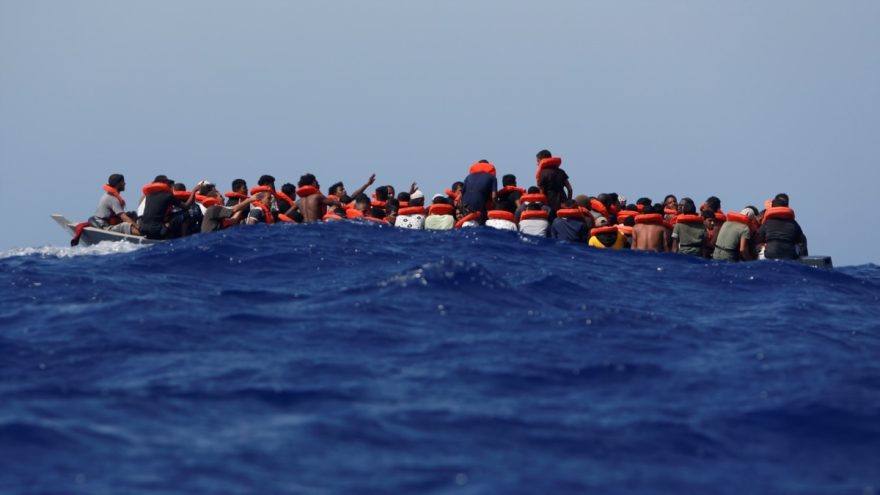
Khaama: A migrant boat carrying 45 people capsized on Thursday near the coastal town of Didim in Turkey’s Aydin province, killing an Afghan woman and her three-year-old son. According to Turkish media, the inflatable boat overturned due to rough seas and poor weather conditions. Click here to read more (external link).
Other Immigration / Migrant News
Trump Signals More Remarks To Come On Bagram Airbase

Donald Trump
Afghanistan International: President Donald Trump indicated he intends to make further remarks about Bagram airbase but gave no timetable for when he might do so. At the White House on Thursday, Trump referred to his administration’s rebuilding of the US military and the equipment left behind in Afghanistan following the 2021 withdrawal. He again criticised the withdrawal, calling it the most shameful moment in US history. Click here to read more (external link).
More
- Counterterrorism a key US priority in Afghanistan: Spokesperson
- Russia, Iran, China & Pakistan Reject US Return To Afghanistan
- Beijing leads push against Trump’s bid to reclaim Afghanistan’s Bagram airbase
- Trump’s Aim to Take Back Afghan Air Base Doesn’t Make Sense
- Trump’s push to reclaim Bagram Air Base cites proximity to China’s nuclear program
Daesh elements ‘completely’ curbed in Afghanistan: Qane

Ariana: Abdul Matin Qane, spokesman for the Ministry of Interior Affairs, says the subversive elements of Daesh in Afghanistan have been “completely” curbed, and there is no cause for concern in this regard. Qane made these remarks in response to concerns raised by some countries and organizations regarding the potential infiltration of Daesh members into Afghanistan under the guise of migrants. Click here to read more (external link).
Related
Tolo News in Dari – September 26, 2025
Balochistan Chief Minister Accuses Kabul of Backing Militant Attacks in Pakistan
 Khaama: Balochistan Chief Minister Sarfraz Bugti has accused Kabul of supporting terrorist groups and militant outfits operating against Pakistan. He said insurgents were finding safe havens across the border. According to Geo News on Thursday, Bugti alleged that the Tehreek-e-Taliban Pakistan (TTP) and other groups easily run training camps and secure shelters in Afghanistan. Click here to read more (external link).
Afghans Fear Losing ‘Last Hope’ As Taliban Shuts Down Internet
 By RFE/RL’s Radio Azadi
September 26, 2025
Maryam has worked as an online interpreter since the Taliban banned women from most jobs in Afghanistan.
But her livelihood is under threat after the hard-line Islamist group last week shut down access to fiber-optic Internet in large swaths of the country.
The move has left government offices, homes, and private businesses in around half of Afghanistan — including major cities — without WiFi access.
“We have faced many problems due to the Internet shutdown,” Maryam, who lives in the northern city of Mazar-e-Sharif, told RFE/RL’s Radio Azadi, using a pseudonym for fear of retribution. “I’m the breadwinner of my family.”
The Taliban said the Internet shutdowns that started on September 15 are intended to prevent “immorality,” with the group previously voicing concern over pornography and online intimacy between men and women.
But critics said the decision is part of a wider crackdown on individual freedoms and the free flow of information. Since seizing power in 2021, the Taliban has severely restricted the rights of Afghans, especially women, and violently cracked down on dissent.
Elizabeth Stickney, a U.S. State Department spokesperson, told Radio Azadi that the Taliban’s restrictions on fiber-optic Internet were “very concerning,” saying it will negatively affect the lives of ordinary Afghans and the country’s economy.
The move comes as the Taliban has started to enforce an October 2024 ban on depictions of living things — people and animals. The ban includes the “production and watching of videos and photos of living things on computers and mobile phones.”
There are fears that the broadband blackouts could further cut off Afghanistan, which has become an international pariah under Taliban rule, from the rest of the world.
The Internet shutdowns have not yet affected Kabul, the Afghan capital, and it is unclear if the restrictions will be enforced nationwide. Mobile Internet is still functioning in most areas, although it is more expensive and less reliable.
A Lifeline For Women
The Internet has been a lifeline for Afghan women, many of whom lost their right to work and study following a Taliban ban in 2022.
Among them is Soraya, who has worked remotely from Kabul for a foreign organization.
“As an Afghan woman, life is already very difficult for us,” she told Radio Azadi, using a pseudonym. “The only way we can earn an income and support ourselves and our families under these conditions is through online work.”
But the Internet shutdowns, Soraya said, have made “life more difficult for us, and I’m afraid that I will lose this last hope and my job.”
Afghan women and teenage girls have turned to virtual learning amid the Taliban’s ban on education.
Sporadic power and Internet outages were already undercutting the reach of online schools and universities. But not being able to access the Internet ends the chance to study for some.
“After I was cut off from school, WiFi Internet was a way for me to find myself again,” said Nazifa, who was in the ninth grade when she was banned from studying.
“But when the WiFi was disconnected, I lost all hope,” she added, also using a pseudonym. “I had passed the exams and worked very hard.”
No Religious Basis
The Taliban has used Islamic Shari’a law to justify its extremist policies. But Islamic scholars say there is no religious grounds for the group’s decision to shut down the Internet.
Fazl al-Hadi Wazin, a member of the Qatar-based International Union of Muslim Scholars, said the Taliban can restrict access to websites with pornographic and violent content. But completely cutting off the Internet is not the solution, he said.
“Cutting and banning the Internet has no religious basis whatsoever,” Wazin, an Afghan scholar, told Radio Azadi. “If something is likely to be misused, this does not mean that it should be banned.”
Shutting down the Internet, Wazin said, means “depriving the nation of a very important tool that is essential for progress and advancement.”
The broadband blackouts are likely to exacerbate the economic strife in Afghanistan, where poverty is rising, hunger is widespread, and unemployment is high.
Mohammad, a resident of the southern city of Kandahar, owns a private company. Since the Internet shutdown, he has been unable to communicate with customers and suppliers.
“Currently our work has completely stopped,” he told Radio Azadi. “In the 21st century, the world is connected by the Internet, and the lack of Internet increases our [economic] problems.”
Meanwhile, media watchdogs have condemned the Internet ban as an attempt to stop the free flow of information.
“Banning broadband Internet is an unprecedented escalation of censorship that will undermine journalists’ work and the public’s right to information,” said Beh Lih Yi, the Asia program coordinator for the Committee to Protect Journalists, a global press freedom watchdog.
“The Taliban should end their cycle of repression and unconditionally restore Internet access, which is an essential tool for news gathering.”
Copyright (c) 2025. RFE/RL, Inc. Reprinted with the permission of Radio Free Europe/Radio Liberty, 1201 Connecticut Ave NW, Ste 400, Washington DC 20036.
US Reviewing Afghanistan Policy, Says State Department Officials
 Afghanistan International: The United States is reviewing its policy on Afghanistan, with a focus on ensuring aid does not reach the Taliban, two senior State Department officials told Afghanistan International on Wednesday. They described the situation in Afghanistan as “catastrophic” and said the US withdrawal in August 2021 “should never have happened the way it did.” Click here to read more (external link).
More
Tolo News in Dari – September 25, 2025