
 Ahmed Hanayesh
Mansoor Khosrow
Radio Free Europe/Radio Liberty
April 26, 2023
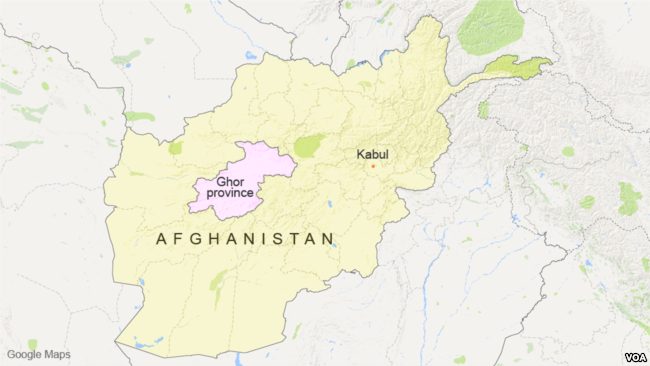
A group of girls wearing black face veils silently enter a madrasah in Afghanistan’s central province of Ghor.
Inside the Islamic seminary, dozens of teenage girls sit on the floor, rocking back and forth, as they recite the Koran, Islam’s holy book.
Among them is Zohra Jalali, who was in her final year of school when the Taliban seized power in 2021. The militant group soon banned girls above the sixth grade from attending school, shattering her dream of becoming a doctor.
Jalili is now among the thousands of teenage girls who have enrolled in Taliban-run madrasahs as a last resort to continue their education. The militants have allowed girls of all ages to study at seminaries in Afghanistan, a predominately Muslim country of around 40 million.
“We want our regular schools to be open,” the 18-year-old told RFE/RL’s Radio Azadi. “Besides religious education, we also want to study other subjects.”
The Taliban has vowed to root out all forms of the modern secular education that thrived in Afghanistan after the U.S.-led invasion in 2001 toppled the Taliban’s first regime.
Since regaining power, the militants have converted scores of secular schools, public universities, and vocational training centers into Islamic seminaries, leading to a surge in the number of madrasahs in the country.
The Islamist group has also vowed to overhaul the national curriculum and build a vast network of madrasahs across the country’s 34 provinces.
Tamina Qudusi, a former university student, told Radio Azadi that the Taliban’s attitude toward modern education is self-destructive.
“How can we [Afghans] stand on our own feet if we don’t have [modern] education?” she asked. “Uneducated women won’t be able to achieve anything.”
Qudusi enrolled in a madrasah in the northern province of Parwan after the Taliban banned women from studying at universities in December. She said attending a seminary would allow her to at least receive some form of education.
At Taliban-run madrasahs, students learn to read and memorize the Koran, which is written in Arabic, a language that few Afghans understand. They also learn about the teachings and sayings of Prophet Muhammad.
Neda Rahmani, a former university student from the southwestern province of Nimroz, said limiting education to religious studies is a detriment to Afghanistan, where men and women are needed in all fields, including in education, health, and even the security sector.
“The Taliban needs to invest time in thinking through and understanding the role of women in this county,” said the 21-year-old, who also attends a madrasah.
The Taliban has defended its efforts to root out modern secular education.
Mawlawi Abdul Jabbar Saqib, the head of the Taliban’s education department in Ghor, said “modern education is not compulsory for women.”
“They must get the correct knowledge of religion for themselves and their families,” he told Radio Azadi.
But many Afghan religious figures and teachers disagree. They have accused the Taliban of using madrasahs to brainwash the young generation with their extremist ideology and erase modern forms of education.
“We need modern education as much as we need bread and water,” said an Islamic scholar in Nimroz who spoke on condition of anonymity for fear of retribution. “We must have female doctors. We also need women engineers and teachers.”
Besides limiting girls and women’s education, the Taliban has also imposed severe restrictions on women’s appearances, freedom of movement, and their right to work.
Razia Haqshanas, a ninth grader in Parwan, has witnessed girls and women’s access to education gradually erode. She fears the Taliban might even ban girls from attending madrasahs.
“My future is dark here,” she told Radio Azadi.
Written by Abubakar Siddique based on reporting by Radio Azadi correspondents Ahmed Hanayesh and Mansoor Khosrow
 Khaama: “Two members of an international terrorist cell crossed the state border between Tajikistan and Afghanistan on Wednesday morning to conduct terrorist activities. The terrorists were eliminated in a joint anti-terror operation by the republic’s law enforcement agencies,” local media reported. The investigation is going on to identify the identity of the militants, the statement said. It also added that the incident happened in the autonomous province of Gorno-badakhsahn, Vanj District.

 8am: On Tuesday, April 25, the WHO tweeted that positive cases of malaria have increased by 45% compared to 2021. The organization stated that approximately 90% of the cases were reported in the eastern provinces of Nangarhar, Laghman, Kunar, and Nuristan.
  FP: On paper, at least, Beijing’s latest deal with the Taliban looks impressive: $10 billion for access to lithium deposits, creating 120,000 direct jobs, plus some infrastructure building and repairs thrown in for good measure. But rather than underpinning hope for economic revival, this contract is likely to join other Chinese ventures in Afghanistan that have been signed with great fanfare—for the republic and extremists alike—only to go out with a whimper rather than a bang. China famously signed a $3 billion deal to develop Afghanistan’s largest copper deposit, not far from Kabul, and then unceremoniously decamped once the shooting started.
  Khaama: Rina Amiri, The US special envoy for women, girls and human rights in Afghanistan, said on Tuesday that the US would not have a normal relationship With the Taliban without respect for human rights. Amiri tweeted, “I have received messages expressing concern regarding recognition of the Taliban. We remain clear. There will be no normalization of relations with the Taliban without respect for the rights of all Afghan, especially women.”