
What is the Taliban’s Plan for Removing the TTP from Border Areas?
 8am: Previously, it was reported that the Taliban are intending to allocate the lands surrounding the Qosh Tepa canal to those displaced from the other side of the Durand Line. This would appear to be in pursuit of several objectives: 1– To alter the social–cultural composition of the north; 2– To eradicate the basis of resistance in the north in a drastic manner; 3– To cause difficulty for the Central Asian republics and Russia. It appears that the United States will back this plan, as maintaining the borders of the Central Asian republics in an insecure state would be more advantageous to the country. Click here to read more (external link).
Related
Afghanistan cricket team in Bangladesh for one-off Test
 Ariana: The Afghanistan national cricket team arrived in Dhaka on Saturday, just days ahead of their one-off Test against Bangladesh starting at the Sher-e-Bangla National Stadium on June 14. Afghanistan is expected to start their three-day training session on Sunday as a part of the buildup for the Test that will run through until June 17. Click here to read more (external link).
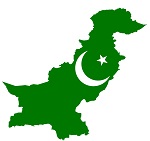
Afghan Refugee Crackdown Continues in Pakistan Despite Taliban Objections
 VOA News
June 11, 2023
Roshan Noorzai
Khudai Noor Nasar
Pakistan is continuing a months-long crackdown on Afghan refugees living in the country, detaining hundreds of people accused of lacking proper documentation.
Taliban leaders have asked Pakistan to stop the process “immediately.” Not only has it continued, but Afghan refugees in Pakistan have told VOA that the crackdown in recent days has intensified in Islamabad, Rawalpindi and adjacent areas.
“Unfortunately, the detentions have intensified, and it still continues,” said Shukria, an Afghan refugee who fled Afghanistan after the Taliban’s takeover.
Shukria, who asked that her full name be withheld, told VOA that the security forces arrested “even those refugees who have UNHCR’s documents.”
She added that some Afghan refugees were arrested at their homes.
“In the places where most Afghans live, Pakistani police arrest Afghans from their houses. They know where they are living … as they were required to register in the nearest police station,” she said.
Shukria said that “among those arrested include women and children.”
She added that Afghan refugees are “terrified.”
“Most of the Afghans do not want to get out of their houses,” she said.
The Afghan Embassy in Islamabad, in a tweet Thursday, said that Taliban officials at the embassy met with officials of Pakistan’s Ministry of Interior and had a “serious discussion on the detentions and harassment of Afghans in Pakistan, and it should stop immediately.”
“The Pakistani side assured the leadership of the [Afghan] embassy of cooperation and added that they only arrest those who do not have legal documents.”
Abdul Karim Haqqani, a Taliban official in the Afghan Embassy in Islamabad, told VOA on Wednesday that 300-400 Afghans have been detained by Pakistani security forces.
He added that they are trying to negotiate with the Pakistani officials for their “immediate release.”
Asif Durrani, Pakistan’s newly appointed special envoy to Afghanistan, told VOA that those Afghans “without proper documents, or he or she has overstayed their visa limit, there is a law that they will be detained.”
Quoting Pakistani officials, local media reported that undocumented Afghans face deportation.
But Arsala Khan, an Afghan refugee who works as a laborer at Islamabad’s Fruit and Vegetable Market, told VOA that he was detained while working even though he had his refugee card on him.
“I was halfway loading a car. I was arrested though I showed my smart card to them,” said Khan, who said he was later released on bail.
The government of Pakistan, with the support of the United Nations, began issuing smart cards to Afghan refugees in Pakistan in April 2021.
United Nations High Commissioner for Refugees stated that more than 1.3 million registered Afghan refugees are in Pakistan.
The U.N. refugee agency says about 3.7 million Afghans are living in Pakistan.
Of about 1.6 million Afghans who fled Afghanistan to neighboring countries after the Taliban seized power in August 2021, about 600,000 went to Pakistan, according to the agency.
Devon Cone, senior advocate for women and girls at Refugees International, told VOA that refugees who fled to Pakistan after August 2021 “bring a lot of challenges.”
Cone said that the Afghans who arrived in Pakistan after the fall of Afghanistan into the hands of the Taliban have “limited opportunities.”
Cone added that newly arrived Afghan refugees in Pakistan are “running out of money. Most of them sold all their belongings in Afghanistan, and almost two years later, they’ve run out of money … Their visas expired. They can’t work in the labor market. They can’t access public education.”
“And finally, they have mental stress and trauma from having had to flee Afghanistan, [and] not being able to go back,” Cone said.
Richard Bennett, the U.N. special rapporteur on human rights in Afghanistan, told VOA that once refugees cross the border, they have “a right to international protection.”
“All [refugees] have the right to have their asylum cases treated seriously and fairly,” he said.
This story originated in VOA’s Afghan Service.
Related
Tolo News in Dari – June 10, 2023
UNSC Report: ‘Taliban Have Reverted to Exclusionary Policies of Late 1990s’

Taliban fighters (file photo)
Tolo News: According to the report, the threat of terrorism is rising in both Afghanistan and the region, and “there are indications that al-Qaida is rebuilding operational capability.” “The Taliban, in power as the de facto authorities in Afghanistan under Hibatullah Akhundzada, have reverted to the exclusionary, Pashtun-centred, autocratic policies of the Taliban administration of the late 1990s,” the report reads. Click here to read more (external link).
Persistent Attacks: Is Badakhshan Province Becoming a Safe Haven for Terrorists?

8am: In the past week, suicide attacks claimed the lives of two senior Taliban commanders in Badakhshan province, resulting in the death of 14 people and injuries to 43 others, primarily civilians. These attacks have drawn condemnation from the United States, Iran, and the United Nations, who denounced the deliberate targeting of civilians during a funeral ceremony for a Taliban official in Fayzabad City. However, certain media activists and politicians characterize these events as contributing to the transformation of Badakhshan province into a sanctuary for terrorists. It is important to note that the responsibility for these incidents has been claimed by the ISIS group. Click here to read more (external link).
Related
Afghan MMA Fighter Released After Spending a Year in Indian Prison

Badakhshi
Khaama: Abdul Azim Badakhsh, an Afghan free fighter who was arrested for beating and assaulting an Indian MMA fighter, was released after spending a year in prison in India. Badakhshi, the first-ranked athlete in South Asia, has recorded 13 victories and three defeats in his professional career so far. Click here to read more (external link).
Other Sports News
Tolo News in Dari – June 9, 2023
The plant at the root of Iran’s meth market
 Global Initiative: Having long hosted Western Asia’s largest methamphetamine market, Iran for decades has employed an aggressive multi-million-dollar campaign to curb the trade. The discovery, however, of the ephedra plant in neighbouring Afghanistan – a source of ephedrine, a key ingredient for the drug – threatens to undermine Tehran’s efforts. The abundance of cheap meth in neighbouring Afghanistan has turned Iran’s border provinces of Khorasan and Sistan-Baluchistan into pivotal nodes in the global meth supply chain. Click here to read more (external link).