
 Navbahor Imamova
VOA News
August 15, 2023
TERMEZ, UZBEKISTAN — Surrounded by orchard trees and flowers, a newly renovated house in Surkhandarya, Uzbekistan, boasts a large courtyard and barn. Sipping green tea in the sweltering summer heat, a group of local women of different ages and backgrounds tell VOA that life near the Afghan border has never been easy, but they now worry more about their neighbors.
Cross-border traffic has fallen since the Taliban takeover in 2021, but dozens of Afghans still enter Uzbekistan daily, and cargo movement at the border crossing is visibly dynamic.
“We see Afghanistan every time we go out. It’s right there,” says Guljamila Hayitova, 72, pointing to the cotton field that ends at the borderline fence.
“Having lived here all my life and still farming in this area, we trust our border forces. We rely on our government, which I know is committed to ensure security. Yet any smoke we see in Hayraton [Afghan border town], any gun shot or blast we hear, does alarm us,” she adds.
With around 3 million people, this southern region of Uzbekistan also borders Tajikistan and Turkmenistan. Nearly 200,000 of its people reside, work and study in Termez, the city on the Afghan border. The Friendship Bridge over the Amu Darya River connects Termez with Hayraton, the northern town of Afghanistan’s Balkh province.
Tashkent’s special representative on Afghanistan, Ismatulla Irgashev, argues that the Taliban, with all their complexities and challenges, “are a reality the neighbors and the international community must accept and deal with, based on mutual interests.”
In recent regional talks that also included U.S. and European envoys, Irgashev and other Uzbek diplomats stressed the “need to provide humanitarian assistance to the Afghan people, while also engaging the leadership in Kabul.”
Tashkent has been pushing for infrastructure projects through Afghanistan so their double-landlocked republic can finally gain access to seaports in South Asia. While experts in Tashkent and elsewhere, including Washington, debate the feasibility of Uzbekistan’s strategic goals regarding the Taliban, who Irgashev describes as “steadily evolving,” people in Termez want more trade and exchange.
Shaman Jumayev’s house and farm overlook the Friendship Bridge. The railway into Afghanistan runs by his property where he lives with his joint family.
“The Taliban takeover has not and will not change the way we live,” Jumayev emphasizes, showing off his teenage grandchildren, who are getting their education in Termez.
“I don’t separate Afghans. Taliban or not, they are all the same for me. We are all quite used to our neighbor, whose conflicts I have watched from here for the last 45 years.”
Jumayev highlights a typical point made by locals in around 70 neighborhoods adjacent to the border: Uzbeks, Afghans and others have lived alongside each other forever, and no politics can ever separate them.
“We can’t wait to see the trade center the Uzbek government aims to open near the crossing point,” said Nasibakhon Abdunazarova, chief of Ayritom, the closest border neighborhood.
“We already benefit from the Termez Cargo Center, where dozens of our men work. Our youth need opportunities and are eager to be employed by new businesses that pay better,” she said.
But the salary at the Termez Cargo Center is modest, Hayitova points out, discussing the impact of the giant terminal that opened in 2016. “But it is still better than having nothing here,” which was the situation until recently.
Located near the border, the cargo center has the capacity to serve up to 50 trucks at a time, offering customs clearance, storage of import-export cargo, and transit of rail and auto-delivered products to and from Afghanistan. It also runs the Karvonsaroy hotel complex.
Jumayev and others interviewed by VOA in Surkhandarya worry about the new channel the Taliban is building off the Amu Darya River.
“We cannot underestimate the need for water. I don’t sense any panic here over this project, but we definitely don’t want to suffer from any scarcity because of it,” Abdunazarova says.
Jumayev, whose farm relies on the Amu Darya, is happy with how Tashkent is handling the issue.
“The Taliban knows our position, because the Uzbek government has laid out our concerns,” he says.
Confident about security
For Surkhandarya Governor Ulugbek Qosimov, “Trade, education and cultural ties with the Afghan people have continued even during the most unstable times on the other side of the Amu Darya.”
“Our people are accustomed to stability and peace, despite what happens in Afghanistan. We have not had any crisis in the area since the Taliban took over,” he said.
Uzbekistan does not accept refugees from Afghanistan. Officials tell VOA that those who entered before the Taliban came to power have mostly been allowed to stay. Many Afghan traders have been able to extend residential permits, while some have been waiting for a long time.
“I feel much safer now with my family here than I did two years ago when the leadership changed in Kabul,” says Nadim, an Afghan citizen who faced deportation in 2021 and asked to withhold his last name for safety reasons.
The Afghan consulate in Termez has renewed its office — a Taliban official now represents Kabul. But since his government is not recognized, the old flag still flies outside the compound.
Termez hosts a special school for Afghan citizens, educating 535 so far. More than half have gotten undergraduate degrees.
“Six years ago, there were about 40 Afghan businesses in Termez. Now, we have more than 300 engaged in construction, agriculture, services and manufacturing,” Qosimov says.
Uzbekistan President Shavkat Mirziyoyev set Afghanistan as a foreign policy priority, focusing on security, development and partnership.
Guided by that strategy, Qosimov says, “All we want is prosperity, here and across the border. We have been assisting our neighbors with food, clothing and other critical necessities. We have also been increasing incentives for Afghan entrepreneurs.”
C5+1
In a July 27 meeting, under the auspices of the C5+1 regional diplomatic platform, special envoys for Afghanistan from Kazakhstan, Kyrgyzstan, Tajikistan, Turkmenistan, Uzbekistan and the United States emphasized a precondition to the Taliban: “An inclusive, united, sovereign, stable, and self-reliant Afghanistan that is free of terrorism, respects the rights of its population, including women and girls, and is at peace with itself and its neighbors.”
The group underlined that the Afghan territory should not be “used as a base for hosting, financing, or exporting terrorism and violent extremism to other countries,” agreeing that countries must strengthen cooperation against trafficking in people, arms and illegal drugs.
A stable and prosperous Afghanistan “is only attainable if all Afghans, including women and girls, and persons belonging to ethnic and religious minorities, can fully, equally, and meaningfully participate in — and contribute to — the country’s future,” the joint statement said.
Reaffirming the importance of regional connectivity through the construction of energy infrastructure and transportation networks connecting Central Asia to South Asia via Afghanistan, C5+1 is supporting United Nations efforts and presence in Afghanistan, urging for responsible and inclusive governance.

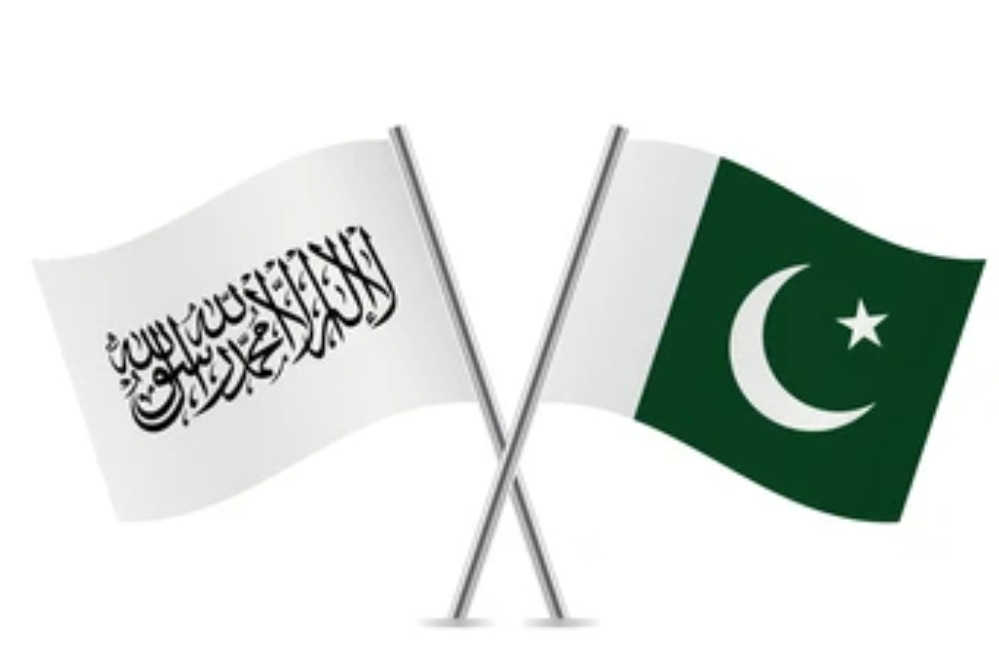 8am: Contrary to previous expectations, the Taliban’s control over Afghanistan did not bring happiness to Pakistan. This is due to an increase in terrorist activities carried out by Tehreek-e-Taliban Pakistan (TTP) against Pakistan’s interests from Afghanistan. On July 20, Khawaja Muhammad Asif, the Pakistani Minister of Defense, acknowledged that Pakistan had initially expressed appreciation to the Taliban for their victory in the long-standing conflict. However, Pakistan was unaware that the Taliban would provide shelter to its adversaries. On July 19, Asif Durrani, Pakistan’s special representative for Afghanistan affairs, visited Kabul for three days to deliver an important message from the Pakistani government to the Taliban regarding the need to suppress TTP.
  By
By  8am: The collapse of the Republic government and the reinstatement of the Taliban did not cause significant concern for the Islamic Republic of Iran, contrary to expectations. Despite the turmoil in Kabul, Iran maintained an open embassy and continued to issue visas from its consulates in major Afghan cities. On November 15, 2021, an Iranian delegation led by Ambassador Hassan Kazemi Qomi visited Kabul and held meetings with Taliban officials. This marked the first official visit of an Iranian delegation to Afghanistan since the Taliban took power. In return, on January 8, 2022, Mullah Amir Khan Muttaqi, the Taliban Acting Foreign Minister, led a delegation of 26 members to Tehran, where they met with Iranian officials. This meeting was followed by negotiations between the Taliban delegation and Ahmad Massoud, the leader of the National Resistance Front (NRF). On August 15, 2022, Qomi made a rare statement claiming that the United States was organizing a group called the “Resistance Front,” which he deemed to be a falsehood. He further stated that their intention was to create internal chaos under the guise of resistance. Qomi’s remarks received significant attention and prompted him to later clarify his statements.
  By
By 