 Akmal Dawi
VOA News
February 15, 2024
Afghanistan has cleared its outstanding electricity debts to three Central Asian neighbors and is negotiating for an increase in energy supplies, a move that could signal the Taliban government is moving toward economic stabilization.
Landlocked Afghanistan relies heavily on energy imports, obtaining more than 70 percent of its electricity from Tajikistan, Uzbekistan, and Turkmenistan, as well as some from Iran.
This year, Tajikistan officials say they will export 1.9 billion kilowatt-hours of power to Afghanistan, a 17% boost from last year.
Taliban officials are actively seeking further increases from Turkmenistan and Uzbekistan, according to DABS, the Taliban-run national electricity company of Afghanistan.
In December, Afghanistan renewed electricity purchase agreements with the three Central Asian republics, securing continued energy supply.
Afghanistan’s electricity payments fell into arrears following the collapse of the former government in August 2021. This prompted service cut-off threats from some suppliers.
Facing severe banking and economic sanctions, the new Taliban government struggled to make timely payments for nearly a year.
Last week, a spokesperson for DABS said Kabul paid a staggering $627 million in bills incurred by the former government.
However, Amanullah Ghalib, a former DABS director, disputes this figure.
“The outstanding payments were $40 to $50 million tops,” Ghalib told VOA.
“Payments were due every two weeks, and delinquencies incurred strict fines and fees. It was not like DABS had not paid for years or months.”
Afghanistan pays approximately $250 million annually for 600 to 650 megawatts of imported electricity, Ghalib added.
VOA reached out to the spokesperson for DABS for clarification on the payment and amount, but he declined to comment.
Business over politics
Despite none of the three Central Asian energy suppliers officially recognizing the interim Taliban government, economic interests continue to drive their ongoing deals with Kabul.
While Turkmenistan maintains robust trade with Afghanistan, Tajikistan has offered shelter to some anti-Taliban insurgents, and Tajik President Emomali Rahmon has called for the formation of an inclusive Afghan government.
“Economic interests make them deal with the Taliban,” said Ghalib about relations between Afghanistan and its neighbors.
With warnings of economic collapse following the Taliban’s return to power in August 2021, Afghanistan’s economic picture remains complex.
Donors, who provided more than half of the former Afghan government’s budget, cut off development aid, imposed sanctions on the country’s fragile banking sector, and froze more than $9 billion of its financial assets abroad.
However, the World Bank reports that the Afghan currency has remained stable against others, annual domestic revenue hit about $2 billion, and exports reached $1.9 billion in 2023.
“While there are a few bright spots in the overall macroeconomic picture of Afghanistan since the Taliban takeover in 2021, the economy’s overall situation is deeply troubling,” Khaled Payenda, former Afghan finance minister, told VOA.
Poverty and unemployment have risen sharply in the country since the Taliban’s return to power, aid agencies have reported.
“The Afghan economy cannot be sustainable in the long run without a growth engine, which has been missing,” Payenda said.
 8am: Anti-Persian Sentiment in Afghan Universities has a long history. For many years, animosity towards Persians has been preserved under the guise of “national terminology” in various forms. Even under the pretext of preserving these terms, Persian books have been thrown into the seas by the former government’s Ministry of Information and Culture. However, the Taliban claim to enforce “pure Islamic Sharia” and assert that there is no difference between languages and ethnicities in their regime, while officially issuing orders banning the use of Persian words for their native speakers. Amidst this, the Taliban leadership at Takhar University has been repeatedly accused of anti-Persian policies and the dismissal of non-Pashtun staff in recent months. Documents obtained from Takhar University, as reported by the Hasht-e Subh Daily, indicate that the Taliban have declared terms like “Danishjo (Student)” and “Danishgah (university)” invalid. Additionally, approximately 17 staff members have been fired from the university, and replaced by individuals affiliated with the Taliban.
  8am: Officials from the Herat Regional Hospital have verified an increase in respiratory illnesses within the province. They report that numerous individuals visit the hospital daily due to contracting these illnesses, and some are hospitalized due to the severity of their condition. Dawood Hashemi, the head of the General Admission Ward at the Herat Regional Hospital, reveals that in January of this year, the hospital received a daily influx of 300 to 350 individuals, with 25 percent of them suffering from respiratory illnesses. Mr. Hashemi attributes the increase in these illnesses to drought and air pollution. He says, “Air pollution. The diseases can be in these pollutants or gases are that scattered in the air people consume daily.”
  Ariana: Ambassador of the Republic of Azerbaijan to Afghanistan Ilham Mammadov paid a courtesy call to Foreign Minister Amir Khan Muttaqi to present the official letter from Azerbaijan’s foreign ministry regarding the opening of their embassy in Kabul, the ministry said in a statement Thursday. IEA’s Foreign Ministry Spokesman Abdul Qahar Balkhi said in a post on X that the meeting focused on the commencement of diplomatic relations between Afghanistan and Azerbaijan, economic cooperation and several other issues.
  Ayaz Gul
 AFP: Sri Lanka completed a sweep of the three-match ODI series against Afghanistan, confidently beating the tourists in the final game by seven wickets Wednesday at Pallekele. The teams now face a three-match T20 series, opening in Dambulla on February 17.
 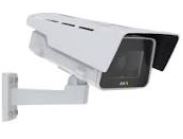 Ariana: The Ministry of Interior has said 15 security cameras were installed in the 15th district, in the square and other areas, and are all linked to a central control room. According to the Ministry of Interior, security cameras are being installed across Kabul city, and at all the squares and other key places.