
 8am: According to local sources, on Monday, March 25, the Taliban executed a raid in Qala-e Amir Mohammad Khan, located within the fifth security district of Ghazni city. The target of their incursion was purportedly a former member of the People’s Uprising Forces from Jaghori district. In the wake of this assault, which occurred two nights prior, one individual, identified as Mohammad Ali and hailing from Malistan district, tragically lost his life at the hands of the Taliban. Additionally, the insurgents seized two other individuals, one of whom is a relative of the deceased, for reasons yet to be disclosed. Among those apprehended is Ahmad Ali, reportedly a former member of the People’s Uprising Forces in Jaghori district during the previous administration. Ali had sought refuge in Pakistan following the collapse of the former government but had recently returned to Afghanistan. This development follows closely on the heels of another Taliban-perpetrated tragedy, where a former army officer of the previous government was slain in Logar province just two days prior. Click here to read more (external link).
Humanitarian Needs in Afghanistan Improve Slightly, Millions Still in Crisis
 Akmal Dawi
VOA News
March 25, 2024
The humanitarian situation in Afghanistan has shown preliminary signs of improvement, with the United Nations reporting a significant reduction in the number of people in need of assistance.
Afghanistan’s economic collapse in 2021, triggered by the government’s disintegration, the Taliban takeover, and the subsequent withdrawal of foreign aid, left the landlocked country in crisis.
For two years, aid agencies have warned of mass starvation and famine.
Last year, the U.N. reported that more than 29 million Afghans desperately needed assistance. Despite Afghanistan’s population growing to an estimated 44.5 million, the number of those in need of assistance has since declined to 23.7 million this year.
“In Afghanistan, a fragile progress has tenuously stabilized conditions, reducing immediate needs,” the U.N. Global Humanitarian Overview 2024 states.
The reported decrease in humanitarian needs has led to a significant reduction in the U.N.-led Afghanistan appeal, from $4.6 billion in 2023 to $3.07 billion this year.
Aid agencies, however, warn that the situation remains fragile.
“Although the numbers have improved, the situation is still terrible,” said Becky Roby, advocacy manager with the Norwegian Refugee Council.
The economic stabilization is at an “unacceptably low level and most households remain extremely vulnerable to shocks,” Roby told VOA.
Causes and credit
The U.N. and aid workers attribute the improvements to massive humanitarian operations over the past two years, which have provided food and protection to millions across Afghanistan.
Despite a staggering 53% funding gap in the 2023 humanitarian appeal, the increased contributions from donors like the United States, the Asian Development Bank and the European Union have played a crucial role in mitigating the crisis.
“On a micro level, we’ve seen instances where Afghans step in to help one another, for instance, after natural disasters,” said Ali Latifi, Asia editor at The New Humanitarian, a nonprofit humanitarian news agency.
General licenses from the U.S. Treasury, offering specific waivers for financial transactions to circumvent sanctions, have played a crucial role in enabling the flow of remittances to Afghanistan.
These funds provide a lifeline for many households with relatives abroad.
Meanwhile, de facto Taliban officials say their economic policies and efforts to tackle corruption have contributed to stabilizing inflation, market disruption and the private sector.
Aid agencies, however, emphasize that ongoing Taliban restrictions, particularly the ban on women’s work, continue to significantly impede and weaken humanitarian activities.
No time to cut aid
More than half of Afghanistan’s population, 23.7 million, are considered in need of humanitarian assistance, but aid agencies will not be able to assist all of them.
The U.N.-led humanitarian appeal for Afghanistan this year seeks $3 billion to assist 17.3 million people.
As of March 25, the appeal has only received 7% of the required funding.
“Without the right funding, implementers will not be able to deliver adequate humanitarian assistance, and ultimately this means that people’s basic needs will go unmet,” the NRC’s Roby said.
Foreign assistance has been crucial in the limited economic stabilization Afghanistan has achieved since 2022.
However, when confronted with concerns that the Taliban’s misogynistic policies could jeopardize this aid, Taliban chief spokesperson Zabihullah Mujahid retorted in an online forum last month, “We don’t need their assistance. Spare us from their [foreigners’] harms.”
Islamic State-Khorasan Criticizes Taliban in Statement Praising Russia Attackers
 By VOA Deewa Service
March 25, 2024
WASHINGTON — The Islamic State-Khorasan terrorist group released a statement in Pashto on Monday glorifying Friday’s attack on a concert in Moscow and scolding the ruling Afghan Taliban for seeking relations with the United States, Russia, China and other countries.
The 30-page statement was published on social media platforms and sent to journalists on Monday, but it did not take responsibility for the Moscow attack. Instead, it focused on criticizing and mocking the Taliban in Afghanistan, which has long been an enemy of the IS-K group.
Islamic State-Khorasan, sometimes also called IS-Khorasan, or ISKP, is the regional affiliate of the larger Islamic State militant group, which took credit for Friday’s attack that killed 137 people.
Monday’s statement was titled, “After Moscow’s Attack: The Sorrow and Fear of Militias.” The “militias” is apparently referring to the Afghan Taliban.
The text of the statement is a fierce polemic against the Afghan Taliban. It also labels the Taliban as allies of the United States, Russia, China, Pakistan and Tajikistan. The Taliban condemned the attack in the hours after it happened on Friday, calling it a terrorist attack and a violation of human standards.
IS-K’s statement accuses the Taliban of embracing the values of “infidel” countries.
“Talib militias are now part of the infidel nation. It is, therefore, natural that they will sympathize with them and will share sorrows with the infidels,” the statement says, while referring to the Afghan Taliban’s condemnation of the Moscow attack.
The 30 pages of the text are embedded with pictures of the alleged attackers of the concert, IS-K’s other attacks in Afghanistan, and photos of Taliban leaders and ministers standing with U.S., Chinese, Iranian and Pakistani officials.
The polemic against the Taliban also references Russian attacks on Islamic State targets in Syria, asking why the Taliban expressed sympathy for Moscow.
“Has Russia this right to destroy our Umma [Muslims] mosques, seminaries, homes and towns with blind bombardment?” the statement asks.
ISKP was formed in 2015 by the disgruntled Pakistani Taliban in a region close to Afghanistan. The United Nations has said that as of June 2023, IS-K fighters and family members numbered between 4,000 to 6,000.
Could Taliban Canal Spark Water War In Central Asia?
The Taliban-led government is pushing forward with the ambitious Qosh Tepa canal project despite concerns over its impact. The waterway taps the Amu Darya River, a key water source that runs through Afghanistan and Central Asia. While Afghan farmers await a potential agricultural boon, neighboring states Uzbekistan and Turkmenistan have expressed concern over possible damage to water security and farming in the area.
How ISIS-K leader forged one of Islamic State’s most fearsome groups
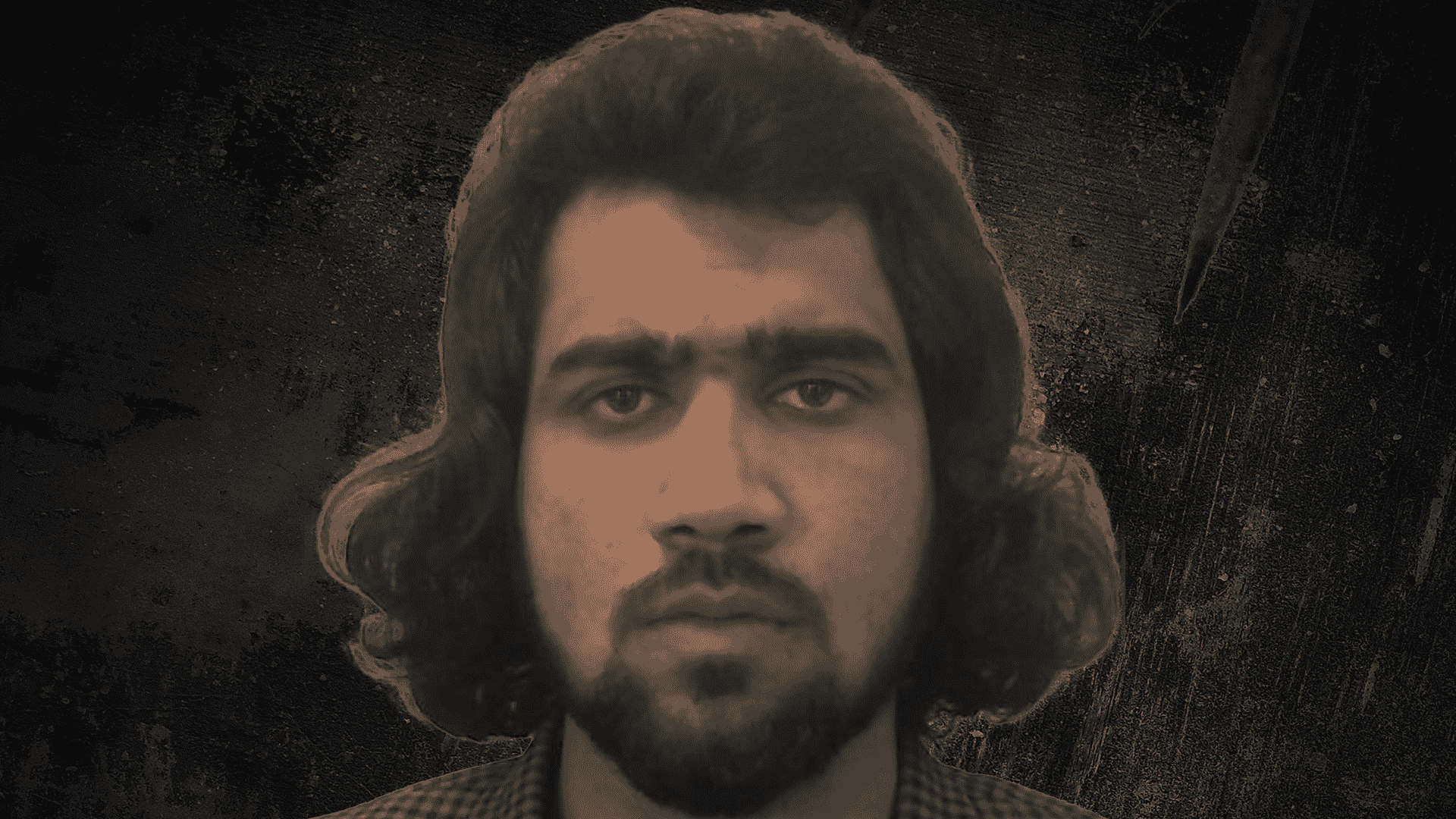
Reuters: Sanaullah Ghafari, the 29-year-old leader of the Afghan branch of Islamic State, has overseen its transformation into one of the most fearsome branches of the global Islamist network, capable of operations far from its bases in the borderlands of Afghanistan. Islamic State has claimed responsibility for Friday’s mass shooting at a concert hall near Moscow that killed at least 137 people. U.S. officials have said they have intelligence indicating it was the Afghan branch, Islamic State Khorasan (ISIS-K), that was responsible. Click here to read more (external link).
Related
The United States’ second retreat from Kabul

US soldiers (file photo)
The Hill: When the United States finally left Afghanistan amid the chaos that claimed the lives of 170 civilians and 13 U.S. service personnel on Aug. 30, 2021, at Hamid Karzai International Airport, it was not the most disastrous retreat from Kabul ever suffered. In January 1842, nearly 16,000 souls, mostly civilian men, women and children, escaped from Kabul under the command of British Major General William Elphinstone headed for Jalalabad 90 miles away. Only one survived — the surgeon William Brydon. Click here to read more (external link).
Taliban orders Hizb-e-Islami leader to vacate home and office

Gulbuddin Hekmatyar
Khaama: According to media reports, Taliban forces have reportedly surrounded the house of Gulbuddin Hekmatyar, the leader of Hizb-e-Islami, in Kabul. It has been said that the controversy revolves around the land of Hekmatyar’s house; according to the Taliban, it belongs to the Ministry of Defense of Afghanistan. Habib al-Rahman, Hekmatyar’s son, wrote in a post on his social media platform X that their house is not surrounded, but they are changing their residence in Kabul. According to him, the leader of Hizb-e-Islami lived in a house provided by the previous government after the peace agreement, while the Taliban have not accepted this agreement. Click here to read more (external link).
Tolo News in Dari – March 25, 2024
US forces were not fighting terrorism in Afghanistan: Lavrov

Lavrov
Ariana: Russian Foreign Minister Sergey Lavrov has claimed that American forces, during their 20 years presence in Afghanistan, were not fighting terrorism, adding they created organizations which later became al-Qaeda. “They created agencies and organisations there, which later became al-Qaeda. Then they began to use it to punish and provoke undesirable regimes in the Middle East and other regions,” he added. The remarks come two days after an attack on a concert hall near Moscow left 137 people dead and 182 others injured. Daesh claimed responsibility for the attack. Click here to read more (external link).
Related
Nearly 50,000 Tuberculosis cases recorded in Afghanistan last year: Ministry of Public Health
 Khaama: The Ministry of Public Health of Afghanistan says that nearly 50,000 positive cases of tuberculosis (TB) were recorded in the country last year. Sharafat Zaman, the Ministry of Public Health spokesperson, said on Monday, citing a video clip, that 49,533 positive TB cases were recorded in Afghanistan in 2023. Click here to read more (external link).