
 Tolo News: The Islamic Emirate has rejected the Brookings Institution’s report alleging that Iran has been allowed to continue recruiting Fatemiyoun forces in Afghanistan. Zabihullah Mujahid, the spokesperson for the Islamic Emirate, described the relations between the Islamic Emirate and Iran as positive and stated that no country is permitted to recruit forces or conduct military activities in Afghanistan. The Fatemiyoun Division is an Iran-supported militia group that has been active in Syria since mid-2013. Click here to read more (external link).
Crisis in Academia: How the Taliban Are Destroying Higher Education in Afghanistan
 8am: In recent months, the Taliban have tested thousands of unfamiliar mullahs in the alphabet of academia and awarded them academic credentials and titles. This demonstrates their ineffectiveness in acquiring madrasa titles and designations and the absurdity of placing someone with titles like mullah, mufti, or hadith scholar on the throne of an academic institution. Exactly like bestowing the title of military general on someone who has graduated from a madrasa and has never received military training. Click here to read more (external link).
Tolo News in Dari – March 30, 2024
Regional Governments Seen Struggling to Control IS-Khorasan

ISIS trainees
By VOA Afghan Service
March 29, 2024
WASHINGTON — Last week’s concert hall massacre in Russia demonstrates not only the capacity of Islamic State-Khorasan to stage complex attacks beyond its base in South-Central Asia, but also the inability of the Taliban and regional countries to counter its threats, experts say.
The Islamic State group claimed the attack on a music venue near Moscow Friday that killed 143 people and wounded more than 180. Although it was the Islamic State, not its offshoot IS-Khorasan, that took the responsibility, U.S. officials said that IS-Khorasan was behind the murderous rampage.
The Taliban’s foreign ministry spokesperson, Abdul Qahar Balkhi, condemned the attack “in the strongest terms,” describing it as “a blatant violation of all human standards.”
“The regional countries must take a coordinated, clear & resolute position against such incidents directed at regional destabilization,” Balkhi said Friday on X, previously known as Twitter.
The Islamic State, in a 30-page statement published on social media platforms and sent to journalists Monday, praised the attack and mocked the Taliban for seeking relations with the United States, Russia, China and other countries.
Homayoun Mohtaat, former Afghan deputy ambassador to Russia, told VOA that the attack made it clear that IS has the ability “to launch complex attacks that could inflict heavy casualties.”
Using an Arabic acronym for Islamic State, he said the “Daesh attack shows the group’s maneuverability and ability to move from one place to another.”
Mohtaat said that IS-Khorasan, also known as ISKP, has been able to expand its activities within the region and beyond.
“But we can see that Afghanistan, because of its geopolitical location, has become an operational platform for Daesh,” he said. “It allowed the group to expand its operation to the Central Asian states and beyond, in Russia.”
He said that the Taliban “neither has the will nor resources” to fight IS-Khorasan.
The Taliban, however, have claimed success against the IS affiliate in Afghanistan.
The Taliban’s defense minister, Mohammad Yaqoob Mujahid, claimed at a press conference in Kabul in December that because of their operations against IS-Khorasan, the number of the group’s attacks decreased by 90%.
But a U.N. report released in January said IS-Khorasan “continued to pose a major threat in Afghanistan and the region.”
In another report released in June 2023, the U.N. estimated that IS-Khorasan’s fighters and their families number between 4,000 and 6,000, including citizens of Afghanistan, Azerbaijan, Iran, Russia, Turkey, and Central Asian countries and a small number of Arabs who traveled from Syria to Afghanistan.
Kamran Bokhari, senior director of the Eurasian Security and Prosperity Portfolio at the New Lines Institute for Strategy and Policy, told VOA that IS-Khorasan is taking advantage of “weak security, weak governance and strategic vacuums” in the region.
“Afghanistan is the strategic vacuum,” Bokhari said. “Yes, the Taliban are there, but it’s not a robust state. The Taliban regime is still trying to consolidate power. Pakistan is in meltdown mode on all levels — political, social, economic and security wise. And Iran has its challenges internally.”
IS-Khorasan is a major rival to the Taliban and has claimed responsibility for several high-profile attacks in Afghanistan since the Taliban took power.
In January, the group said it was behind twin blasts in the Iranian city of Kerman that killed at least 95 people. Iranian Intelligence traced back the attacks to the Tajik fighters of IS-Khorasan.
Russia has said that its security forces arrested four Tajik nationals for allegedly carrying out the Moscow massacre.
Attacks will help recruitment
Bill Roggio, a senior fellow at the Foundation for Defense of Democracies, told VOA that the attacks in Russia and Iran would “certainly” help IS-Khorasan to recruit more militants.
“Those spectacular attacks have a great effect on recruiting. … So, they might be able to poach some fighters from [other extremist] groups, the disaffected or those who want to see the result now,” Roggio said.
The United Nations says that there are around 20 militant groups active in Afghanistan.
Most of these, including al-Qaida and Tehrik-e-Taliban Pakistan, or TTP, have close ties to the Taliban. But even before seizing power in Afghanistan in August 2021, the Taliban considered IS-Khorasan as an adversary and conducted military operations against the group.
Riccardo Valle, Islamabad-based analyst and director of research for The Khorasan Diary, told VOA that the Taliban have been “successful” in their fight against IS-Khorasan.
The Taliban “were able to decapitate the Islamic State leadership in several instances. They have been able to infiltrate Islamic State in Afghanistan and thus it has been able to prevent several attacks,” said Valle.
But he said the group has been able to move across Turkey, Central Asia and Afghanistan. “This is coupled with the fact that [the relationship] between Afghanistan and Pakistan is extremely tense,” which makes it easy for the militants to move across that border.
Pakistan accuses the Taliban of harboring and supporting TTP fighters involved in attacks in Pakistan, a charge the Taliban deny.
Valle said that the Taliban alone would not be capable of “tackling the issue” of containing IS-Khorisan.
“The real threat posed by the ISKP in Afghanistan and the whole region is fueling instability within the region, fueling mutual distrust between the countries and posing a major threat to the civilians,” Valle said.
Ali Jalali, a former Afghan interior minister, told VOA he believes the threats will continue until the Taliban cut ties with all foreign extremist groups in Afghanistan.
“During their war against the republic, they allied with many extremist groups. These groups supported them. Now they are in [Afghanistan], and they cannot cut their ties with them,” he said.
Jalali said that the Taliban takeover of Afghanistan has not brought stability and the formation of a ‘lawful’ government. “And unless there is [political] stability, this will continue.”
This story originated in VOA’s Afghan Service.
Related
Taliban’s Afghanistan: A Country of Only Men
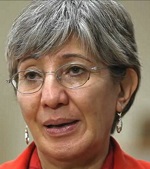
Sima Samar
Sima Samar via Ms. Magazine: The Taliban that now rules Afghanistan is the same extremist entity that revoked the basic human rights of Afghanistan’s women and girls and minorities when they were last in power in the 1990s. And now, they have done it again. I didn’t think that I would see history repeat itself in my country twice within my lifetime, but it has. In Aug. 15, 2021, the Taliban’s takeover of Afghanistan erased in a few weeks the progress made over two decades, particularly in women’s rights and democratic institutions. Click here to read more (external link).
Over 1 million women in Afghanistan malnourished last year: WFP
 Ariana: A total of 1.2 million women in Afghanistan were malnourished last year, the U.N. World Food Programme (WFP) said on Thursday. Mona Shaikh, head of nutrition at WFP Afghanistan, said that the number of malnourished women is expected to increase this year. On malnourished children, she said that their number will reach 3 million this year, but WFP will be able to assist only 1.6 million of them. Click here to read more (external link).
Tolo News in Dari – March 29, 2024
Tajikistan Detains Several People In Connection With Deadly Moscow Attack
 By RFE/RL’s Tajik Service
March 29, 2024
DUSHANBE — Tajik authorities detained nine people this week in connection with the March 22 deadly attack on a concert hall near Moscow, local media reported on March 29, citing a security source.
All nine were reportedly detained by the state security service in the Vahdat district in Dushanbe outskirts on March 25, and brought to the capital. They are allegedly also suspected of having connections with the Islamic State group, which has claimed responsibility for the terrorist attack.
A separate source in Dushanbe told RFE/RL on March 29 there were several youths among the detainees.
On March 26, a source at Tajik law enforcement agencies told RFE/RL that six people were arrested in Vahdat on suspicion of plotting a terrorist attack but didn’t provide further details.
Russia’s Investigative Committee said on March 28 that it had another suspect in relation with the attack on the Crocus City Hall venue in the Moscow suburb of Krasnogorsk which killed more than 140 people. The committee didn’t not provide details of the suspect’s identity or alleged actions, but said he was detained in suspicion of being involved in financing the attack.
Russian authorities have previously said that 11 suspects had been arrested, including four men who allegedly carried out the attack. Those four — identified as Tajik citizens Muhammadsobir Faizov, Saidakram Rajabalizoda, Dalerjon Mirzoev, and Faridun Shamsiddin appeared in a Moscow court on March 24 on terrorism charges.
Tajik security sources were quoted by Reuters as saying that Russian investigators were in Tajikistan on March 26, questioning family members of the suspects.
The Islamic State-Khorasan, a faction of the Islamic State group has claimed responsibility for the massacre, but Russian officials have persistently claimed — without presenting evidence — that Ukraine and the West had a role in the attack.
Kyiv denies involvement and Ukrainian officials claim that Moscow is pushing the allegation as a pretext to intensify its fighting in Ukraine.
White House National Security Council spokesman John Kirby said Russia’s charge of Ukrainian involvement in the attack was “nonsense and propaganda” and reiterated that the United States had passed detailed information to Russian security services about an extremist attack in Moscow in advance of the March 22 assault.
“It is abundantly clear that [Islamic State] was solely responsible for the horrific attack in Moscow last week,” Kirby said on March 28. “In fact, the United States tried to help prevent this terrorist attack and the Kremlin knows this.”
With reporting by Reuters and AP
Copyright (c) 2024. RFE/RL, Inc. Reprinted with the permission of Radio Free Europe/Radio Liberty, 1201 Connecticut Ave NW, Ste 400, Washington DC 20036.
Amnesty International Calls On Pakistan To Stop Expelling Afghan Girls And Women
 By RFE/RL’s Radio Azadi
March 28, 2024
Amnesty International has urged Pakistan to halt expelling hundreds of thousands of Afghan girls and women to neighboring Afghanistan.
“The deportation of Afghan refugees from Pakistan will put women and girls at unique risk,” Amnesty’s South Asia Office wrote on X, formerly Twitter, on March 27.
The global rights watchdog’s plea comes ahead of the beginning of a new phase of the expulsion of Afghan refugees from neighboring Pakistan. Islamabad plans to force some 850,000 documented Afghan refugees back to their country next month if they don’t leave voluntarily.
Since October, Pakistan has already expelled more than 500,000 Afghans who lacked proper documents to stay in the country.
“Forced returns seriously curtail their rights to education, work, movement, and in some cases, expose them to imminent threat of violence,” Amnesty said.
“The Government of Pakistan must halt all deportations and take affirmative measures to ensure the safety of refugee women and girls,” it added.
After returning to power in August 2021, the Taliban’s ultraconservative Islamist government in Afghanistan has banned teenage girls and women from education. It also prohibited women from employment in most sectors.
Afghan women must also wear a niqab — a strict head-to-toe veil — in public. Taliban restrictions have severely curtailed women’s mobility by requiring them to be accompanied by a male chaperone outside their homes. Women are also banned from leisure activities, including visits to parks.
“Women and girls will experience serious repression of their rights to education, work, freedom of movement and more if deported,” Amnesty said.
The new warning comes two days after Amnesty called in a new report on Islamabad to reverse forced expulsions of all Afghans.
The report, Pakistan: Human Rights Charter, issued on March 25, asked Islamabad to protect all at-risk “refugees in compliance with Pakistan obligations under the principle of non-refoulement.”
Non-refoulement is a fundamental principle of international law that prohibits a state from returning asylum seekers to a country where they would face persecution based on their race, religion, nationality, membership of a particular social group, or political opinion.
Pakistan lacks a domestic law that offers a path to refugee status. It is not a signatory to the 1951 UN Convention Relating to the Status of Refugees or the 1967 protocol intended to remove constraints on who can be considered a refugee.
Copyright (c) 2024. RFE/RL, Inc. Reprinted with the permission of Radio Free Europe/Radio Liberty, 1201 Connecticut Ave NW, Ste 400, Washington DC 20036.
US Unfazed as India Engages Taliban
 By Akmal Dawi
VOA News
March 28, 2024
Just two weeks after senior Indian diplomat J.P. Singh visited Kabul to meet with Taliban officials, a senior U.S. official landed in New Delhi to discuss Afghanistan.
Thomas West, the U.S. special representative for Afghanistan, urged Indian Foreign Secretary Vinay Kwatra to develop “a unified diplomatic approach in support of collective interests” in Afghanistan.
Unlike India, the United States has severed diplomatic ties with Kabul since the United States’ withdrawal from war-torn Afghanistan in 2021.
Washington maintains a policy of sanctions and isolation toward Taliban leaders.
Some analysts criticize that approach as ineffective, but U.S. officials maintain there will be no change until the Taliban reverse their bans on women’s education and work and form a more inclusive government.
“The United States is going to continue to pursue policies in Afghanistan that protect our national interests and support the Afghan people,” a State Department spokesperson wrote to VOA.
India takes a different approach.
It views the Taliban as having brought a measure of stability to Afghanistan after 20 years of civil war, according to Rustam Shah Mohmand, a former Pakistani ambassador to Kabul.
“India eyes Afghanistan’s mineral wealth, and it wants transit access for trade and energy to Central Asia,” Mohmand told VOA.
In the meeting with Amir Khan Muttaqi, the Taliban’s acting foreign minister, Singh and other Indian delegates also talked about “enhancing trade via Chabahar port,” according to a statement by the Taliban foreign ministry. Chabahar is a seaport in southeastern Iran. India has hoped to use the port to establish a trade route.
The U.S. has no such interest.
However, the State Department spokesperson expressed respect for India’s need to pursue its national interests by engaging with the Taliban.
Counterterrorism
Terrorism threats emanating from Afghanistan have long been a primary concern for the U.S. and India.
U.S. officials frequently warn the Taliban against harboring al-Qaida and other militant groups that could endanger U.S. interests.
Similarly, New Delhi fears groups such as Lashkar-e-Taiba and their alleged acts of terrorism against India.
The Taliban maintain that they do not, and will not, allow any group to use Afghan territory to threaten other countries.
“While both Washington and New Delhi claim to share an interest in countering radicalization, neither of them has crafted policies toward countering this phenomenon,” said Raghav Sharma, a professor of international affairs at India’s O.P Jindal Global University.
Despite its geographical distance, the U.S. relies on “over the horizon” capabilities such as drones and satellite imagery to counter terrorism threats in Afghanistan, according to U.S. officials.
Lacking comparable resources, India chooses to directly engage with the Taliban to mitigate potential security risks emanating from Afghanistan.
Regional interests
Over the past two years, the U.S. has largely focused its public diplomacy on Afghan women’s rights, criticizing the Taliban for their misogynistic policies.
Countries surrounding Afghanistan, however, have taken a more pragmatic approach, maintaining diplomatic and trade relations despite concerns about human rights.
While no country has officially recognized the Taliban government, the Islamic Emirate of Afghanistan (the Taliban’s official name) has diplomatic missions in 38 countries.
That includes close U.S. allies such as Italy, Japan, Norway and Turkey, which have kept diplomats in Kabul.
U.S. officials say there is a broad international consensus against recognizing the Taliban government.
The Taliban accuse the U.S. of using its leverage to deny them Afghan representation at the United Nations and other international platforms.
“India is likely to grant de facto recognition to them [the Taliban] by accrediting their diplomats” after India holds general elections in April, Sharma told VOA. This would put the country “broadly in line with actions of most major actors in the region.”
Amid growing tensions between Pakistan and the Afghan Taliban, India sees an opportunity to be on good terms with Kabul. India and Pakistan have a long history of strained relations, dating back to the partition of Indian subcontinent in 1947.