
Education is an internal issue, countries should not interfere: Haqqani

Sirajuddin Haqqani
Ariana: Acting Minister of Interior Affairs Sirajuddin Haqqani says Afghanistan is an independent country and the world should understand this and stop interfering in its internal affairs. In a meeting with a number of representatives of the Union of Afghans based in European countries, Haqqani emphasized that the issue of education is a part of the country’s internal issues and that the Islamic Emirate will not work on the orders of other countries. Click here to read more (external link).
AFF Claims To Have Killed 3 Members of Taliban’s Intelligence Agency in Kabul

Afghanistan International: The Afghanistan Freedom Front (AFF) has claimed responsibility for an attack that resulted in the deaths of three members of Taliban’s intelligence agency and injuries to two others. The incident occurred during an assault on a Taliban convoy in Kabul’s District 2 on Friday evening. The AFF targeted the convoy as it moved towards a Taliban military factory. Click here to read more (external link).
A sticky bomb explodes in Kabul, killing 1 and wounding 3 in a mostly Shiite Hazara neighbourhood
 AP: A sticky bomb exploded in a mostly Shiite neighborhood of the Afghan capital Kabul on Saturday, killing one person and wounding three others, a police official said. There was no immediate claim of responsibility, but suspicion is likely to fall on the Islamic State group. Its affiliate in the region has in the past carried out attacks targeting Shiites, whom IS considers to be apostates. Click here to read more (external link).
Taliban’s Stern Order to Jaghori District Residents: Repair the Roads
 8am: This directive follows a trend where the Taliban have been collecting significant sums of money under the guise of alms, zakat, and charity from Afghanistan’s impoverished population for the past two and a half years, without providing basic services. There have been numerous reports of forced participation by residents in public projects in this district previously. Click here to read more (external link).
Tolo News in Dari – April 20, 2024
Afghanistan Championship League kicks off with spectacular opening ceremony
 Khaama: The third season of the Afghanistan Football Champions League kicked off today, Sunday, April 20th, in Kabul, with the participation of twelve teams from various provinces. The league officially commenced today, Sunday, April 20th, with the presence of officials from the Afghanistan Football Federation and the organization of two matches. Click here to read more (external link).
Taliban Distort Islam to Restrict Civic Space in Afghanistan – Study
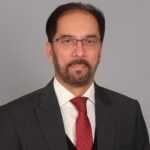
Ramizpoor
Michael Hughes: The Taliban’s archaic interpretation of Sharia has been a useful tool in crushing civil society despite the fact such discourse is in line with Islamic principles, a new research report from the Raoul Wallenberg Institute argued, as the radicals in Kabul look to eradicate opposing voices from the country.
The study by researcher M. Abul Ahrar Ramizpoor comes as the Taliban escalate crack downs on members of civil society in recent months, particularly targeting journalists. As part of the process the Taliban have often used religion to justify their actions. Ramizpoor explores the mindset behind this attitude and action toward civic space. Click here to read more.
High-profile Afghan Taliban religious scholar assassinated in Pakistan
 Ayaz Gul
VOA News
April 19, 2024
ISLAMABAD — Afghanistan’s Taliban government confirmed Friday that one of its leading religious scholars was assassinated by unknown assailants in neighboring Pakistan.
The deceased, identified as Mohammad Omar Jan Akhundzada, was leading evening prayers at a mosque in the southwestern Pakistani city of Quetta on Thursday when gunmen stormed the building and fatally shot him before fleeing, according to local police.
There were no immediate claims of responsibility for the deadly shooting.
Taliban spokesman Zabihullah Mujahid said Friday on social media platform X that Akhundzada was part of a government oversight committee of top Islamic scholars and taught at the central “jihadi” madrasa, or Isla mic seminary, in the southern Afghan city of Kandahar. Mujahid also tweeted a picture of the deceased man.
“We are saddened to learn that the country’s leading religious scholar … has been martyred,” Mujahid wrote. “We condemn the killings of religious scholars as a heinous crime by enemies of Islam,” he said without providing further details.
Multiple Afghan sources reported that the slain scholar was a senior adviser to the reclusive Taliban supreme leader, Hibatullah Akhundzada, who is based in Kandahar and governs Afghanistan from there through religious decrees stemming from his strict interpretation of Islam.
A senior Taliban official explained that the oversight committee comprises leading religious scholars and is responsible for reviewing all regulations before they are implemented to ensure that they conform to Islamic principles.
Quetta is the capital of Pakistan’s border province of Baluchistan. The city and surrounding areas host hundreds of thousands of Afghan refugees and have previously also witnessed deadly attacks on Taliban-affiliated personalities in the community.
Taliban chief Akhundzada himself was based in the Pakistani province and directed insurgent attacks from there against the United States-led foreign forces in Afghanistan until their withdrawal in August 2021, which paved the way for his fundamentalist group to reclaim control of the country.
Since then, several central Taliban religious figures and associates also have been assassinated inside Afghanistan, including the capital, Kabul.
Islamic State-Khorasan, a regional Islamic State affiliate and bitter rival of the Taliban, has claimed responsibility for many of the attacks.
Tolo News in Dari – April 19, 2024