Khaama: In a recent statement, Naseem Saddat, spokesman for the Afghanistan Cricket Board (ACB), announced that the ACB and India’s BCCI have agreed to host Afghanistan’s T20 and One-day series against Bangladesh at Shaheed Vijay Singh Pathik Stadium in Greater Noida and Green Park Stadium in Kanpur, Uttar Pradesh. Given the strong historical ties, India has played a pivotal role in the meteoric rise of the Afghanistan cricket team. The BCCI provided a ground for the Afghanistan cricket team in Noida in 2015, which became its home ground. The Afghanistan team also hosted a T20 series against Bangladesh in Dehradun, India. Click here to read more (external link).
Discovery of Woman and Granddaughter’s Bodies in Ghor: Suspect Linked to Taliban District Governor

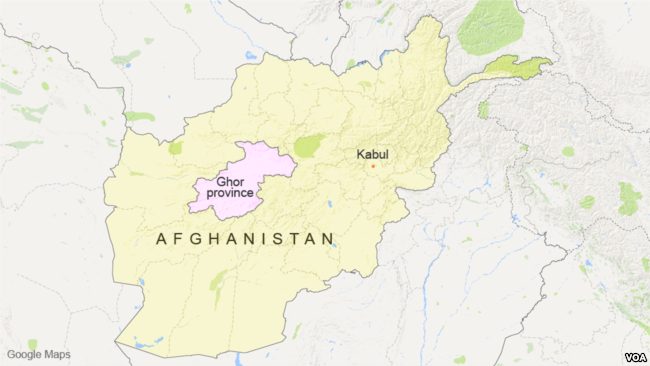
8am: Local sources in Allahyar District, Ghor Province, accused individuals linked to “Mawlawi Jaber,” the Taliban district governor, of the murder after the bodies of the 45-year-old woman and her granddaughter were discovered. They alleged that the local Taliban official moved the family of one of his associates, who lived near the woman’s house, to another village after the murder. Click here to read more (external link).
Other Taliban in Ghor News
The myth of moderation and media freedom in Afghanistan
ORF: In the past two and a half years, rapid clampdown on independent institutions like media and free speech has debunked the sham of a ‘reformed Taliban’. Estimates suggest over 450 documented cases of media violations by the Islamic Emirate since its takeover. This includes the murders of three journalists, 219 detentions, and a staggering 235 incidents of threats and physical violence. As a result, about 53 percent of journalists have lost their jobs. Self-censorship has skyrocketed as fear and repression take hold. Safety and working conditions for journalists, particularly women, have become perilous. The Taliban’s iron fist controls the dissemination of information, meticulously crafting a narrative that silences dissent and paints a rosy picture of their rule. Click here to read more (external link).
Iran Air starts flights to Kabul
Ariana: The Ministry of Transport and Civil Aviation said Wednesday that Iran Air International Airlines has launched direct flights to Kabul for the first time. The ministry said in a statement that Iran Air will have flights to Kabul once a week. Click here to read more (external link).
Tolo News in Dari – June 12, 2024
Rankings joy for Afghanistan as Nabi crowned new No.1 all-rounder

Mohammad Nabi
Ariana: Afghanistan’s unbeaten start to the ICC Men’s T20 World Cup has seen one of their star performers rise to the top of the ICC Men’s T20I All-Rounder Rankings. The team has won both of their contests in the 20-over showcase thus far and a host of their players have been in scintillating touch with bat and ball. Veteran Mohammad Nabi is the big winner in the latest rankings update, with the 39-year-old rising to the No.1 spot on the list for all-rounders following his recent two-wicket haul against New Zealand in Guyana. Click here to read more (external link).
Unstable Healthcare System and Escalating Crisis: The Taliban Are an Obstacle to Health Services
8am: The World Health Organization (WHO) has published a report stating that restrictions imposed by the Taliban have hindered thousands of women from accessing healthcare, education, and employment. According to the report, 24 mothers and 167 infants die daily from preventable diseases. The report indicates that 17.9 million people require health assistance, while 9.5 million have limited or no access to healthcare facilities. Afghanistan is one of the two countries in the world where polio is still present. The healthcare system in Afghanistan has faced a severe crisis under Taliban rule. Citizens’ access to healthcare services has drastically decreased, and the majority of people, due to increasing poverty and persistent unemployment, cannot visit healthcare centers, enduring physical ailments along with mental distress. Click here to read more (external link).
Other Health News
Taliban Clamps Down On Activities Of Rival Islamist Parties In Afghanistan
By Abubakar Siddique
June 11, 2024
Radio Free Europe/Radio Liberty
The Taliban government has cracked down on rival Islamist parties in Afghanistan in what is seen as an effort to prevent any future opposition to its hard-line rule.
Since banning all political parties last year, the Taliban has targeted two of its major former rivals. It shut down two Kabul-based TV stations owned by the Hezb-e Islami and Jamiat-e Islami parties, respectively.
Now, the extremist group has cracked down on Harakat-e Islami Afghanistan, closing a TV station as well as a university and seminary accused of having links with the Shi’ite political party.
The Taliban’s clampdown on political parties is part of a wider assault on dissent. After seizing power in 2021, the militants have jailed dozens of journalists, activists, and academics.
‘Relentless Crackdown’
The Taliban’s Justice Ministry on June 8 ordered the closure of Tamadon TV due to its alleged affiliation with Harakat-e Islami Afghanistan. The ministry also alleged that the station was operating on “seized land.”
Tamadon TV, which covered news and current affairs as well as Shi’ite religious programming, has denied the claims.
The station was founded in 2006 by Ayatollah Asif Mohseni, a prominent Shi’ite cleric and leader of Harakat-e Islami Afghanistan who died in 2019.
Mohammad Jawad Mohseni, the director of Tamadon TV, rejected the Taliban’s claims about the broadcaster’s political affiliations. He said Mohseni had resigned as the leader of Harakat-e Islami in 2005, a year before establishing the station.
Global and Afghan media watchdogs have condemned the closure of Tamadon TV.
“The Taliban is expanding its relentless crackdown on Afghan media and suppressing any independent voices,” said a statement by the New York-based Committee to Protect Journalists, which called on the group to “immediately and unconditionally reverse its decision.”
In April, the Taliban shut down Noor TV and Barya TV for “violating Afghan and Islamic values and journalistic principles.”
Jamiat-e Islami owned Noor TV, while Hezb-e Islami ran Barya. The stations ran Islamic programs.
Harakat-e Islami Afghanistan, Jamiat-e Islami, and Hezb-e Islami were all factions of the mujahedin, the Islamist groups that battled the Taliban for control of Afghanistan in the 1990s. Prominent mujahedin figures received prominent roles in the new political order that emerged after the U.S.-led invasion in 2001 toppled the Taliban’s first regime.
‘Narrow-Minded Policies’
On the same day that it ordered the closure of Tamadon TV, the Taliban also announced that it was shutting down Khatam-al Nabyeen University and its madrasah, or Islamic seminary. The same allegations were made against the educational institutions.
“Political parties are abolished in the country,” Barakat Rasuli, a spokesman for the Taliban’s Justice Ministry, wrote on X. “Their media outlets do not have the right to operate.”
“The buildings [of all three] are built on usurped land,” Rasuli added. “This why we have stopped their activities and shut down their offices.”
The TV station, university, and seminary are all part of a sprawling complex in west Kabul, where members of the Shi’ite minority reside. Like Tamadon TV, the university and madrasah were established by Mohseni in 2006.
Mohseni was believed to have ties with neighboring Iran, where he lived for years during the Soviet occupation of Afghanistan in the 1980s. Tehran allegedly helped fund the Khatam-al Nabyeen University and seminary as part of its efforts to build influence in the country.
Afghanistan’s Shi’ite community have been increasingly marginalized under the rule of the Taliban, a Sunni militant group.
The Taliban has prevented members of the Shi’ite community, which makes up around 15 percent of the population, from publicly marking important religious festivals and restricted the teaching of Shi’ite jurisprudence in universities in Afghanistan.
Sami Yousafzai, a veteran Afghan journalist and commentator, said the militant group’s closure of Tamadon TV as well as Khatam-al Nabyeen University and seminary “shows the Taliban’s religious bias and its narrow-minded policies.”
“They are against anyone who doesn’t follow their ideology, [including] followers of Islamist groups such as Hezb-e Islami, Jamiat-e Islami, or Harakat-e Islami Afghanistan,” Yousafzai added.
Copyright (c) 2024. RFE/RL, Inc. Reprinted with the permission of Radio Free Europe/Radio Liberty, 1201 Connecticut Ave NW, Ste 400, Washington DC 20036.
UN ‘hopeful’ about Taliban’s presence at ‘Doha III’ meeting on Afghanistan
Ayaz Gul
VOA News
June 11, 2024
ISLAMABAD — A United Nations diplomat has encouraged the Taliban to attend a conference on Afghanistan later this month, stating that it would help return much-needed global attention to the crisis-ridden country.
Malick Ceesay, the head of the Pakistan-based liaison office for the U.N. Assistance Mission in Afghanistan (UNAMA), told an unofficial dialogue between religious scholars from the two countries that the Ukraine war and Gaza hostilities had dramatically shifted the international attention from Afghanistan.
“And that’s a concern for the United Nations. We don’t want Afghanistan to be forgotten,” Ceesay said at the Tuesday meeting, hosted by the independent Center for Research and Security Studies in the Pakistani capital.
“We are hopeful that this time around, the Islamic Emirate will send its representatives (to Doha) to be able to engage with the international community in a constructive and effective manner,” the U.N. diplomat said, using the official title of the Taliban government in Kabul.
The two-day U.N. conference of special envoys on Afghanistan will commence in Doha, Qatar, on June 30. According to a U.N. spokesperson, it aims to increase international engagement with the Taliban and Afghanistan at large “in a more coherent, coordinated and structured manner.”
The meeting will be the third in the tiny Gulf nation’s capital since U.N. Secretary-General Antonio Guterres launched the process in May 2023. He did not invite the Taliban to the first session, and Afghanistan’s de facto rulers declined an invitation to attend the second this past February.
The Taliban have publicly stated their intention to send a delegation to the “Doha III” conference, saying they have shared their conditions with the U.N. and will make a formal announcement after reviewing its “final agenda.”
While they have not revealed their conditions, the Taliban had asked the U.N. in the run-up to the second Doha meeting that their delegates would be accepted as the sole official representatives of the country, meaning that Afghan civil society representatives, women’s rights activists, and members of opposition groups would not be present.
They also sought a meeting between their delegation and the U.N. at “a very senior level.” Guterres rejected the conditions as unacceptable. The international community has not recognized the Taliban government as Afghanistan’s legitimate rulers, and the country remains under U.N. sanctions.
Ceesay said Tuesday that the Taliban’s restrictions on women’s access to education and employment and a lack of inclusivity in the Taliban government continue to raise questions about the Afghan authorities’ legitimacy.
“These are all tied together. The Islamic Emirate leadership knows that this is the reason why the recognition is not coming,” he said.
The Muslim U.N. diplomat criticized the Taliban’s assertion that their treatment of women aligns with Islamic law.
“Islam never says that women should not go to school, and Islam never says that women should not go to work. Which (version of) Islam and which Quran says that? It’s not found in there,” he added.
Ceesay said that UNAMA is engaging with all Afghans to help them achieve a broad-based governance system that includes everybody.
“Islamic Emirate is doing a fairly notable job on that, but we want it to increase more so that every Afghan citizen will feel that they belong to the country and the government belongs to them, not just one-sided, 90% one ethnicity. That’s not fair,” he stated.
The conservative Taliban are ethnically Pashtun, the majority community in Afghanistan.
Ceesay said the Taliban have allowed Afghan females to work in some public offices related to passport, immigration, healthcare, and agriculture. But those concessions have been “overshadowed” due to bans on the remaining women’s access to employment and girls’ education beyond grade six, he added.
The reclusive Taliban supreme leader, Hibatullah Akhundzada, who governs the country through edicts based on his harsh interpretation of Islam, has dismissed international criticism and calls for reforming his policies.
In the run-up to the third Doha conference, pro-Taliban social media activists have posted audio of a recent speech by Akhundzada in which he vowed not to budge on his stance under foreign pressure, come what may.
“Who are you to meddle in our land, system, and policies? I am not here to take your orders nor will I take a single step with you or deal with you regarding the Sharia (Islamic law),” Akhudzada said.
Over 80 Afghans arrested for ‘illegally’ crossing into Pakistan
Ariana: Pakistan security forces arrested 85 Afghan nationals in the border district of Chagai district for allegedly crossing into Pakistan illegally, officials said on Monday. The Afghan nationals were found on the Pakistani side near the border without legal travel documents, Dawn News reported. Reports indicated the Afghan nationals entered Pakistan illegally in order to cross into Iran. They had reportedly planned to then journey on from Iran. Click here to read more (external link).
Related