
The Taliban warn journalists, experts against cooperating with Afghanistan International TV
 AP: The Taliban Thursday warned journalists and experts against working with Afghanistan International TV. It’s the first time they have told people not to cooperate with a specific outlet. Afghanistan International TV, which is headquartered in London, is accessible through satellite, cable and social media. Click here to read more (external link).
ISIS Claims Responsibility For Attack On Taliban Fighters in Badakhshan

Afghanistan International: ISIS has claimed responsibility for the attack on Taliban police personnel in Faizabad city, the capital of Badakhshan province. In their statement, ISIS said that “12 Taliban militants” were killed and wounded in the assault. The Taliban confirmed the deaths of three of their security personnel. Click here to read more (external link).
Abu Muslim and Adalat Farah draw 0-0 while Maiwand beat Jawanan Wahedi 2-0 in ACL
 Ariana: The 37th match of Afghanistan Champions League (ACL) between Abu Muslim Farah and Adalat Farah FC on Wednesday ended in a draw. In the second match of the day, the 38th game, Maiwand FC defeated Jawanan Wahedi FC 2-0. Thursday’s ACL matches will see Mawj Sahil take on Khadim at 1 PM and Attack Energy face Istiqlal Kabul at 3:30 PM. Click here to read more (external link).
Taliban and the Flames of Ethnic Conflicts

Taliban militants (file photo)
8am: The Taliban, predominantly Pashtun in composition, represent a nexus of ethnic and religious identity. Besides suppressing followers of other religions, they have also deeply divided people along ethnic lines, often ridiculing non-Pashtun ethnicities. Attacks on women by Taliban fighters and commanders predominantly target non-Pashtun women, as reported by media outlets. Hence, the Taliban exploit assaults on women as a tool for intimidating and demeaning non-Pashtuns, essentially punishing them through these heinous acts. Therefore, it seems that sending delegations to resolve these conflicts might not yield lasting results. The Taliban do not refrain from their ethnic and religious policies, and the continuation of these policies will likely fuel further conflicts in the future. Click here to read more (external link).
4 Taliban Fighters Killed In Kabul, Claims AFF

Afghanistan International: The Afghanistan Freedom Front (AFF) announced on Tuesday that four Taliban fighters had been killed after its forces attacked a Taliban base in Kabul. The Front posted on the X social media network that the attack took place near one of the group’s bases in the Sarai Shamali area of the city. Click here to read more (external link).
Bomb blast hits Taliban convoy in turbulent Afghan province, kills 3
 Ayaz Gul
VOA News
May 8, 2024
ISLAMABAD — A bomb explosion in Afghanistan’s volatile northeastern Badakhshan province Wednesday killed at least three Taliban security personnel and wounded six others.
Multiple sources, including residents and area hospital officials, confirmed the casualties. They said that a “sticky improvised explosive device” apparently planted on a motorbike struck a Taliban military convoy in the provincial capital, Faizabad.
The Taliban’s Interior Ministry spokesman confirmed the casualties, saying the bomb targeted a unit of security forces that were heading to illegal poppy fields to destroy them. Abdul Mateen Qani said the attack was under investigation.
No group claimed responsibility for the bombing in Badakhshan, which has been in the grip of unprecedented violent public protests against Taliban authorities’ poppy eradication campaign. The unrest erupted last Friday and left two protesters dead in clashes with Taliban security forces.
Wednesday’s deadly blast came a day after the Taliban’s army chief, Fasihuddin Fitrat, said in a video message that he had addressed complaints of protesting farmers and resolved the unrest. He insisted on receiving public support for poppy eradication.
Fitrat arrived in Faizabad from Kabul two days ago as the head of a high-powered delegation to negotiate with the demonstrators’ leaders.
Ahead of his visit to the province, the Taliban army chief had threatened to militarily “quell the rebellion” if the demonstrations persisted. He reiterated his government’s resolve to eradicate poppy cultivation in Afghanistan and vowed to achieve this goal, come what may.
Since regaining control of the country, the Taliban’s reclusive supreme leader, Hibatullah Akundzada, has imposed a nationwide ban on poppy cultivation, production, usage, transportation, and trade of illicit drugs.
However, deteriorating economic conditions and the absence of alternatives for poppy-growing farmers have been causing unrest in parts of Afghanistan against the ban, which went into effect in April 2022.
The United Nations estimates the ban on poppy cultivation rendered some 450,000 people jobless in poverty-stricken Afghanistan and precipitated a $1.3 billion loss in farmers’ incomes.
Badakhshan and surrounding Afghan provinces are ethnically non-Pashtun regions. The Taliban, who represent the country’s majority Pashtun population, were unable to take control of the northern provinces during their first stint in power in the 1990s.
Critics argue that the rare public uprising in Badakhshan highlights the potential obstacles that the Taliban may face in maintaining their authority in Afghanistan, reeling from decades of war and the effects of natural disasters, such as earthquakes, floods, and droughts.
Related
Taliban Admission: Corruption Surges by 80 to 90 Percent in The Second Emirate
 8am: The source adds, “The increase in corruption among the officials of the [Taliban] emirate has become a tradition, and every individual, even if they hold a minimal position or authority, has enriched themselves through their means. From ministers to local officials at the provincial and district levels, where in my view corruption is more prevalent and increasing. When we saw the first emirate and now see the current one, corruption has increased by 80 to 90 percent.” The source emphasizes, “We all recognize the rampant lawlessness. Each appointee brings their people, with no oversight on administrative actions. In a brief period, they amass multiple properties.” Referring to a Taliban official, the source states, “Taliban officials are involved in commercial ventures, purchasing land and homes, constructing oil tanks, and conducting trade. Additionally, we observe instances of drug trafficking and polygamy, even among government officials. However, corruption has peaked in the current regime, posing a threat to its foundation.” Click here to read more (external link).
‘One-Party Rule’: Taliban Wages Crackdown On Political Parties
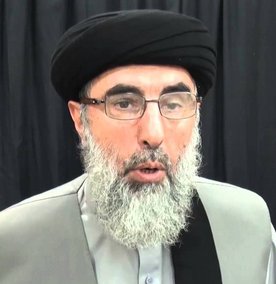
Gulbuddin Hekmatyar
Abubakar Siddique
RFE/RL’s Radio Azadi
May 8, 2024
The Taliban is widening its crackdown on dissent by targeting political parties in Afghanistan.
The extremist group banned all political parties last year. But in recent months, the Taliban has clamped down on parties still deemed to be active.
Among the high-profile targets is the Hezb-e Islami party led by Gulbuddin Hekmatyar, one of Afghanistan’s most notorious ex-warlords and a former militant leader.
The move comes as the Taliban intensifies its efforts to stifle opposing voices in Afghanistan, where scores of journalists and activists have been jailed since the militants’ takeover in 2021.
‘Bad Policies’
Hekmatyar signed a peace deal with the former Afghan government in 2016, under which he was granted security and a government-funded residence in the capital, Kabul.
The 76-year-old initially welcomed the Taliban’s resumption of control in Afghanistan. But he has grown increasingly critical of the group, which has monopolized power, severely curtailed women’s rights, and stamped out the free press.
In March, the Taliban forced Hekmatyar out of his government-funded residence and barred him from holding his Friday sermons. Members of his party were then prevented from meeting with him in his new residence in the capital.
In April, a TV station owned by Hezb-e Islami was shut down. Barya TV mainly aired Hekmatyar’s speeches and sermons.
“Totalitarian regimes deeply believe in one-party rule,” said Obaidullah Baheer, a lecturer of politics at the American University of Afghanistan and Hekmatyar’s grandson.
Hezb-e Islami and the Taliban are both hard-line Islamist groups that are mostly made up of Pashtuns.
“Some Taliban followers revere Hekmatyar and agree with his criticism of the group’s bad policies, which the Taliban leader sees as a threat to his authority and the group’s unity,” Baheer said.
In August 2023, the Taliban formally banned all political parties in Afghanistan in a decree issued by Justice Minister Abdul Hakim Sharai.
Sharai, during a gathering in March, reiterated that “parties have no place in our political system.” He added that “even mentioning the name of a party is a crime.”
The minister also claimed that the Taliban had shown “full respect” to Hekmatyar.
‘Sacred Duty’
Hameed Hakimi, an Afghanistan expert at the Washington-based Atlantic Council think tank, said the ban on political parties is aimed at preventing any future political opposition.
“The disenfranchisement and disarming of Hekmatyar sends a signal to those like him,” said Hakimi.
Under the Taliban’s theocratic system, spiritual leader Mullah Haibatullah Akhundzada, who is the “Amir ul-Momineen,” or the leader of the faithful, has the final say on all important matters.
The Taliban sees “Afghans as subjects of Islamic law,” said Hakimi, adding that obedience to Akhundzada is seen as Afghans’ “sacred duty.”
“It is detrimental to the future of Afghanistan,” Hakimi said. “And detrimental to any sense of pluralism.”
Isa Ishaqzai, president of the Afghanistan National Congress party, said the Taliban is “terrified” at the prospect of Afghans raising their voices for “justice, human rights, and national interests.”
“Political parties can inform people,” Ishaqzai told RFE/RL’s Radio Azadi.
Copyright (c) 2024. RFE/RL, Inc. Reprinted with the permission of Radio Free Europe/Radio Liberty, 1201 Connecticut Ave NW, Ste 400, Washington DC 20036.
Tolo News in Dari – May 8, 2024