
Taliban Confirm 2 Americans Among Foreign Detainees in Afghanistan

Zabihullah Mujahid
Ayaz Gul
VOA News
March 31, 2024
ISLAMABAD — The Taliban government in Afghanistan confirmed Sunday that they had detained “a number of foreign citizens, including two Americans” for allegedly violating their laws.
Zabihullah Mujahid, the chief Taliban spokesperson, told the state-run Afghan radio they had informed the United States about the detention of its citizens. He did not provide any additional details, nor did he reveal the nationalities of the other foreign detainees.
Relatives and U.S. officials have identified one of the Americans in custody as Ryan Corbett, while the identity of the second person was not disclosed.
“Two Americans are currently imprisoned along with other foreign nationals. The reasons for their visit are not clear, but whatever the reasons, anyone who visits Afghanistan must abide by its laws. Anyone obtaining an Afghan visa agrees to follow our laws,” Mujahid said while talking separately to the privately run local TOLO news channel.
This is the first time the Taliban has publicly acknowledged the detention of two American nationals. So far, they had only reported the arrest of Corbett.
He was taken into custody in August 2022, a year after the Islamist group regained power in Afghanistan following the withdrawal of U.S.-led Western troops after nearly 20 years of war with the then-insurgent Taliban.
Corbett’s family has lately stepped-up calls for President Joe Biden’s administration to do more to secure his safe and early release.
According to CNN, Corbett was able to call his wife Anna and their three children last week for the fifth time since his detention.
“It was a disturbing call,” Anna Corbett told the U.S. media outlet Thursday. “It was hard to hear Ryan losing hope. He’s been held now almost 600 days and he had a change in his mindset about it,” she told the U.S. news network.
Anna said that Corbett’s physical health had been deteriorating, “and now that his mental health is going down, it’s just super scary for the kids and I.”
The U.S. State Department spokesperson said Thursday that it was working to secure the release of all American citizens “wrongfully detained” abroad.
Mathew Miller told reporters he “cannot imagine the pain” the families were “going through, and the grief that they’re suffering, and how difficult it must be knowing that their loved one is going through such a tragic hardship.”
He said that U.S. officials in meetings with Taliban representatives had “continually pressed” them to release all American detainees immediately and unconditionally.
“We have made clear to the Taliban that these detentions are a significant obstacle to positive engagement, and we will continue to do that. We are using every lever we can to try to bring Ryan and these other wrongfully detained Americans home from Afghanistan,” he added.
Corbett and his family had lived in Afghanistan for years before being evacuated during the August 2021 Taliban takeover. He ran and supervised humanitarian projects for nongovernmental organizations, focusing on health and education.
Corbett returned to Afghanistan twice in 2022 and was detained by the Taliban on his second trip but has not been charged with any crimes, according to his family.
“The Biden administration has done little to secure Ryan’s release despite continued reports of his deteriorating health while held in deplorable conditions,” U.S. Representative Michael McCaul, the House Foreign Affairs Committee chairman, said in a March 27 statement.
More Than Just Islamic State: Rising Militancy in Afghanistan and Pakistan
Nafees Takar
VOA News
March 30, 2024
WASHINGTON — There has been a wave of attacks across Pakistan in recent weeks by militant groups operating in the region that have widely varying objectives.
This week, a suicide attacker killed five Chinese nationals and their Pakistani driver in a convoy in Pakistan’s northwest. Pakistani Taliban, Tehreek-e-Taliban Pakistan, or TTP, is the usual suspect for such attacks in the northwest, but in a statement on Wednesday, it denied being behind targeting the Chinese workers.
Earlier, two suicide attacks in Pakistan’s restive Khyber Pakhtunkhwa province killed nine Pakistani troops in the third week of March.
In the southwest, militants carried out a brazen attack on Pakistan’s second-largest naval airbase and a port complex near the Arabian Sea in the volatile Balochistan province. The Pakistan army said two soldiers and 14 militants were killed in the attacks. Designated terrorist group Baloch Liberation Army, or BLA, accepted the responsibility.
The attacks by suspected regional militant groups came as the most active terrorist group in the region, Islamic State-Khorasan, was blamed by Washington for the attack in Moscow a week ago that killed more than 140 concert-goers.
“The recent surge in attacks is deeply concerning because it represents an escalation in militant tactics,” said Elizabeth Threlkeld, senior fellow and director for South Asian affairs at the Washington-based Stimson Center.
Who are the militant groups now active in the region, and what are their goals?
Islamic State-Khorasan, or IS-K, is leading the current wave of terror across the region.
The group was formed in 2015 by disgruntled Pakistani Taliban members. It considers itself a branch of the larger Islamic State, or IS, in what it calls the Khorasan, a reference to the historic region comprising parts of Afghanistan, Pakistan, Turkmenistan, Tajikistan, Uzbekistan and Iran.
IS-K, like its parent organization IS, is a Sunni organization. IS-K claims it is working to enforce Salafi sharia throughout its region of influence. The group opposes Shia Islam, and fighters have taken credit for hundreds of deaths of Shiites in Pakistan and Afghanistan in recent years.
A U.N. report last year in June said IS-K’s family members and fighters in the region number between 4,000 and 6,000.
“IS-K is attracting disgruntled militants from Taliban and members of the Tajikistan-based radical group Jama’at Ansarullah, Islamic Movement of Uzbekistan, East Turkistan Islamic Movement and those inspired by the Salafi ideology,” said Syed Fakhar Kakakhel, a Pashtun journalist in Pakistan who covers militancy in Afghanistan and Pakistan.
IS-K has not claimed responsibility for the attack in Moscow, but its statement in Pashto last Monday glorified the attackers. The 30-page statement was a fierce polemic against the ruling Taliban in Afghanistan, scolding them for their relations with the U.S., Russia, China and other countries.
IS-K has claimed responsibility, though, for two recent suicide attacks, one each in Afghanistan’s Kandahar city on March 21 and the suicide bombings on January 3 at the memorial services for the Iranian commander Qassem Soleimani in Kerman city, Iran. More than 100 people were killed in the latter attack. Soleimani was killed in a U.S. drone attack in Iraq in 2020.
Russian, Iranian and Afghan Taliban identified the attackers of Moscow, Kerman and Kandahar as nationals of Tajikistan.
Tehreek-e-Taliban Pakistan: umbrella syndicate of militants
Analysts say TTP has gotten smarter in its tactics, techniques, and weapons since the withdrawal of U.S.-led NATO forces from Afghanistan in August 2021. A U.N. report early this year said al-Qaida is conducting suicide bomber training to support TTP, a U.S.-designated terrorist group.
Kakakhel said TTP’s new strategy includes delegating powers to its proxies, adding sophisticated weapons such as M24 sniper rifles and M16A4 rifles with thermal scopes and night vision, along with targeted ambushes to its playbook.
“We had reported suicide attacks where a candidate came to press the button and blew himself off. But now, they fight for the last breath inflicting maximum casualties to forces and then pressing the button at the right time,” Kakakhel said.
“I assess the TTP’s threat to be more severe, especially as the TTP has sanctuary in Afghanistan and support of the Taliban. TTP also has a bigger fighting force,” said Asfandyar Mir, senior expert for South Asia with a focus on Afghanistan and Pakistan, at the Washington-based U.S. Institute for Peace.
The militants carried out 97 attacks in February this year and about 789 attacks last year in Pakistan alone, the highest since 2018, according to Islamabad-based Center for Research and Security Studies. Pakistani officials attribute a higher percentage of the attacks to the TTP or its proxies.
The Pakistan military and civilian government representatives engaged the TTP leadership in talks in 2021, but they couldn’t reach a deal. The government officials later said TTP wanted power in regions close to Afghanistan to impose their Sharia on the style of Afghan Taliban.
“Pakistani security forces should be commended for holding off attacks on Gwadar and Turbat naval station, but the broader challenge remains that the military and police are taking heavy losses across the western border region,” Elizabeth Threlkeld told VOA.
She said Pakistan’s leaders badly miscalculated in assuming a Taliban government in Kabul would support Pakistan’s interests. “As Pakistan seeks a way out of this difficult diplomatic and security challenge, it would benefit from conducting a thorough review of the analysis and decision-making that drove its Afghan policy for the past two decades to draw lessons going forward,” she said.
Balochistan: home for militant separatist groups
Baloch separatist groups, several of which are designated as terrorist groups by Britain and the United States, are largely secular but for nearly 20 years have been embroiled in an active insurgency against Pakistani troops. The feud started after the Pakistani army killed a prominent Baloch leader and former chief minister, Balochistan Akbar Bugti, in 2006.
As many as five known Baloch separatist groups are coordinating their attacks against Chinese-funded projects and Pakistani forces in the restive province under the banner of the “Baloch Raji Aajoi Sangar,” a Baloch name translated as Baloch National Freedom Movement.
The most lethal faction is the Majeed Brigade, a sub-group of the Baloch Liberation Army. The Majeed Brigade has accepted responsibilities for some of the lethal attacks on the Chinese nationals and Pakistani troops. Other Baloch separatist groups engaged in insurgency include Baloch Republican Army, Baloch Republican Guards, Baloch Liberation Front and Bashirzeb Baloch Group.
Balochistan-based analyst Syed Ali Shah said Baloch militants are different from Islamic militants: “In Balochistan, this is a political insurgency. They are not fighting for the implementation of Sharia; rather, [they fight] for greater control over Baloch coast and resources.”
Pakistani media has reported 11 major attacks on Chinese nationals and projects in Balochistan and other parts of the country since 2018. Most of these attacks were claimed by Baloch separatist groups.
Some analysts consider the Islamist militants a bigger threat for regional security because of their transnational presence and higher number of fighters. “As for the Baloch militants, they have been trying to target Chinese interests for several years now and are in no mood to relent,” said senior expert Mir.
He said he thinks Pakistan will probably continue to exert pressure on the Afghan Taliban to reduce the threat of both TTP and Baloch militants.
Related
US drones violating Afghanistan’s airspace: Taliban

US MQ-9 Reaper drone (file photo)
AA: The interim Afghan government on Saturday said that US military drones are patrolling and “violating” Afghanistan’s airspaces. Speaking to Kabul-based TOLO news, Taliban spokesman Zabihullah Mujahid said: “These aircraft undoubtedly belong to the US, flying and crossing from the airspace of some neighboring countries to Afghanistan.” Click here to read more (external link).
Other US-Afghanistan News
Kabul Denies Allowing Iran to Recruit Fatemiyoun Forces in Afghanistan
Tolo News: The Islamic Emirate has rejected the Brookings Institution’s report alleging that Iran has been allowed to continue recruiting Fatemiyoun forces in Afghanistan. Zabihullah Mujahid, the spokesperson for the Islamic Emirate, described the relations between the Islamic Emirate and Iran as positive and stated that no country is permitted to recruit forces or conduct military activities in Afghanistan. The Fatemiyoun Division is an Iran-supported militia group that has been active in Syria since mid-2013. Click here to read more (external link).
Crisis in Academia: How the Taliban Are Destroying Higher Education in Afghanistan
8am: In recent months, the Taliban have tested thousands of unfamiliar mullahs in the alphabet of academia and awarded them academic credentials and titles. This demonstrates their ineffectiveness in acquiring madrasa titles and designations and the absurdity of placing someone with titles like mullah, mufti, or hadith scholar on the throne of an academic institution. Exactly like bestowing the title of military general on someone who has graduated from a madrasa and has never received military training. Click here to read more (external link).
Tolo News in Dari – March 30, 2024
Regional Governments Seen Struggling to Control IS-Khorasan

ISIS trainees
By VOA Afghan Service
March 29, 2024
WASHINGTON — Last week’s concert hall massacre in Russia demonstrates not only the capacity of Islamic State-Khorasan to stage complex attacks beyond its base in South-Central Asia, but also the inability of the Taliban and regional countries to counter its threats, experts say.
The Islamic State group claimed the attack on a music venue near Moscow Friday that killed 143 people and wounded more than 180. Although it was the Islamic State, not its offshoot IS-Khorasan, that took the responsibility, U.S. officials said that IS-Khorasan was behind the murderous rampage.
The Taliban’s foreign ministry spokesperson, Abdul Qahar Balkhi, condemned the attack “in the strongest terms,” describing it as “a blatant violation of all human standards.”
“The regional countries must take a coordinated, clear & resolute position against such incidents directed at regional destabilization,” Balkhi said Friday on X, previously known as Twitter.
The Islamic State, in a 30-page statement published on social media platforms and sent to journalists Monday, praised the attack and mocked the Taliban for seeking relations with the United States, Russia, China and other countries.
Homayoun Mohtaat, former Afghan deputy ambassador to Russia, told VOA that the attack made it clear that IS has the ability “to launch complex attacks that could inflict heavy casualties.”
Using an Arabic acronym for Islamic State, he said the “Daesh attack shows the group’s maneuverability and ability to move from one place to another.”
Mohtaat said that IS-Khorasan, also known as ISKP, has been able to expand its activities within the region and beyond.
“But we can see that Afghanistan, because of its geopolitical location, has become an operational platform for Daesh,” he said. “It allowed the group to expand its operation to the Central Asian states and beyond, in Russia.”
He said that the Taliban “neither has the will nor resources” to fight IS-Khorasan.
The Taliban, however, have claimed success against the IS affiliate in Afghanistan.
The Taliban’s defense minister, Mohammad Yaqoob Mujahid, claimed at a press conference in Kabul in December that because of their operations against IS-Khorasan, the number of the group’s attacks decreased by 90%.
But a U.N. report released in January said IS-Khorasan “continued to pose a major threat in Afghanistan and the region.”
In another report released in June 2023, the U.N. estimated that IS-Khorasan’s fighters and their families number between 4,000 and 6,000, including citizens of Afghanistan, Azerbaijan, Iran, Russia, Turkey, and Central Asian countries and a small number of Arabs who traveled from Syria to Afghanistan.
Kamran Bokhari, senior director of the Eurasian Security and Prosperity Portfolio at the New Lines Institute for Strategy and Policy, told VOA that IS-Khorasan is taking advantage of “weak security, weak governance and strategic vacuums” in the region.
“Afghanistan is the strategic vacuum,” Bokhari said. “Yes, the Taliban are there, but it’s not a robust state. The Taliban regime is still trying to consolidate power. Pakistan is in meltdown mode on all levels — political, social, economic and security wise. And Iran has its challenges internally.”
IS-Khorasan is a major rival to the Taliban and has claimed responsibility for several high-profile attacks in Afghanistan since the Taliban took power.
In January, the group said it was behind twin blasts in the Iranian city of Kerman that killed at least 95 people. Iranian Intelligence traced back the attacks to the Tajik fighters of IS-Khorasan.
Russia has said that its security forces arrested four Tajik nationals for allegedly carrying out the Moscow massacre.
Attacks will help recruitment
Bill Roggio, a senior fellow at the Foundation for Defense of Democracies, told VOA that the attacks in Russia and Iran would “certainly” help IS-Khorasan to recruit more militants.
“Those spectacular attacks have a great effect on recruiting. … So, they might be able to poach some fighters from [other extremist] groups, the disaffected or those who want to see the result now,” Roggio said.
The United Nations says that there are around 20 militant groups active in Afghanistan.
Most of these, including al-Qaida and Tehrik-e-Taliban Pakistan, or TTP, have close ties to the Taliban. But even before seizing power in Afghanistan in August 2021, the Taliban considered IS-Khorasan as an adversary and conducted military operations against the group.
Riccardo Valle, Islamabad-based analyst and director of research for The Khorasan Diary, told VOA that the Taliban have been “successful” in their fight against IS-Khorasan.
The Taliban “were able to decapitate the Islamic State leadership in several instances. They have been able to infiltrate Islamic State in Afghanistan and thus it has been able to prevent several attacks,” said Valle.
But he said the group has been able to move across Turkey, Central Asia and Afghanistan. “This is coupled with the fact that [the relationship] between Afghanistan and Pakistan is extremely tense,” which makes it easy for the militants to move across that border.
Pakistan accuses the Taliban of harboring and supporting TTP fighters involved in attacks in Pakistan, a charge the Taliban deny.
Valle said that the Taliban alone would not be capable of “tackling the issue” of containing IS-Khorisan.
“The real threat posed by the ISKP in Afghanistan and the whole region is fueling instability within the region, fueling mutual distrust between the countries and posing a major threat to the civilians,” Valle said.
Ali Jalali, a former Afghan interior minister, told VOA he believes the threats will continue until the Taliban cut ties with all foreign extremist groups in Afghanistan.
“During their war against the republic, they allied with many extremist groups. These groups supported them. Now they are in [Afghanistan], and they cannot cut their ties with them,” he said.
Jalali said that the Taliban takeover of Afghanistan has not brought stability and the formation of a ‘lawful’ government. “And unless there is [political] stability, this will continue.”
This story originated in VOA’s Afghan Service.
Related
Taliban’s Afghanistan: A Country of Only Men

Sima Samar
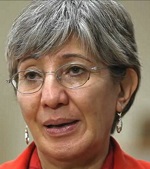
Sima Samar via Ms. Magazine: The Taliban that now rules Afghanistan is the same extremist entity that revoked the basic human rights of Afghanistan’s women and girls and minorities when they were last in power in the 1990s. And now, they have done it again. I didn’t think that I would see history repeat itself in my country twice within my lifetime, but it has. In Aug. 15, 2021, the Taliban’s takeover of Afghanistan erased in a few weeks the progress made over two decades, particularly in women’s rights and democratic institutions. Click here to read more (external link).
Over 1 million women in Afghanistan malnourished last year: WFP
Ariana: A total of 1.2 million women in Afghanistan were malnourished last year, the U.N. World Food Programme (WFP) said on Thursday. Mona Shaikh, head of nutrition at WFP Afghanistan, said that the number of malnourished women is expected to increase this year. On malnourished children, she said that their number will reach 3 million this year, but WFP will be able to assist only 1.6 million of them. Click here to read more (external link).