
logo

Daily Updated Afghan News Service

  • Home
  • About
  • Opinion
  • Links to More News
  • Good Afghan News
  • Poll Results
  • Learn about Islam
  • Learn Dari (Afghan Persian/Farsi)

Recent Posts

  • Afghan Women Turn To Social Media To Earn Living As Doors Close Offline November 22, 2026
  • Tolo News in Dari – November 22, 2026 November 22, 2026
  • Spanta: Germany’s Policy Toward the Taliban Is a Clear Example of Double Standards November 22, 2026
  • Afghanistan wins bronze at Asia Rugby Sevens Trophy 2026 November 22, 2026
  • Taliban Release Confession Video, Accuse Seven Of Plotting Attacks In Kabul November 21, 2026
  • Tolo News in Dari – November 21, 2026 November 21, 2026
  • Renowned Afghan Singer Wahid Saberi Dies in Uzbekistan November 21, 2026
  • Lebanon defeat Afghanistan 5-0 in Beach Soccer Asian Cup November 21, 2026
  • Is Pakistan backing anti-Taliban groups in Afghanistan? November 20, 2026
  • Tolo News in Dari – November 20, 2026 November 20, 2026

Categories

  • Afghan Children
  • Afghan Sports News
  • Afghan Women
  • Afghanistan Freedom Front
  • Afghanistan United Front
  • Al-Qaeda
  • Anti-Government Militants
  • Anti-Taliban Resistance
  • AOP Reports
  • Arab-Afghan Relations
  • Art and Culture
  • Australia-Afghanistan Relations
  • Book Review
  • Britain-Afghanistan Relations
  • Canada-Afghanistan Relations
  • Censorship
  • Central Asia
  • China-Afghanistan Relations
  • Civilian Injuries and Deaths
  • Corruption
  • Crime and Punishment
  • Drone warfare
  • Drugs
  • Economic News
  • Education
  • Elections News
  • Entertainment News
  • Environmental News
  • Ethnic Issues
  • EU-Afghanistan Relations
  • Everyday Life
  • France-Afghanistan Relations
  • Germany-Afghanistan Relations
  • Haqqani Network
  • Health News
  • Heroism
  • History
  • Human Rights
  • India-Afghanistan Relations
  • Interviews
  • Iran-Afghanistan Relations
  • ISIS/DAESH
  • Islamophobia News
  • Japan-Afghanistan Relations
  • Landmines
  • Media
  • Misc.
  • Muslims and Islam
  • NATO-Afghanistan
  • News in Dari (Persian/Farsi)
  • NRF – National Resistance Front
  • Opinion/Editorial
  • Other News
  • Pakistan-Afghanistan Relations
  • Peace Talks
  • Photos
  • Political News
  • Reconstruction and Development
  • Refugees and Migrants
  • Russia-Afghanistan Relations
  • Science and Technology
  • Security
  • Society
  • Tajikistan-Afghanistan Relations
  • Taliban
  • Traffic accidents
  • Travel
  • Turkey-Afghanistan Relations
  • UN-Afghanistan Relations
  • Uncategorized
  • US-Afghanistan Relations
  • Uzbekistan-Afghanistan Relations

Archives

Dari/Pashto Services

  • Bakhtar News Agency
  • BBC Pashto
  • BBC Persian
  • DW Dari
  • DW Pashto
  • VOA Dari
  • VOA Pashto

Afghan forces capture Taliban shadowy governor, kill key commander in 2 days

3rd November, 2015 · admin

KABUL, Nov. 3 (Xinhua)– The Afghan government forces in crackdown against militants have captured a Taliban shadowy governor and killed a key commander in the eastern region of the militancy-plagued country over the past two days.

In the latest crackdown against Taliban outfit, National Directorate for Security (NDS) or the country’s intelligence agency have captured Taliban shadowy governor for the eastern Laghman province, Aminuallah Kuchi in the eastern Nangarhar province, the spy agency said in a statement released here Tuesday.

“Personnel of NDS have captured the shadowy governor of Taliban for Laghman province Aminuallah Kuchi along with two of his bodyguards in Behsoud district of Nangarhar province,” the statement said.

The arrested man, according to the statement had served as Taliban shadowy governor in Khost, Balkh and Laghman provinces over the past 10 years.

Kuchi had been involved in organizing subversive activities and killings countless number of people over the past decade and his arrest is a major setback to the militants, the statement asserted.

A day earlier on Monday, a Taliban key commander along with one of his bodyguard was killed after the security forces stormed their hideout outside Ghazni city the capital of the eastern Ghazni province.

“Taliban key commander Qari Ahmadullah alias Bilal along with his bodyguard were killed after clash erupted in Qala-e-Qazi neighborhood outside provincial capital Ghazni city on Monday morning,” Mohammad Aman Hamim the governor of Ghazni province told Xinhua.

Qari Ahmadullah, according to the official and local people of Ghazni, was a notorious commander of Taliban outfit who was involved in organizing terrorist attacks and planting mines on the roads to target security forces vehicles and security personnel.

The physical elimination of Qari Ahmadullah, according to Ghazni’s governor, is a major blow to the Taliban and would demoralize the militants in Ghazni’s neighboring Wardak, Kandahar and Paktika provinces.

Taliban militants who have intensified activities since April and so far have captured few districts are yet to make comment.

Warring sides in Afghanistan typically doing their best to gain more grounds and consolidate their footholds ahead of harsh winter and snowfall in the mountainous central Asian country.
Posted in Taliban |

Disturbing Footage Emerges Of ‘Taliban’ Stoning In Afghanistan

3rd November, 2015 · admin

By Abdul Qadir Ghafoori and Frud Bezhan
Radio Free Europe/Radio Liberty
November 02, 2015


RFE/RL’s Radio Free Afghanistan has obtained video footage from an eyewitness that appears to show the brutal stoning last week of a 19-year-old Afghan woman in the central province of Ghor.

The two-minute clip shows a group of men throwing stones with increasing intensity at a covered individual crammed in a hole in the ground. A crowd of onlookers are seen capturing the incident on their mobile phones and a woman’s pitiful cries can plainly be heard.

Local official Mohammad Zaman Azimi, in a previous report, blamed Taliban militants for the execution.

Azimi said the woman, identified as 19-year-old Rokhshana, was stoned to death after being accused of having premarital sex with her fiance, a 23-year-old man named Mohammad Gul, who was reportedly lashed.

It was unclear why the young woman would have received a more severe punishment, although Taliban and religious courts in the past have been more lenient toward men.

Azimi added that the stoning took place in the village of Ghalmin on the outskirts of Firoz Koh, the provincial capital.

The couple allegedly had fled their families in a bid to find a place to be married.

Unmarried girls in Afghanistan are often restricted to their homes and banned from having contact with men outside their immediate families.

Brutal punishments often await Afghan women and girls who break the social norm.

Death by stoning for convicted adulterers is banned under Afghan law, although offenders face long prison terms. The penal code, originating in 1976, makes no provision for the use of stoning.

Afghanistan’s Constitution prescribes that “no law can be contrary to the beliefs and provisions of the sacred religion of Islam” and sometimes appears at odds with more liberal and democratic elements within it.

Capital punishment was widely practiced by the Taliban regime, which ruled much of the country from 1996-2001, when convicted adulterers were routinely shot or stoned in executions conducted in front of large crowds.

In rural areas, where Taliban militants exert considerable influence, some Afghans still turn to Taliban courts for settling disputes, as many view government bodies as corrupt or unreliable. The Taliban courts employ strict interpretations of Shari’a law, which prescribes punishments such as stoning and executions.

In many Taliban-controlled areas, men or women found guilty of having a relationship outside marriage or an extramarital affair are sentenced to death, or in other cases publicly flogged.

Afghan officials often blame the Taliban for such punishments.

Since the U.S.-led invasion in 2001, there have been sporadic reports of Afghan stonings but no conclusive evidence.

There have been instances of other harsh punishments being meted out, however, seemingly in keeping with strict interpretations of Islam.

In one prominent case, in 2012, a 16-year-old girl in the western city of Herat was flogged and then killed along with her alleged boyfriend.

In 2013, there was a government proposal to reintroduce public stoning as punishment for adultery. But the government backed away from the proposal after international condemnation.

The abandoned legislation had set the punishment for extramarital sex between unmarried individuals at 100 lashes; sex outside marriage was punished by stoning to death if the adulterer or adulteress was married.

Masooma Anwari, the head of women’s affairs in Ghor, expressed grave concern over the situation of women in the province.

She said the “incompetence” of the local authorities in governance and security has paved the way for such incidents.

The stoning is just the most recent in a string of public punishments in Ghor that have sparked outrage.

On August 31, a young man and woman found guilty of adultery were lashed publicly.

Sima Joyenda, Ghor’s embattled female governor, came under criticism from rights activists at home and abroad for supporting the sentence. Joyenda, who is under pressure to resign, added that the sentence, which was carried out based on the ruling of a primary court, was in keeping with the law.

“Afghanistan is an Islamic country and Ghor is one of the provinces of Afghanistan, and we cannot disobey what the law of Islam and our constitution says,” Ariana News quoted her as saying last month.

Ghor, a mountainous and remote province in the central highlands, is one of the poorest and most unstable areas in the country.

The provincial government’s power extends little beyond Firoz Koh. Dozens of illegal, armed groups run by former warlords and militia leaders are active in Ghor, a key transit route for arms and drugs, and the resulting clashes are seen to be the source of much of the violence in the province.

Written by Frud Bezhan based on reporting by Radio Free Afghanistan’s Abdul Qadir Ghafoori

Posted in Afghan Women, Human Rights, Taliban |

Afghan Taliban Splinter Faction Chooses Own Leader

3rd November, 2015 · admin
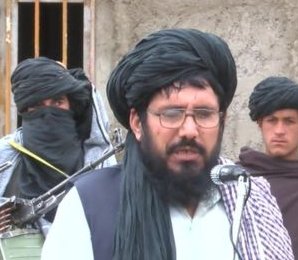
Mullah Rasool

Mullah Rasool

Radio Free Europe/Radio Liberty
November 02, 2015

A splinter faction of the Afghan Taliban has reportedly selected its own chief to challenge the militant group’s new leader.

Mullah Akhtar Mansur was appointed Taliban leader in July after Afghan intelligence leaked the news that the movement’s longtime leader, Mullah Mohammad Omar, had been dead for more than two years. Mullah Mansur was Mullah Omar’s deputy.

An unidentified commander within the dissident faction said on November 2 that they had chosen Mullah Mohammad Rasool Akhund as their leader to lead the fight against U.S.-led foreign forces and the Kabul government.

A second militant commander was quoted as saying Akhund had “spent 10 years with Mullah Omar and was one of his trusted men.”

Other militants have split from the Taliban movement and pledged allegiance to the Islamic State group following the announcement of Omar’s death.

Based on reporting by Reuters
Posted in Taliban | Tags: Mullah Mansur, Mullah Rasul |

Pakistan Reveals Plan to Repatriate Afghan Refugees

3rd November, 2015 · admin

afg_and_pakAyaz Gul / VOA News / November 02, 2015 11:14 AM

ISLAMABAD—Pakistan authorities say they have a plan to begin a phased repatriation of 1.5 million Afghan refugees within the next two years, ruling out the extension of the December 31 deadline for their legal stay in the country.

Since 2002, the U.N. refugee agency has facilitated the return of 3.8 million registered Afghans from Pakistan.  The 1.5 million remaining constitute the largest protracted refugee population globally.

Pakistani officials estimate there are another one million undocumented Afghans living illegally in the country.

The refugees fled decades of violence in Afghanistan, where conditions continue to discourage them from joining a UNHCR-sponsored voluntary repatriation program.

A Pakistani spokesman, Tariq Hayat, told VOA a repatriation plan “approved by all stakeholders” will go to the Cabinet this week for approval.  He said the proposal does not seek “extension or settlement” of the Afghan population in Pakistan beyond the December 31 deadline.

“There is no decision to extend their stay. However, we cannot send them overnight and we will be sending them in a phased program, which is likely to take something under two years.  But at the end of that period they will all be out of here (Pakistan),” Hayat said.

Dignified return promised

Afghan and U.N. officials have called for Islamabad to not hastily expel the Afghans as next month’s deadline approaches.  They insist Afghanistan is still fragile, embroiled in conflict and unable to absorb large numbers of returnees.

Hayat said the proposed plan ensures the refugees return to Afghanistan with “dignity” in an organized manner.

A senior U.N. official requesting anonymity told VOA the expiration of the December 31st deadline will not change the refugee status of Afghans under international laws and obligations Pakistan adheres to.

Last month, Afghan President Ashraf Ghani told the UNHCR Executive Committee his government is focused on creating “pull factors” to make the country attractive for Afghans living in exile.  He cited widespread poverty and years of corruption for discouraging Afghans from returning home.

President Ghani added that 36 percent of Afghans live in poverty and that has “stubbornly” not changed in nearly a decade.

“The refugees and the internally displaced will not believe that they can make their homeland home unless they feel that the state is an agent of a compact with its people,” Ghani said.

Security fears have intensified because of the unusual rise in fighting in Afghanistan this year that Afghan officials blame on the withdrawal of foreign combat forces.

Burden factor cited

Officials in Pakistan describe Afghan refugees as a burden on the national economy and host communities.  They also say rising anti-Pakistan sentiment in Afghanistan is fueling anger against Afghan refugees.

Bilateral relations have deteriorated in recent months over allegations that Pakistan continues to support the Taliban insurgency, charges Islamabad rejects.  Afghan officials suspect the refugee settlements are where the insurgents are trained and equipped to fight in Afghanistan.

Some critics say the tensions could be behind Pakistan’s push for the refugees to go back to Afghanistan.  Young Afghan refugees complain that while they are “unwanted” in Pakistan for various reasons, authorities in Afghanistan “suspect” them of being Pakistani spies or Taliban fighters when they return home and apply for jobs.

Posted in Pakistan-Afghanistan Relations, Refugees and Migrants |
Previous Posts

Subscribe to the Afghanistan Online YouTube Channel

---

---

---

Get Yours!

Peace be with you

Afghan Dresses

© Afghan Online Press
  • About
  • Links To More News
  • Opinion
  • Poll