
NATO says allies will leave Afghanistan together
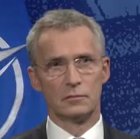
Jens Stoltenberg
Ariana: NATO said Thursday that its members would consult and decide on when to leave Afghanistan after US President Donald Trump asserted to bring all American forces home by Christmas. Trump, who is seeking re-election on November 3, said on Twitter Wednesday: “We should have the small remaining number of our BRAVE Men and Women serving in Afghanistan home by Christmas!” Addressing a joint press conference with President of North Macedonia, Zoran Zaev, NATO Secretary-General Jens Stoltenberg said: “We decided to go into Afghanistan together, we will make decisions on future adjustments together, and when the time is right, we will leave together.” Stoltenberg stated that NATO’s decisions would be based on the conditions on the ground. Click here to read more (external link).
Related
Govt Under Scrutiny for Alleged Misuse of COVID-19 Funds
 Tolo News: Amid reports of a surge in the number of COVID-19 cases in Herat in western Afghanistan, the government is facing mounting criticism over alleged misuse of international fund to battle the pandemic in the country. A Kabul-based anti-corruption organization, Integrity Watch Afghanistan (IWA), on Friday said the government is not ready to provide the details of the money it spent for combating the pandemic. Click here to read more (external link).
Related
NDS: ‘Taliban’ Team of Assassins ‘Trained in Pakistan’
 Tolo News: A 15-member Taliban team that the National Directorate of Security claims was formed to carry out assassinations has revealed during an investigation that they received training in Pakistan, the NDS said. Members of the group, who were captured by Afghan intelligence agency two days ago, confessed in the initial rounds of interrogation that they were assigned to “assassinate government officials and employees,” said the NDS. Click here to read more (external link).
Related
1TV Afghanistan Dari News – October 8, 2020
Afghan Taliban Hails Trump’s Proposed Troop Exit Plan

Donald Trump
Ayaz Gul
VOA News
October 8, 2020
ISLAMABAD – The Taliban says U.S. President Donald Trump’s intention to withdraw all American troops from Afghanistan before the end of the year will bode well for the peace deal between the two adversaries.
Trump suggested on Twitter late Wednesday a withdrawal timeline as early as Christmas, a deadline much sooner than that put forward by his national security adviser, Robert O’Brien, earlier in the day.
“We should have the small remaining number of our BRAVE Men and Women serving in Afghanistan home by Christmas!” Trump tweeted.
The Taliban hailed the announcement as “a positive step” on the way to implementing the peace deal it signed with the United States on February 29 aimed at ending the 19-year-old Afghan war.
“The Islamic Emirate (Taliban) is also committed to the contents of the agreement and hopes for good and positive relations with all countries, including the U.S., in the future,” a Taliban statement said Thursday.
Trump’s tweet came hours after O’Brien had said the administration intends to reduce U.S. troop levels in Afghanistan from 5,000 to 2,500 by early 2021.
Afghan government
The Afghan government, which was not part of the U.S.-Taliban deal, did not immediately offer any direct reaction to Trump’s tweet.
However, Afghan army chief General Yasin Zia told reporters Thursday that in the past six months, local security forces have conducted all ground operations against insurgents across Afghanistan.
Abdullah Abdullah, the head of the Afghan government’s peacemaking process, told reporters during his ongoing visit to India that it was early for an official response to Trump’s statement.
“But eventually we as Afghans should be prepared for any eventuality. There is no doubt that there will be consequences by the decisions made by (our) international partners all together. But it is our responsibility to work together and find a way to live in peace,” Abdullah stressed.
U.S.-Taliban deal
A U.S.-led international military alliance invaded Afghanistan days after the deadly Sept. 11, 2001, attacks on New York and Washington.
The military action toppled the then-ruling Taliban for harboring the al-Qaida terror network and its chief, Osama bin Laden, the mastermind of the terror strikes on America.
The Taliban, however, has since waged a relentless and bloody insurgency against the U.S.-backed government in Kabul, regaining control or influence over half of the country’s districts, though Afghan officials contest those claims.
The U.S.-Taliban deal called for the removal of all foreign forces from Afghanistan by mid-2021 in return for assurances by the insurgents to ban terrorist groups from using Afghan soil for international attacks.
The deal also encouraged the insurgents to open first-ever direct peace talks with the Afghan government last month in Doha, Qatar, to negotiate a permanent cease-fire and power-sharing deal in post-war Afghanistan.
The intra-Afghan dialogue, however, has not produced any tangible outcome more than a month after it started.
Taliban violence
The Taliban has refused to reduce battlefield violence in Afghanistan despite engaging in peace talks in Doha. Critics say Trump’s latest troop withdrawal tweet would embolden the insurgents and would weaken the Afghan government negotiating team.
“And it kneecaps U.S. envoys and other officials by seriously undermining their claims that any further troop reductions would be ‘conditional.’ Or, Trump’s statement suggests that the only condition that concerns him is what he thinks sounds good on the eve of election,” tweeted Laurel Miller, a former U.S. government special representative for Afghanistan and Pakistan.
Torek Farhadi, a Kabul-based political commentator and former government official, urged Afghan rival teams to make their ongoing peace dialogue productive instead of paying attention to Trump’s actions.
“Early withdrawal of U.S. forces from Afghanistan by Christmas could tip the scale in favor of Taliban on the battlefield. But make no mistake, this war could go on much longer. Both sides should focus on peace through a political agreement. Peace is what Afghans want from their leaders,” Farhadi said.
The Afghan war is estimated to have killed more than 160,000 people. They include combatants on both sides and Afghan civilians. The U.S. military has lost more than 2,400 personnel while more than 20,000 others have been wounded and the military action has cost Washington nearly $1 trillion.
Related
ACB renames new cricket stadium in Nangarhar after Najeeb Tarakai

Najeeb Tarakai
Ariana: Afghanistan Cricket Board (ACB) announced it has renamed the Behsood Cricket Stadium in Nangarhar, which is currently under construction, after the late Najeeb Tarakai who died on Tuesday. Tarakai died on Tuesday from injuries sustained last week after being hit by a car while crossing a road in Nangarhar. Click here to read more (external link).
Other Sports News
Coronavirus: 68 New Cases reported in Afghanistan
Tolo News: The Ministry of Public Health on Thursday reported 68 new positive cases of COVID-19 out of 372 samples tested in the last 24 hours. The cumulative number of total cases is now 39,616, the number of total reported deaths is 1,470, and the total number of recoveries is 33,058. Click here to read more (external link).
Related
Other Health News
How to Easily Generate Energy from Reusable Sources

When we talk about energy in this day and age, we have to include renewable sources. Gone are the days where everybody needs to use fossil fuels and dead-end energy tech. The technology itself, as time goes on, will go the way of the fossil and cease to be. We need to be proactive with our choices and prepare for the energy shifts that are to come. Most of the infrastructure is already here. If you’re looking to power your home with renewable sources of energy, now is the time to do it. It’s never been easier, more convenient, and more accessible. Here’s how you can easily generate energy for yourself and the grid, using powerful, reusable sources.
Choosing Solar
Solar panels are all the rage. Why? Simply put, they’re our ticket to tapping into the greatest source of energy that this solar system will ever know: the sun. Forget about geothermal. Forget about burning coal. Forget about the idea of “clean burning” substances. All of them contribute, in one way or another, to the progression of human-influenced climate change. Solar technology, such as solar cells on roofs, has been at the forefront of changing this for quite some time now. It used to be that the technology surrounding it was either too expensive or manufactured under some questionable circumstances nowadays it’s different. You can get access to some top-of-the-line materials for a lot less than you expected.
Keep Your Solar Cells Clean
If you’re going to keep solar cells on your roof, you need to know how to maintain them to get maximum efficiency. Yes, they are, overall, not very difficult to maintain. But that doesn’t mean you can ignore them. Going up and cleaning them with a gentle mop does more than just make it look pretty. The cells in each panel generate electricity by converting sunlight to a usable source. Simply put, the more dirt and grime you have on your solar cells, the less sunlight it’s probably getting. That, in turn, means less usable energy for you. Make a good maintenance schedule and stick to it. It doesn’t have to be anything complicated. A courtesy check once a week is more than fine.
Check Sources
Lastly, you should know where your cells are coming from. Make sure that you take recommendations from local, well known, and trusted sources. You can go all over the internet, searching for the best deals. But in the end, the switch to reusable energy sources is a point of ethics. It only makes sense to stick to that all the way through. So find useful and informative recommendations from reputable individuals. You’ll never know what kind of nefarious dealings the other, cheaper brands may be into. That’s not something you’d want on your conscience.
The switch to reusable energy is a no-brainer. It’s a wonderful step in the right direction, not only for the individual but for the people around. Seeing someone successfully use these energy sources in a manner that’s both affordable and karma-free is the best thing you can do for your local community. Find a way to switch today.
As Kabul Backs Azerbaijan In Conflict With Armenia, Afghans Recall Fighting In Previous War

Mohammad Younas was among the thousands of Afghan fighters that Hezb-e Islami, a major Afghan Islamist party, sent to Azerbaijan in the 1990s to bolster Baku in its war against Armenia.
Khatir Pardes
Abubakar Siddique
Radio Free Europe/Radio Liberty
KABUL — Mohammad Younas is nostalgic about his time fighting with Azerbaijani forces in the war against Armenians for the Nagorno-Karabakh territory in the early 1990s.
“If possible, I would again join the Muslims of Azerbaijan to defend them against non-Muslims,” he said, alluding to the predominantly Muslim country in its battle with Armenian forces, who are mainly Orthodox Christians. The conflict between the South Caucasian neighbors has never been considered a religious one.
But Younas’s real motivation was a mix of religious zeal and material gain. “My real motivation in going to Azerbaijan was participating in a jihad, but I also wanted to make some money,” he told RFE/RL’s Radio Free Afghanistan.
Younas was among the thousands of Afghan fighters that Hezb-e Islami, a major Afghan Islamist party, sent to Azerbaijan in the 1990s to bolster Baku in its war against Armenia. The conflict between the two Soviet republics mushroomed into a full-scale war after the fall of the Soviet Union in 1991, which preceded the demise of Afghanistan’s communist regime in April 1992.
While far from being materially involved in the current war over Nagorno-Karabakh, Kabul still supports Baku’s position, which sees Yerevan as occupying its territory — a position also recognized internationally.
Afghanistan’s declared support for Azerbaijan has prompted Armenia to push for an end to Kabul’s observer status in the Collective Security Treaty Organization (CSTO), a Russian-led regional alliance.
Sending Afghan Mujahedin
Gulbuddin Hekmatyar, an anti-Soviet guerrilla and Hezb-e Islami leader, celebrated the fall of his former enemies in Afghanistan in 1992.
But soon after he plunged his country into a civil war as he joined fighting against other Afghan Islamist and ex-communist factions. He eventually became the prime minister in a deeply divided regime in 1993 but failed to establish control over the capital.
Yet Hekmatyar still celebrates sending people like Younas and thousands more of his supporters to fight for Azerbaijan after it requested help. In a speech to his supporters last week, he said that in response to an Azerbaijani request he told Afghan refugees in Iran to join the fighting in Nagorno-Karabakh.
“A sizeable number of our mujahedin went there and scored numerous victories,” he told supporters at a Kabul mosque. “They pushed back the Armenians within the initial days and captured many territories. Their advances continued until the Azerbaijani officials approached us ahead of impending talks that resulted in a cease-fire,” he said, referring to an armistice in May 1994 that ended nearly six years of fighting over Nagorno-Karabakh.
Well-Paid To Fight
In Kabul, Younas has vivid memories of the fighting.
He crossed into neighboring Iran from Pakistan after Hezb-e Islami leaders ordered him to go to Azerbaijan. He said he joined a group of 300 Afghans on a special flight from the southeastern Iranian city of Zahedan to Baku in early 1994 from where they were soon deployed to the front lines.
“During one battle an Armenian tank column attacked us; our comrades attempted to target them with rockets,” he said of a battle in the last days of winter in 1994. “One rocket hit our comrade Bashir, who was killed instantly, but we continued fighting.”
Younas said that at the end of the battle they captured eight Armenian fighters. “We later exchanged them to free our comrades,” he said. Upon his return to Afghanistan in June, Younas was paid more than $1,500 for his participation in the fighting by his party, which confirms speculation that Afghan fighters were recruited as mercenaries by Azerbaijan.
Humayun Jarir, Hekmatyar’s son-in-law and a senior Hezb-e Islami leader, says nearly 70 Afghans among the estimated 5,000 fighters their party sent to Azerbaijan were killed in the fighting. He says Hezb-e Islami fighters ultimately contributed to forcing the Armenians to accept a cease-fire.
Beginning in late 1993, Armenian authorities protested the recruitment of Afghans by Azerbaijan. They had warned that the role of Muslim Afghan forces in Nagorno-Karabakh could turn the territorial conflict into a religious war between Muslim Azerbaijanis and the Christian Armenians.
Contrarian Kabul
Yerevan is upset by Kabul’s current diplomatic support for Baku in the latest round of hostilities, which have killed hundreds and led to charges by Armenian officials of Baku receiving material support from Turkey, who Yerevan says has also recruited Syrians to fight in Nagorno-Karabakh.
Late last month, the Afghan government called for an end to the fighting between the two countries but reiterated its support for Azerbaijan.
“Nagorno-Karabakh is internationally recognized as part of Azerbaijan,” said a statement by the Afghan Foreign Ministry. “Afghanistan wants the end of the occupation of Nagorno-Karabakh and supports the efforts of Azerbaijan’s people and other nations.”
This prompted the Armenian parliament to call on the CSTO to move toward stripping Afghanistan of its observer status.
“In response to the statements supporting Turkish-Azerbaijani aggression by Afghanistan, the Republic of Armenia’s National Assembly has officially appealed to the CSTO parliamentary assembly secretary to start the process of depriving Afghanistan of its observer status,” Armenian parliament speaker Arat Miroyan said in a statement on October 2.
While suffering from a seemingly unending war for more than 40 years, Kabul has surprised many by adopting bold and controversial positions in faraway wars and territorial disputes.
In March 2104, Afghanistan joined Syria and Venezuela in backing Russia’s illegal annexation of Ukraine’s Crimean Peninsula. The United States and its European allies, major donors to Afghanistan, had opposed the move and termed it a “land grab” by Moscow. More than 100 countries voted against Russia’s takeover of Crimea in a UN General Assembly resolution.
Written by Abubakar Siddique based on reporting in Kabul by Khatir Pardes