
logo

Daily Updated Afghan News Service

  • Home
  • About
  • Opinion
  • Links to More News
  • Good Afghan News
  • Poll Results
  • Learn about Islam
  • Learn Dari (Afghan Persian/Farsi)

Recent Posts

  • Taliban sign $20 million gold mining deal in Kunduz May 10, 2026
  • Afghanistan’s exiled women cricketers urge ICC to recognize national team May 10, 2026
  • Tolo News in Dari – May 10, 2026 May 10, 2026
  • Taliban Detain Several People After Clashes In Panjshir’s Paryan District May 9, 2026
  • Taliban-residents clashes in Badakhshan leave at least two dead May 9, 2026
  • Unidentified Aircraft, Gunfire Reported Across Kabul May 9, 2026
  • Afghanistan’s Ali Bilal wins New York Pro title May 9, 2026
  • Tolo News in Dari – May 9, 2026 May 9, 2026
  • Karzai: Pakistan seeking to legitimize Durand Line, authorities must clarify May 9, 2026
  • Sources report heavy clashes in Panjshir May 8, 2026

Categories

  • Afghan Children
  • Afghan Sports News
  • Afghan Women
  • Afghanistan Freedom Front
  • Al-Qaeda
  • Anti-Government Militants
  • Anti-Taliban Resistance
  • AOP Reports
  • Arab-Afghan Relations
  • Art and Culture
  • Australia-Afghanistan Relations
  • Book Review
  • Britain-Afghanistan Relations
  • Canada-Afghanistan Relations
  • Censorship
  • Central Asia
  • China-Afghanistan Relations
  • Civilian Injuries and Deaths
  • Corruption
  • Crime and Punishment
  • Drone warfare
  • Drugs
  • Economic News
  • Education
  • Elections News
  • Entertainment News
  • Environmental News
  • Ethnic Issues
  • EU-Afghanistan Relations
  • Everyday Life
  • France-Afghanistan Relations
  • Germany-Afghanistan Relations
  • Haqqani Network
  • Health News
  • Heroism
  • History
  • Human Rights
  • India-Afghanistan Relations
  • Interviews
  • Iran-Afghanistan Relations
  • ISIS/DAESH
  • Islamophobia News
  • Japan-Afghanistan Relations
  • Landmines
  • Media
  • Misc.
  • Muslims and Islam
  • NATO-Afghanistan
  • News in Dari (Persian/Farsi)
  • NRF – National Resistance Front
  • Opinion/Editorial
  • Other News
  • Pakistan-Afghanistan Relations
  • Peace Talks
  • Photos
  • Political News
  • Reconstruction and Development
  • Refugees and Migrants
  • Russia-Afghanistan Relations
  • Science and Technology
  • Security
  • Society
  • Tajikistan-Afghanistan Relations
  • Taliban
  • Traffic accidents
  • Travel
  • Turkey-Afghanistan Relations
  • UN-Afghanistan Relations
  • Uncategorized
  • US-Afghanistan Relations
  • Uzbekistan-Afghanistan Relations

Archives

Dari/Pashto Services

  • Bakhtar News Agency
  • BBC Pashto
  • BBC Persian
  • DW Dari
  • DW Pashto
  • VOA Dari
  • VOA Pashto

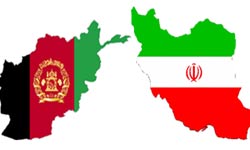
All Aboard! Afghanistan, Iran Open First Rail Link

10th December, 2020 · admin


Ayaz Gul
VOA News
December 10, 2020

ISLAMABAD – Afghanistan and Iran Thursday inaugurated the first railway link between them, expressing hope the landmark move will boost trade and travel links across the region.

The 225-kilometer line connects the eastern Iranian city of Khaf to the western Afghan city of Herat, providing a crucial transport link to landlocked Afghanistan, which is ravaged by several decades of war.

Attaullah Nasib is the director of a government agency known as the Afghanistan Investment Facilitation Unit, which helps foster business ventures in the country. Nasib told the inaugural ceremony, held virtually because of the coronavirus pandemic, that his country was currently connected to the railway networks of central Asia all the way to China. The Khaf-Herat line, Nasib said, would provide Afghan traders with access to Iran’s railroads and seaports as well as to the rail networks of European countries.

“The railway station inaugurated here today…will enhance Afghanistan’s economy, with a focus on long-term strategic economic development to increase domestic growth, regional stability, and promote a positive economic environment, which will foster private investment,” he said.

Afghan President Ashraf Ghani and his Iranian counterpart, Hassan Rouhani, also addressed Thursday’s virtual opening ceremony, which saw cargo trains depart from opposite ends of the line.

Rouhani hailed the opening as “a historic day” in the bilateral relationship, saying his country was able to implement the project despite economic sanctions imposed by the United States on his country.

“Our victory is your victory and your happiness is our joy,” Iranian media quoted Rouhani as saying during the ceremony.

Ghani also called the railway a “historic and vital project” not only for the two countries but for the region and beyond.

Under construction since 2007, the estimated $700 million rail link can transport one million passengers and six million tons of goods a year, according to Iranian officials.

Tehran has mostly funded construction of the line on both sides of the border as part of its development assistance to Kabul.

Iran is Afghanistan’s second-largest trading partner after neighboring Pakistan, which is also planning to extend its national railway network into eastern and southwestern Afghan border towns.

“Trade can bring some much-needed geo-strategic stability in the region,” said Torek Farhadi, a former Afghan government adviser.

Farhadi, who also served at the International Monetary Fund, said the Khaf-Herat link will potentially facilitate Afghan exports of dried fruits and marble stones to Azerbaijan and Turkey. For Iran, he added, the connection opens possibilities to export to central Asian countries of Tajikistan and Kyrgyzstan.

Thursday’s inauguration comes as representatives of the Afghan government and Taliban insurgency engage in peace talks in Qatar to find a negotiated end to their country’s protracted conflict, which has hampered infrastructure development in Afghanistan.

“Products find their way to markets even during war time but overall business environment, transport and logistics costs hugely benefit from peace,” Farhadi said. “The entire Iran/Afghanistan/Pakistan region has pent up, untapped trade potential and complementarities which can help them export more to the rest of the world,” he said.

Posted in Economic News, Iran-Afghanistan Relations | Tags: Herat |

Taliban steadfast over Afghanistan being an Islamic Emirate

10th December, 2020 · admin · 7 Comments

Baradar

Ariana: Mullah Abdul Ghani Baradar, the Taliban’s political deputy and head of the group’s Qatar office, told a virtual meeting at the Center for Humanitarian Conflict Studies in Doha that Afghanistan’s future system must be Islamic and inclusive. According to Mullah Baradar, a future system needs to ensure public facilities are maintained, that women’s rights and media rights are in accordance with Islamic law (Sharia) and that good relationships with foreign countries are established. Click here to read more (external link).

Posted in Peace Talks, Political News, Taliban | Tags: Mullah Abdul Ghani Baradar |

1TV Afghanistan Dari News – December 10, 2020

10th December, 2020 · admin

Posted in News in Dari (Persian/Farsi) |

Afghanistan: 213 New Cases of COVID-19, 18 Deaths Reported

10th December, 2020 · admin

Tolo News: The Ministry of Public Health on Thursday reported 213 new positive cases of COVID-19 out of 1,401 samples tested in the last 24 hours. The data by the ministry shows that the cumulative number of total cases is now 48,753, the number of total reported deaths is 1,939, and the total number of recoveries is 38,221. Click here to read more (external link).

Related

  • MoPH Urges Public to Respect COVID-19 Health Guidelines
Posted in Health News | Tags: Coronavirus (COVID-19) in Afghanistan |

Female Afghan Journalist, Driver Gunned Down

10th December, 2020 · admin

Ayesha Tanzeem
VOA News
December 10, 2020

ISLAMABAD – Unknown gunmen killed a female journalist and her driver in Afghanistan’s Nangarhar province Thursday morning.

Malalai Maiwand was on her way to work in the provincial capital, Jalalabad, when two gunmen opened fire on her car.

Haji Zalamy, the director of Enikass radio and television where Maiwand worked, said the journalist died on the spot while her driver, Tahir Khan, succumbed to his wounds later in the hospital.

Zalmay said that the station had received security threats but that they were not specific to any individual.

His station was attacked several times in recent years, including in a bomb blast and a rocket attack. Zalmay himself was kidnapped for ransom and released after six months.

Dr. Zahir Adil, a spokesman for the provincial health department of Nangarhar, confirmed that Maiwand’s body was brought to the provincial hospital.

Maiwand had been working for Enikass TV for eight years, where she hosted a morning show.

President Ashraf Ghani, along with several Kabul-based ambassadors and the European Union, have condemned the killing, as have Afghan media and rights groups.

The office of the EU in Afghanistan tweeted that attacks on “media representatives are attacks on the freedom of speech and can never be tolerated. We expect this heinous crime to be investigated & perpetrators brought to justice.”

Ross Wilson, the chargé d’affaires of the U.S. embassy in Kabul, demanded the “killers be brought to justice.”

Maiwand’s killing comes days after the EU, NATO, and the U.S. issued a strong joint statement against targeted killing of journalists, religious leaders, rights activists, students, civil society activists, and other civilians in Afghanistan.

The statement called them “savage attacks against Afghan blood” and “attacks on the very peace process” which is currently ongoing in the country and in Doha, Qatar, where a government team is negotiating with the Taliban.

Afghanistan is one of the deadliest countries for the media worldwide, with over 30 journalists killed directly for their work there in the past 10 years, according to the press freedom organization, Committee to Protect Journalists.

There have been recent attacks that targeted particular journalists.

Last month, Elyas Dayee, a reporter from Radio Free Europe/Radio Liberty’s Pashto language service known as Radio Azadi, was killed in a magnetic bomb attack in Helmand province.

Another journalist killed last month was Yama Siawash, who worked for local TV station TOLOnews.

Related

  • Two suspects arrested for killing female Afghan journalist – Daesh claims responsibility for the attack
  • Kabul: 8 Killed in Targeted Killings in 10 Days
Posted in Civilian Injuries and Deaths, ISIS/DAESH, Media, Security | Tags: Afghan Journalists |

VOA Exclusive: 21-Point Code of Conduct Hailed as Breakthrough in Afghan Peace Talks

10th December, 2020 · admin · 5 Comments

By Tahir Khan
Ayesha Tanzeem
VOA News
December 9, 2020

ISLAMABAD – Negotiation teams from the Afghan government and the Taliban have agreed to refer differences in interpretation of Sharia law to a joint committee, protect the confidentiality of ongoing peace talks, and carry out the process with “truthfulness, sincerity, and determination,” according to a code of conduct agreed upon by both sides last week.

VOA has obtained a copy of the 21-point code that was hailed as a breakthrough after nearly three months of negotiations between the two sides that officially started on September 12.

Zalmay Khalilzad, the United States special representative for Afghan reconciliation, called it a “milestone” and tweeted: “The people of #Afghanistan now expect rapid progress on a political roadmap and a ceasefire.”

The preamble of the code sets up four principles as the basis of negotiations.

The first one of them is the agreement signed on February 29, 2020, in Doha, between the United States and Taliban. The Afghan government was not a party to that deal and the government negotiation team strongly resisted its inclusion, according to sources familiar with the talks.

The Doha deal announced a timeline for withdrawal of all foreign forces from Afghanistan and release of Taliban prisoners in return for guarantees the Taliban will sever ties with groups like al-Qaida and will prevent anyone from planning or carrying out a terrorist attack on the U.S. or its allies on Afghan soil.

In the end, the U.S.-Taliban agreement was included but diluted with three other principles, all of them focusing on the demand for “durable peace.”

The rest of the document defines how the two sides will behave during the negotiation process and what issues could or could not become part of the agenda.

“The agenda will not include any subject that is against the sacred and blessed religion Islam or the interests of the country,” the code says.

Initially, the Taliban team wanted to specify the Hanafi jurisprudence, part of the Sunni school of thought in Islam, as the basis for negotiations. However, it encountered stiff resistance from the government team, which pointed out the religious diversity in Afghanistan, including Shi’ites.

“If differences emerge in the interpretation of Sharia law, a joint committee of the negotiation teams will make a decision,” the agreed code says.

Another interesting point of the code is about showing “respect for the other side” during the process. Multiple Afghan and Western sources told VOA over the last two months that when the negotiations started, the Taliban were acting like the victors and were treating the Afghan side as the losers in this conflict.

The three-page document emphasizes the need to take time, “not be in a haste” when discussing important issues, and “carefully listen to each other’s statements with patience.”

It also sets down a protocol for note-taking that involves each side nominating three members to record the minutes, which then would be compared by both sides at the end of a meeting.

“The approved text of the minutes would be verified by both sides,” the document says.

The two teams also have agreed to avoid irresponsible comments in the media and to release only agreed upon statements.

“Protecting the confidentiality of the documents is essential and both sides should avoid disclosure of secrets,” the code says as it emphasizes the need to keep media and unrelated people from accessing the site of negotiations and the need to reject speculation.

“Once an issue is decided, there will be no further discussion on it. It will become part of the final agreement,” according to the document.

The code of conduct also specifies that no one other than members of the two teams will be in the room while negotiations are under way, including anyone from the host country or other countries that have facilitated the process.

The negotiations on finalizing the agenda continue at a time when Afghanistan has faced a spate of violence it has not seen for years.

“Violence, especially driven by Taliban attacks, continues to undermine the peace process and must end,” said a NATO statement issued Wednesday.

A car bomb attack on an army base Tuesday night killed two in Afghanistan’s Ghazni province. In Balkh province Wednesday, Taliban killed seven members of an anti-Taliban local force. A car bomb attack Monday in Kandahar wounded at least 35 people.

Charity organization Save the Children reported 2020 to be a “terrible year for the children of Afghanistan, nearly 1,900 of whom have been killed or maimed in the fighting.”

Meanwhile, a report published by the Cost of War project of Brown University said civilian casualties caused by airstrikes carried out by the United States and its allies have risen more than 300 percent since 2017.

The United States military Tuesday refuted as “one-sided” that report that civilian casualties caused by American and coalition airstrikes in Afghanistan had spiked to record levels. U.S. military spokesman Col. Sonny Leggett said the report “relies on disputed data and ignores civilian casualties caused by Taliban and ISIS attacks.”

“This includes ongoing Taliban use of car bombs, IEDs [improvised explosive devices], rockets and targeted killings to intimidate, harass and instill fear across Afghanistan,” he added in a written response shared with VOA via email.

The U.S. reduced its airstrikes after reaching a deal in February with the Taliban.

Even without the violence, Afghan analysts like Tareq Farhadi think the talks will take time, especially when the teams start negotiating the future form of government in Afghanistan.

The Taliban do not accept the current Afghan constitution.

Posted in Civilian Injuries and Deaths, Peace Talks, Security, Taliban, US-Afghanistan Relations | Tags: Ashraf Ghani Government |

Afghan Security Forces Hit By Surge Of Taliban Suicide Car Bombings

10th December, 2020 · admin

Taliban fighters (file photo)

Radio Free Europe/Radio Liberty
Frud Bezhan
December 9, 2020

The Taliban is employing a fight-and-talk strategy in Afghanistan, seeking to gain leverage in peace talks through gains on the battlefield.

The militant group carries out targeted killings and assassinations against civilian targets in major urban areas.

In rural areas, where the Taliban holds sway, the militants are also staging mass casualty attacks against Afghan government military targets.

In its attacks against Afghan military bases and outposts, the Taliban is increasingly utilizing a deadly and effective terror tactic: suicide car bombings, or what military experts call “suicide vehicle-borne improvised explosive devices” (SVBIEDs).

The Taliban has carried out suicide car bombings for years. But in recent months, there has been a major escalation with dozens of the attacks staged across Afghanistan.

The surge in the use of the tactic has coincided with peace talks that started in September in Doha, Qatar, between Afghan government representatives and the Taliban.

The intra-Afghan negotiations are a key part of a U.S.-Taliban deal signed in February. Under that agreement, foreign forces are to leave Afghanistan by May 2021.

In exchange, the Taliban has vowed security guarantees to prevent future terrorist attacks out of Afghanistan and to negotiate with Kabul on a permanent cease-fire and a power-sharing arrangement.

Fragile and deeply divided, the Afghan government has come to the negotiating table in a position of relative weakness.

With about half of the territory in the country controlled or contested by the Taliban, Kabul lacks the military advantage to drive a hard bargain.

“The Taliban is attempting to pressure the Afghan government into concessions at the negotiating table by continuously conducting these attacks on a regular basis,” says Hugo Kaaman, an independent researcher focused on SVBIED design and tactics by militants and terrorist groups.

Kaaman has documented at least 50 Taliban SVBIED attacks in Afghanistan since August 20. That, on average, is about three SVBIED attack every week.

“The Taliban is showcasing that they have the capability to conduct these attacks far more often than they have actually done previously, and that it will continue like this until they give up,” Kaaman says.

‘Taliban’s Most Powerful Weapon’

Experts say SVBIEDs are effective at causing mass casualties and are notoriously difficult to stop.

The vehicles used are often either flatbed trucks or U.S.-built Humvees – armored vehicles given to Kabul by the U.S. military that have been captured from Afghan government forces by the Taliban.

The trucks usually are equipped with armor plating to protect the vehicle for as long as possible. Once a vehicle is driven into its intended target, the driver detonates explosives packed inside to trigger a powerful blast.

Experts say the explosives are being carried by the vehicle rather than the driver. Although a driver may also wear a suicide bomber’s vest in addition to the vehicle’s explosive cargo, suicide vests are never the main charge.

Kaaman says the Taliban’s use of Humvees as SVBIEDs is “particularly scary” given that the vehicles are sometimes able to pass through security checkpoints and gain access to government military facilities before they are detonated.

Taliban suicide drivers often prepare for the attacks by shaving off their long beards and wear captured uniforms from the Afghan National Army, he says.

“It’s the Taliban’s most powerful weapon,” Kaaman says. “It’s a force multiplier that allows them to knock out hardened positions despite a technological disadvantage.”

Besides SVBIEDs, the Taliban’s usual arsenal also includes rockets, mortars, small arms, and the group’s signature weapon — improvised explosives devices (IEDs).

Kaaman says the main reason the Taliban has been increasing its use of SVBIEDs is to expand the territory under its control.

“They’re trying to seize land and using SVBIEDs to knock out crucial Afghan Army bases and outposts in their way using one of the more effective ways to do so,” he says.

The Taliban has carried out most of its SVBIEDs against military targets in its traditional strongholds in the country’s south and east where the militants retain larger resource bases and operational capabilities.

In the most recent attack, the Taliban rammed a captured military vehicle packed with explosives into an Afghan Army post in the southeastern province of Ghazni on December 9, killing at least three Afghan soldiers and wounding five others.

A week earlier, on November 29, a Taliban SVBIED attack killed at least 30 Afghan security personnel at the entrance to an Afghan Army base in Ghazni.

“The pace of such attacks seems likely to continue, both because of the large numbers of casualties they cause and the demoralizing effect they have upon the Afghan security forces,” says Ted Callahan, a security expert on Afghanistan.

Ceaseless Violence

The Taliban’s growing use of suicide vehicle bombs comes as part of its intensified wave of attacks across Afghanistan.

In recent months, the Taliban has launched major offensives aimed at seizing control of two provincial capitals in southern Afghanistan: Lashkar Gah and Kandahar City.

Involving hundreds of Taliban fighters and lasting for weeks, the onslaughts were eventually quelled by U.S. air strikes.

The Taliban has also been behind a surge of targeted killings and assassinations in Afghan cities that have targeted government workers as well as journalists, rights activists, cultural figures, moderate religious leaders, and women in public roles.

The attacks are a violation of the U.S.-Taliban deal, which is thought to include a Taliban pledge to reduce violence.

U.S. forces have retaliated by increasing air strikes against the Taliban. That has provoked a war of words between the U.S. military and the Taliban, which alleges that the air strikes violate the U.S.-Taliban deal.

The U.S. military said it reserves the right under the deal to defend Afghan security forces who come under Taliban attack.

Observers say the Taliban is likely to continue its attacks because violence is the group’s main leverage in the Doha peace talks.

The militants, analysts say, will resist a cease-fire because violence is a source of new recruits and motivates its fighters.

But the Taliban’s relentless violence has sapped a fragile trust between the two sides.

Afghan and Taliban negotiators had been deadlocked for months. In a small breakthrough on December 2, the two parties reached an agreement on the rules and procedures for the talks to go forward.

But they have yet to agree on an agenda for the negotiations. Talks on substantive issues appear to be a long way off.

Copyright (c) 2020. RFE/RL, Inc. Reprinted with the permission of Radio Free Europe/Radio Liberty, 1201 Connecticut Ave NW, Ste 400, Washington DC 20036.
Posted in Peace Talks, Security, Taliban, US-Afghanistan Relations | Tags: Afghan Army |

1TV Afghanistan Dari News – December 9, 2020

9th December, 2020 · admin

Posted in News in Dari (Persian/Farsi) |

Russian Helicopters accuse Ukraine of endangering lives of US, Afghan troops

9th December, 2020 · admin · 15 Comments

Ariana: Russian Helicopters, the manufacturer of Mi-17V-5 choppers used in Afghanistan, has warned that the lives of US and Afghan soldiers could be at risk as the helicopters are being repaired by unauthorized enterprises in Ukraine. Click here to read more (external link).

Related

  • Russian company criticizes overhaul of Afghan helicopters in Ukraine as ‘illegal’
Posted in Russia-Afghanistan Relations, Security | Tags: Air Force |

COVID-19: 177 New Cases, 13 Deaths Reported in Afghanistan

9th December, 2020 · admin

Tolo News: The Ministry of Public Health on Wednesday reported 177 new positive cases of COVID-19 out of 2,247 samples tested in the last 24 hours. The data by the ministry shows that the cumulative number of total cases is now 48,540, the number of total reported deaths is 1,921, and the total number of recoveries is 38,150.  Click here to read more (external link).

Related

  • Afghanistan will get first shipment of coronavirus vaccine in mid-2021
Posted in Health News | Tags: Coronavirus (COVID-19) in Afghanistan |
Previous Posts
Next Posts

Subscribe to the Afghanistan Online YouTube Channel

---

---

---

Get Yours!

Peace be with you

Afghan Dresses

© Afghan Online Press
  • About
  • Links To More News
  • Opinion
  • Poll