logo

Daily Updated Afghan News Service

  • Home
  • About
  • Opinion
  • Links to More News
  • Good Afghan News
  • Poll Results
  • Learn about Islam
  • Learn Dari (Afghan Persian/Farsi)

Recent Posts

  • Heavy Bride Prices and Costly Weddings Push Young People to Migrate in Pursuit of Marriage November 11, 2026
  • Six People Executed For Alleged Taliban Spying, Says Afghanistan United Front November 11, 2026
  • Historic first for Rahmat Shah after ICC rankings update November 11, 2026
  • Tolo News in Dari – November 11, 2026 November 11, 2026
  • Years Late, Just In Time? Turkmenistan’s TAPI Gas Pipeline Nears Afghan City November 10, 2026
  • US Democrats Seek Vote on Bill to Protect Afghans From Deportation November 10, 2026
  • More Than 4 Million Children in Afghanistan To Need Treatment For Acute Malnutrition in 2027 November 10, 2026
  • Tolo News in Dari – November 10, 2026 November 10, 2026
  • Scotland boycotts bilateral cricket matches against Afghanistan November 10, 2026
  • Taliban official’s aides replace Tajik Red Crescent staff in Paktia November 9, 2026

Categories

  • Afghan Children
  • Afghan Sports News
  • Afghan Women
  • Afghanistan Freedom Front
  • Afghanistan United Front
  • Al-Qaeda
  • Anti-Government Militants
  • Anti-Taliban Resistance
  • AOP Reports
  • Arab-Afghan Relations
  • Art and Culture
  • Australia-Afghanistan Relations
  • Book Review
  • Britain-Afghanistan Relations
  • Canada-Afghanistan Relations
  • Censorship
  • Central Asia
  • China-Afghanistan Relations
  • Civilian Injuries and Deaths
  • Corruption
  • Crime and Punishment
  • Drone warfare
  • Drugs
  • Economic News
  • Education
  • Elections News
  • Entertainment News
  • Environmental News
  • Ethnic Issues
  • EU-Afghanistan Relations
  • Everyday Life
  • France-Afghanistan Relations
  • Germany-Afghanistan Relations
  • Haqqani Network
  • Health News
  • Heroism
  • History
  • Human Rights
  • India-Afghanistan Relations
  • Interviews
  • Iran-Afghanistan Relations
  • ISIS/DAESH
  • Islamophobia News
  • Japan-Afghanistan Relations
  • Landmines
  • Media
  • Misc.
  • Muslims and Islam
  • NATO-Afghanistan
  • News in Dari (Persian/Farsi)
  • NRF – National Resistance Front
  • Opinion/Editorial
  • Other News
  • Pakistan-Afghanistan Relations
  • Peace Talks
  • Photos
  • Political News
  • Reconstruction and Development
  • Refugees and Migrants
  • Russia-Afghanistan Relations
  • Science and Technology
  • Security
  • Society
  • Tajikistan-Afghanistan Relations
  • Taliban
  • Traffic accidents
  • Travel
  • Turkey-Afghanistan Relations
  • UN-Afghanistan Relations
  • Uncategorized
  • US-Afghanistan Relations
  • Uzbekistan-Afghanistan Relations

Archives

Dari/Pashto Services

  • Bakhtar News Agency
  • BBC Pashto
  • BBC Persian
  • DW Dari
  • DW Pashto
  • VOA Dari
  • VOA Pashto

Dostum says Taliban ‘trapped’ in north and have nowhere to go

12th August, 2021 · admin

Dostum

Ariana: Marshal Abdul Rashid Dostum said Wednesday that the Taliban are now trapped in the north and will not be able to flee that part of the country and that security forces will “crackdown” on the militants. Speaking to journalists in Balkh province, Dostum said: “The Taliban have been trapped in the north several times and this time it is not easy to get out from the north.” Click here to read more (external link).

Posted in Security, Taliban | Tags: Afghan resistance against Taliban, Dostum |

Reporter’s Notebook: Families Fleeing Afghanistan Struggle to Survive in Turkey

12th August, 2021 · admin

Heather Murdoch
VOA News
August 11, 2021

VAN, TURKEY – Afghan clothes and Iranian SIM cards litter fields under the mountains that stand between Turkey and the Iranian border.

A wisp of smoke rises out of what was a small fire, abandoned many hours before.

As the Taliban swept through villages and cities in Afghanistan over the past few months, families have fled in droves, many traveling across Iran and into Turkey.

In the past, this route was flooded with refugees trying to get to Europe to seek safety and freedom. Now it’s packed with people making a last-ditch effort to stay alive in Turkey, where they find no humanitarian aid and run the risk of being arrested and deported.

We meet 16-year-old Abdul Tawab outside the park where he sleeps in central Van, a city famous among tourists for its massive lake and among refugees for its proximity to the Iranian border.

Tawab arrived in Turkey two weeks ago, hoping to go to Istanbul to find a job. But like so many other men and boys in the park, he is now out of money and stuck here in Van.

Tawab says he is afraid he will be arrested if he draws attention to himself outside, so we walk a zigzag path through the markets until he feels safe at a table upstairs in a café.

In Afghanistan, Tawab supported five siblings and his parents on his carpenter’s salary, which was about $1 a day. He left home after the Taliban had stormed into his village and riddled his uncle with bullets, killing the well-loved father of nine.

“He didn’t care if people were rich or poor,” Tawab says. “He liked everyone, and everyone liked him.”

Taliban fighters on motorcycles later wrapped his uncle’s body in barbed wire and deposited it in a field, Tawab says. Refugees say the militants will execute anyone who is associated with the Afghanistan government or foreign organizations, or anyone identified as Hazara, a Shiite ethnic group and the country’s largest religious minority.

Saranwal Nadir, Tawab’s uncle, was a lawyer in a government court.

“We found him in the field,” Tawab says. “His body was lying in puddles of water and blood.”

Crisis beginning 

Turkey already hosts 3.7 million refugees, more than any other country in the world. But frustration among the population is growing, and many believe this crisis is only beginning.

Twitter in Turkey is alight with rumors about incoming people from Afghanistan. Some say the refugees are increasing crime rates or depressing wages. Another commonly heard complaint is that they are mostly young men, as evidenced by videos online.

Young men from Afghanistan say the women and children are mostly in safe houses, hidden from cameras by the same smugglers who kicked the men out onto the streets, sometimes to be rounded up and deported.

When the United States fully pulls out of Afghanistan, the borders may be even more packed with people trying to get into Turkey, a relatively safe country that has a history of taking in refugees, says Mahmut Kaçan, a lawyer and the coordinator for the Asylum and Migration Commission of the Van Bar Association.

But once in Turkey, there is no clear path to establishing legal status and no organizations at all to support families in need of food or shelter. The United Nations’ refugee agency no longer processes asylum claims in Turkey, and claims through government offices can take years.

“They are living in limbo in Turkey,” Kaçan says.

Taliban takeover 

Up at least four flights of sloping concrete stairs, in a two-bedroom apartment in Van, two families from Afghanistan, 12 people in all, say they are afraid to go outside. Inside, the apartment is barren, with almost no furniture and only a few plastic bags of clothes and bedding.

The adults go out only when they think they may find work. But after a month in Turkey, none of them have had any luck.

The rent here is less than $70 a month, and the families say they already sold all their belongings to pay smugglers $1,000 per person, roughly the minimum cost to get from Kabul to Van. They borrowed rent money last month and do not know how they will manage in the future.

But as soon as the U.S. announced it would be pulling out, says Saeed Sanaye Sadet, one of the apartment residents, he knew he would never be safe at home again, because he used to work for an American company.

We point out that the Taliban have taken over vast swaths of Afghanistan in recent months, but not all of it, and the capital, Kabul, is still held by the government. But Sadet says the fall of the country feels inevitable.

“It’s already happening,” he scoffs, when we ask why he is so sure.

Women and girls 

On the edge of a graveyard in Van, rows of shallow graves cover the bodies of people who died attempting to flee to Turkey.

Many were among the 61 refugees killed in a shipwreck on Lake Van last year. Other graves are identified only by the border-area location where the body was found.

As we drive away from the graveyard, Mohammad Mahdi Sultani, a journalist from Afghanistan who is working with us as a guide and translator, says people have been risking their lives for a long time to escape Afghanistan, which has been at war since the 2001 U.S. invasion.

But the reason people are fleeing is shifting as the Taliban gain ground, he says. His uncle fled his village for Iran because he has two daughters, 19 and 21. When the Taliban came in, they demanded that families place flags outside their houses to indicate whether there were any unwed women or girls inside.

“They say (the Taliban) will marry them,” Sultani says, meaning, by force.

In the crowded apartment up the stairs, Leena Sadet, Saeed Sadet’s wife, says she remembers her mom’s blue burqa from her childhood, when Taliban law forced all women to leave their jobs and go outside only fully covered.

“The same thing will happen if they are in power,” Leena Sadet says. “The women won’t work, and the girls will not go to school.”

Mohammad Mahdi Sultani contributed to this report.

Posted in Afghan Women, Civilian Injuries and Deaths, Refugees and Migrants, Security, Taliban, Turkey-Afghanistan Relations | Tags: Forced marriage by Taliban, Taliban Rapists, Taliban War on Muslims |

Taliban Seizes Kunduz Airport As Ghani Replaces Army Chief

11th August, 2021 · admin

RFE/RL’s Radio Azadi
August 11, 2021

The Taliban has captured the airport of the strategic northern provincial capital of Kunduz, where hundreds of members of the Afghan security forces reportedly surrendered to the militants as President Ashraf Ghani replaced the army chief of staff.

Amid a string of rapid advances by the militants across Afghanistan, Defense Ministry deputy spokesman Fawad Aman tweeted that General Hibatullah Alizai has replaced General Wali Ahmadzai as the Afghan Army chief of staff.

The Kunduz airport fell to the militants on August 11 when most government forces there surrendered, while others retreated to the Aliabad district of Kunduz, sources told RFE/RL under the condition of anonymity.

Taliban spokesman Zabiullah Mujahid tweeted that the group had taken control of the airport and posted a video purportedly showing government soldiers joining the militants’ ranks.

Amruddin Wali, a local lawmaker, told AFP that hundreds of Afghan soldiers and police who had retreated to the airport outside Kunduz after the Taliban captured most of the northern city at the weekend have surrendered to the Taliban “with all their military gear.”

The Taliban has been on the offensive across Afghanistan since May 1, when the United States and its allies officially began withdrawing their forces in a pullout that is expected to be completed by the end of this month.

As militants extended their territorial gains to more than a quarter of the country’s provincial capitals in less than a week, Ghani flew to Mazar-e Sharif, the capital of Balkh Province, “to check the general security in the northern zone,” according to a statement released by the presidential office.

Earlier on August 11, the Taliban reportedly captured Faizabad, the capital of the remote northeastern province of Badakhshan, making it the ninth of Afghanistan’s 34 regional capitals to be overrun since August 6.

On August 10, the militant group seized the northern city of Pol-e Khomri, capital of Baghlan Province, and Farah city, the capital of the southwestern Farah Province, and consolidated their grip on Aybak, the capital of the northern Samangan Province which had fallen the previous day.

That added to the five provincial capitals that the militants had overrun since August 6: Kunduz; Sar-e Pol; Taloqan; Zaranj; Sheberghan.

But the loss of Mazar-e Sharif would be a huge drawback for the government and would mean the total loss of control over northern Afghanistan — long a stronghold of anti-Taliban warlords.

Government forces are also battling the militants in Kandahar and Helmand, the southern Pashto-speaking provinces from where the Taliban draw their strength.

In Kandahar, a spokesman said that government forces repelled an attack on the morning of August 11.

“Some 15 Taliban fighters were killed, and eight others were wounded due to the security forces’ resistance to the Taliban attacks,” Sadiq Issa told RFE/RL.

He did not provide details on casualties among Afghan forces.

The head of Mirwais Hospital in Kandahar, Mohammad Daud Farhad, told RFE/RL that two civilians were killed and 14 were wounded, including women and children, in the past 24 hours.

Ghani arrived in Mazar-e Sharif on August 11 and held talks with two longtime local strongmen — Atta Muhammad Noor and Abdul Rashid Dostum — about the defense of the northern city as Taliban fighters inched closer to its outskirts.

Dostum, who flew into Mazar-e Sharif on August 11 with a group of fighters from Kabul, issued a warning to the Taliban after arriving in the city.

“The Taliban never learn from the past,” he told reporters, vowing to kill the militants.

“The Taliban has come to the north several times but they were always trapped. It is not easy for them to get out.”

Dostum stands accused of massacring hundreds, if not thousands, of Taliban prisoners of war during the 2001 U.S. invasion that toppled the hard-line Islamists’ rule over the country.

In Faizabad, a local lawmaker told the media that security forces had retreated after days of heavy clashes.

“The Taliban has captured the city now,” said Zabihullah Attiq.

The militants also confirmed in a social-media post that they were in control of the city.

Taliban gains over the past several weeks have been accompanied by widespread reports of revenge killings and other attacks on civilians.

As fighting raged, U.S. diplomats were scrambling to breathe life back into all but dead talks between the Afghan government and Taliban in Doha, where Washington’s special envoy Zalmay Khalilzad was pushing the Taliban to accept a cease-fire and stop its sweeping offensive.

In Washington, U.S. President Joe Biden on August 10 stood firmly by his deadline to withdraw all American troops by August 31, instead urging Afghan leaders to “fight for themselves.”

“I do not regret my decision” to withdraw U.S. troops after two decades of war, he told reporters.

“They have got to want to fight. They have outnumbered the Taliban,” Biden said.

The European Union said on August 10 that it was considering more support for countries neighboring Afghanistan while a handful of EU member states insisted on continuing forced deportations amid fears of an exodus of hundreds of thousands of Afghans as Taliban fighters advance.

EU states reportedly fear a repeat of the migrant crisis that engulfed Europe in 2015 when well over 1 million migrants, including many from war-torn Syria, arrived in the European Union and sparked lasting political divisions in the bloc.

But Germany’s Interior Ministry on August 11 announced that it was halting deportations to Afghanistan for the time being due to the unstable security situation in the country.

The United Nations said there have so far been no “large-scale displacements” across Afghanistan’s borders, although an EU official was quoted as saying the UN estimated that 500,000 Afghans could be pushed toward neighboring Pakistan, Iran, and Tajikistan if the situation continues to deteriorate.

The Afghanistan representative for UNICEF, the UN’s children’s agency, said on August 9 that it was “shocked by the rapid escalation of grave violations against children in Afghanistan,” adding, “The atrocities grow higher by the day.”

The U.S. Central Command has said the troop withdrawal is more than 95 percent complete and will be finished by August 31, ahead of the September 11 anniversary of two decades since the Al-Qaeda attacks on the United States that prompted the invasion of Afghanistan.

This story includes reporting by Radio Azadi correspondents on the ground in Afghanistan. Their names are being withheld for their protection.

With reporting by Reuters, AP, AFP, and Tolo News

Copyright (c) 2021. RFE/RL, Inc. Reprinted with the permission of Radio Free Europe/Radio Liberty, 1201 Connecticut Ave NW, Ste 400, Washington DC 20036.

Related

  • Six EU Countries Want to Maintain Deportations of Afghan Asylum-Seekers
Posted in EU-Afghanistan Relations, Refugees and Migrants, Security, Taliban, US-Afghanistan Relations | Tags: Ashraf Ghani Government Security Failure, Asylum, Atta Mohammad Noor, Badakhshan, Dostum, Kunduz, Mazar-e-Sharif |

Taliban ‘going door-to-door dragging out girls as young as 12 to make them fighters’ sex slaves’ in terrifying rampage

11th August, 2021 · admin

Taliban militants (file photo)

The Sun: The Taliban are “going to door to door” to round up young girls to be “sex slaves” to fighters in the terror group, reports claim. An inside source suggests that Taliban leaders are attempting to kidnap and forcedly marry women after after local leaders in Afghanistan were asked to present a list of those aged 12 to 45 last month. Click here to read more (external link).

Posted in Afghan Women, Security, Taliban | Tags: Taliban Rapists |

Sometimes I have to pick up a gun’: the female Afghan governor resisting the Taliban

11th August, 2021 · admin

Salima Mazari

The Guardian (UK): As one of only three female district governors in Afghanistan, Mazari has attracted attention simply by being a woman in charge. What sets the 40-year-old apart, particularly amid the recent wave of Taliban violence, is her hands-on military leadership. “Sometimes I’m in the office in Charkint, and other times I have to pick up a gun and join the battle,” she says. Click here to read more (external link).

Posted in Afghan Women, Security, Taliban | Tags: Balkh, Salima Mazari |

1TV Afghanistan Dari News – August 11, 2021

11th August, 2021 · admin

Posted in News in Dari (Persian/Farsi) |

Russia Wraps Up Drills With Uzbek And Tajik Troops Near Afghan Border

11th August, 2021 · admin

RFE/RL’s Radio Azadi
August 11, 2021

Russia completed joint military exercises with troops from Tajikistan and Uzbekistan on August 10 as the Taliban gain control of much of northern Afghanistan bordering Moscow’s Central Asian allies.

The war games began last week, involving about 2,500 Russian, Tajik, and Uzbek troops at a training ground in Tajikistan about 20 kilometers from the Afghan border.

“The exercise was conducted against the background of the aggravation of the situation and the threat of penetration of radical terrorist groups into the border countries of the Central Asian region,” Russia’s Central Military District commander, Colonel General Alexander Lapin, said.

Russia’s Defense Ministry said the drills involved tanks, armored personnel carriers, Su-25 attack jets, helicopters, and other weaponry in a simulated joint response to cross-border militant attacks.

Lapin said the combined forces for the first time used tactics gained by Russian forces fighting in Syria.

Russia, which has a military base in Tajikistan, has vowed defend the former Soviet Central Asian states against any security threat from Afghanistan.

Kazakhstan, Kyrgyzstan, and Tajikistan are members of the Moscow-dominated Collective Security Treaty Organization.

The exercises followed smaller Russian-Uzbek drills held near Uzbekistan’s border with Afghanistan that concluded last week.

Russian Defense Minister Sergei Shoigu said at a separate event on August 10 that Russian forces will continue to conduct regular drills with its Central Asian allies near the Afghan border.

Central Asians states bordering Afghanistan are concerned about security threats emanating from Afghanistan and the potential for tens of thousands of refugees to pour over the border.

The Taliban has sought to reassure neighboring countries and Russia that it poses no threat as it gains control over much of Afghanistan’s territory and captures provincial cities from the government in Kabul as U.S.-led forces leave the country.

With reporting by TASS

Copyright (c) 2021. RFE/RL, Inc. Reprinted with the permission of Radio Free Europe/Radio Liberty, 1201 Connecticut Ave NW, Ste 400, Washington DC 20036.
Posted in Central Asia, Russia-Afghanistan Relations, Security, Taliban | Tags: Tajikistan-Afghanistan Relations, Uzbekistan-Afghanistan Relations |

Taliban Said To Be In Control Of Two-Thirds Of Afghanistan, As EU Weighs Migrant Flows And U.S. Pursues Peace Talks

10th August, 2021 · admin

Zalmay Khalilzad

By RFE/RL’s Radio Azadi
August 10, 2021

The United States scrambled to press for an Afghan peace deal and the European Union debated greater help in the region to handle refugee flows on August 10 as Taliban fighters continued to overrun at least two new population centers in the war-ravaged country.

The moves came ahead of news that the militant group had captured the eighth provincial hub in the span of a week when they took the northern city of Pol-e Khomri, the capital of Baghlan Province.

Earlier, an RFE/RL correspondent on the ground said strategic buildings, including the governor’s office in Farah city, the capital of the southwestern Farah Province, had also fallen to the Taliban.

Farther north, the dpa news agency quoted local officials as saying security has also worsened around Afghanistan’s fourth-largest city, Mazar-e Sharif, with a population of around half a million people.

In the capital, Kabul, Afghan President Ashraf Ghani called on regional Afghan warlords to support his embattled government and appealed to civilians to defend the country’s “democratic fabric,” aides said on August 10.

Taliban gains in recent weeks have been accompanied by widespread reports of revenge killings and other attacks on civilians.

U.S. special envoy for Afghanistan Zalmay Khalilzad is in Qatar for talks with the Taliban in a push to get the group to stop its sweeping offensive.

In the Qatari capital, Doha, where the militant group has a political office, Khalilzad will “press the Taliban to stop their military offensive and to negotiate a political settlement, which is the only path to stability and development in Afghanistan,” the State Department said on August 9.

White House press secretary Jen Psaki repeated Washington’s position on August 10 that Afghan defense forces are sufficiently trained and equipped to fight back against the Taliban.

Psaki was speaking after international news agencies quoted a “senior EU official” as saying Taliban fighters now control 65 percent of Afghanistan, are poised to capture 11 provincial hubs, and are seeking to cut off Kabul’s traditional support from forces in the north of the country.

The Taliban has been on the offensive across Afghanistan since May 1, when the United States and its allies officially began withdrawing their forces in a pullout that is expected to be completed by the end of this month.

The European Union said on August 10 that it was considering more support for countries neighboring Afghanistan while a handful of EU member states insisted on continuing forced deportations amid fears of an exodus of hundreds of thousands of Afghans as Taliban fighters advance.

The interior ministers of Austria, Belgium, Denmark, Germany, Greece, and the Netherlands — in a letter dated August 5 and disclosed only later — reportedly urged the EU’s executive arm to “intensify talks” with the Afghan government after Kabul said it was suspending “nonvoluntary returns” of Afghans fleeing the violence for three months.

They reportedly fear a repeat of the migrant crisis that engulfed Europe in 2015 when well over a million migrants, including many from war-torn Syria, arrived in the European Union and sparked lasting political divisions in the bloc.

“We would like to highlight the urgent need to perform returns, both voluntary and nonvoluntary, to Afghanistan,” the ministers wrote to the European Commission, which confirmed receipt of the letter. “Stopping returns sends the wrong signal and is likely to motivate even more Afghan citizens to leave their home for the EU.”

A senior EU official was quoted as saying “the first priority” was support “to those countries that are the most affected.”

The United Nations has said that there have so far been no “large-scale displacements” across Afghanistan’s borders.

But an EU official was quoted as saying the UN estimated that 500,000 Afghans could be pushed toward neighboring Pakistan, Iran, or Tajikistan if the situation continues to deteriorate.

The head of the International Organization for Migration, Antonio Vitorino, said in a statement on August 10 that he was “extremely concerned by the deteriorating situation in Afghanistan — particularly the impact on mobile and displaced populations, including returnees.”

He cited deadly escalations in Helmand, Kandahar, Herat, Kunduz, and Nimroz provinces, “adding untold suffering in a country where over 5 million people are already displaced internally.”

Gulam Bahauddin Jailani, head of the national disaster authority, told Reuters that fighting was going on in 25 of the 34 provinces and 60,000 families had been displaced over the past two months, with most seeking refuge in the Afghan capital.

A security source and provincial councilor in northern Baghlan Province told RFE/RL’s Radio Azadi on condition of anonymity that government forces had retreated and Taliban fighters entered Pol-e Khomri at around 7:30 p.m. local time on August 10.

The sources said sporadic fighting was continuing in some areas of the city.

A Taliban spokesman, Zabiullah Mujahid, said on his Twitter account that the city had been “fully seized” by the militants.

Taliban militants were also consolidating their grip on the local levers of power in Aybak, the capital of the northern Samangan Province overrun by the group, residents said, as national security forces battled militants in three other northern provinces — Balkh, Takhar, and Kunduz.

The fall of Aybak on August 9 came a day after militants overran three provincial capitals, including most of the strategic northeastern city of Kunduz, the provincial capital of Sar-e Pol and Taloqan, the capital of northeastern Takhar Province.

Militants on August 6 took Zaranj, the capital of the southwestern Nimroz Province, and the northern Jawzjan Province’s capital, Sheberghan.

Heavy clashes were also reported close to Mazar-e Sharif, the capital of Balkh Province, officials told RFE/RL, while Afghan commandos launched a counterattack on August 9 to try to beat back Taliban fighters who had overrun most of Kunduz.

If the Taliban cements its control of Kunduz, a city of some 375,000 inhabitants, it would be the most significant urban center to fall to the militants since May.

In Balkh, militants appear to be in a position to advance from different directions on Mazar-e Sharif, the biggest city in the region, whose fall would deal a devastating blow to the Kabul government.

Atta Mohammad Noor, a northern militia commander, vowed to fight the Taliban to the end, saying there would be “resistance until the last drop of my blood.”

Security officials also reported fighting on the outskirts of the western city of Herat, near the Iranian border.

As fighting raged, tens of thousands of people were on the move inside the country, with families fleeing newly captured Taliban cities with tales of brutal treatment at the hands of the militants, despite an order on August 10 from the group’s military commander to his fighters not to harm Afghan forces and government officials in territories they conquer.

In a nearly five-minute audio, Mohammad Yaqoob, the son of late Taliban leader Mullah Omar, told militants to stay out of abandoned homes of government and security officials who have fled, leave marketplaces open and protect places of business, including banks.

There have been reports by civilians who have fled Taliban advances of heavy-handed treatment by the insurgents — schools being burned down and repressive restrictions on women.

The Afghanistan representative for UNICEF, the UN’s children’s agency, said on August 9 that it was “shocked by the rapid escalation of grave violations against children in Afghanistan,” adding, “The atrocities grow higher by the day.”

The Taliban has also taken most of Lashkar Gah, the capital of southern Helmand Province, where heavy fighting including air strikes by the U.S. and Afghan forces continues.

Khalilzad, the architect of the peace deal that the previous U.S. administration of President Donald Trump brokered with the Taliban in February 2020, was expected to hold talks with key players and seek a commitment from Afghanistan’s neighbors and the region not to recognize a Taliban government that comes to power by force.

Senior Afghan officials may also travel to Doha in the coming days, including Abdullah Abdullah, who heads the government’s reconciliation council.

Kabul and several western governments say Pakistan’s support for the Taliban allowed the group to resurface after being pushed from power by the U.S. invasion in 2001.

#SanctionPakistan is among the top trending hashtags on Twitter as tens of thousands of Afghans demand an end to the Taliban offensive which they labeled as “Pakistan’s proxy war in Afghanistan.”

Afghans have also been taking to the streets in European, Canadian, and U.S. cities to protest against Taliban’s human rights violations and seek an end to regional support for the militant group.

Pakistan denies supporting the Taliban.

The U.S. Central Command has said the troop withdrawal is more than 95 percent complete and will be finished by August 31, ahead of the September 11 anniversary of two decades since the Al-Qaeda attacks on the United States that prompted the invasion of Afghanistan.

This story includes reporting by Radio Azadi correspondents on the ground in Afghanistan. Their names are being withheld for their protection.

With reporting by Reuters, AP, AFP, and Tolo News

Copyright (c) 2021. RFE/RL, Inc. Reprinted with the permission of Radio Free Europe/Radio Liberty, 1201 Connecticut Ave NW, Ste 400, Washington DC 20036.

Related

  • Taliban’s Capture Of Afghan Cities Boosts ‘Narrative Of Inevitable Conquest’
  • Pentagon: US Airstrikes in Afghanistan ‘Having an Effect’ on Taliban
Posted in Refugees and Migrants, Security, Taliban, US-Afghanistan Relations | Tags: Ashraf Ghani Government Security Failure, Atta Mohammad Noor, Herat, Zalmay Khalilzad |

‘Please pray for me’: female reporter being hunted by the Taliban tells her story

10th August, 2021 · admin

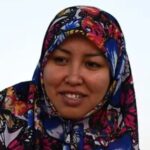
The Guardian (UK): Two days ago I had to flee my home and life in the north of Afghanistan after the Taliban took my city. I am still on the run and there is no safe place for me to go. Last week I was a news journalist. Today I can’t write under my own name or say where I am from or where I am. My whole life has been obliterated in just a few days. Click here to read more (external link).
Posted in Afghan Women, Civilian Injuries and Deaths, Human Rights, Media, Security, Taliban | Tags: Afghan Journalists, Taliban War on Muslims |

Iran-Afghan trade comes to full halt because of surging violence: Businessman

10th August, 2021 · admin

Press TV
August 10, 2021

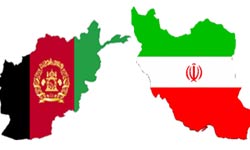
An Iranian businessman says trade with Afghanistan has fully stopped amid rising tensions in the neighboring country.

Hossein Salimi, who chairs the Iran-Afghanistan Joint Chamber of Commerce, said on Tuesday that even Afghan traders had stopped processing Iranian export cargoes destined for Afghanistan because of surging violence in Afghan cities and towns.

Trade with Afghanistan accounts for a considerable part of Iran’s export revenues with monthly purchases by customers in the country normally reaching over a quarter of a billion US dollars.

However, exports started to decline last month after fighting intensified between the Taliban and government forces in various regions.

Salimi told the semi-official ILNA news agency that air strikes carried out by the United States in recent days had complicated the security situation in Afghanistan and led to full closure of border crossings from Iran.

He said that local middlemen who had been taking risk of delivering Iranian cargoes to Afghan customers had stopped operating because of increased fighting.

The businessman said it would take at least 10 days before the two countries can resume limited trade through their border crossings.

Figures by Iran’s customs office IRICA published on Monday showed that exports to Afghanistan had reached $258 million in value terms in the calendar month to July 22.

The figures showed that Iranian monthly exports to Afghanistan had increased by nearly 20% year on year in late July and just before violence began to intensify in the country.

That comes as an IRICA spokesman on Tuesday denied reports about a full closure of border crossings on the Iran-Afghan borders, saying trade was flowing normally between the two countries.

Posted in Economic News, Iran-Afghanistan Relations |
Previous Posts
Next Posts

Subscribe to the Afghanistan Online YouTube Channel

---

---

---

Get Yours!

Peace be with you

Afghan Dresses

© Afghan Online Press
  • About
  • Links To More News
  • Opinion
  • Poll