
logo

Daily Updated Afghan News Service

  • Home
  • About
  • Opinion
  • Links to More News
  • Good Afghan News
  • Poll Results
  • Learn about Islam
  • Learn Dari (Afghan Persian/Farsi)

Recent Posts

  • Afghan Deportations Is Strategic Mistake, Says European Parliament Member May 6, 2026
  • Ex-MP Mohsin Dawar says Pakistan strikes avoid Taliban members May 6, 2026
  • Afghan fighter Waheedullah Nezhand to face Argentine opponent May 6, 2026
  • Tolo News in Dari – May 6, 2026 May 6, 2026
  • Rising Crime in Afghanistan: Citizens Say Taliban Are Behind Most Cases May 5, 2026
  • Local elders broker fragile ceasefire between Taliban, Pakistan in Kunar May 5, 2026
  • Catalan Parliament Voices Concern Over Hazaras Situation In Afghanistan May 5, 2026
  • Afghanistan’s powerlifting team to compete in Belarus competitions May 5, 2026
  • Tolo News in Dari – May 5, 2026 May 5, 2026
  • Taliban say three civilians killed in new Pakistan shelling in Kunar May 4, 2026

Categories

  • Afghan Children
  • Afghan Sports News
  • Afghan Women
  • Afghanistan Freedom Front
  • Al-Qaeda
  • Anti-Government Militants
  • Anti-Taliban Resistance
  • AOP Reports
  • Arab-Afghan Relations
  • Art and Culture
  • Australia-Afghanistan Relations
  • Book Review
  • Britain-Afghanistan Relations
  • Canada-Afghanistan Relations
  • Censorship
  • Central Asia
  • China-Afghanistan Relations
  • Civilian Injuries and Deaths
  • Corruption
  • Crime and Punishment
  • Drone warfare
  • Drugs
  • Economic News
  • Education
  • Elections News
  • Entertainment News
  • Environmental News
  • Ethnic Issues
  • EU-Afghanistan Relations
  • Everyday Life
  • France-Afghanistan Relations
  • Germany-Afghanistan Relations
  • Haqqani Network
  • Health News
  • Heroism
  • History
  • Human Rights
  • India-Afghanistan Relations
  • Interviews
  • Iran-Afghanistan Relations
  • ISIS/DAESH
  • Islamophobia News
  • Japan-Afghanistan Relations
  • Landmines
  • Media
  • Misc.
  • Muslims and Islam
  • NATO-Afghanistan
  • News in Dari (Persian/Farsi)
  • NRF – National Resistance Front
  • Opinion/Editorial
  • Other News
  • Pakistan-Afghanistan Relations
  • Peace Talks
  • Photos
  • Political News
  • Reconstruction and Development
  • Refugees and Migrants
  • Russia-Afghanistan Relations
  • Science and Technology
  • Security
  • Society
  • Tajikistan-Afghanistan Relations
  • Taliban
  • Traffic accidents
  • Travel
  • Turkey-Afghanistan Relations
  • UN-Afghanistan Relations
  • Uncategorized
  • US-Afghanistan Relations
  • Uzbekistan-Afghanistan Relations

Archives

Dari/Pashto Services

  • Bakhtar News Agency
  • BBC Pashto
  • BBC Persian
  • DW Dari
  • DW Pashto
  • VOA Dari
  • VOA Pashto

Verbal Clash Reported between Dostum, Taliban’s Fazil in Moscow

20th March, 2021 · admin

Dostum

Tolo News: Fazil was the Taliban’s designated chief of army staff during their regime in Kabul and the two know each other from the mid-1990s. According to reports, the verbal clash broke out when Dostum put his hand on Mullah Fazil’s shoulder to inquire about his health, but Fazil removed Dostum’s hand from his shoulder and called him a “traitor” and a “killer.” Click here to read more (external link).

Posted in History, Peace Talks, Political News, Taliban | Tags: Dostum, Mullah Fazil |

U.S. government to consider proposal to free Afghan drug lord in exchange for American contractor

20th March, 2021 · admin

Bashir Noorzai

Yahoo News: U.S. government agencies are again looking at a long-standing proposal to release an Afghan drug kingpin [Bashir Noorzai] in exchange for concessions in peace talks, which would include the release of an American held [by the Taliban-aligned Haqqani network] in Afghanistan, according to multiple sources familiar with the matter. Click here to read more (external link).

Posted in Crime and Punishment, Haqqani Network, Taliban, US-Afghanistan Relations | Tags: Bashir Noorzai |

Tolo News in Dari – March 20, 2021

20th March, 2021 · admin

Posted in News in Dari (Persian/Farsi) |

Abdullah blasts Ghani for sacking interior minister

20th March, 2021 · admin

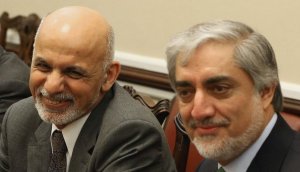
Ghani (left) and Abdulllah (right) – File photo

Ariana: Abdullah Abdullah, the High Council for National Reconciliation chair, on Saturday voiced his dissatisfaction over President Ashraf Ghani’s move Friday to dismiss Interior Minister Masoud Andarabi. Abdullah stated the move was in violation of the power-sharing agreement he signed with Ghani in May last year – a deal that signaled the end of a months-long stalemate that plunged the country into a political crisis following disputed elections. Click here to read more (external link).

Related

  • Afghan president appoints 2 ministers, angers ruling partner
Posted in Political News | Tags: Ashraf Ghani, Ashraf Ghani Government, Dr. Abdullah, Massoud Andarabi |

Untangling Taliban’s Ties With Al-Qaeda ‘Extremely Difficult’

20th March, 2021 · admin

Al Qaeda leader, Ayman al-Zawahri

Frud Bezhan
March 19, 2021

Radio Free Europe/Radio Liberty

Afghan special forces stormed an isolated mudbrick house in a Taliban-controlled district of Ghazni Province in October, killing six suspected militants — including Husam Abd-al-Ra’uf, the No. 2 figure in the Al-Qaeda terrorist network.

The Egyptian national, also known as Abu Muhsin al-Masri, was on the FBI’s Most Wanted Terrorists list for conspiracy to kill U.S. citizens.

Just weeks later, Afghan forces killed another senior Al-Qaeda leader named Mohammad Hanif in a Taliban-controlled district of the southwestern Farah Province.

Such high-profile killings have shown the Taliban still hosts Al-Qaeda more than 19 years after U.S.-led forces toppled the Taliban regime for harboring Al-Qaeda founder Osama bin Laden following the September 11 terrorist attacks against the United States.

Since late 2001, the United States’ core strategic aim in Afghanistan has been to ensure that terrorist groups cannot launch attacks against the United States again from Afghan territory.

Under a deal struck with the United States in February 2020, the Taliban pledged to end its cooperation with Al-Qaeda and start peace talks with the Afghan government.

In exchange, U.S. troops were meant to leave Afghanistan by May 2021.

The Taliban has opened talks in Doha with Afghan government delegates about a possible peace settlement.

But it remains unclear whether the Taliban is willing or able to end its deep links with Al-Qaeda — a decades-old relationship forged through ideological sympathies and a history of shared battlefield struggles.

Now, the Taliban’s apparent failure to fulfil that obligation is complicating efforts to end the war in Afghanistan.

‘Shared History’

The roots of Al-Qaeda date from the Soviet occupation of Afghanistan in the 1980s when bin Laden and future Taliban leaders fought alongside U.S.-backed mujahedin factions that were battling Soviet forces.

After the Soviets withdrew from Afghanistan in 1989, bin Laden and other Saudi fighters in the conflict returned to Saudi Arabia. Then, bin Laden and his Saudi allies moved to Sudan before returning in 1996 to Afghanistan, where they were offered accommodation and protection by the Taliban regime.

In return, Al-Qaeda provided crucial military training, funds, and weapons to the Taliban — which had emerged just a few years earlier in Kandahar and had seized large swaths of Afghan territory following a brutal civil war between rival mujahedin factions.

From its sanctuaries in Afghanistan, Al-Qaeda orchestrated a series of attacks against U.S. targets around the world, culminating in the September 11, 2001 terrorist attacks in the United States that killed nearly 3,000 people.

A U.S.-led military campaign since then has severely weakened Al-Qaeda, which is now thought to have only a few hundred fighters remaining in Afghanistan.

But observers say the terrorist network remains a crucial part of the Taliban insurgency, with Al-Qaeda figures serving as military advisers, explosives experts, and instructors on their extremist interpretation of Islam.

“It will be extremely difficult to untangle these two groups,” says Weeda Mehran, an Afghanistan expert at Britain’s University of Exeter. “Their ties have been cemented through factors such as shared history, close collaboration, and shared patrons that, at the very least, will take time and effort to be severed.”

A United Nations monitoring team said in February that it had evidence of Al-Qaeda fighters who are still training and advising the Taliban.

It said Al-Qaeda members are often embedded in Taliban units to act as military advisers for key operations.

The U.N. monitoring team also said the Taliban had “regularly consulted” with Al-Qaeda during negotiations with the United States last year and “offered guarantees that it would honor their historical ties.”

Mehran expects that the Taliban will continue to maintain its ties to Al-Qaeda even if an intra-Afghan peace deal is agreed upon.

“Certain elements of the Taliban will continue with Al-Qaeda,” Mehran says. “Up to a certain degree, this might be tolerated by everyone as this can be a buffer against more pernicious groups in the region, such as Islamic State.”

‘Incremental Steps’

In fact, the 2020 U.S.-Taliban deal does not include an explicit Taliban commitment to break off ties with Al-Qaeda.

The agreement states that the Taliban “will not allow any of its members, other individuals or groups, including [Al-Qaeda], to use the soil of Afghanistan to threaten the security of the United States and its allies.”

It also says the Taliban must “send a clear message” to Al-Qaeda that they “have no place in Afghanistan,” not to “cooperate” with them, and to “prevent them from recruiting, training, and fundraising.”

It also says the Taliban cannot “provide visas, passports, travel permits, or other legal documents” that allow Al-Qaeda members to enter Afghanistan.

Ibraheem Bahiss, an independent Afghan research analyst, says the Taliban has made “some incremental steps” in fulfilling its commitments.

Bahiss says the Taliban has “taken a very strong stance” toward the rival IS militants, although it has been “less forceful” with other transnational groups such as Al-Qaeda.

In February, the Taliban issued instructions to its members to avoid recruiting or harboring foreign fighters and stipulating punishment for violators. It is unclear if those rules have been implemented.

Observers say it will be difficult to determine if the Taliban has met all of its obligations. The U.S.-Taliban deal includes secret annexes while the publicly available text contains ambiguities that make it difficult to verify compliance.

It is unclear, for example, if the Taliban’s commitments extend to territories where they have full control or include contested areas. The definition of control is also vague. The distinction is significant because nearly half of Afghanistan’s districts are contested by the Taliban and control over specific territory is often changing.

The Taliban’s obligation to prevent Al-Qaeda from using Afghan soil to plot and mount attacks on the United States and its allies is the most specific stipulation in the deal. But proving they have failed to comply with that obligation also is difficult.

“The Taliban has the luxury of plausible deniability,” says Michael Kugelman, deputy director of the Asia Program at the Washington-based Wilson Center. “It’s easy to find examples of the Taliban providing space to the group. It’s a lot harder to point to examples where the Taliban is providing space to Al-Qaeda members that are plotting attacks on the United States. There’s no smoking gun.”

Kugelman says the difficulty of verifying Taliban compliance on its counterterrorism commitments is a “reflection of a flawed deal.”

In February, a report to Congress by the Office of the Inspector General on the U.S. military mission in Afghanistan said “it was unclear whether the Taliban was in compliance with the agreement, as members of Al-Qaeda were integrated into the Taliban’s leadership and command structure.”

The Pentagon warned in July that that while Al-Qaeda currently poses a “limited threat” to the United States in Afghanistan, the group is resilient and its interest in attacking U.S. and Western targets “persists.”

Ultimately, the question of whether the Taliban has met its obligations regarding Al-Qaeda will be a political one rather than a legal interpretation of the agreement.

“It will be determined by the United States at its sole discretion and with view to overarching political considerations,” Bahiss says.

Counterterrorism Lens

Analysts say President Joe Biden could threaten to hold up the withdrawal from Afghanistan of the remaining U.S. troops if there is no indication, or insufficient evidence, that the Taliban has ended its cooperation with Al-Qaeda.

Biden has long seen the war in Afghanistan through a counterterrorism lens. Before assuming office in January, he said Washington should pull out of the country, save for a relatively small number of troops — “several thousand” — to fight Al-Qaeda and IS militants.

If Biden’s concerns are not addressed, observers say he could retain a small counterterrorism force that would remain in Afghanistan beyond a major military withdrawal — even though the existing U.S.-Taliban deal includes no provision for a continued U.S. military presence.

But his administration has been surprisingly silent about Al-Qaeda in its messaging on Afghanistan. A new U.S. peace proposal and accompanying draft peace deal submitted to the Afghan government and the Taliban in late February was largely quiet on counterterrorism issues.

Kugelman says it could be an issue of sequencing, with Washington first looking to focus on reviving the Afghan peace process, building a regional consensus for peace, and incentivizing the Taliban to reduce violence.

“The United States has not downgraded Al-Qaeda as a concern,” Kugelman concludes.

Copyright (c) 2021. RFE/RL, Inc. Reprinted with the permission of Radio Free Europe/Radio Liberty, 1201 Connecticut Ave NW, Ste 400, Washington DC 20036.
Posted in Al-Qaeda, ISIS/DAESH, Peace Talks, Security, Taliban, US-Afghanistan Relations |

Afghanistan Had 8 Constitutions in Last 100 Years

20th March, 2021 · admin

Tolo News: Afghanistan has had eight constitutions in the last 100 years that have been prone to violations by the different governments throughout the century.  Lawyers said the constitution ensures law and order but even the 2004 Constitution that was seen as one of the best constitutions in the last 100 years, was faced with violations by governments. Click here to read more (external link).

Posted in History, Political News |

Afghanistan Wins T20 Series against Zimbabwe

20th March, 2021 · admin

Tolo News: Afghanistan’s national cricket team the three-match T20I series against Zimbabwe at the first opportunity when they coasted to a 47-run win in Abu Dhabi on Saturday, 20 March. Click here to read more (external link).

Related

  • Nabi upbeat about T20 World Cup after series win against Zimbabwe
Posted in Afghan Sports News | Tags: Cricket |

Tolo News in Dari – March 19, 2021

19th March, 2021 · admin

Posted in News in Dari (Persian/Farsi) |

In Moscow, Afghan Government, Taliban Agree To Accelerate Peace Talks

19th March, 2021 · admin

Radio Free Europe/Radio Liberty
March 19, 2021

A senior Afghan official says the government and the Taliban have agreed at a meeting in Moscow to try to accelerate talks aimed at ending decades of war in the country.

The March 19 meeting followed an international conference in the Russian capital on the intra-Afghan peace process, just six weeks before a deadline for the United States to pull out troops that have been in the war-torn country for nearly 20 years.

The gathering was aimed at breathing life into negotiations that started in September between the Afghan government and the Taliban, which have stalled over government accusations that the insurgents have done too little to halt violence.

Abdullah Abdullah, chairman of Afghanistan’s High Council for National Reconciliation, told Russia’s RIA Novosti news agency that the sides did not discuss any specific issues when they met on March 19.

But he said the Afghan government team expressed “readiness to accelerate the [peace] process” and that the Taliban “did as well.”

Abdullah also warned that if the current opportunity for peace is missed, neither side would benefit.

In a joint statement issued by the U.S. State Department after the conclusion of the March 18 conference, the United States, Russia, China, and Pakistan called on Afghanistan’s warring sides to “engage immediately in discussions on fundamental issues to resolve the conflict.”

Such issues included “the foundations of the future peaceful and stable Afghan state, the content of a political road map leading to an inclusive government, and the modalities of a permanent and comprehensive cease-fire,” it said.

“At this pivotal moment, our four states call on the parties to negotiate and conclude a peace agreement that will bring an end to over four decades of war in Afghanistan,” the statement said, urging the Taliban not to launch a spring offensive.

The Moscow meeting was the first of three planned international conferences ahead of a May 1 deadline for the withdrawal of U.S. and NATO troops from Afghanistan.

The date was fixed under a February 2020 agreement between the administration of former U.S. President Donald Trump. But his successor, Joe Biden, has warned that it could be difficult for the United States to meet the deadline, especially with violence escalating in the country.

A member of the Taliban delegation sent to Moscow told a press conference on March 19 that if Washington fails to withdraw its forces by May 1, the insurgents could respond with force.

Asked whether the group could launch an offensive in the spring if U.S. forces do not leave the country on time, Mohammad Suhail Shaheen said: “If they don’t leave by the end of April, they will thus violate the agreement. In this case…there would certainly be a counteraction. But we hope that it won’t happen,” according to Interfax.

The Moscow conference was seen as a curtain-raiser for a larger meeting of regional players in Turkey in April, as well as a summit that U.S. envoy Zalmay Khalilzad has asked the United Nations to organize.

The meeting included representatives of the Taliban, the Afghan government, and the country’s negotiation team, as well as officials from Russia, China, Pakistan, and the United States.

It marked the first time Washington has sent a senior official to participate in Afghan peace negotiations convened by Russia.

Khalilzad’s presence was seen as a sign of Washington’s increasing effort to attract support among regional powers for its plans for Afghanistan.

With reporting by Reuters and Interfax

Copyright (c) 2021. RFE/RL, Inc. Reprinted with the permission of Radio Free Europe/Radio Liberty, 1201 Connecticut Ave NW, Ste 400, Washington DC 20036.

Related

  • Pakistan’s Support for Afghan Peace Led to Doha Deal: Pakistani Army Chief
  • Herat Religious Scholars Call for End to Violence
  • MoFA Welcomes Moscow Meeting’s Statement on Afghanistan
  • Biden administration considering 6-month extension for US troops in Afghanistan
Posted in Pakistan-Afghanistan Relations, Peace Talks, Russia-Afghanistan Relations, Security, Taliban, US-Afghanistan Relations | Tags: Ashraf Ghani Government, Dr. Abdullah, Suhail (Sohail) Shaheen |

President Ghani appoints new security ministers

19th March, 2021 · admin

Ariana: President Mohammad Ashraf Ghani Friday appointed former Kandahar Governor Hayatullah Hayat as Acting Interior Minister and Chief of Army Staff General Yasin Zia as Acting Defense Minister, the National Security Council said in a statement. Click here to read more (external link).

Posted in Political News, Security | Tags: Ashraf Ghani, Ashraf Ghani Government, Hayatullah Hayat, Yasin Zia |
Previous Posts
Next Posts

Subscribe to the Afghanistan Online YouTube Channel

---

---

---

Get Yours!

Peace be with you

Afghan Dresses

© Afghan Online Press
  • About
  • Links To More News
  • Opinion
  • Poll