logo

Daily Updated Afghan News Service

  • Home
  • About
  • Opinion
  • Links to More News
  • Good Afghan News
  • Poll Results
  • Learn about Islam
  • Learn Dari (Afghan Persian/Farsi)

Recent Posts

  • Heavy Bride Prices and Costly Weddings Push Young People to Migrate in Pursuit of Marriage November 11, 2026
  • Six People Executed For Alleged Taliban Spying, Says Afghanistan United Front November 11, 2026
  • Historic first for Rahmat Shah after ICC rankings update November 11, 2026
  • Tolo News in Dari – November 11, 2026 November 11, 2026
  • Years Late, Just In Time? Turkmenistan’s TAPI Gas Pipeline Nears Afghan City November 10, 2026
  • US Democrats Seek Vote on Bill to Protect Afghans From Deportation November 10, 2026
  • More Than 4 Million Children in Afghanistan To Need Treatment For Acute Malnutrition in 2027 November 10, 2026
  • Tolo News in Dari – November 10, 2026 November 10, 2026
  • Scotland boycotts bilateral cricket matches against Afghanistan November 10, 2026
  • Taliban official’s aides replace Tajik Red Crescent staff in Paktia November 9, 2026

Categories

  • Afghan Children
  • Afghan Sports News
  • Afghan Women
  • Afghanistan Freedom Front
  • Afghanistan United Front
  • Al-Qaeda
  • Anti-Government Militants
  • Anti-Taliban Resistance
  • AOP Reports
  • Arab-Afghan Relations
  • Art and Culture
  • Australia-Afghanistan Relations
  • Book Review
  • Britain-Afghanistan Relations
  • Canada-Afghanistan Relations
  • Censorship
  • Central Asia
  • China-Afghanistan Relations
  • Civilian Injuries and Deaths
  • Corruption
  • Crime and Punishment
  • Drone warfare
  • Drugs
  • Economic News
  • Education
  • Elections News
  • Entertainment News
  • Environmental News
  • Ethnic Issues
  • EU-Afghanistan Relations
  • Everyday Life
  • France-Afghanistan Relations
  • Germany-Afghanistan Relations
  • Haqqani Network
  • Health News
  • Heroism
  • History
  • Human Rights
  • India-Afghanistan Relations
  • Interviews
  • Iran-Afghanistan Relations
  • ISIS/DAESH
  • Islamophobia News
  • Japan-Afghanistan Relations
  • Landmines
  • Media
  • Misc.
  • Muslims and Islam
  • NATO-Afghanistan
  • News in Dari (Persian/Farsi)
  • NRF – National Resistance Front
  • Opinion/Editorial
  • Other News
  • Pakistan-Afghanistan Relations
  • Peace Talks
  • Photos
  • Political News
  • Reconstruction and Development
  • Refugees and Migrants
  • Russia-Afghanistan Relations
  • Science and Technology
  • Security
  • Society
  • Tajikistan-Afghanistan Relations
  • Taliban
  • Traffic accidents
  • Travel
  • Turkey-Afghanistan Relations
  • UN-Afghanistan Relations
  • Uncategorized
  • US-Afghanistan Relations
  • Uzbekistan-Afghanistan Relations

Archives

Dari/Pashto Services

  • Bakhtar News Agency
  • BBC Pashto
  • BBC Persian
  • DW Dari
  • DW Pashto
  • VOA Dari
  • VOA Pashto

Mullah Baradar — The Taliban’s Most Public Face

16th August, 2021 · admin

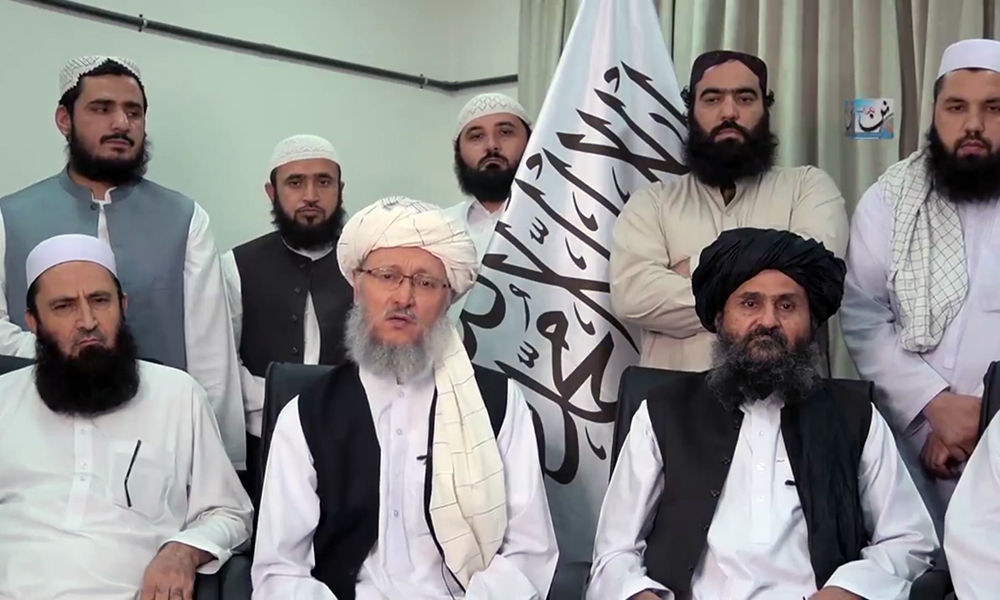
Baradar (center)

By Golnaz Esfandiari
Radio Free Europe/Radio Liberty
August 16, 2021

Abdul Ghani Baradar, known as Mullah Baradar, is a co-founder of the Taliban and senior leader of the militant Islamist group who is expected to hold a top role in governing Afghanistan in the wake of the Taliban’s takeover of the country.

Baradar — the most public face of the Taliban — was also the insurgent group’s representative who signed the landmark February 2020 Doha agreement with the United States that aimed to end the 20-year war in Afghanistan.

Born in 1968 in Uruzgan Province, Baradar is a Durrani Pashtun from the Popalzai tribe. He also served as the Taliban’s deputy defense minister.

Baradar fled to Pakistan after the U.S. invasion of Afghanistan following the September 11, 2001, terrorist attacks on the United States that led to the group’s ouster.

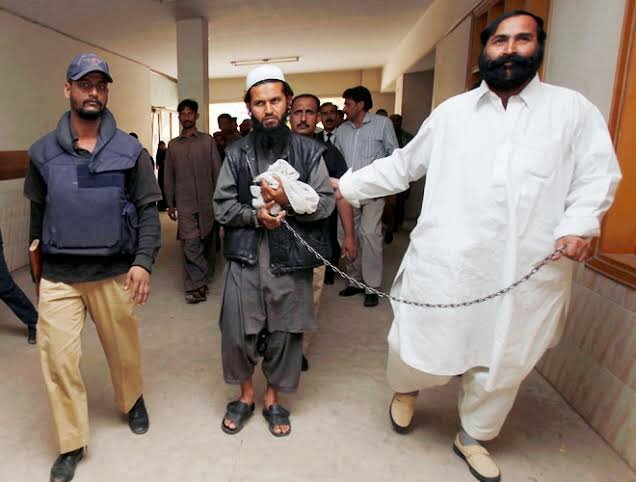
Baradar spent eight years in jail in Pakistan after being reportedly arrested in Karachi in 2010 in an operation by U.S. and Pakistani intelligence agents. He was released following a request by U.S. envoy to Afghanistan Zalmay Khalilzad to play a role in the peace talks due to his authority and his reputation for being able to negotiate.

But while the 2020 deal with the United States ended America’s longest war, it also paved the way for the Taliban’s triumphant return to Kabul on August 15 after it seized much of the country within a week as Afghan forces melted away.

‘A Very Calm Person’

Baradar, who was reported to be on his way to Kabul on August 15 for the first time in nearly two decades, could play a senior role in Afghanistan’s future administration.

Suhail Shaheen, a Taliban spokesman and negotiator, told the Associated Press on August 16 that the militants would hold talks in the coming days aimed at forming an “open, inclusive Islamic government.”

Baradar, who serves as the head of the Taliban’s political bureau, is a powerful figure who is respected within the group for his military as well as negotiating skills.

In a brief video statement on August 15, Baradar said the group’s victory was unexpectedly swift, adding that the real test would begin now with serving the people and resolving their problems.

Journalist Sami Yousaifzai has covered the Taliban for many years and has met with Baradar.

“Baradar is a very calm person, I met him three or four times, he’s very diplomatic, he only speaks to the point. Even before his capture he was known as a figure silently doing a lot of thinking [for the Taliban]. He has a lot of respect within the Taliban,” Yousafzai told RFE/RL.

“I think he has ambitions to become leader and he’s the one who struck a deal with the Americans very successfully,” he added. “As much as I’ve heard from the Taliban, he also has a desire to be in a senior role in the future.”

Working In The Shadows

Baradar, who became second-in-command after the death of elusive Taliban leader Mullah Omar in 2013, had reportedly worked in the shadows for years, strategizing the bloody Taliban insurgency and appointing the group’s military commanders.

During his detention in Pakistan he was reported to have provided the United States with “useful” information about the inner workings of the militant group.

Baradar is from the same tribe as former Afghan President Hamid Karzai, who has stayed in Kabul and has said he is working “to solve the issue of Afghanistan with the Taliban leadership peacefully.”

Baradar, who fought the Soviets in the 1980s, held several posts under the brutal Taliban rule from 1996 to 2001 during which women were stripped of basic rights, including being banned from studying and working and having restricted access to medical care.

The group has in recent weeks attempted to project a more moderate image while many — including scores of Afghans fleeing their country and those who have lived in recent years in areas controlled by the Taliban — remain unconvinced.

In a 2009 interview with Newsweek, Baradar said the group was determined to fight until the expulsion of U.S. troops from the country.

“The history of Afghanistan shows that Afghans never get tired of struggling until they have freed their country. We shall continue our jihad till the expulsion of our enemy from our land,” he said.

In March 2020, U.S. President Donald Trump held a 35-minute phone conversation with the Taliban political leader that Trump described as “very good.”

In November, Baradar met with then U.S. Secretary of State Mike Pompeo in Doha.

He was also involved in recent days in failed talks with the administration of President Ashraf Ghani, who fled Afghanistan on August 15.

Copyright (c) 2021. RFE/RL, Inc. Reprinted with the permission of Radio Free Europe/Radio Liberty, 1201 Connecticut Ave NW, Ste 400, Washington DC 20036.
Posted in History, Pakistan-Afghanistan Relations, Taliban, US-Afghanistan Relations | Tags: Mullah Abdul Ghani Baradar, Taliban - Pakistani asset |

Rapid Taliban Offensive Avoided Tactical Mistake Made in the 1990s

16th August, 2021 · admin

Taliban militants (file photo)

Jamie Dettmer
VOA News
August 16, 2021

The rapid Taliban offensive across Afghanistan that culminated Sunday with the flight of Afghan President Ashraf Ghani was meticulously planned and executed with ruthless efficiency, say Western military experts.

And they note the Islamist militants appeared to have learned from their tactical mistake in the mid-1990s, when they overran Kabul before having secured the north of the country, allowing opponents to form a Northern Alliance opposition.

This time around, Taliban commanders have been much more methodical, building up momentum by securing outlying districts, securing the main border posts with neighboring Pakistan and Iran, then moving on to regional capitals, and leaving Kabul for last after seizing Mazar-e-Sharif, Afghanistan’s fourth largest city and the onetime stronghold of the Northern Alliance.

The Northern Alliance helped U.S.-led forces topple the Taliban in 2001, after the September 11th terror attacks on the United States.

A pair of veteran warlords had pledged to assist the Afghan army in protecting Mazar-e-Sharif, but as with many other provincial capitals, a strong defense did not materialize.

Demoralized Afghan army forces shrank away or surrendered. The pro-government militias downed their weapons or switched sides after warlords Abdul Rashid Dostum and Ata Mohammad Noor fled abruptly, Abas Ebrahimzada, a local lawmaker, told the Associated Press.

“The Taliban’s success has not happened by chance,” said Tim Willasey-Wilsey, a former British diplomat and now a visiting professor at King’s College London. “It is clearly the fruit of preparation and planning. Above all, they have learnt from the experience of 1994 to 1996 when they eventually took Kabul but failed to capture the north,” he wrote in a commentary for the Cipher Brief, an online subscription-based conversation site connecting private and public sector security professionals.

Western diplomats say Abdul Ghani Baradar, the Taliban’s political chief, and Mullah Yaqoob, son of the Taliban’s founder Mullah Omar, who leads the group’s military commission, were among the main strategic planners behind the offensive, likely plotted over years.

Baradar is a veteran leader and was largely brought up in Kandahar — the Taliban’s birthplace. His military experience goes back even before the formation of the Taliban — he fought against the Russians in the 1980s. After the Russians left, he partnered with Mullah Omar, his brother-in-law, to set up the Taliban movement of young “purist” Islamic scholars with the backing of Pakistan’s Inter-Services Intelligence agency. With the same rapidity seen in recent weeks, the Taliban in 1996 seized power after capturing a series of provincial capitals.

Baradar was detained by Pakistani security forces in 2010 at the request of the Obama administration but freed three years ago, again at the request of the Trump administration, to lead the Taliban’s negotiation team in Qatar, where a partially secret deal was struck in February 2020 outlining the principle of a U.S. withdrawal.

Some critics of the Biden’s administration’s decision to withdraw argue that the negotiations in Qatar, which since became deadlocked when it came to peace talks between the Afghan government of Ashraf Ghani and the Taliban, was just seen by the Islamist militants as a staging post to their sweeping into power.  They noted the discrepancies between what the Taliban were saying in Doha, during ultimately fruitless exchanges, and what the group’s fighters were doing.

And it may have lulled Washington into believing that the Taliban were prepared to reach some political accommodations with their Afghan adversaries. Others see the talks as a contributing factor in the demoralization of the Afghan government and its 350,000-strong security forces, trained and equipped at huge cost by the U.S. and Western coalition allies.

“The Taliban’s advances can be attributed primarily to the erosion of morale and cohesion among the government’s security forces and political leadership,” according to Laurel Miller and Andrew Watkins of the International Crisis Group, a Brussels-based research group.

In a commentary Saturday, they noted that since May, while talks in Doha were under way, the Taliban “drove security forces from more than 200 of the country’s roughly 400 districts, in many instances without much fighting.”

They added, “The first districts to fall were home to poorly resourced and surrounded small bands of government forces, and the Taliban reached out to many via local elders, persuading them to leave their posts without fighting. With each new advance, a sense of momentum grew among the insurgents’ own rank and file but also among local communities. Over recent months, the Taliban actively engaged local communities throughout the country with a mixture of disinformation, threats, targeted violence and promises of clemency, even in some cases for troops and civilian officials.”

Back in June, Andrew Wilder of the United States Institute of Peace, a Washington-based independent institute founded by the U.S. Congress, was warning the decision to withdraw U.S. forces “without a cease-fire or a framework for a political agreement between the Taliban and the government caught Afghans and regional countries by surprise,” adding the Taliban was “capitalizing on the moment to seize dozens of districts and project an air of confidence.”

As U.S. troops started the drawdown, psychological and military momentum shifted to the Taliban. After a trip to Kabul, he cautioned, “Afghan security forces suffer from low morale and frequent changes in leadership and supply shortages caused by poor planning and the withdrawal of international air support.”

Western military officials say the failure by the Ghani government to shape a strategic defense plan, give clear instructions to units, and even to supply with any consistency, further corroded the confidence of the Afghan military. And the speed of the Taliban offensive disoriented them as did suddenly being cut off from close U.S. air support, which a lot of their training focused on.

Analyst Jack Watling of the Royal United Services Institute, a British defense-focused research group, told the BBC: “Soldiers are often sent to areas where they have no tribal or family connections. One reason why some may have been so quick to abandon their posts without putting up a fight.”

“I think the demoralization factor was predictable but not factored in enough by the decision-makers in Washington,” a senior British military official told VOA on the condition of anonymity.

“I am not surprised that much by the caving in of Afghan forces — with the notable exception of some special forces — or of local pro-government militias throwing in the towel or even swapping allegiances. If you look at what happened as Soviet forces started their withdrawal in the 1980s, something similar happened with militias and their leaders making their calculations and turning against the government as they sensed the central government was doomed,” he added.

Judging by Taliban actions the past few days, the group’s leaders may have factored into their end game calculations that tribal leaders and some veteran warlords would switch sides. And there are signs that the Taliban leadership has been holding secret talks with key local leaders for weeks to assure them that local political and administrative arrangements can continue as much as before as long as overall Taliban authority is accepted, say British officials.

In Herat, near the Iranian border, local leaders were quick to side last week with the Taliban, including Kamran Alizai, Herat’s provincial council chief, after little fighting, Local pro-government warlord Ismail Khan also quickly submitted and was dispatched by the Taliban to Kabul Friday as a go-between for talks with officials still loyal to the Ghani government, according to local reports.

Posted in History, Security, Taliban | Tags: Mullah Abdul Ghani Baradar, Mullah Mohammad Yaqoob, Pakistan takeover of Afghanistan via Taliban, Taliban - Pakistani asset |

Russia says Afghan president fled with cars and helicopter full of cash – RIA

16th August, 2021 · admin

Ghani

Reuters: Russia’s embassy in Kabul said on Monday that Afghan President Ashraf Ghani had fled the country with four cars and a helicopter full of cash and had to leave some money behind as it would not all fit in, the RIA news agency reported. Click here to read more (external link).

Posted in Corruption, Political News, Russia-Afghanistan Relations | Tags: Ashraf Ghani, Corrupt Ghani |

Taliban urges government staff to return to work

16th August, 2021 · admin

Taliban Militant Leadership

Ariana: In a bid to reassure the nation, the Taliban on Monday called on all government employees, including women, to return to work.  The deputy head of the Taliban’s political office in Qatar Abdul Salam Hanafi stressed that diplomatic missions, and military and civilian government employees can work alongside the Taliban without any concerns and that no one’s rights will be violated. Click here to read more (external link).

Posted in Economic News, Taliban |

Russian Ambassador To Kabul To Meet Taliban

16th August, 2021 · admin

Radio Free Europe/Radio Liberty
August 16, 2021

A senior Russian official says the country’s ambassador to Afghanistan, Dmitry Zhirnov, will hold talks with Taliban representatives on August 17 to discuss the security of Russian citizens and embassy personnel.

Russian presidential envoy Zamir Kabulov told the radio station Ekho Moskvy on August 16 that Zhirnov will meet Taliban representatives in Kabul on how the group plans to provide security for the Russian Embassy in the Afghan capital.

Though Moscow initially said it would not change personnel numbers at the embassy, Kabulov said some staff at the embassy will be given either paid leave or be evacuated to reduce the number of people present during the turmoil.

Zhirnov said that the Taliban militia was already guarding the Russian Embassy.

“Today the Afghan national security military who guarded us left. Taliban representatives assured us again that they will not touch a hair on the heads of Russian diplomats there, saying, ‘You can safely continue working,'” Zhirnov said in a televised interview with Rossia-24.

Russia is estimated to have a staff of around 100 people at the embassy.

On August 15, the Taliban announced it had taken control of the Afghan capital, Kabul, after weeks of capturing large swaths of the country in offensives timed with the announced August 31 departure of U.S. troops from Afghanistan.

Based on reporting by Ekho Moskvy, Rossia-24, and Interfax

Copyright (c) 2021. RFE/RL, Inc. Reprinted with the permission of Radio Free Europe/Radio Liberty, 1201 Connecticut Ave NW, Ste 400, Washington DC 20036.
Posted in Russia-Afghanistan Relations, Security, Taliban |

U.S. Policy Under Fire As Taliban Seizes Control In Afghanistan

16th August, 2021 · admin

Joe Biden

Radio Free Europe/Radio Liberty
August 16, 2021

The sudden seizure of Kabul by Taliban militants after they made rapid advances across the country has triggered sharp criticism of the U.S. policy in Afghanistan, where Washington ultimately failed to build a democratic government capable of withstanding the insurgents despite spending billions of dollars and providing two decades of military support.

U.S. President Joe Biden has yet to issue a statement on the capture of Kabul and the fall of the Afghan government on August 15, but leading figures in his administration have acknowledged they were caught off-guard with the utter speed of the collapse of Afghan security forces ahead of the planned U.S. military withdrawal by the beginning of September.

Biden, who has spent months downplaying the prospect of the Taliban taking control, is now facing rising criticism, especially from Republicans in Congress, with critics saying that the United States’ reputation as a global power had been badly tarnished.

“It is a colossal failure, and it is a humiliation,” former UN envoy to Afghanistan Peter Galbraith said on August 16, adding that it remained to be seen how it affects “America’s standing in the world.”

Galbraith told Reuters that rampant corruption within the Afghan police and all levels of government meant that money that the United States was giving in aid often ended up in Taliban hands, while local warlords, government officials, and police cooperated with the militant group.

Others, such as William Maley, emeritus professor at Australian National University, say several missteps led to the collapse of the Western-backed government in Afghanistan, but ultimately “appalling U.S. decision-making lies at the heart of the tragedy.”

“It is hard to see how Biden can emerge from this disaster without his credibility shredded, but the greater loss is to the credibility of the United States, which increasingly appears a fading power internationally,” he said.

“When historians look back at the shambolic U.S. exit from Afghanistan, it may increasingly appear a critical marker of America’s decline in the world, far eclipsing the flight from Saigon in 1975,” he added.

Much has changed in the two decades since the Taliban was overthrown by the U.S.-led invasion nearly 20 years ago, and some analysts have expressed concern that gains in areas such as women’s rights and the rights of the Shi’ite Hazara minority group will quickly disappear.

Under the 1996-2001 Taliban rule, women could not work, girls were not allowed to attend school, and women had to cover their faces and be accompanied by a male relative if they wanted to venture out of their homes.

U.S. national-security adviser Jake Sullivan said in an interview on NBC’s Today show on August 16 that while the situation on the ground in Afghanistan deteriorated faster than anticipated, Biden is prepared to marshal the international community on human rights in Afghanistan, where the Taliban is seizing power.

“He is prepared to marshal the international community on this issue. He cares passionately about these human rights questions, and we will stay focused on them in the period ahead,” Sullivan said.

“But that was not a reason for the United States to enter a third decade of war in the middle of an internal conflict in another country,” he added.

At home, Biden may feel even more heat as Republicans seize on the issue, saying it raises security fears inside the United States.

“We are going to go back to a pre-9/11 state. A breeding ground for terrorism,” Representative Michael McCaul (Republican-Texas) told CNN on August 15.

In an interview, British Defense Secretary Ben Wallace tried to deflect some of the criticism from Biden and the United States, saying the Taliban’s takeover was a “failure of the international community.”

Assessing that the West’s intervention was a job only half-done, the former British Army officer maintained that the 20-year intervention by U.S.-led forces “wasn’t a waste,” but he accused Western powers of being short-sighted in policy matters.

“If it’s a failure, it’s a failure of the international community to not realize that you don’t fix things overnight,” he told the BBC, citing “a failure to recognize that military might on its own” could not completely resolve the situation in Afghanistan.

“Half the mission on its own…was entirely successful,” he said, pointing to the removal of the Taliban following the September 11, 2001, attacks and the death of Al-Qaeda leader Osama bin Laden, which he said made the world safer.

But “that doesn’t mean that the next 20 years are going to be the same,” Wallace added, echoing concerns about the impact of the hard-line group’s resurgence on world security.

With reporting by AFP, Reuters, the BBC, and AP

Copyright (c) 2021. RFE/RL, Inc. Reprinted with the permission of Radio Free Europe/Radio Liberty, 1201 Connecticut Ave NW, Ste 400, Washington DC 20036.

Related

  • Airlines Begin To Avoid Afghan Airspace Amid Travel Chaos
  • Five Dead, Chaos Envelopes Kabul Airport As Afghans Try To Flee Taliban
  • Reporter’s Diary: The Day Kabul Fell
Posted in Everyday Life, Security, Taliban, US-Afghanistan Relations |

The Taliban Is Back — What Happens Next?

15th August, 2021 · admin

Taliban’s Baradar (left) and Pakistani Foreign Minister Qureshi (right). File photo.

Frud Bezhan
Radio Free Europe/Radio Liberty
August 15, 2021

The situation in the Afghan capital, Kabul, is changing rapidly as the Taliban has moved into the city and taken over parts of it, including the Presidential Palace. This happened as Afghan President Ashraf Ghani fled the country and security forces in the city melted away.

Though much is unknown, here are some of the key questions for the war-torn country as the militant Islamist group takes control of the entire country.

What Happened To The Democratically Elected Afghan Government?

The internationally recognized government in Kabul has largely collapsed.

President Ghani flew out of Afghanistan on August 15, effectively ceding power to the Taliban as its fighters surrounded the capital and later entered it. He landed in neighboring Tajikistan and was reported to be headed to a third country.

Key members of Ghani’s administration — including First Vice President Amrullah Saleh, a fierce Taliban critic; National Security Adviser Hamdullah Mohib; and Fazel Fazly, the head of the administrative office of the president — also fled the country.

Some senior government officials, including cabinet ministers, remain in the city.

Who’s In Charge Now?

Afghanistan’s security forces appeared to be partially in control of the city as of late on August 15 but were ceding it rapidly to Taliban fighters.

After initially pledging not to enter the city, the Taliban said it had sent its fighters into “some parts” of the city, allegedly to maintain order and prevent looting. There were some reports of sporadic gunfire around the city, but there did not appear to be major fighting.

Some Afghan soldiers and police officers were seen abandoning their posts, taking off their uniforms, and fleeing with their weapons.

Taliban commanders were shown walking through the Presidential Palace in central Kabul and taking down an Afghan flag in what appeared to be Ghani’s office.

The Taliban fighters quickly took control of key government buildings and Taliban commanders were shown walking through the Presidential Palace and taking down an Afghan flag in what appeared to be Ghani’s office.

Kabul’s international airport is still controlled by a few thousand U.S. troops who are securing the safe departure of foreign diplomats, expats, and Afghans who worked for foreign entities from Kabul.

Omar Samad, a former Afghan diplomat in Europe, said that “there are security units all over but no commander in chief at the helm after the top echelon fled the country.”

Hamid Karzai, Afghanistan’s influential ex-president, announced the creation of a “coordination council” on August 15. He said the body would oversee the peaceful transition of power.

The three-man council includes Abdullah Abdullah, the second-highest government official in Kabul, and Hekmatyar Gulbuddin, one of Afghanistan’s most notorious former warlords and a former militant leader.

“It seems this council is in charge,” says Ali Adili, a researcher at the Afghanistan Analysts Network, an independent think tank in Kabul. “But it’s unclear who has authorized such a council,” he added. “The formation of the council has yet to reassure the people of Kabul.”

What Government Is Likely To Emerge?

Afghan Interior Minister Abdul Sattar Mirzakawal said power would be handed over to a transitional administration. But the Taliban appeared to quash those claims, insisting that the group expected a complete handover of power.

“I fear that the Taliban will take over directly or we will have an interim government that is essentially a Taliban proxy,” said Haroun Rahimi, an assistant professor of law at the American University of Afghanistan in Kabul. “In that case, the future political system is unlikely to be inclusive leading many Afghans to perceive it as imposed and illegitimate.”

U.S. officials had said that Washington would not recognize a Taliban government if the militant group forcibly seized power.

The Taliban has previously said they favored a transitional government if Ghani stepped down. But it is unclear if they will follow through on their pledge.

“Now that Ghani has fled, we will know over the next day or two whether we are headed toward a broad-based set-up or a one-party system, even though the signs point to a more inclusive interim period,” Samad said.

Torek Farhadi, a former adviser to the Afghan government, said if there is a more inclusive interim setup, the Taliban was likely to be dominant but there could be room for other political actors, although he expects it to be lesser-known personalities and stakeholders rather than figures from the current political elite in Kabul.

“The Taliban will probably form a government of their choice, with representatives from all provinces and ethnic groups, but not necessarily from the political figures we know,” Farhadi said.

What About Longer-Term?

A Taliban-dominated government in Kabul is likely to emerge, analysts say.

During its rule, power was centralized in the hands of an “Amir ul-Momineen,” or leader of the faithful. The supreme leader was the head of state and had ultimate authority. This was Mullah Omar, the Taliban’s spiritual leader and founder.

The Taliban has rejected democracy and elections, branding them “foreign imports.”

It is unclear if the Taliban will reestablish its brutal former regime. When it ruled Afghanistan from 1996 to 2001, the fundamentalist Islamists oppressed women, massacred ethnic and religious minorities, and banned music and television.

Early indications suggest the militants will reimpose many of their repressive laws and retrograde policies in Kabul — as they have done in other captured cities and towns throughout Afghanistan.

The extremist group has banned women from working outside the home, severely limited girls’ education, and required women to be accompanied by a male relative if they leave their homes. There have also been several reports of young women being forced to marry Taliban fighters.

Even then, the militants have sought to project a more moderate face, promising to respect women’s rights and protect both foreigners and Afghans. “We assure the people, particularly in the city of Kabul, that their properties, their lives are safe,” Taliban spokesman Suhail Shaheen said on August 15.

What Leverage Will Outside Powers Have?

Western powers had previously pledged to remain engaged in Afghanistan even after the departure of all foreign forces from the country by August 31.

“It is crucial that, as promised, the international community does not once again walk away and abandon Afghanistan as was the case between 1989 and 2001,” Samad said.

“It is also imperative that the Taliban behave in a manner that can retain international attention and support, especially regarding their policies on human [and] gender rights and certain core liberties like freedom of expression.”

Analysts say the United States and other foreign powers can influence Taliban behavior by offering international aid to the destitute country and official recognition to the group. Some say Washington is betting that the Taliban will be reluctant to rule as an international pariah, as it did in the 1990s.

But it is unclear if international legitimacy is still important to the Taliban given that it is on the verge of capturing the entire country — late on August 15 it controlled 27 of Afghanistan’s 34 provinces.

“If the Taliban show that they are not interested in gaining domestic legitimacy through an inclusive government, then international legitimacy could be one of the few sources of leverage left,” Rahimi said.

Copyright (c) 2021. RFE/RL, Inc. Reprinted with the permission of Radio Free Europe/Radio Liberty, 1201 Connecticut Ave NW, Ste 400, Washington DC 20036.
Posted in Afghan Women, Pakistan-Afghanistan Relations, Security, Taliban, US-Afghanistan Relations | Tags: Ashraf Ghani, Ashraf Ghani Government, Ashraf Ghani Government Security Failure, Pakistan takeover of Afghanistan via Taliban, Taliban - Pakistani asset, United States handing Pakistan control of Afghanistan |

Ashraf Ghani has left Tajikistan

15th August, 2021 · admin

Ghani has now left Tajikistan, government sources say, boarding a plane from Dushanbe.

Unclear where he is headed.

— Frud Bezhan فرود بيژن (@FrudBezhan) August 15, 2021

Posted in Political News | Tags: Ashraf Ghani |

Ashraf Ghani’s Statement

15th August, 2021 · admin

Posted in Political News, Security, Taliban | Tags: Ashraf Ghani |

Ghani Leaves Afghanistan as Taliban Arrive at Kabul, Await Power Transfer

15th August, 2021 · admin

Ghani

Ayesha Tanzeem
VOA News
August 15, 2021

KABUL, ISLAMABAD – Afghan President Ashraf Ghani, along with his vice president and other senior officials, flew out of the country on Sunday, setting the stage for Taliban insurgents to regain power in Afghanistan 20 years after a U.S.-led military invasion ousted them.

There was no comment from Ghani. In a recorded message on Saturday, Ghani had told the nation he was consulting with both national and international players on the situation which he called an “imposed war.”

However, Abdullah Abdullah, head of the Afghan National Reconciliation Council, posted a video on Facebook, criticizing Ghani.

Abdullah confirmed that Ghani had left the country and said, “I feel the former president left the country and people in a bad position. God will make him accountable.”

Ghani’s whereabouts and destination are currently unknown.

Afghan Vice President Amrullah Saleh, who is said to have accompanied Ghani and the others who left, in a tweet vowed not to bow to the Taliban, but he did not respond in the message to reports of him leaving the country.

Afghanistan Defense Minister Bismillah Mohammadi in a tweet lamented, in an apparent reference to Ghani and his associates, that they “tied our hands behind our backs and sold the homeland, damn the rich man and his gang.

The Taliban swept through most of the country in a little more than a week and reached the gates of the capital, Kabul, on Saturday. The insurgents, however, stayed out of the city, insisting they wanted a “peaceful transition of power” to spare Kabul of any violence.

Sunday morning, a Taliban delegation engaged prominent Afghan jihadi leaders, politicians and elders in negotiations that culminated in Ghani stepping down from office, sources directly aware of the developments told VOA.

The Taliban maintained in the talks that they would not engage Ghani in any transfer of power, saying he was not “a legitimate” president.

It is not known who was involved in the negotiations, but Abdullah Abdullah, who has overseen U.S.-brokered, intra-Afghan peace talks with the Taliban, was among the negotiators of Sunday’s deal.

Under a deal reportedly reached, a delegation of Afghan leaders, including Abdullah, would travel to Qatar, where “the transfer of power to the Taliban” will formally take place, sources told VOA.

Taliban spokesman Suhail Shaheen, who is based in the group’s political office in the Qatari capital, Doha, said in a statement that insurgent fighters have been directed not to harm anyone or attack government and private properties during the course of military advances.

Shaheen said “anyone found guilty would be prosecuted and severely punished” by the Taliban. He insisted the Islamist group has maintained from the outset that it wanted a “peaceful transition of power,” blaming the beleaguered Ghani government for “pushing ahead with the war option.”

Taliban spokesman Zabihullah Mujahid confirmed Sunday evening that their fighters have been directed to enter parts of Kabul to guard security posts and other installations to “prevent chaos and looting after Afghan forces abandoned them.” Mujahid urged the residents to remain calm saying the move was meant to ensure security of the people.

Earlier Sunday, the Taliban took over Jalalabad, capital of Nangarhar province and the last major city outside the capital to have been under government control.

Various reports said security forces were also retreating from other districts of Nangarhar province, which borders Pakistan and holds one of the key border crossings into Pakistan via Torkhem.

Also Sunday, Taliban spokesman Zabihullah Mujahid said their fighters took control of Bagram Air Base and the prison there and freed its inmates. There were high-profile Taliban prisoners at Bagram, which served as the main base for the U.S.-led foreign military mission in Afghanistan.

The speed of the Taliban offensive has shocked both locals and the international community. While violence in the country has been high since 2020, after the Taliban signed a deal with the United States, the latest campaign against Afghan cities has been unexpectedly fast.

The Taliban gains started with the capital of Nimruz province August 6 and nine days later, they had surrounded Kabul from all sides.

The Taliban’s arrival at the gates of Kabul has embassies scrambling to get their personnel out.

The U.S. is sending 1,000 troops, in addition to the 3,000 troops that were ordered last week, to help evacuate U.S. Embassy staff. Helicopters are reported ferrying staff to the Kabul airport.

“We have conveyed to the Taliban representatives in Doha, via our Combatant Commander, that any action on their part on the ground in Afghanistan, that puts U.S. personnel or our mission at risk there, will be met with a swift and strong U.S. military response,” U.S. President Joe Biden said, according to a White House statement.

Related

  • Ghani has reportedly flown to neighboring Tajikistan, several officials told the media on condition of anonymity, but the information could not be independently verified
  • Blinken Rejects Kabul-Saigon Comparison As Countries Call For UN Security Council Meeting
  • US Calls Taliban Takeover ‘Heart Wrenching’
  • In Photos: Taliban Enter Kabul
Posted in Security, Taliban, US-Afghanistan Relations | Tags: Amrullah Saleh, Ashraf Ghani, Bismillah Mohammadi, Dr. Abdullah, Kabul, Tajikistan |
Previous Posts
Next Posts

Subscribe to the Afghanistan Online YouTube Channel

---

---

---

Get Yours!

Peace be with you

Afghan Dresses

© Afghan Online Press
  • About
  • Links To More News
  • Opinion
  • Poll