
Heavy clashes in and around Panjshir, the last bastion of resistance to Taliban in #Afghanistan
Taliban launched multi-pronged attack on the valley tonight. Resistance forces staged counterattacks
Source in Panjshir says hospital beds filling up as violence escalates
— Frud Bezhan فرود بيژن (@FrudBezhan) September 2, 2021
‘We Don’t Have Any Money’: Taliban Takeover Plunges Afghanistan Into Economic Turmoil
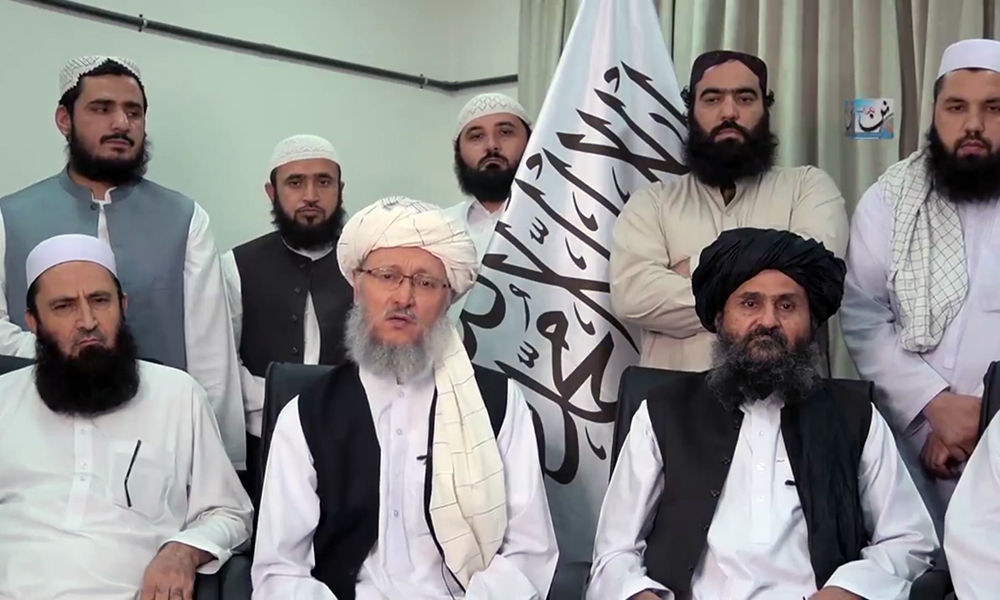
Taliban Militant Leadership
By Frud Bezhan
RFE/RL’s Radio Azadi
September 2, 2021
KABUL — Hundreds of Afghans stand along dusty roadsides in the capital, Kabul, desperately trying to sell their meager possessions.
Many offer used pots, plates, and cups that are piled up on bedsheets. Others sell tattered mattresses and old rugs or hope someone will buy their television or refrigerator.
“There are no jobs and we don’t have any money,” says Haji Aziz, an unemployed cook who stands by a heap of kitchen utensils for sale along a busy road in downtown Kabul. “I’m trying to sell whatever I can so I can feed my family,” says Aziz, a weary, middle-aged man who is the sole breadwinner for his family of nine.
He is among millions of Afghans who are reeling from the economic shocks of the Taliban’s rapid takeover of Afghanistan, an impoverished, war-scarred country of some 38 million people.
Since the militant group’s capture of Kabul on August 15, residents have been hit by soaring food prices and cash shortages. Inflation has surged and the value of the national currency, the afghani, has plummeted.
Many businesses and stores remain closed. Government workers, many of whom have gone into hiding, have been unpaid. Thousands of people line up outside banks and ATMs as armed Taliban fighters attempt to keep order.
‘Significant Economic Obstacles’
Even before the Taliban takeover, Afghanistan’s economy was extremely fragile, propped up for 20 years by foreign aid. International assistance accounts for around 40 percent of the country’s gross domestic product (GDP).
But since the militant group regained power, foreign donors have suspended aid to Afghanistan. The World Bank and the International Monetary Fund (IMF) have also halted payments.
Foreign reserves of the Da Afghanistan Bank (DAB), the central bank, have also been frozen. DAB has reserves of around $9 billion, most of which is held in the United States.
“Given the frozen reserves and reduced donor flows, the new administration will face significant economic obstacles,” Ajmal Ahmady, the former governor of DAB who fled Kabul after the Taliban takeover, told RFE/RL.
He expects most economic indicators — including rising inflation, cash shortages, and a plummeting currency — to “worsen.”
Afghanistan’s GDP is predicted to shrink by nearly 10 percent this financial year, with a further drop of 5 percent next year.
Foreign investment from “some major economies, namely China and potentially Russia,” could prevent an economic collapse in Afghanistan, said Fitch Ratings, a top U.S. financial firm. But that scenario assumes that Moscow and Beijing — which have contacts with the militant group — would recognize the Taliban as the legitimate government.
Experts say the Afghan economy could collapse, a grim scenario that could spur widespread hunger and worsen an already devastating humanitarian crisis.
More than 550,000 Afghans have been internally displaced since January 2021, bringing the total number of displaced Afghans to almost 4 million, according to the UN. It says nearly half of Afghanistan’s 38 million people need humanitarian assistance to survive.
UN Secretary-General Antonio Guterres warned on September 1 of a looming “humanitarian catastrophe” in Afghanistan as he urged countries to provide emergency funding following the final departure of foreign troops on August 31.
He said basic services threatened to collapse “completely” amid the “deepening humanitarian and economic crisis” in Afghanistan.
‘We Have No Choice’
With the economy on the brink of collapse, Afghanistan is facing a mass exodus of people.
Tens of thousands of Afghans at risk of Taliban reprisals fled Kabul, the scene of deadly and chaotic evacuation efforts led by the United States and other NATO countries that ended on August 30.
Tens of thousands of other Afghans who worked with foreign forces were left behind. They, along with others facing economic hardship and the prospect of life under hard-line Taliban rule, are pouring into neighboring Pakistan and Iran, from where some will pay smugglers to take them as far as Turkey and Western Europe.
The International Organization for Migration estimates that 2021 could see up to 1.5 million Afghans fleeing westward in search of safety and jobs.
Those who remain in Afghanistan are resorting to desperate measures, as household items are going up for sale on roadsides around the country.
“Many people are selling off whatever valuable they have,” says Nematullah, a shopkeeper in Kabul.
For some it is about survival, earning enough to feed their families each day. Others will use the money to flee their homeland and its new fundamentalist rulers.
“People are desperate,” says Nematullah. “There are no jobs and no money. People don’t have any other choice.”
Written by Frud Bezhan in Prague with contributions from RFE/RL’s Radio Azadi correspondents in Afghanistan. Their names are being withheld for their safety.
Copyright (c) 2021. RFE/RL, Inc. Reprinted with the permission of Radio Free Europe/Radio Liberty, 1201 Connecticut Ave NW, Ste 400, Washington DC 20036.
Tolo News in Dari – September 2, 2021
Clashes break out between Taliban and resistance movement
 Ariana: Clashes erupted between the Taliban and the resistance movement on Thursday in Gulbahar, the entrance gate of Panjshir province, and both sides used heavy and light weapons. Both sides accused each other of initiating the clash. Click here to read more (external link).
Related
Tajikistan Posthumously Awards Afghans Masud, Rabbani With Country’s Highest Honor

Ahmad Shah Massoud
Radio Free Europe/Radio Liberty
September 2, 2021
DUSHANBE — Tajikistan has awarded posthumously two former Afghan political figures, Ahmad Shah Masud and Burhanuddin Rabbani, with the country’s highest honor, the Order of Ismoili Somoni.
Tajik President Emomali Rahmon signed the decree awarding the two men the honor on September 2. According to the decree, Masud and Rabbani were recognized for their contribution to ending a devastating 1993-1997 civil war in Tajikistan.
Ahmad Shah Masud, nicknamed the Lion of Panjshir, was one of the leading military commanders of the Afghan resistance to Soviet troops from 1979-1989 and fought against the Taliban’s rule in Afghanistan from 1996-2001.
After Soviet troops withdrew from Afghanistan, Masud served as defense minister from 1992 until his assassination on September 9, 2001.
Rabbani served as Afghanistan’s president from 1992 to 2001. Between 1996-2001 his authority was not recognized by Taliban militants, who controlled many regions of the country.
Rabbani was killed on September 20, 2011, by a bomb attack during a meeting with Taliban representatives at his home.
Both Masud and Rabbani were ethnic Tajiks involved in peace talks that ended the war in Tajikistan in 1997.
The signing of the decree awarding the two men the honor comes as the Taliban battles resistance forces in the Panjshir Valley, which is mainly populated by ethnic Tajiks.
Tajikistan has officially stated that Afghanistan’s new government under the Taliban must include Tajiks, Uzbeks, and representatives of the country’s other ethnic groups.
Copyright (c) 2021. RFE/RL, Inc. Reprinted with the permission of Radio Free Europe/Radio Liberty, 1201 Connecticut Ave NW, Ste 400, Washington DC 20036.
Tajik Interior Minister Says His Country Unable To Host Many Afghan Refugees
 Radio Free Europe/Radio Liberty
September 2, 2021
Tajik Interior Minister Ramazon Rahimzoda says his country is unable to host many refugees from neighboring Afghanistan, as thousands look to flee after Taliban militants took control of the country.
Rahimzoda cited a lack of infrastructure to host Afghan refugees as the reason and called on international organizations, including the United Nations, to assist the Central Asian nation to build such infrastructure. He spoke during a meeting with Mulugeta Zewdie, the country director for the UN High Commissioner for Refugees, on September 1.
Rahimzoda noted that 80 Afghan families are currently in a neutral segment of the Tajik-Afghan border area and seek to enter Tajikistan fearing for their lives. Some 5,000 Afghan government troops have already entered Tajikistan as they fled from Taliban advances in recent weeks. The troops were later sent back to Tajikistan.
He also said his ministry is overwhelmed with work related to any possible influx of refugees, stressing that the ongoing instability and the growing humanitarian crisis in Afghanistan may cause a “flow of terrorists to other countries.”
In the past 15 years, Tajikistan has accepted more than 3,000 families who left Afghanistan and allocated 70 hectares of land in the country’s south for setting up a proper camp for refugees two decades ago.
“However, in 20 years no international organizations provided any practical assistance to create an infrastructure to admit refugees and persons who seek asylum. Because of that, the Republic of Tajikistan does not have capacities to accept a big number of refugees or asylum-seekers,” the ministry quoted Rahimzoda as saying.
In July, almost 350 ethnic-Kyrgyz shepherds from Afghanistan with their families and some 4,000 livestock fled the country and entered Tajikistan. They were later sent back to their village in Afghanistan, although Kyrgyz authorities asked Dushanbe to secure their safe passage to Kyrgyzstan.
Last month, authorities in Uzbekistan said they had sent 150 Afghan refugees back to Afghanistan under an agreement with the Taliban and at the request of the refugees themselves.
In July, Tajikistan said it was ready to shelter up to 100,000 Afghan refugees but later backed away from that statement.
Copyright (c) 2021. RFE/RL, Inc. Reprinted with the permission of Radio Free Europe/Radio Liberty, 1201 Connecticut Ave NW, Ste 400, Washington DC 20036.
Afghan Women Stage Protest In Herat, Call For Their Rights To Be Preserved
 By RFE/RL’s Radio Azadi
September 2, 2021
KABUL — About three dozen women in the western Afghan city of Herat have protested to demand the new Taliban leadership preserves the rights and advances women have made in the country since the militants were ousted two decades ago.
“Education, security and work is our fundamental right, “ the women chanted, according to amateur videos posted online.
“Don’t be afraid; we are all together,” they added at the September 1 protest held in front of the Herat governor’s office.
Since taking back power after the fall of Kabul on August 14, Taliban leaders have repeatedly said they want peaceful relations with other countries and would respect the rights of women within the framework of Islamic law.
During its 1996-2001 rule, also guided by Islamic Shari’a law, the Taliban stopped women from working. Girls were not allowed to go to school and women had to wear all-enveloping burqas to go out and then only when accompanied by a male relative.
Many still remember that period and don’t trust the militants’ pledge.
Friba Kabrzani, an organizer of the rally, said women should be allowed to participate in the new government, including the Cabinet and Loya Jirga, or elders’ council.
Afghan women have made many sacrifices over the past 20 years to achieve what they have, she said, adding, “We want the world to hear us, and we want our rights to be saved.”
Kabrzani says some families did not allow other women to join the march out of fear for their safety.
Another organizer, Basira Taheri, told AFP that the Taliban should consult women on important decisions.
“We don’t see any women in their gatherings and meetings,” she said.
Shortly after the Taliban takeover, the European Union said it would only cooperate with a new Afghan government if it respected fundamental rights, including those of women.
The United Nations and many human rights groups have also expressed concerns, especially after local media reports surfaced claiming the actions of the militants differed sharply from the moderate image the group’s leaders were trying to project.
The French media watchdog Reporters Without Borders, for example, warned on September 1 that hundreds of women have been forced to stay home since the hard-line group took control of the country.
“We have witnessed them beating women again,” one of the protesters, Maryam Ebram, said adding that her group planned to continue to demand their rights.
“We will not sit quiet as the Taliban wants us to,” Ebram said.
This story is based reporting by Radio Azadi correspondents on the ground in Afghanistan. Their names are being withheld for their protection.
With additional reporting by AP and AFP
Copyright (c) 2021. RFE/RL, Inc. Reprinted with the permission of Radio Free Europe/Radio Liberty, 1201 Connecticut Ave NW, Ste 400, Washington DC 20036.
Diversity Visa Winners Stuck in Afghanistan After US Withdrawal
 Aline Barros
VOA News
September 2, 2021
They beat the odds and won a chance to legally immigrate to the United States under a lottery visa program for nationals from countries with low numbers of immigrants to the U.S.
But after the Taliban takeover of Afghanistan followed by the American military withdrawal completed on Monday, these once-lucky Afghans fear they may never be able to leave their country.
After 20 years of war in Afghanistan spanning four American presidencies, the U.S. government slammed the door on the last evacuation flights of civilian Afghans last weekend, leaving behind hundreds of these diversity visa winners.
S., a 27-year-old former women’s rights advocate living in Kabul, is among them.
Due to safety concerns, she asked VOA not to share her full name.
She was first informed by the U.S. government in 2020 that she had won a spot in the diversity visa program, commonly known as the green card lottery. Under the Immigration Act of 1990, Congress approved the program to increase the diversity among immigrants to the United States.
At first, she was excited.
S. said she was excited when she learned she was among the 55,000 randomly selected people chosen annually from around the world. But there was plenty of paperwork and documentation to provide, and interviews and background checks conducted by U.S. Embassy officials.
S. told VOA she filed all the required paperwork and was waiting for an interview at the U.S. Embassy, a process that usually took a few months.
“When I received the letter [from the U.S. government], I was very, very happy. And I was a master’s degree student,” she explained.
Because of her advocacy work, and fear the Taliban might go after her, S. decided to move in with her brother. And then her hopes for final approval were dashed.
“Unfortunately, the [U.S.] embassy in Kabul closed [on Aug. 31] … We don’t know where to go for interviews or where to get our visas. … In Afghanistan, we’re at risk. … And it’s really worrying us about our lives. … But I will keep trying to leave Afghanistan,” she said in an audio message.
Program’s turbulent track record
Long before S. and others suffered this major setback, the diversity visa program had a turbulent track record.
In 2017, then-President Donald Trump announced a series of actions that blocked people from Muslim-majority countries from coming to the United States. Then in March 2020, Trump shut down consulates around the world because of the coronavirus pandemic. The Trump administration followed that by announcing a ban on certain immigrant visas, arguing that it was needed to protect the American economy.
As a result, hundreds of Afghan winners of the visa lottery were prevented from coming to the U.S. at that time.
According to a U.S. government document, once consulates began to reopen in the summer of 2020, officials were ordered to process diversity visas last.
Immigrant advocates sued. Earlier this month, a federal judge decided the U.S. government must keep on processing lottery visa winners. On Aug. 17, the U.S. District Court for the District of Columbia ordered the Biden administration to issue 9,095 diversity visas from Fiscal Year 2020.
Yet, Biden administration lawyers said in court the administration would not be able to deal with applications until the fall of 2022, at the earliest.
Lottery visas
While the 1990 immigration law was designed to increase diversity among immigrants to the United States, those interested in applying to the program had to have at least a high school degree or two years of work experience in a profession that required a minimum of two years of training.
Winners usually receive an email or letter in July notifying them they won. Then they submit a complete application and must attend an interview at the beginning of the federal fiscal year, by Oct. 1, at the closest U.S. consulate. And because visa eligibility does not transfer to the following year, the entire process must be done in a year.
According to the latest figures from the U.S. State Department, more than 13 million people applied last year.
The unluckiest ones of all
But in the program’s 30-year history, winners in the last few years may have been the unluckiest of all.
H., a 33-year-old Afghan diversity visa winner, said despite sending all documents necessary he and his family have been waiting for a visa interview for a year.
“There is no hope for life in this country anymore,” he told VOA in a text message.
A State Department spokesperson told VOA by email Wednesday that although the U.S. government is “currently” unable to provide consular services for immigrant visas in Afghanistan, they are developing alternative ways so officials can continue to “deliver this important service for the people of Afghanistan.”
“Immigrant visa applicants should continue monitoring official U.S. government websites, including travel.state.gov, for updated information,” the spokesperson said.
H. said because of the work he did assisting U.S. officials and the former Afghan government prosecuting criminals, his whole family is currently in hiding. He said only his wife or mother-in-law goes out to buy food when the family needs basic supplies.
“I have written [you] the reality of my life. … I wish the visa interview would be online and electronically, so that we can travel comfortably to our new life and home,” H. said in a text message.
Related
Anti-Taliban resistance grows in Panjshir Valley as soldiers clash

Resistance fighters in Panjshir
news.com.au: The Taliban faces its strongest resistance in the north of Afghanistan, where a resistance army is growing in the Panjshir Valley. The valley has long been a stronghold in Afghanistan, thanks to its natural defences, and has never fallen to the Taliban or the Soviets. Reports have also surfaced that the Taliban lost a number of soldiers on Monday night when they clashed with resistance fighters. Click here to read more (external link).
Pakistan’s New Endgame in Afghanistan: Mitigate Blowback
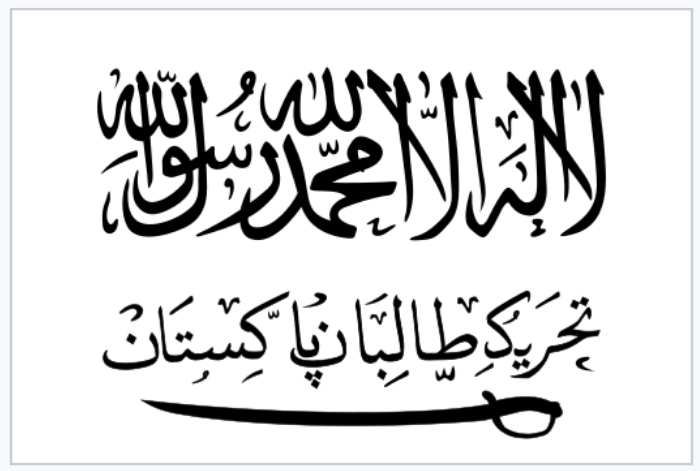
TTP Flag
Michael Hughes: The Taliban takeover of Afghanistan has certainly bolstered Islamabad’s position vis-à-vis its rivalry with New Delhi, yet troubling signs are already emerging that Frankenstein monsters could end up uniting against the Pakistani state.
According to a post in the Indian Defense Research Wing, New Delhi is certainly concerned that Pakistan will attempt to leverage its new victory to oust the Indians from Kashmir. The next few months will determine if the Afghan Taliban will keep their word and stay out of Kashmir but there is a likelihood that elements of the group, with help of their ISI sponsors, will not live up to this commitment and cause havoc in the region as they did in the 1990s, the article written by Rajesh Ahuja said.