
In Zaranj, the capital of Afghanistan’s southwestern Nimroz Province, Iran’s currency is now being used for most transactions. One shopkeeper says more than 90 percent of his customers pay him with Iranian currency. Businessmen say it is because banks are closed or limiting withdrawals and there is a shortage of afghanis, the country’s currency.
Gravitas: America’s lies on the trillion-dollar Afghan war
America spent more than $2.2 trillion on the war in Afghanistan. Most of this money went back to the US via private contractors and companies. Top US arms dealers got $2 trillion in public funds between 2001 & 2021. WION’s Palki Sharma exposes the truth of the Afghan war.
Tolo News in Dari – September 3, 2021
Road to refuge for Afghan nationals through India-Pakistan border may also face Covid hurdle
 TNN: With Pakistan temporarily closing its borders with Afghanistan, fearing an influx of refugees, Afghan nationals arriving at India-Pakistan international border to migrate to India is next to impossible. Even if someone manages to do so, strict Covid-19 protocols and clearance from ministry of home affairs will be another hurdle. Immigration sources here say Attari international border is already closed for passengers due to the Covid-19 pandemic. Click here to read more (external link).
Taliban Close To Forming Government Amid Fighting Over Opposition Holdout
 Radio Free Europe/Radio Liberty
September 3, 2021
The Taliban appears to have moved closer to forming a new government in Afghanistan as the hard-line Islamist group continues to battle resistance fighters in a key opposition stronghold north of Kabul.
The militants face the challenge of shifting gears from being an insurgent group to governing power more than two weeks after seizing control of most of the country and days after the United States fully withdrew its troops after a 20-year presence.
Many of the world’s leading nations are waiting to see who will be in the government and whether the next administration’s actions will be in line with the Taliban’s promises of being more moderate than during its brutal rule between 1996 and 2001, when it enforced a radical form of Islamic law.
“We have to judge them on their actions, not on their words,” NATO Secretary-General Jens Stoltenberg said on September 3. “We will hold them accountable to what they have promised — on preventing Afghanistan being a safe haven for international terrorists, on human rights, especially rights of women, and on free passage.”
The legitimacy of the new administration in the eyes of international donors and investors will be crucial for the economy, which is in tatters as the country battles drought and the ravages of a conflict that took the lives of an estimated 240,000 Afghans.
Aid agencies have warned that many Afghans were struggling to feed their families and millions may now face starvation.
Reuters quoted three sources as saying that the government will be led by Taliban co-founder and political chief Mullah Abdul Ghani Baradar, who is considered a relative moderate within the group.
He will be joined by Mullah Mohammad Yaqoob, the son of late Taliban founder and spiritual leader Mullah Mohammad Omar, and Sher Mohammad Abbas Stanekzai, a member of Taliban’s Doha political office, in senior government positions.
“All the top leaders have arrived in Kabul, where preparations are in final stages to announce the new government,” a Taliban member said under condition of anonymity.
Another source said that Taliban leader Haibatullah Akhunzada will focus on religious matters and governance within the framework of Islam, according to Reuters.
A Taliban spokesman told AFP on September 3 that the announcement of a new administration would not happen until September 4 at the earliest.
While the Taliban have spoken of its will to form a consensus government, a source close to the militants told Reuters that the interim government being formed would consist solely of Taliban members.
Baradar, one of the founders of the Taliban in 1994, spent eight years in prison in Pakistan after being reportedly arrested in Karachi in 2010 in an operation by U.S. and Pakistani intelligence agents. He was eventually released at the request of the United States.
In February 2020, he helped negotiate the landmark Doha agreement with the United States that aimed to end the 20-year war in Afghanistan.
Since the Taliban seized Kabul on August 15 after a lightning offensive across the country, the militants have faced resistance from opposition groups and remnants of the Afghan Army holding out in Panjshir Valley, about 100 kilometers northeast of the capital, with reports of casualties.
A spokesman for the National Resistance Front (NRF) said the resistance fighters were battling to repulse “heavy” assaults, as the Taliban seeks to capture the only province that has not fallen to the militants.
The NRF followers, said to number in the thousands, are led by Ahmad Masud, son of a former mujahedin commander who fought against the Taliban in northeastern Afghanistan in the late 1990s.
Efforts to negotiate a settlement appear to have broken down, with each side blaming the other for the failure.
The Taliban has declared an amnesty for all Afghans who worked with foreign forces during the war that ousted it from power and said it was in talks with “all factions” to reach an agreement on a future government.
The group has also promised a more tolerant and open brand of rule compared with their first stint in power, but many reports have said summary executions and house-to-house searches for those who worked with international groups or the previous government are occurring across the country.
Amid speculation on how the new Taliban government is likely to treat women, around 30 women took to the streets of Kabul to demand access to education, the right to return to work, and a role in governing the country.
“Freedom is our motto. It makes us proud,” read one of the protesters’ signs.
The small rally was the second women’s protest in as many days demanding equal rights from Afghanistan’s new rulers, with the other held in the western city of Herat.
The Taliban has said women will be able to continue their education and work outside the home, which was denied them when the militants were last in power, but the Taliban has also vowed to impose Shari’a, or Islamic law.
Meanwhile, a BBC correspondent reported coming across a beauty salon whose owner said he had been ordered to paint over the women’s faces displayed on its shop front.
The European Union laid out its conditions for stepping up engagement with the Taliban, saying it has no plans to recognize Afghanistan’s new government, once announced, but it will engage with the Taliban-led administration on an “operational” basis.
EU foreign policy chief Josep Borrell told a news conference that the 27-nation bloc will coordinate its contacts with the Taliban through a joint EU presence in Kabul to oversee evacuations and to ensure that the incoming government in Kabul fulfils commitments on security and human rights.
A Pakistani official said the government planned to send security and intelligence officials to Kabul to help the Taliban reorganize the Afghan military “in order for them to control their territory,” amid concerns about a potential rise in Islamic State attacks along the border with Afghanistan.
“Whether we recognize the Taliban government or not, stability in Afghanistan is very important,” the official, who has direct knowledge of the country’s security decisions, told Reuters.
The Kabul airport has remained shut since August 31 after the United States fully withdrew its troops following a 20-year presence, but international efforts are under way to resume operations there to facilitate humanitarian assistance and further evacuations.
A senior manager with Afghanistan’s flag carrier Ariana Afghan Airlines told AFP on September 3 that domestic flights were set to resume later in the day.
“We have received a green light from the Taliban and aviation authorities and plan to start flights today,” Tamim Ahmadi told the news agency.
The United States and its allies were able to evacuate more than 123,000 foreigners and Afghans from Kabul since August 14, the day before the Taliban regained control of Afghanistan two decades after being removed from power by the U.S.-led invasion in 2001.
But tens of thousands of Afghans who had helped Western nations oust the militants during the long war and others at risk remained behind.
The militants have promised to allow Afghans to travel freely in and out of the country, but many remain in doubt about the group’s intentions.
With Kabul airport still closed, many Afghans were seeking to flee over land, with large crowds reported at the Spin Boldak border crossing with Pakistan in recent days.
The UN refugee agency, UNHCR, said last week that up to 500,000 Afghans could flee their homeland by year-end.
But UNHCR spokesman Babar Baloch said the numbers of Afghan nationals fleeing across the borders to Pakistan and Iran “remain small,” without giving a figure.
“So far what we have not seen is a large refugee influx,” Baloch told a Geneva news briefing from Islamabad.
Separately, a top aide to Polish Prime Minister Mateusz Morawiecki said that a first group of some 250 Afghan evacuees will arrive to the Central European country on September 3 from Germany.
Michal Morawiecki said Poland will temporarily host a total of some 500 Afghan evacuees who had worked for NATO in Afghanistan.
The Afghans will remain in Poland for up to three months before moving on to other countries. But up to 50 of them will be able to settle in Poland, depending on their choice, according to Dworczyk.
In a positive development, Western Union and MoneyGram have announced they would resume money-transfer services to Afghanistan, allowing vital remittances into a war-torn country that has been reliant for years on foreign aid.
The opening of the money-transfer services will be especially welcomed by Afghans with foreign relatives abroad since hundreds of people have been lining up daily outside Afghan banks to withdraw cash up to a limit of $200 per week. Cash machines, meanwhile, aren’t working.
However, the U.S. administration has no plans to release billions of dollars in Afghan gold, investments, and foreign currency reserves that the United States froze following the Taliban takeover.
With reporting by Reuters, AFP, the BBC and AP
Copyright (c) 2021. RFE/RL, Inc. Reprinted with the permission of Radio Free Europe/Radio Liberty, 1201 Connecticut Ave NW, Ste 400, Washington DC 20036.
Ariana Afghan Airlines Official Says Domestic Flights To Resume On September 3
 Radio Free Europe/Radio Liberty
September 3, 2021
A senior manager with Afghanistan’s flag carrier Ariana Afghan Airlines has said that domestic flights were set to resume on September 3, AFP reported.
“We have received a green light from the Taliban and aviation authorities and plan to start flights today,” Tamim Ahmadi told the news agency.
On September 2, Al-Jazeera quoted an Afghan civil aviation official as saying that domestic flights from Kabul airport will resume on September 3, though international flights will “take time” before restarting.
The Kabul airport has remained shut since August 31 after the United States fully withdrew its troops following 20 years of presence, but international efforts are under way to resume operations there to facilitate humanitarian assistance and further evacuations.
Qatari Foreign Minister Mohammad bin Abdulrahman al-Thani said on September 2 that the Gulf Arab state was working with the Taliban to reopen Kabul’s airport “as soon as possible.”
Qatar was also working with Turkey for potential technical support to restart operations at the airport, he said, adding that he hoped for “some good news” in the coming days.
Based on reporting by AFP
Copyright (c) 2021. RFE/RL, Inc. Reprinted with the permission of Radio Free Europe/Radio Liberty, 1201 Connecticut Ave NW, Ste 400, Washington DC 20036.
Afghan women report forced marriages to flee country amid Taliban takeover, sources say
 CNN: US officials processing Afghan refugees abroad recently alerted the State Department to instances in which women and girls were forced into marriage or arrived with male partners posing as their husbands to be eligible for evacuation and escape the Taliban, according to two sources familiar with the matter. Click here to read more (external link).
Taliban trading Uyghurs for Chinese Money
Taliban Says China Will Be ‘Main Partner’ To Rebuild Afghanistan

Taliban co-founder Mullah Abdul Ghani Baradar (L) and Chinese Foreign Minister Wang Yi pose for a photo during their meeting in Tianjin on July 28, 2021.
Radio Free Europe/Radio Liberty
September 2, 2021
The Taliban says China will maintain diplomatic relations with Afghanistan and the new rulers in Kabul will rely on Beijing for economic support after the withdrawal of U.S.-led international forces.
Taliban spokesman Zabihullah Mujahid told the Italian newspaper La Repubblica on September 2 that China was the group’s “main partner” to halt an economic collapse and rebuild the country.
The Taliban has pledged to be more moderate since they toppled Afghanistan’s Western-backed government on August 15, promising to protect some human rights and refrain from reprisals against old enemies.
The United States and its allies have closed their diplomatic missions and conditioned any recognition of a Taliban government – as well as economic aid that propped up the previous government – on the group’s actions.
In particular, Western powers are calling on the Taliban to allow people to leave the country, enable access of humanitarian aid, make a complete break with international terrorist organizations, and respect human rights, especially for women.
Without aid, humanitarian organizations have warned of catastrophe as severe drought and war have forced tens of thousands of families to flee their homes. The U.S. government has also frozen Afghanistan’s Central Bank reserves, helping to fuel a banking and payments crisis.
China, however, is unlikely to make aid and political ties contingent on human rights issues, preferring instead hard economic, political, and security interests.
“China is our main partner and represents a fundamental and extraordinary opportunity for us because it is ready to invest and rebuild our country,” Mujahid told La Repubblica.
Mujahid said the Taliban are interested in the Belt and Road Initiative, China’s global infrastructure and resource development plan designed to tighten economic and political ties across dozens of countries.
“We own rich copper mines, which, thanks to the Chinese, will be modernized. Finally, China represents our ticket to the markets around the world,” Mujahid.
Another Taliban spokesman said on September 2 that China has promised to keep its embassy in Afghanistan open and “beef up” relations as well as increase humanitarian aid.
Abdul Salam Hanafi, a member of the Islamist group’s political office in Doha, Qatar, “held a phone conversation with Wu Jianghao, Deputy Foreign Minister of the People’s Republic of China,” spokesman Suhail Shaheen tweeted.
“The Chinese Deputy Foreign Minister said that they would maintain their embassy in Kabul, adding our relations would beef up as compared to the past… China will also continue and increase its humanitarian assistance especially for treatment of COVID-19,” he wrote.
Close ties between China and the Taliban could undermine the Western strategy of using economic leverage to pressure the new rulers in Kabul.
Russia, as well, has maintained its diplomatic mission in Kabul.
Relations with Russia are “mainly political and economic. Russia continues to mediate for us and with us to create the conditions for international peace,” Mujahid said.
In a report, Fitch Solutions said on September 2 that it expects Afghanistan’s economy to collapse as international money that funded the previous government dries up.
“The highly disruptive manner in which the U.S.’s security forces left the country and the Taliban takeover will mean that the economic pains for the country will be felt acutely over the short term,” said the research arm of credit ratings agency Fitch Group.
It expects the country’s real gross domestic product (GDP) to shrink by 9.7 percent this year, with a further drop of 5.2 percent next year.
Foreign investment would be needed to support a more optimistic case, Fitch said.
“An alternative and more positive economic scenario would entail Afghanistan’s growth averaging around 2.2 percent in 2023-2030, which assumes that some major economies, namely China and potentially Russia, would accept the Taliban as the legitimate government of Afghanistan and begin major investment projects,” it said.
With reporting by AFP, La Repubblica, and Reuters
Copyright (c) 2021. RFE/RL, Inc. Reprinted with the permission of Radio Free Europe/Radio Liberty, 1201 Connecticut Ave NW, Ste 400, Washington DC 20036.
Afghan Family Hit in Drone Strike Wants Answers; US Defends Airstrike
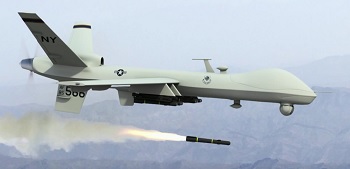
AP: The last thing Ahmadi remembers was the sound of his brother’s car horn announcing his arrival and the squealing of the children. He said his mind has been “not right” since that day. Sunday’s U.S. drone strike killed 10 members of his family, six of them children, Ahmadi said. Click here to read more (external link).