
logo

Daily Updated Afghan News Service

  • Home
  • About
  • Opinion
  • Links to More News
  • Good Afghan News
  • Poll Results
  • Learn about Islam
  • Learn Dari (Afghan Persian/Farsi)

Recent Posts

  • Rising Crime in Afghanistan: Citizens Say Taliban Are Behind Most Cases May 5, 2026
  • Local elders broker fragile ceasefire between Taliban, Pakistan in Kunar May 5, 2026
  • Catalan Parliament Voices Concern Over Hazaras Situation In Afghanistan May 5, 2026
  • Afghanistan’s powerlifting team to compete in Belarus competitions May 5, 2026
  • Tolo News in Dari – May 5, 2026 May 5, 2026
  • Taliban say three civilians killed in new Pakistan shelling in Kunar May 4, 2026
  • Afghanistan’s passport remains world’s weakest, Henley Index shows May 4, 2026
  • Tolo News in Dari – May 4, 2026 May 4, 2026
  • Afghanistan National Team to Play in Maldives Four-Nation Tournament May 4, 2026
  • Ex-MP Fawzia Koofi calls Taliban raid on her Badakhshan home ‘cowardly’ May 3, 2026

Categories

  • Afghan Children
  • Afghan Sports News
  • Afghan Women
  • Afghanistan Freedom Front
  • Al-Qaeda
  • Anti-Government Militants
  • Anti-Taliban Resistance
  • AOP Reports
  • Arab-Afghan Relations
  • Art and Culture
  • Australia-Afghanistan Relations
  • Book Review
  • Britain-Afghanistan Relations
  • Canada-Afghanistan Relations
  • Censorship
  • Central Asia
  • China-Afghanistan Relations
  • Civilian Injuries and Deaths
  • Corruption
  • Crime and Punishment
  • Drone warfare
  • Drugs
  • Economic News
  • Education
  • Elections News
  • Entertainment News
  • Environmental News
  • Ethnic Issues
  • EU-Afghanistan Relations
  • Everyday Life
  • France-Afghanistan Relations
  • Germany-Afghanistan Relations
  • Haqqani Network
  • Health News
  • Heroism
  • History
  • Human Rights
  • India-Afghanistan Relations
  • Interviews
  • Iran-Afghanistan Relations
  • ISIS/DAESH
  • Islamophobia News
  • Japan-Afghanistan Relations
  • Landmines
  • Media
  • Misc.
  • Muslims and Islam
  • NATO-Afghanistan
  • News in Dari (Persian/Farsi)
  • NRF – National Resistance Front
  • Opinion/Editorial
  • Other News
  • Pakistan-Afghanistan Relations
  • Peace Talks
  • Photos
  • Political News
  • Reconstruction and Development
  • Refugees and Migrants
  • Russia-Afghanistan Relations
  • Science and Technology
  • Security
  • Society
  • Tajikistan-Afghanistan Relations
  • Taliban
  • Traffic accidents
  • Travel
  • Turkey-Afghanistan Relations
  • UN-Afghanistan Relations
  • Uncategorized
  • US-Afghanistan Relations
  • Uzbekistan-Afghanistan Relations

Archives

Dari/Pashto Services

  • Bakhtar News Agency
  • BBC Pashto
  • BBC Persian
  • DW Dari
  • DW Pashto
  • VOA Dari
  • VOA Pashto

IRGC: Kabul crime US plot to revive Takfiri terrorism, insecurity in Afghanistan

10th May, 2021 · admin

Press TV
May 10, 2021

Iran’s Islamic Revolution Guards Corps (IRGC) has strongly condemned the terrorist attack targeting a girls’ school in the Afghan capital, noting that the massacre is part of an American plot to bring Takfiri terrorism back to life in the war-torn country.

“This grave crime is a plot by Americans, which is aimed at reviving Takfiri terrorism and bringing back war and insecurity to Afghanistan,” the IRGC said in a Monday statement.

“This horrific incident, under conditions when the Americans claim to be leaving Afghanistan, places blame on the White House more than ever for transferring Takfiri terrorists from Syria and Iraq to Afghanistan and attracting the arms, financial and intellectual support of its regional allies to inculcate a sense of return of war and insecurity to Afghanistan if US troops pull out of the country.”

The IRGC said, “The terrorist regime of the United States and its allies must stop their vicious warmongering and hatred against the Islamic Ummah, especially the oppressed nation of Afghanistan.”

“The world public opinion believes that the withdrawal of US forces from West Asia will provide lasting security and peace to the Muslim nations in the region.”

The IRGC also expressed condolences to the “honorable and Muslim people of Afghanistan,” particularly the families of the martyrs.

At least 68 people, mostly schoolgirls, lost their lives in explosions caused by a car bomb and mortar shells targeting a school in the Shia majority neighborhood of Dasht-e-Barchi in western Kabul on Saturday.

Afghan President Ashraf Ghani said the Taliban militant group was to blame. The Taliban, however, did not claim responsibility for the blast. According to some media reports, the Daesh Takfiri terrorist group claimed the attack hours later.

The tragedy befell Afghanistan a week after the United States and its NATO allies began withdrawing their troops and military hardware.

US President Joe Biden has said the drawdown of US forces will have been completed by September 11.

The Taliban have issued a warning, pledging to attack US troops if they failed to withdraw as scheduled.

Posted in Civilian Injuries and Deaths, Iran-Afghanistan Relations, ISIS/DAESH, Security, Taliban, US-Afghanistan Relations | Tags: US aiding ISIS |

U.S. trashes unwanted gear in Afghanistan, sells as scrap

10th May, 2021 · admin

Politico: The Americans are dismantling their portion of nearby Bagram Air Base, and anything that they are not taking home or giving to the Afghan military, they destroy as completely as possible. “They left us nothing,” he [Afghan junk dealer] said. “They don’t trust us. They have destroyed our country. They are giving us only destruction.” Click here to read more (external link).

Posted in Economic News, US-Afghanistan Relations |

1TV Afghanistan Dari News – May 10, 2021

10th May, 2021 · admin

Posted in News in Dari (Persian/Farsi) |

Taliban Declare Three-day Afghan Ceasefire for Eid Holiday

10th May, 2021 · admin

Taliban (file photo)

Ayaz Gul
VOA News
May 10, 2021

ISLAMABAD – The Taliban have announced a nationwide cease-fire in Afghanistan that will take effect when the three-day annual Muslim festival of Eid-al-Fitr begins Thursday, marking the end of the Islamic fasting month of Ramadan.

The announcement follows a spike in attacks by the Islamist insurgent group against government forces across many Afghan provinces. The interior ministry said Monday that shortly before the Taliban’s cease-fire announcement at least 11 people were killed when a bomb blast hit a bus in the southern Zabul province. The cease-fire announcement came a day after multiple blasts outside a girls school in Kabul killed more than 60 people, mostly students.

The Taliban said Sunday its leadership has instructed all insurgent fighters “to halt all offensive operations against the enemy” across the country to enable Afghans to celebrate the festivities in a “peaceful and secure atmosphere.”

Insurgent fighters have been instructed to break the cease-fire only for self-defense and not to visit enemy areas or host Afghan security forces during the three-day Eid celebrations.

The Taliban have previously declared nationwide Eid cease-fires but resumed fighting immediately after the festivities.

There was no immediate reaction from the Afghan government, but it was expected to reciprocate as it has in the past.

Troop exit praised

In a separate statement issued hours earlier in connection with the Eid holidays, Taliban chief Mawlawi Hibatullah Akhundzada praised the ongoing withdrawal of U.S. and NATO troops from Afghanistan.

“We consider the withdrawal of forces by America and other foreign countries a good step and strongly urge that all parts of the Doha agreement be implemented,” Akhundzada said.

He was referring to the February 2020 landmark peace-building pact the United States negotiated with the insurgents in Qatar’s capital, Doha, to pull all U.S. and coalition troops from the country to close America’s longest war, now in its 20th year.

“Unfortunately, the American side has so far violated the signed agreement repeatedly and caused enormous human and material loss to civilians,” Akhundzada alleged.

The insurgent leader again urged the U.S. to deliver on its pledges and secure the release of an estimated 7,000 Taliban prisoners who remain in Afghan jails. He also demanded the removal of United Nations and U.S. sanctions on Taliban members in line with the deal.

The foreign military drawdown was supposed to be concluded by May 1, but U.S. President Joe Biden missed the deadline, citing logistical reasons and announcing last month that all U.S. troops would be out by September 11. That would be the 20th anniversary of the terrorist strikes against the U.S.

The Taliban denounced the delay and threatened to break their cease-fire with international forces that has been in place since the signing of the deal. U.S. commanders say the troop drawdown has been under way smoothly.

Washington also has alleged that the insurgent group has not lived up to its commitment to ease violence and engage in a “genuine peace process” with Afghan rivals.

The Taliban have intensified battlefield attacks since the foreign troop withdrawal started, inflicting heavy casualties on Afghan government forces and capturing new territory.

The Afghan army chief said Saturday that his forces had “killed and injured 1,000″ Taliban fighters in the past week.

Afghan adversaries often issue inflated casualty tolls for the other side, which are impossible to verify from independent sources.

U.S. officials have blamed the Taliban for the latest rise in violence and called on all warring parties to reduce hostilities and resume stalled peace talks, known as intra-Afghan negotiations.

The peace process, which stemmed from the U.S.-Taliban deal, started in Doha last September but has mostly been deadlocked, with the Afghan rivals accusing each other of delaying and trying to subvert the dialogue.

“We prioritize negotiations and understanding. … However, the Kabul administration has repeatedly tried to sabotage the ongoing political process through various means and continues to engage in such activity,” Akhundzada said Sunday.

A spokesman for Afghan President Ashraf Ghani rejected the accusations while responding to the statement by the Taliban chief.

“If the Taliban are sincere in what they say, then they must stop killing Afghan civilians and return to the negotiation table to discuss peace,” Mohammad Ameri told VOA.

Bombing death toll soars 

Meanwhile, officials and victims’ families told media that the death toll had risen to at least 63 from Saturday’s multiple blasts outside a girls school in Kabul’s western Dasht-e-Barchi neighborhood, mostly populated by ethnic Hazara Shiite Muslims.

More than 150 people sustained injuries, some critically wounded.

The victims were mostly schoolgirls leaving for home after finishing classes.

Afghan Interior Ministry spokesman Tariq Arian said attackers detonated a car bomb and two improvised explosive devices during the evening rush hour.

No one has taken responsibility for the carnage in Dasht-e-Barchi, which has experienced such incidents before, claimed by Islamic State.

Afghan officials accused the Taliban of plotting the attack on the girls school. It was one of the deadliest in Kabul in recent months. The insurgent group denied involvement, saying it condemns any violence against Afghan civilians.

In a video message released Sunday, Ghani again pointed a finger at the Taliban, saying the insurgents “should know that they will not achieve their evil goals through war.” He said the Taliban “will be crushed” by Afghan security forces.

The president declared Tuesday a national day of mourning for the victims of the Kabul attack and other recent bombings against civilians.

Related

  • Ghani Orders Afghan Forces to Observe Eid Ceasefire
  • Amnesty International say ‘brutal crimes’ highlight govt failures
Posted in Civilian Injuries and Deaths, Human Rights, Security, Taliban, US-Afghanistan Relations | Tags: Ashraf Ghani Government Security Failure, Taliban War on Muslims, Zabul |

Afghanistan: 340 New Cases of COVID-19, 12 Deaths Reported

10th May, 2021 · admin

Tolo News: The Ministry of Public Health Monday reported 340 new positive cases of COVID-19 out of 2,514 samples tested in the last 24 hours. The ministry reported that the cumulative total of known COVID-19 cases is 62,403, the total number of reported deaths is 2,710, and the total number of recoveries is 54,382. Click here to read more (external link).

Posted in Health News | Tags: Coronavirus (COVID-19) in Afghanistan |

Hazara Shia community and unending cycle of violence

9th May, 2021 · admin

By Syed Zafar Mehdi via Press TV
May 9, 2021

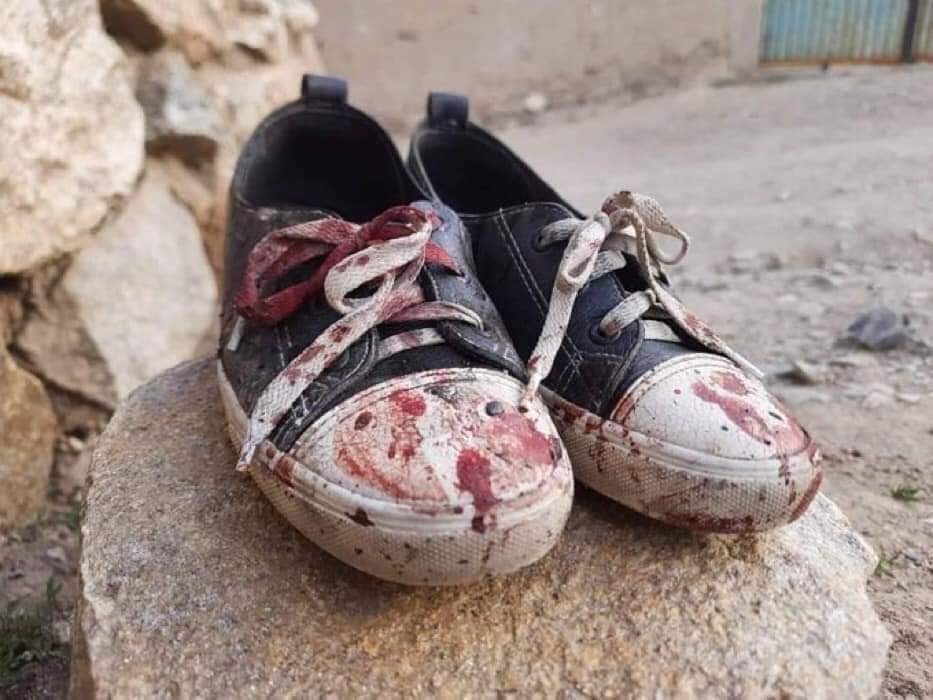
Hours after multiple explosions ripped through western Kabul’s Shia-dominated neighborhood of Dasht-e Barchi on Saturday, grief-stricken parents stood numb outside Sayed ush-Shuhada School, sifting through piles of blood-stained bags and books of their slain children.

Three bombs struck outside the school entrance as students were leaving for the day, just before the time to break their fast, leaving at least 68 dead and hundreds wounded — all of them young girls with big dreams.

The ghastly attack, claimed by the Daesh terrorist group, follows a dangerous pattern of similar attacks in recent years on the persecuted community of Hazara Shias in Afghanistan, and neighboring Pakistan.

Educational institutes, community mosques, sports clubs, maternity hospitals, wedding halls, political functions — no place appears to be safe anymore for this religious and ethnic minority across the Durand Line.

The genocidal attacks have become so regular that they no longer evoke condemnation or outrage from the world’s big-mouthed human rights champions. There are no candle-light vigils for them, no protest marches, no high-level probes, not even those evocative social media hashtags. Their deaths are reduced to cold statistics.

The congested Dasht-e Barchi neighborhood of western Kabul has morphed into one of those harrowing places where life and death dance together. The place has borne the brunt of violence over the years, especially since the Daesh terrorist group gained foothold in the war-ravaged country in 2013-2014.

The group’s hatred for Shias has a historical background, dating back to the assassination of Ali Ibn Abi Talib (AS) in 40 A.H. Daesh ideologues take inspiration from those who carried out the murderous assault on the first Shia Imam in Kufa. They praise the murderers of his son Hussain ibn Ali (AS) and deem the slaughter of his followers legitimate.

The Hazara ethnicity only makes this community of Shias more vulnerable to Daesh’s hate-driven violence.

Most persecuted community

Hazara Shias, among the most persecuted ethnic minorities in the world, are among the few races whose origin remains shrouded in mystery.

There are multiple theories about their origin. Some anthropologists trace their ancestry to Turko-Mongols, while some believe they were originally Buddhists who lived in Hazarajat, the territory inhabited by Hazara people in the central highlands of Afghanistan, since the period of Kushan Dynasty 2000 years ago, before the arrival of Islam.

The country has a grim history of ethnic violence, in particular the targeted killings of Hazara Shias. In late 1900s, brutal Pashtun ruler, Abdul Rahman Khan, had ordered extermination of all Shias in central Afghanistan, which led to the massacre of thousands of Hazara Shias.

Their properties were seized and they were forced to abandon their homes. For almost a century, Hazara Shias were incarcerated and sold as slaves to wealthy merchants. Their women and children were sexually abused. Many of them were forced to observe taqiyya (seclusion), according to multiple historical accounts.

Their situation only turned worse in later decades, especially during the tyrannical rule of Taliban in 1990s, when their houses would be raided and they would be identified and killed, mostly in northern provinces of the country.

“Hazaras are not Muslims, you can kill them,” Moulvi Mohammed Hanif, a Taliban commander, once famously told a gathering of Pashtun tribal elders in northern Afghanistan.

While many Hazara Shias fled to Pakistan and Iran during 1990s, many stayed back to face the specter of unutterable horror. In one of the most barbaric episodes in recent history, thousands of Hazara Shias were systematically killed in northern Mazar-e-Sharif city in 1998, which author-analyst Ahmed Rashid describes as “genocidal in its ferocity”.

Interestingly, Taliban has in recent years distanced itself from the violence perpetrated against the minority community, shifting the blame on its arch-foe, Daesh.

What is, however, important is also the role played by foreign occupiers in ensuring that terrorist groups — both Taliban and the Daesh — seize control of the country.

As the acclaimed journalist and author, Anand Gopal, told me in an interview once, the blame for resurrecting the insurgency in Afghanistan ultimately rests with the Americans.

Keeping the pot boiling, after all, works in their favor and make a case for their continued involvement in the war-ravaged country, despite facing a humiliating defeat from the Taliban.

Cycle of violence

Dasht-e Barchi and other smaller pockets inhabited by Shias in Kabul have seen an unbroken chain of attacks in recent years, mostly claimed by Daesh. Two of the attacks that instantly come to mind are from 2016, when I was stationed in the Afghan capital as one of the foreign journalists.

At least, 18 people were killed and 54 wounded in October that year after a gunman wearing army fatigue opened fire at Shia mourners commemorating Ashura (Muharram 10) at Ziyarat-e Sakhi shrine in the Shia-dominated area of Kabul. Victims included four women and two children.

Daesh immediately claimed responsibility for the gruesome attack. The next day, in a show of exemplary defiance, thousands of Hazara Shias marched through the streets of Kabul, remembering the martyrs of Karbala and Kabul.

Exactly 40 days later, on the occasion of Arbaeen, terrorists struck again in Kabul. At least 27 people were killed and hundreds wounded after a suicide bomber blew himself up at Baqir-ul-Uloom mosque on highly-fortified Darul Aman Road, a few blocks away from the parliament house.

The bloody juggernaut rolled on with civil administration, security and intelligence apparatus watching the whirlpool of violence as silent spectators. I, as a journalist, soon began to lose the count of attacks and resulting civilian casualties.

In June 2017, in yet another attack by Daesh terrorists on a mosque in an area of Kabul dominated by Shia Muslims, scores of people were killed. The attack on al-Zahra mosque in the holy month of Ramadan, which came a month after a massive truck explosion in the Afghan capital, showed that the terrorist group had firmly planted itself in the war-torn country.

The fears grew four months later, in October 2017, after a bombing at Imam Zaman Mosque in the same area left at least 39 dead. The cleric leading the prayers was among those killed, who were later laid to rest in a single row, next to each other, the way they offered their prayers together.

The terror campaign continued unabated as the local security agencies and their foreign patrons stood paralyzed. In March 2018, a Daesh suicide bomber attacked a gathering commemorating the death anniversary of Abdul Ali Mazari, a revered leader of Afghanistan’s Hazara Shias, who was killed by the Taliban in 1995.

Five months later, more than 34 young students were mowed down in cold blood at an educational center in Dasht-e Barchi neighborhood. The students were preparing for university entrance exams at that time. Their dreams were buried along with them.

In September 2018, twin bombings at a sports club in the same neighborhood killed 20, including journalists and others who arrived at the scene after the first explosion. They died while trying to save those wounded in the first explosion.

A year later, in August 2019, on a day marking 100th anniversary of Afghanistan’s independence from Britain, a Daesh suicide bomber struck at a wedding event of a young Shia Hazara couple in Kabul, massacring 63 people and injuring hundreds. The bride and groom survived, but not many in their immediate and extended families escaped the horror.

The worst of all attacks, however, came in May 2020 when terrorists masquerading as policemen killed 15 pregnant women and newborns at a maternity hospital in Dasht-e Barchi area.

The hospital run by Medicine Sans Frontier (MSF) had its shutters down soon, after the funding organization pulled out under pressure.

If this wasn’t enough, in October 2020, another attack targeted an educational center in a crowded Shia neighborhood of Kabul, killing 30 people, mostly young students between 15 and 26 years of age.

More recently, seven Shia Hazara laborers were killed by Daesh terrorists at a plastics factory in eastern city of Jalalabad on March 4 2021. They were blindfolded and their hands were tied before being silenced forever.

In the wake of this terrifying spiral of targeted violence, and lack of protection from the law enforcement agencies, many mosques, educational institutions and healthcare facilities belonging to Hazara Shia community are now being guarded by young Hazara volunteers themselves.

However, as the latest attack revealed, the security cover is still not tight enough to prevent terrorists from striking at will.

Across the Durand Line

Meanwhile, in neighboring Pakistan, Hazara Shias, who constitute a tiny minority of migrant population putting up in small ghettos, continue to live in fear. They have also been at the receiving end of violence perpetrated by militant groups under different banners.

Hazara Shias in Pakistan have been targeted by banned militant groups such as Lashkar-e-Jhangvi, Sipah-e-Sahaba as well as Daesh.

According to a 2019 report by Pakistan’s National Commission for Human Rights, at least 509 Hazara Shias have been killed for professing their faith since 2013. Human Rights Commission of Pakistan says nearly 1,000 Hazaras were killed in sectarian violence between 2009 and 2014.

In a most recent case, Daesh terrorist group claimed responsibility for killing 11 coal miners in the southwestern province of Balochistan in June 2021, all of them Hazara Shias.

The gruesome incident, downplayed by Pakistani authorities, forced the members of Hazara community to raise their voice loudly and fearlessly. They staged a sit-in, with bodies of slain men, in the freezing cold, demanding justice and protection.

Prime minister Imran Khan called it an “inhumane act of terrorism,” but refused to come to meet the protesting families. When they refused to bury the bodies until their demands were met, PM Khan accused them of trying to “blackmail” him.

They were eventually laid to rest in a mass grave on the outskirts of the provincial capital Quetta.

Their demand for justice, like on several occasions before, went unheeded.

Syed Zafar Mehdi is a Tehran-based journalist editor and blogger with over 10 years experience, he has reported extensively from Kashmir, India, Pakistan, Afghanistan and Iran for leading publications worldwide. Can be reached at armaan.journo@gmail.com.

(The views expressed in this article do not necessarily reflect those of Press TV.)

Posted in Civilian Injuries and Deaths, Ethnic Issues, History, Human Rights, ISIS/DAESH, Security, Taliban | Tags: Ashraf Ghani Government Security Failure, ethnic cleansing, genocide, Hazaras, Shiites |

Rights watchdog calls on govt to protect Hazaras against genocide

9th May, 2021 · admin

Ariana: The Afghanistan Independent Human Rights Commission (AIHRC) said Sunday in a statement that the Afghan government has to grant special protection to Hazaras and the community in Dasht-e-Barchi. The AIHRC said it was government’s duty to protect the Hazara community against crimes against humanity, ethnic cleansing or genocide. The statement comes a day after a deadly bombing close to a girls high school in Dasht-e-Barchi killed 63 people and wounded 187. Click here to read more (external link).

Related

  • Victims of Kabul School Bombing, All Teenagers, Laid to Rest
  • Most School Attack Victims Were From Low-Income Families
Posted in Afghan Children, Civilian Injuries and Deaths, Ethnic Issues, Human Rights | Tags: Ashraf Ghani Government Security Failure, ethnic cleansing, genocide, Hazaras |

Afghan Taliban Chief Hails Troop Exit as Kabul Bombing Death Toll Soars 

9th May, 2021 · admin

Mullah Hibatullah Akhundzada

Ayaz Gul
VOA News
May 9, 2021

ISLAMABAD – The leader of Afghanistan’s Taliban insurgency Sunday praised the ongoing withdrawal of U.S. and NATO troops from the country, as officials in Kabul raised the death toll to more than 60 from the previous day’s multiple blasts outside a girls’ school in the capital.

“We consider the withdrawal of forces by America and other foreign countries a good step and strongly urge that all parts of the Doha agreement be implemented,” said Mawlawi Hibatullah Akhundzada.

The Taliban chief was referring to the February 2020 landmark peace-building pact the United States negotiated with the insurgents in Qatar’s capital, Doha, to pull all U.S. and coalition troops from the country to close America’s longest war, now in its 20th year.

“Unfortunately, the American side has so far violated the signed agreement repeatedly and caused enormous human and material loss to civilians,” Akhundzada alleged in a statement he issued in connection with the annual Muslim festival of Eid starting this week.

The foreign military drawdown was supposed to be concluded by May 1 in line with the deal, but U.S. President Joe Biden missed the deadline, citing logistical reasons and announcing last month that all U.S. troops would be out by September 11. That would be the 20th anniversary of the terrorist strikes against the U.S.

The Taliban denounced the delay and threatened to break their cease-fire with international forces that has been in place since the signing of the deal. U.S. commanders say the troop drawdown has been under way smoothly. Washington also alleges the insurgent group has not lived up to its commitment to ease violence and engage in a “genuine peace process” with Afghan rivals.

The Taliban have intensified battlefield attacks since the foreign troop withdrawal started, inflicting heavy casualties on Afghan government forces and capturing new territory.

The Afghan army chief said on Saturday his forces had also “killed and injured 1,000″ Taliban fighters in the past week.

Afghan adversaries often issue inflated casualty tolls for the other side, which are impossible to verify from independent sources.

U.S. officials have blamed the Taliban for the latest rise in violence and called on all warring parties to reduce hostilities and resume stalled peace talks, known as intra-Afghan negotiations.

The peace process, which stemmed from the U.S.-Taliban deal, started in Doha last September, has mostly been deadlocked, with both Afghan rivals accusing the other of delaying and trying to subvert the dialogue.

“We prioritize negotiations and understanding… However, the Kabul administration has repeatedly tried to sabotage the ongoing political process through various means and continues to engage in such activity,” Akhundzada said Sunday.

A spokesman for Afghan President Ashraf Ghani rejected the accusations while responding to the statement by the Taliban chief.

“If the Taliban are sincere in what they say, then they must stop killing Afghan civilians and return to the negotiation table to discuss peace,” Mohammad Ameri told VOA.

Meanwhile, officials and victims’ families told media that the death toll had risen to at least 63 from Saturday’s multiple blasts outside a girls’ school in Kabul’s western Dasht-e-Barchi neighborhood, mostly populated by ethnic Hazara Shi’ite Muslims.

More than 150 people had sustained injuries and doctors were said to be struggling to save the lives of some of those critically wounded.

The victims were mostly schoolgirls leaving for home after finishing classes.

Afghan Interior Ministry spokesman Tariq Arian said attackers detonated a car bomb and two improvised explosive devices during the evening rush hour.

No one has taken responsibility for the carnage in Dasht-e-Barchi, which has previously experienced such incidents. Past attacks were claimed by Islamic State.

Afghan officials accused the Taliban of plotting the attack on the girls’ school. It was one of the deadliest in Kabul in recent months. The insurgent group denied involvement, saying it condemns any violence against Afghan civilians.

In a video message released Sunday, Ghani against pointed a finger at the Taliban, saying the insurgents “should know that they will not achieve their evil goals through war.” He said the Taliban “will be crushed” by Afghan security forces.

The president declared Tuesday as a national day of mourning for the victims of the Kabul attack and other recent bombings against civilians.

Related

  • Taliban leader says in Eid message there ‘will be an Islamic Emirate’
Posted in Afghan Children, Civilian Injuries and Deaths, Peace Talks, Security, Taliban, US-Afghanistan Relations | Tags: Hibatullah Akhundzada |

Interview with Fawzia Koofi

9th May, 2021 · admin

Posted in Afghan Women, Interviews, Political News | Tags: Fawzia Koofi |

1TV Afghanistan Dari News – May 9, 2021

9th May, 2021 · admin

Posted in News in Dari (Persian/Farsi) |
Previous Posts
Next Posts

Subscribe to the Afghanistan Online YouTube Channel

---

---

---

Get Yours!

Peace be with you

Afghan Dresses

© Afghan Online Press
  • About
  • Links To More News
  • Opinion
  • Poll